#cahaya
#cahaya
[ follow ]
#renewable-energy #solar-power #sustainability #clean-energy #solar-energy #sustainable-architecture #design


fromwww.theguardian.com
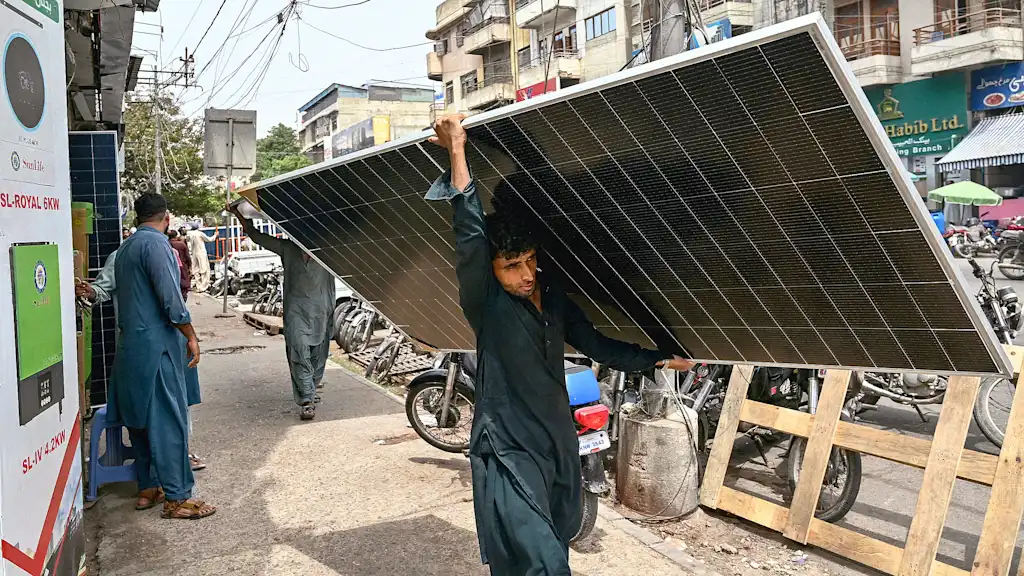
1 month agoHow Pakistan's people-led solar boom is easing impact of Middle East energy crisis
People who could afford to do it at that time realised that it was much cheaper and cost-effective and better for them in the long run to do a one-time investment in rooftop solar as opposed to keep paying high electricity bills from a grid that is also unreliable, said Nabiya Imran, an associate at Renewables First, a Pakistani thinktank.
World news
fromEarth911
1 month agoShould You Go Solar In 2026?
The most consequential shift for anyone considering rooftop solar in 2026 is the expiration of Section 25D, the Residential Clean Energy Credit. That 30% credit, which was worth up to $9,000 on a $30,000 system, is no longer available for home solar installations. The One Big Beautiful Bill, signed July 4, 2025, accelerated the phase-out that the Inflation Reduction Act had originally extended through 2034.
SF real estate
UX design
fromYanko Design - Modern Industrial Design News
1 month agoBuddy's Wind-Up Mood Lamp Is the Anti-App We All Need - Yanko Design
A portable mood lamp with a single mechanical winding key eliminates unnecessary technology complexity while providing eight science-informed light modes for different moods and activities.
World news
fromwww.theguardian.com
1 month agoFuel rations and no air con: south-east Asian nations race to conserve energy
Southeast Asian governments implement emergency energy conservation measures and financial relief programs as Middle East conflict disrupts global oil supplies, causing severe economic hardship for workers and transport operators.
fromHarvard Business Review
1 month agoHow To Deliver on ESG Initiatives in Emerging Market
Multinational firms are under rising pressure-from investors, regulators, and employees-to demonstrate positive societal impact in the places where they do business. With ESG-focused institutional investments projected to reach nearly $34 trillion this year and roughly 90% of large U.S. companies now disclosing ESG reports, these pressures are now a central part of corporate strategy.
Business
fromYanko Design - Modern Industrial Design News
1 month agoThis Jellyfish-Inspired Lamp Transforms When You Switch It On - Yanko Design
The reference point is specific, not from a general impression of the ocean, but from the particular way jellyfish tentacles move: slow, layered, and almost meditative in repetition. That quality informs the lamp's layered construction and the dense organic lattice etched across its translucent shade. The pattern reads quietly in a lit room. Switch the lamp on and the whole surface activates, casting warm amber light through the texture in a way that feels atmospheric rather than task-driven.
Design
US news
fromwww.npr.org
1 month agoEasy-to-use solar panels are coming, but utilities are trying to delay them
Plug-in solar panels that connect to standard outlets are gaining traction in the U.S. as a cost-effective alternative to traditional rooftop solar, though utility opposition based on safety concerns is slowing legislative adoption.
fromComputerWeekly.com
3 weeks agoWhy IT leaders need to consider AI's energy footprint | Computer Weekly
We are making sure that we have renewable energy powering all of our datacentre footprint. We have 100% renewable power today that is powering all of Azure, and we're very proud to build that base and essentially stimulate renewable energy around the world and in the UK.
Environment
#building-integrated-photovoltaics

Renovation
fromYanko Design - Modern Industrial Design News
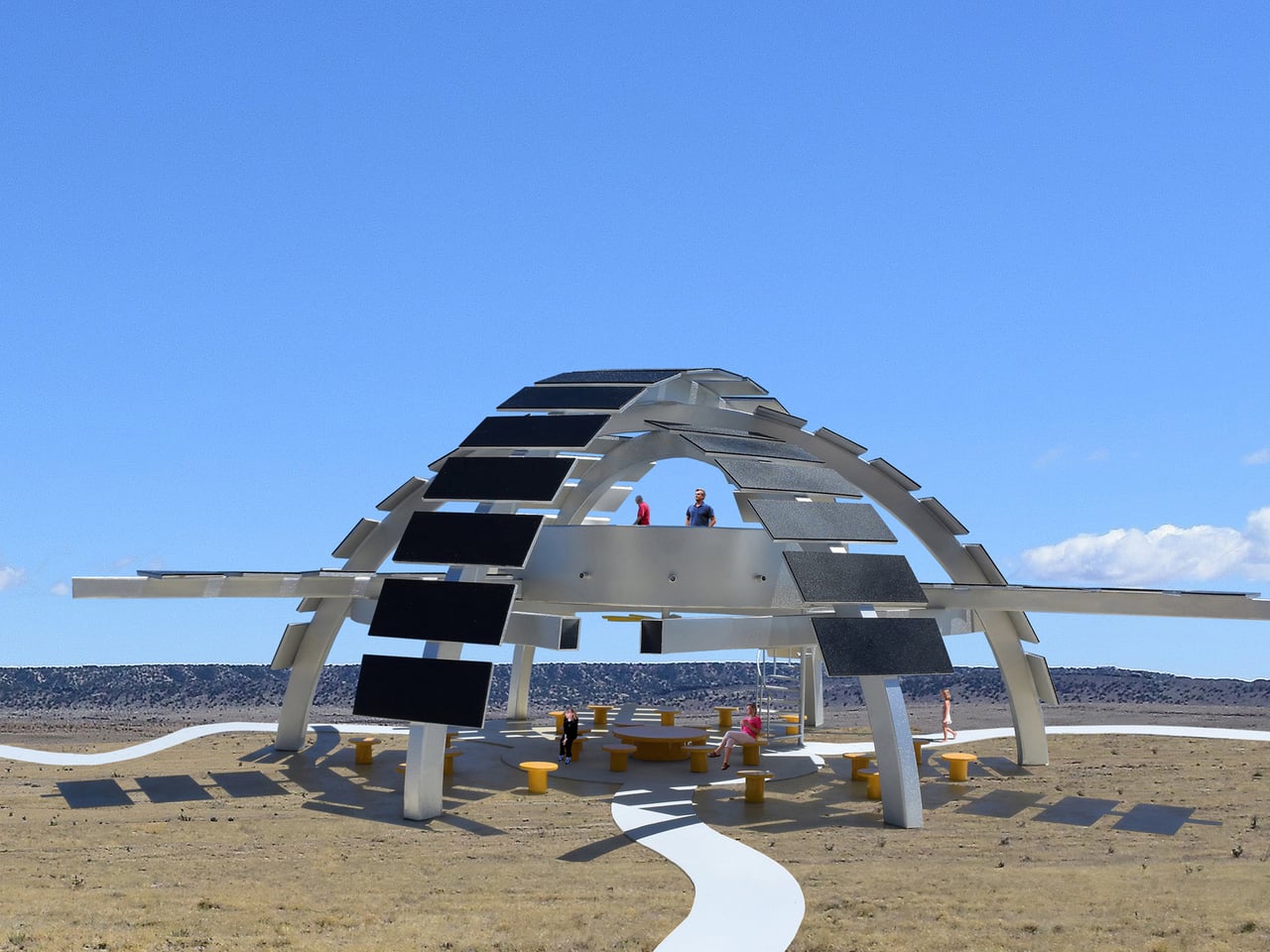
1 month ago5 Solar Panel Designs So Beautiful You'd Never Know They're Generating Power - Yanko Design
Buildings are evolving from energy-efficient structures into active power generators through integrated photovoltaic technology and aesthetic solar solutions.


fromArchDaily
1 month agoHow Architecture Is Learning to Generate Its Own Energy
Photovoltaic (PV) solar energy represents a modular technology that can be manufactured in large-scale facilities, generating economies of scale, while also being adaptable to small-scale applications. From residential rooftop systems to large-scale power generation installations, photovoltaic solar energy has established itself as a cost-effective option for electricity production in many countries around the world.
Environment
fromColossal
2 months agoIn Collaboration with Indigenous Artisans Around the World, PET Lamp Emphasizes Sustainability
Tons upon tons of these single-use plastics end up in landfills or even floating in the ocean. Spanish design firm PET Lamp set out give another purpose to these otherwise short-lived materials. Partnering with artisans in communities from Chile to Ethiopia to Australia, the company celebrates both Indigeneity and sustainability, drawing upon time-honored global craft traditions while supporting local economies and recycling discarded materials.
Arts

fromAeon
2 months agoIn solarpunk cities of the future, tech follows nature's lead | Aeon Essays
In Indra's Net of pearls and jewels, every gem reflects every other, a shimmering image of interdependence. This ancient Vedic metaphor for connection across the cosmos also illuminates what the environmental philosopher Glenn Albrecht first proposed in 2014as 'theSymbiocene': the era after the Anthropocene, in which human technologies take their cues from living systems and work in partnership rather than through dominance.
Philosophy
fromBusiness Insider
2 months agoIt took me a second solo trip to Bali to finally launch my slow fashion business
The 26-year-old real estate project manager from Munich came to the surf camp to improve her skills on the water. I came to talk with adventurous travelers about their big ideas, from new businesses to life after layoffs.
Fashion & style
fromZDNET
1 month agoI bought this inflatable solar-powered lantern on a whim - here's how it comes in handy
Despite the fact that your lamp might make use of a low-energy LED lightbulb (and it should, because those old incandescent bulbs are terribly wasteful), using the AC outlet on a power station is wasteful if low-voltage options exist. This is why I recommend keeping emergency lighting like camping lanterns handy, both for use outdoors but also situations when you find yourself stuck in the darkness.
Miscellaneous
Design
fromdesignboom | architecture & design magazine
2 months agocircular bamboo roof collects rainwater at balinese restaurant by pablo luna studio
Juna Restaurant uses bamboo arches, an A-frame, and a stepped roof in a circular plan to combine passive climate strategies, vernacular craft, and river views.
Design
fromYanko Design - Modern Industrial Design News
2 months agoRain, Light, and Lunch: Inside Ubud's Circular Bamboo Oasis - Yanko Design
Juna Ubud uses a circular, tiered bamboo and ulin‑shingle canopy to choreograph rain, light, and breezes, feeding a central courtyard pond for passive climate control.
fromTheregister
1 month agoSingapore eyes barge-based hydrogen power for datacenters
A barge-based configuration offers advantages over land-based facilities, according to BDC, including optimization of scarce land resources through offshore or nearshore deployment, vital in a country that is smaller than many cities, including London. This arrangement also offers segregation between hydrogen handling infrastructure and the core datacenter operations, the firm says, plus greater flexibility in hydrogen transport and storage, making use of Singapore's maritime ecosystem.
Environment
fromArchDaily
2 months agoWhen Light Meets Energy in Glass Ceilings
From the large industrial roofs and galleries of the 19th century to the contemporary atriums of museums and public buildings, glass has been a recurring material in shaping large and monumental interior spaces. More than a technological or engineering solution, these horizontal glazed planes introduce a distinct luminous quality: light that comes from above. Unlike lateral daylight entering through façades, zenithal light is more evenly distributed, reduces harsh shadows, and lends spaces a sense of continuity and openness that is difficult to achieve otherwise.
Design
fromwww.archdaily.com
1 month agoAl-Iqtishad Mushola / CREM Paragon x KIND
Located on the southeastern edge of the University of Indonesia's Faculty of Economics and Business, AlIqtishad redefines the role of a campus Mushola, shifting from a discreet endpoint to a civic and spiritual threshold within the FEB UI Masterplan.
Design
fromArchDaily
2 months agoOn the International Day for Clean Energy: How Local Initiatives Respond to the Spatial Impacts of Energy Production
January 26 marks the International Day for Clean Energy, an initiative aimed at raising awareness and mobilizing action for an inclusive transition from fossil fuels, such as coal, oil, and natural gas, to power generation systems with lower greenhouse gas emissions and fewer pollutants. The term "clean" signals a fundamental shift away from extractive, finite, and exhaustible energy sources toward systems based on renewable resources or on capturing energy embedded in natural processes.
Environment
Environment
fromFuturism
2 months agoThe Amount of New Solar Power Production Capacity China Is Manufacturing Is Legitimately Mind-Blowing
China produces roughly a terawatt of solar panels annually, drives 64% of global utility-scale solar and wind construction, and has slashed global electricity costs to about $0.04/kWh.
fromArchitectural Digest
2 months agoSustainable Architecture Is More Needed Than Ever-Here's What It Actually Means
According to the UN, the "buildings and construction sector is by far the largest emitter of greenhouse gases." Sustainable architecture, in essence, tries to change that-and is more needed than ever. As climate change intensifies, it challenges architects and designers to consider the impact of their work in every step of the building process, from raw materials to site impact to future maintenance, decades down the line.
Environment
fromEarth911
2 months agoGuest Idea: 7 Solutions to Give Your Old Sunglasses a Second Life
Just like that coffee cup, eyewear is a complex fusion of materials. Metal hinges are screwed into polymer frames, which hold chemically-coated lenses. This mix of metals, plastics, and coatings means standard sorting machines cannot process them. As a result, they are rejected as contamination and sent directly to landfills, where they contribute to non-biodegradable waste. Unlike a disposable paper cup, however, a pair of sunglasses is built for durability. Its high-quality components make it a perfect candidate for repair, reuse, or reinvention.
Environment
Environment
fromdesignboom | architecture & design magazine
2 months agofiji living system proposal uses kinetic concave mirrors for energy and water autonomy
Buildings can function as integrated energy, water, and environmental infrastructure using a dual-axis concave mirror system that concentrates solar energy and harvests water.
[ Load more ]