#co-authorship
#co-authorship
[ follow ]

Intellectual property law
fromInside Higher Ed | Higher Education News, Events and Jobs
5 days agoLawmakers Question Publish-or-Perish Culture of Research
Federal lawmakers are addressing research fraud and integrity issues in scientific publishing, highlighting the flawed incentive structures in the industry.
fromNature
3 weeks agoNow is the time for scientific societies to guide global research
Modern scientific societies are increasingly vulnerable due to their dependence on membership fees and journal subscriptions, which are being challenged by the rise of virtual networking and open-access publishing.
Science
fromwww.theguardian.com
3 weeks agoSoon publishers won't stand a chance': literary world in struggle to detect AI-written books
An editor expressed concern, stating that the Shy Girl incident could happen to any publisher, highlighting the industry's need for vigilance regarding the authenticity of submissions.
Books
Philosophy
fromWarpweftandway
1 month agoTwo Collaborative Learning () Events This Week
The 四海为学 Collaborative Learning Project hosts two free public events: Louise Edwards discussing childhood and gender in China on March 19, and Peter Hershock exploring AI and agency from a Buddhist perspective on March 20.
fromwww.scientificamerican.com
3 weeks agoWhat happens when AI starts checking mathematicians' work
Computer programs that check mathematical arguments have existed for decades, but translating a human-written proof into the strict programming language of a computer is extremely time-consuming, often taking months or even years.
OMG science
fromNature
4 weeks agoMajor conference catches illicit AI use - and rejects hundreds of papers
"We hope that by taking strong action against violations of agreed-upon policy we will remind the community that as our field changes rapidly the thing we must protect most actively is our trust in each other."
Intellectual property law
fromFuturism
1 month agoNovel Pulled From Shelves After Author Is Accused of Using AI
Hachette remains committed to protecting original creative expression and storytelling. The company requires all submissions to be original to the authors and that the authors disclose whether AI is used during the writing process.
Books
Privacy technologies
fromInside Higher Ed | Higher Education News, Events and Jobs
1 month agoNo, I Don't Want My Article Turned into a Podcast (opinion)
Academia.edu converts user papers into Spotify podcasts without explicit permission, raising concerns about AI use, attribution accuracy, and the platform's for-profit business model disguised as educational.
Privacy professionals
fromFast Company
1 month agoChatGPT Edu feature reveals researchers' project metadata across universities (exclusive)
ChatGPT Edu's Codex Cloud Environments expose repository metadata and user activity information to thousands of colleagues at universities, revealing project details and interaction patterns without exposing actual private code.
#academic-publishing
Higher education
fromNature
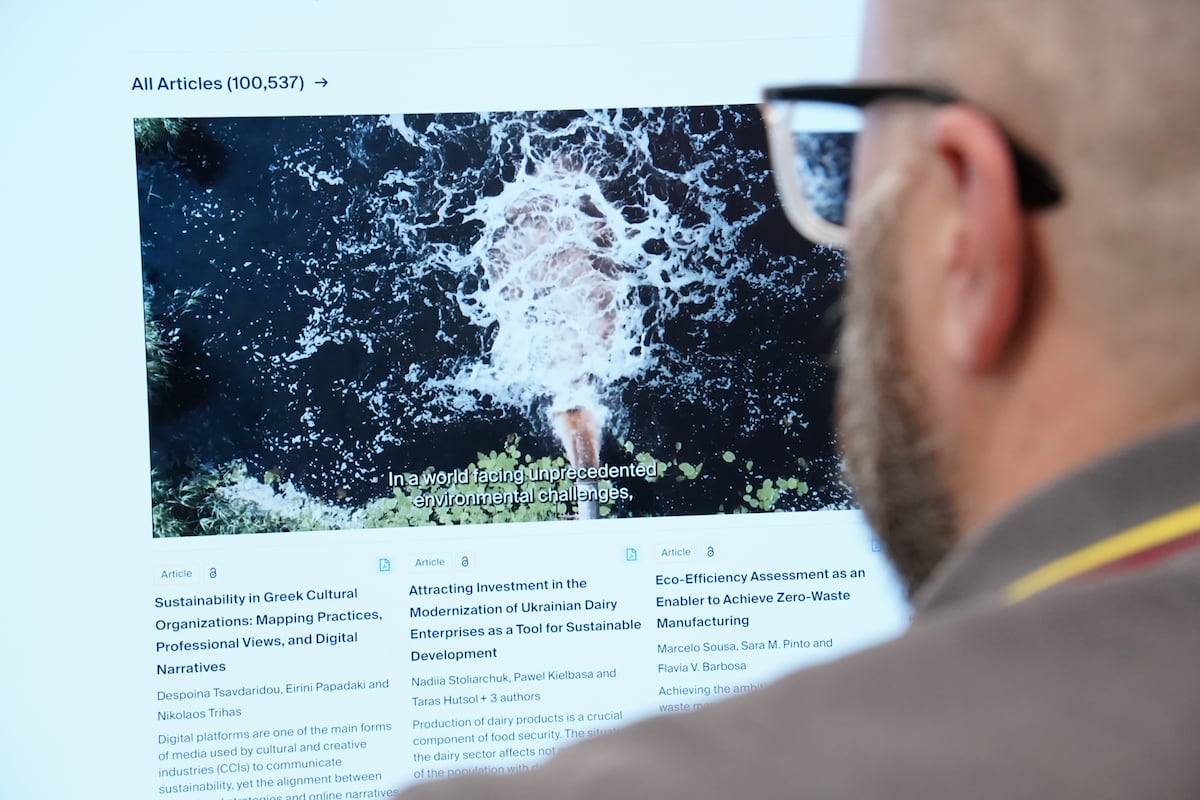
1 month agoReckoning with my 'ghost years': why a high publication rate doesn't always reflect success
Publication gaps during early career development represent valuable research progress and skill-building, not career failure, despite academic pressure to maintain constant output.
Higher education
fromNature
1 month agoReckoning with my 'ghost years': why a high publication rate doesn't always reflect success
Publication gaps during early career development represent valuable research progress and skill-building, not career failure, despite academic pressure to maintain constant output.
Science
fromNature
1 month agoHow bioRxiv changed the way biologists share ideas - in numbers
bioRxiv has grown to over 310,000 preprints since 2013, with neuroscientists as top users and monthly submissions reaching 4,000 by 2025, demonstrating widespread acceptance of preprint publishing in scientific research.


fromThe Wire Magazine - Adventures In Modern Music
2 months agoAuthorship under automation - The Wire
On 13 January 2026, Bandcamp published "Keeping Bandcamp Human", declaring that "music and audio that is generated wholly or in substantial part by AI is not permitted on Bandcamp", alongside a strict prohibition on AI-enabled impersonation of other artists or styles. The post invites users to report releases that appear to rely heavily on generative tools, and it explicitly reserves the right to remove music "on suspicion of being AI-generated".
Music
fromwww.theguardian.com
1 month agoUK Society of Authors launches logo to identify books written by humans not AI
The SoA said the absence of any government measure to compel tech companies to label AI-generated output meant readers were struggling to distinguish between books written by a human, and machine-generated work based on AI models trained on copyrighted work without permission or payment.
Books
Science
fromNature
1 month agoKeep calm and be transparent: advice from scientists who retracted their papers
Scientists who self-retract papers due to honest mistakes maintain citation rates and receive community support, suggesting shifting attitudes toward retractions as responsible scientific practice rather than career-damaging misconduct.
US news
fromInside Higher Ed | Higher Education News, Events and Jobs
2 months agoAntitrust Lawsuit Against Academic Publishers Dismissed
A federal judge dismissed researchers' antitrust lawsuit against six major academic publishers and STM, finding insufficient evidence of a publishing industry conspiracy.
fromNature
2 months agoWhen two years of academic work vanished with a single click
Within a couple of years of ChatGPT coming out, I had come to rely on the artificial-intelligence tool, for my work as a professor of plant sciences at the University of Cologne in Germany. Having signed up for OpenAI's subscription plan, ChatGPT Plus, I used it as an assistant every day - to write e-mails, draft course descriptions, structure grant applications, revise publications, prepare lectures, create exams and analyse student responses, and even as an interactive tool as part of my teaching.
Privacy technologies
Higher education
fromInside Higher Ed | Higher Education News, Events and Jobs
1 month agoJournal Submissions Riddled With AI-Created Fake Citations
Artificial intelligence is generating convincing fake academic citations with legitimate formatting, real journal names, and fabricated DOI links, deceiving researchers and educators.
Intellectual property law
fromPsychology Today
1 month agoUnconscious Plagiarism: Fact or Fiction?
Unconscious plagiarism claims by famous artists may reflect genuine memory lapses rather than intentional theft, though distinguishing between carelessness and authentic unconscious appropriation remains difficult.
OMG science
fromArs Technica
1 month agoResearch roundup: Six cool science stories we almost missed
Scientists revived Edison's nickel-iron battery design using protein scaffolding and graphene oxide, creating an aerogel structure for improved renewable energy storage with extended range and longevity.
fromNature
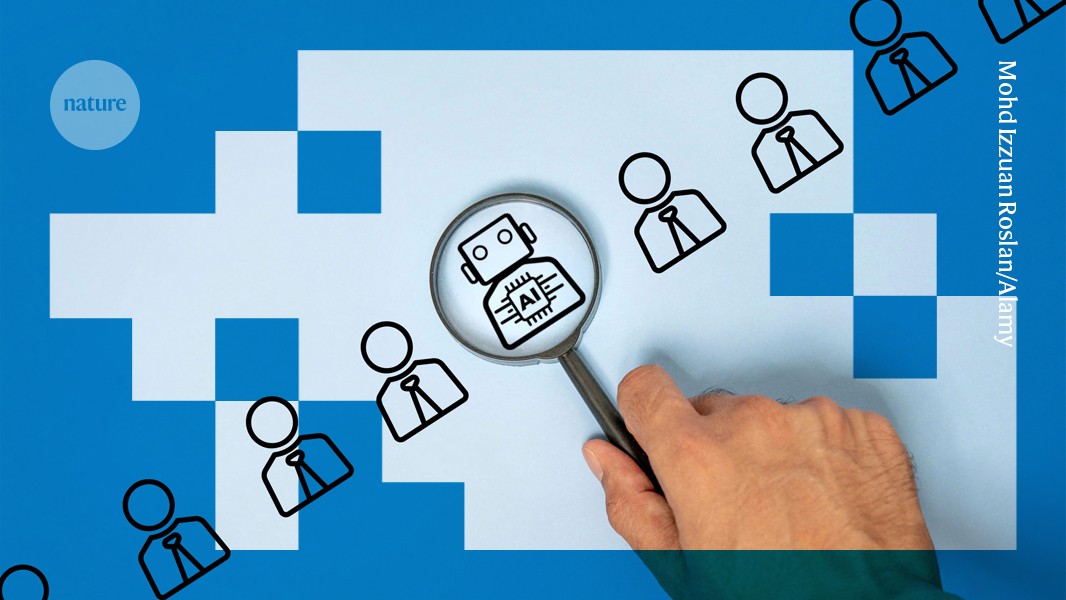
2 months agoAI could transform research assessment - and some academics are worried
In 2023, Australia abandoned its expensive and bureaucratic scholar-led research-assessment programme. New Zealand followed suit soon after. The hope, according to a transition plan unveiled by the Australian federal government's Department of Education and the research sector, was to find a "more modern, data-driven approach". In the United Kingdom, where financial pressures on universities are especially acute, there are similar calls to reform the Research Excellence Framework (REF), the country's performance-based research-funding system.
Higher education
Science
fromNature
2 months agoSynthesizing scientific literature with retrieval-augmented language models - Nature
OpenScholar is an open, retrieval-augmented system integrating a 45 million-paper datastore, trained retrievers, and iterative self-feedback to generate cited, up-to-date scientific literature syntheses.
fromNature
2 months agoWhat can I do if my idea has been plagiarized?
A few years ago, I put together what I felt was a truly innovative concept, which I presented in a conference poster at an international meeting in my field. After the presentation, I spoke to another early-career scientist about my work and how it might apply to their findings. Two years later, they scooped me by publishing a preprint paper that presented my idea, with many of the same verbal formulations and an identical flow of ideas, without any acknowledgement or attribution to my work.
Intellectual property law
Higher education
fromInside Higher Ed | Higher Education News, Events and Jobs
1 month agoExtraordinary Scholar to Lead Largest Education Research Assn.
Sylvia Hurtado, a distinguished higher education researcher, was elected the 112th president of the American Educational Research Association, becoming the second Latina and third higher education scholar in this leadership role.
fromInside Higher Ed | Higher Education News, Events and Jobs
2 months agoOn Being Edited by AI
That was a year or so ago, and my first brush with what generative AI could do. Like many, I started using it for fun: planning trips, finding nineteenth century authors I could recommend to fantasy-loving students (a genre I don't read), and making a holiday card starring my dog, Harry. But as work piled up, I didn't have time for new toys, so now I use AI for work.
Higher education
fromNature
1 month agoPop-up journals for policy research: can temporary titles deliver answers?
I'm less interested in topics than in questions, and I'm less interested in publishing than I am in curation. When I've testified before Congress or dealt with an appropriations bill or a budget negotiation, this question, of what is the return on investments when you're doing R&D, comes up quite often. It's been asked by economists in very formal ways since at least the 1950s, but the data and the methods that were available were really not very strong.
Science

Higher education
fromInside Higher Ed | Higher Education News, Events and Jobs
1 month agoWriting Accountability Groups Bring Many Benefits (opinion)
Writing accountability groups are low-cost, high-impact interventions that address structural barriers to faculty scholarly writing through protected time, peer accountability, and mentorship.
[ Load more ]