#defence-co-production
#defence-co-production
[ follow ]
#nato #ukraine #drones #russia #military-technology #defense-spending #defense #military-spending #european-defense


fromSpiegel
2 days ago(S+) Defense in Orbit: Germany Goes Big in the Military Space Race
The German military also uses this airborne communications hub, which allows command staff and soldiers deployed abroad to communicate across continents. The information they share is classified, strictly confidential.
Germany news
#ukraine
Russo-Ukrainian War
fromLondon Business News | Londonlovesbusiness.com
2 days agoUkrainian strikes hit more than 70 'defence-industry, and supporting infrastructure inside Russia' - London Business News | Londonlovesbusiness.com
Ukrainian long-range strikes against Russian targets have intensified, focusing on military and energy infrastructure to reduce enemy capabilities.
#defense-spending


Business
from24/7 Wall St.
1 month ago3 Defense Stocks Built for the New Era of National Security Spending
Defense spending is shifting structurally, with investors identifying companies positioned to capture the next decade of growth through diversified funds, nuclear propulsion specialists, and emerging defense technology providers.
fromFortune
2 months agoWorld news
France's Thales 'extensively' ramps up production to meet a global boom in defense spending, says international CEO Pascale Sourisse | Fortune
Global defense spending surged in 2024, driving firms like Thales to expand production, accelerate drone/C-UAS work, and prompting shifts in procurement and stock gains.
Business
from24/7 Wall St.
1 month ago3 Defense Stocks Built for the New Era of National Security Spending
Defense spending is shifting structurally, with investors identifying companies positioned to capture the next decade of growth through diversified funds, nuclear propulsion specialists, and emerging defense technology providers.


fromwww.theguardian.com
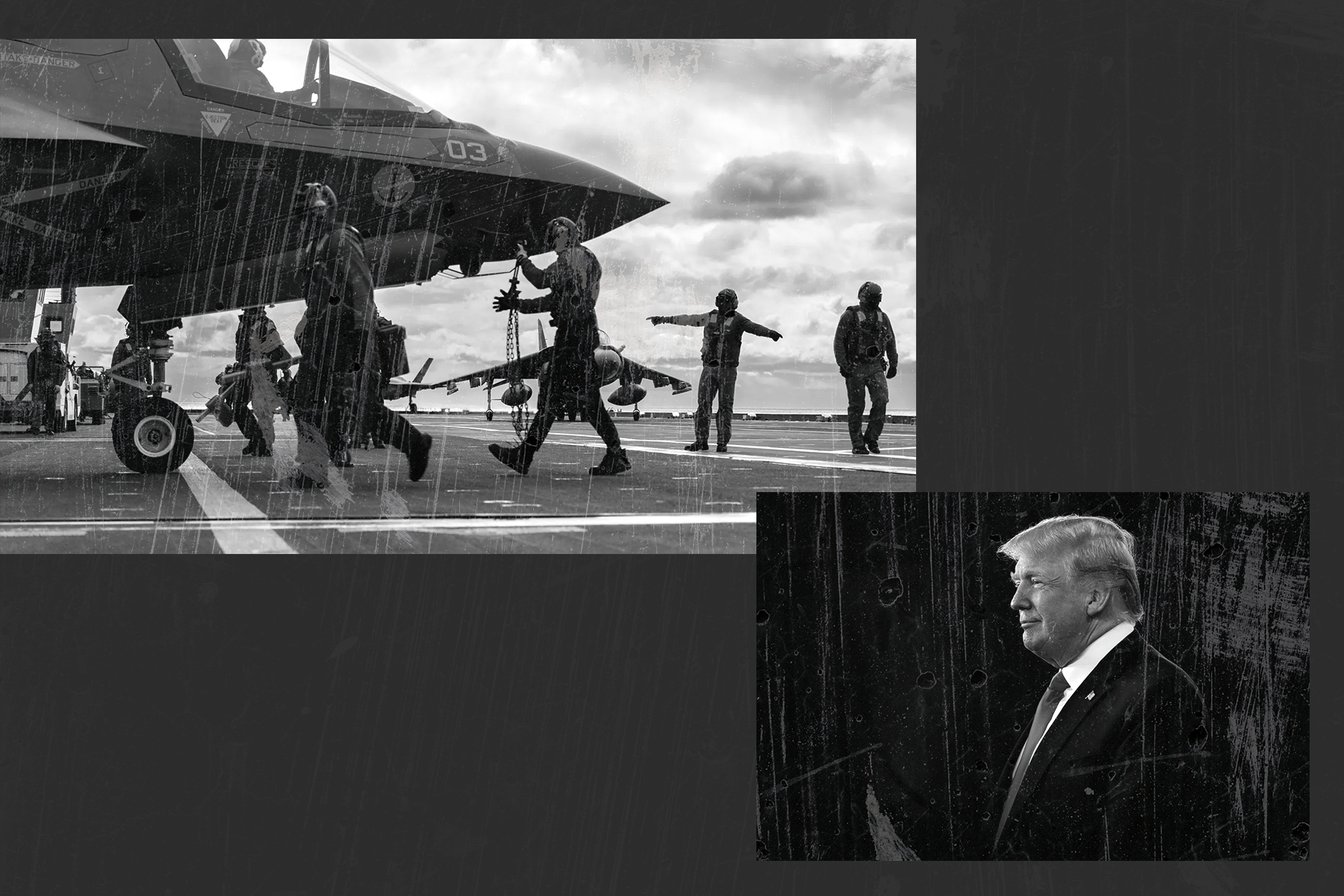
1 day agoWales's first minister calls on Keir Starmer to halt US-UK space defence project
The United States under Donald Trump is not the partner it once was. Talk of targeting civilians, undermining our allies, and diminishing the sacrifice of our armed forces is not the conduct of a reliable ally.
UK politics
Artificial intelligence
fromFortune
2 days agoA retired general's warning: America can't fight the AI arms race on tech it doesn't control | Fortune
The U.S. faces a critical AI arms race affecting military power and national security, highlighted by the Anthropic-Pentagon standoff over AI usage control.
Europe news
fromwww.businessinsider.com
3 days agoThe West is preparing for cheap drone attacks, but many businesses and civilians can only watch, not stop them
Civilian and corporate organizations struggle to counter small drone threats due to legal restrictions, leading to increased demand for drone detection devices.
fromwww.businessinsider.com
2 weeks agoThe US is burning through expensive missiles. DARPA is looking for cheaper ones that can be built in days, not months.
"To accelerate current weapons development timelines, DARPA is considering an alternative development paradigm to increase the nation's magazine depth and breadth."
World news
Miscellaneous
fromBusiness Insider
1 month agoNATO allies are linking their defenses together to better hunt and kill drones on its eastern edge
NATO and the US are developing an integrated counter-drone network along Russia's border using rapid 90-day testing cycles to detect, track, and neutralize aerial threats including Shahed-type drones.
Russo-Ukrainian War
fromwww.businessinsider.com
3 days agoUkraine's Patriot crews are breaking from the norm, fighting Russian threats with fewer missiles
Ukrainian soldiers are using fewer Patriot interceptors against Russian missiles due to strained stockpiles, launching only one per threat instead of the standard two to four.
fromComputerWeekly.com
4 weeks agoUK MoD awards more than two dozen contracts for AI targeting systems | Computer Weekly
Asgard will help it realise the ambitions of the government's 2025 Strategic defence review, which promised to 'deliver a tenfold increase in lethality over the next 10 years' via a combination of enhanced 'firepower, surveillance technology, autonomy, digital connectivity and data'.
Artificial intelligence
from24/7 Wall St.
1 month agoOndas Just Unlocked $1 Billion In Prime Defense Contracts
Ondas said Q4 revenue landed between $29.1 million and $30.1 million, comfortably above the $27 million to $29 million range it had guided to in January. For the full year, revenue came in at $49.7 million to $50.7 million versus prior guidance of $47.6 million to $49.6 million. Adjusted EBITDA losses narrowed in line with expectations, and the company reiterated its 2026 revenue target of $170 million to $180 million.
Venture
fromwww.aljazeera.com
1 month agoHow corporations have collaborated with US military over the decades
Our war fighters are leveraging a variety of advanced AI tools. These systems help us sift through vast amounts of data in seconds so our leaders can cut through the noise and make smarter decisions faster than the enemy can react. Humans will always make final decisions on what to shoot and what not to shoot and when to shoot, but advanced AI tools can turn processes that used to take hours and sometimes even days into seconds.
Artificial intelligence
fromBusiness Matters
2 months agoSmall defence firms to get easier access to MoD contracts under new growth unit
Small British defence companies are set to gain easier access to Ministry of Defence contracts after the government launched a dedicated unit to simplify procurement and boost spending with smaller suppliers. The Ministry of Defence has unveiled the Defence Office for Small Business Growth, a new service designed to cut through what ministers describe as labyrinthine procurement processes that have historically shut small and medium-sized enterprises (SMEs) out of the defence market.
UK news
fromBusiness Insider
1 month agoThere's a new US Army office 'getting in the dirt' with soldiers and trying to quickly turn their ideas into real battlefield tech
Number one is speed takes priority over perfection. We can iterate to get to operational capability. And the second is that early soldier feedback is critical in order to make sure we're getting the right technology for the future fight, and then we want to be able to prove the demand signal before we spend big dollars on programs.
US news
fromwww.independent.co.uk
1 month agoUK joins European powers to build cheap drone defences
Five European nations France, Poland, Germany, the United Kingdom, and Italy (the E5 nations) have launched a new programme to develop low-cost air defence systems and autonomous drones. Announced on Friday, the initiative leverages Ukrainian expertise from four years of war against Russia, forming part of wider European efforts to bolster border security, including a proposed "drone wall" to detect and intercept drones violating airspace. Both Moscow and Kyiv possess advanced drone warfare capabilities, with battlefield innovations from the conflict reshaping modern tactics.
UK news
fromFortune
2 months agoDanish general doesn't expect U.S. attack and says recent deployment of European troops to Greenland is for 'working together with allies' | Fortune
"I hope that the people of the Kingdom of Denmark do not abandon their faith in the American people," Coons said in Copenhagen, adding that the U.S. has respect for Denmark and NATO "for all we've done together."
World news

fromBreaking Defense
2 months agoPentagon CTO offers industry free use of 400 patents from gov't labs - for a start - Breaking Defense
Step one, effective immediately, is to make roughly 400 carefully picked patents available online for a free two-year trial period. Specifically, any company that wants to try out one of the 400 technologies in its own research, development, and products can get what's called a Commercial Evaluation License (CEL) without the usual fee. Those 400 technologies- everything from a Navy-developed drone tracking system to novel Army mortar fuses - were chosen out of the thousands of possibilities by Michael's staff.
Washington DC
fromwww.bbc.com
1 month agoUK agrees drone defence plan with four EU allies
Britain is to develop new air defence weapons alongside the EU's four biggest military powers, deepening ties with the European defence sector. The project will invite manufacturers in the UK, Germany, France, Italy and Poland to submit plans to build low-cost missiles and autonomous drones. The allies are pledging a speedy process to build the weapons together, inspired by Ukraine's development of cheap drones to counter attacks from Russia.
UK politics
fromwww.dw.com
2 months agoGermany's Bundeswehr goes on military spending spree
Germany's military, the Bundeswehr, is currently on a spending spree: it has more than 108 billion ($129 billion) at its disposal this year a gigantic, unprecedented sum. This is being financed both by the official federal budget and special funds, for which the state is taking out loans. This money is intended to make the Bundeswehr, which has been subject to decades of cutbacks, more powerful and modern. There is also time pressure.
Germany news
Russo-Ukrainian War
fromwww.theguardian.com
1 month agoRevealed: the Ukrainian facility where UK engineers help fix vital weapons
Britain operates secret military repair facilities inside Ukraine with contracted engineers, fixing donated weapons systems like AS-90 howitzers to keep them operational at the front.
Europe politics
fromwww.theguardian.com
1 month agoWithout US military support, we need a European defence union. Here's what that looks like | Paul Taylor
Europe must build an independent, credible defence with higher spending, logistics, manpower and new leadership because US support may be reduced or absent.
Miscellaneous
fromwww.theguardian.com
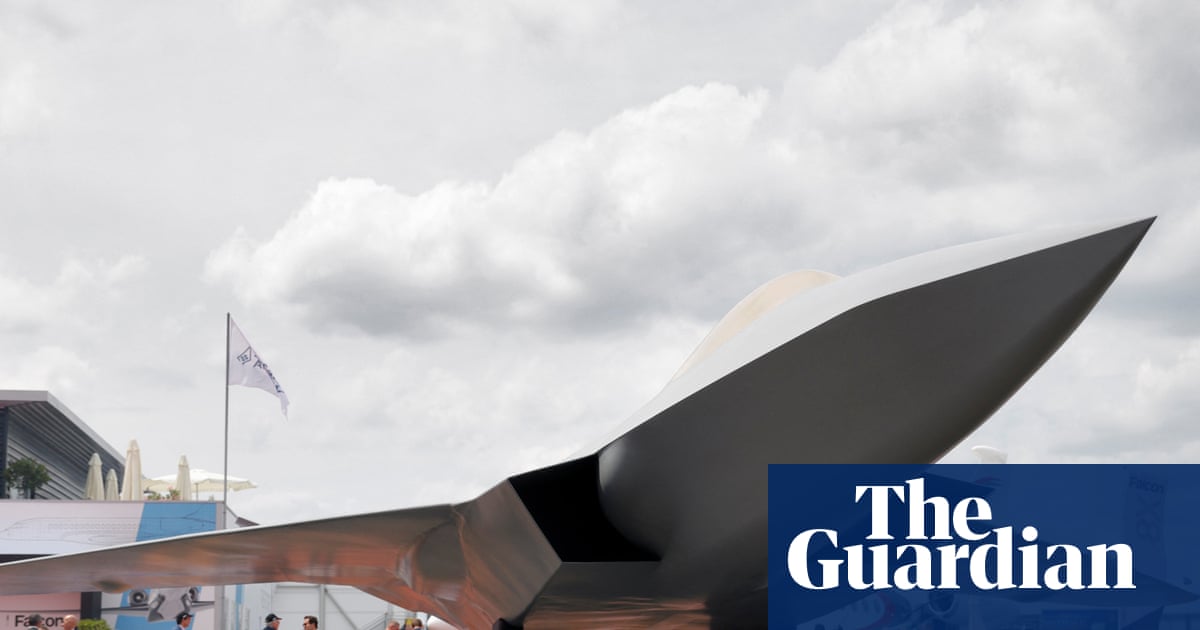
1 month agoFrance and Germany agreed to build the fighter jet of the future. Now they can't agree who is in charge
Franco-German FCAS fighter jet project is collapsing due to technical, operational and industrial disagreements over nuclear and carrier capabilities.
fromwww.aljazeera.com
2 months agoWhy is Germany trying to build Europe's strongest conventional army'?
At the beginning of the year, German men aged 18 began to receive a compulsory questionnaire registering their fitness for army service under a law passed last month. Joining the army is voluntary for now, but the law allows the government to introduce mandatory service to meet its goal of building what it says will be the strongest army in Europe for the first time since World War II.
Miscellaneous
[ Load more ]