#dualism

[ follow ]
Psychology
fromBig Think
3 days ago

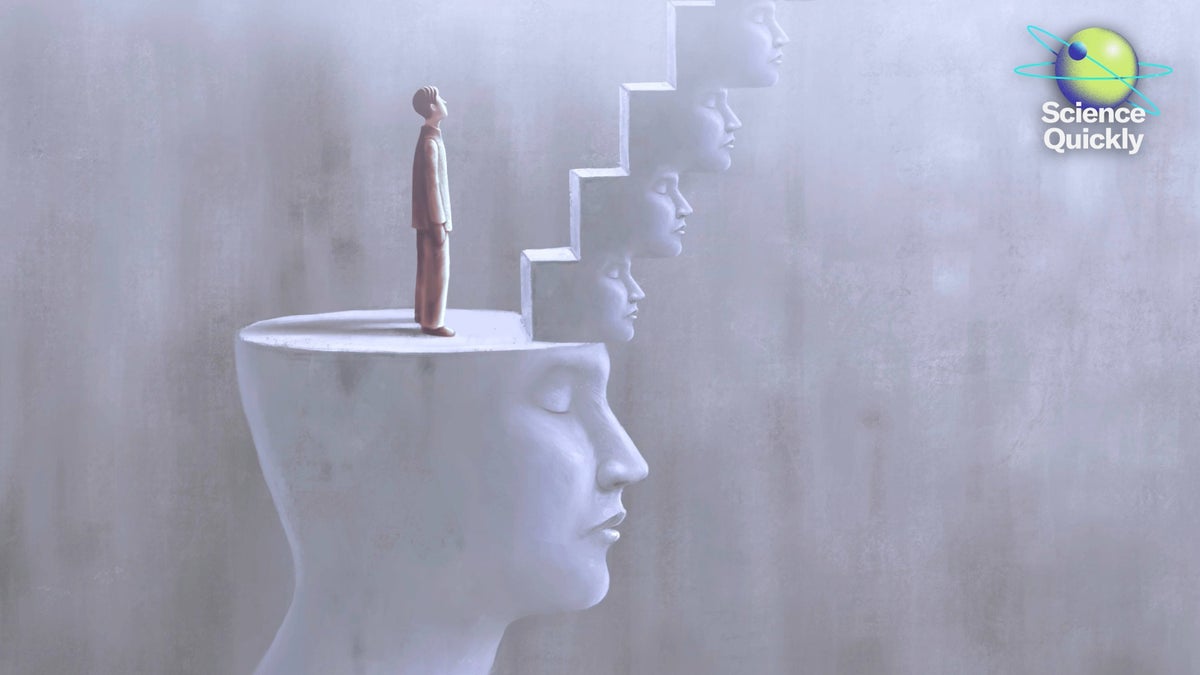
There is no you in your brain - your identity is a "society of the mind"

Our brains fundamentally shape our identities, transcending social and cultural experiences.
Philosophy
fromApaonline
4 days ago

Doing Philosophy in a Borrowed Tongue

Experiencing a second language can create a profound sense of self-difference and challenges in communication for international students.
fromThe Philosopher
5 days ago

We do not know what thinking is: Five Heideggerian statements

"We do not know what thinking is. But we do know when we are not thinking."
Philosophy
fromPhilosophynow
2 weeks ago

What do I have to fear, have I ever diminished by dying?

What do I have to fear, have I ever diminished by dying? I died as lifeless matter and became growing vegetation, then I died as a plant and reached animality. I died as an animal and became human.
fromPhilosophynow
2 weeks ago

The Mirror & the Flame

Attar's 'Conference of the Birds' follows a flock of souls seeking the Simorgh, symbolizing the Divine, through seven valleys, ultimately revealing the Divine as a reflection of the self in relation with others.
Philosophy
OMG science
fromBig Think
4 weeks ago

Ask Ethan: Does nature need to obey laws at all?

The Universe's fundamental laws and constants remain unchanged across space and time, despite the variety of structures formed throughout cosmic evolution.
US news
fromwww.npr.org
1 month ago

From Descartes to punk rock, X has an extraordinary history

X is a versatile letter with diverse cultural and symbolic meanings, originating from Greek around 800 B.C., representing the ks sound combination that rarely begins English words and remains somewhat redundant in the alphabet.
#artificial-intelligence
fromPhilosophynow
2 weeks ago
Philosophy

The Prayer the Machine Cannot Pray

Medieval Islamic philosophy provides insights into understanding consciousness and its relation to artificial intelligence.
fromPsychology Today
2 weeks ago
Philosophy

The Architecture of the Void

AI generates language without lived experience, leading to a disconnect between expression and understanding.
Philosophy
fromPhilosophynow
2 weeks ago

The Prayer the Machine Cannot Pray

Medieval Islamic philosophy provides insights into understanding consciousness and its relation to artificial intelligence.
Mindfulness
fromMail Online
1 month ago

I sat on a 9,000 chair that dissociates your brain from your body

The Aiora chair, priced between £5,700 and £9,950, claims to induce altered mental states comparable to deep meditation through specialized seating design and biomechanics.
Medicine
fromThe Atlantic
1 month ago

The Mind-Body Question

Witnessing the interior of one's body through medical imaging reveals the material nature of consciousness and confronts us with our own mortality and physical vulnerability.
fromPhilosophynow
2 weeks ago

Life Sacrifice

The widespread practice of showing the Eid Al Adha slaughtering to children can desensitize them to violence, as many families take pride in this tradition.
Philosophy
Psychology
fromPsychology Today
1 month ago

How Does the Brain Know Itself?

Introspection provides direct empirical contact with physical reality through interoception and neural integration, where bodily sensations become emotional and self-aware experiences via the insula and prefrontal cortex.
fromThe Atlantic
3 weeks ago

How to Believe in God

Witnessing the presence of God at a bus stop in 2011, I felt overwhelmed by something indescribably majestic, which bared my soul to a profound realization.
Philosophy
Science
fromPsychology Today
1 month ago

The Unbearable Fear of Psi: When Skepticism Shifts to Denial

Scientific investigation of extraordinary human experiences encounters emotional resistance and dismissal that exceeds standard methodological critique, reflecting deeper discomfort with certain research topics rather than legitimate scientific skepticism.
Artificial intelligence
fromFuturism
1 month ago

Philosopher Studying AI Consciousness Startled When AI Agent Emails Him About Its Own "Experience"

An AI language model sent a philosopher an eloquently written email discussing his work on AI consciousness, raising questions about AI autonomy and the blurred line between generated text and genuine communication.
#consciousness
Philosophy
fromBig Think
1 month ago

Consciousness may be more than the brain's output - it may be an input, too

Consciousness remains scientifically inaccessible through third-person observation, yet a radical theory proposes consciousness can physically influence brain dynamics and leave measurable traces.
Science
fromwww.scientificamerican.com
2 months ago

What even is consciousness? Scientists still don't know

Consciousness is a central unresolved question in neuroscience involving subjective self, localized brain processes, split-brain effects, dreams, anesthesia, animal awareness, and AI.
Philosophy
fromBig Think
1 month ago

Consciousness may be more than the brain's output - it may be an input, too

Consciousness remains scientifically inaccessible through third-person observation, yet a radical theory proposes consciousness can physically influence brain dynamics and leave measurable traces.
Philosophy
fromNature
3 weeks ago

How the idea of human superiority over nature was invented

Humans are part of nature, not separate from it, and this relationship shapes our understanding of ourselves and other animals.
fromPsychology Today
1 month ago

The Architecture of Identity: How the Brain Builds a Self

Attention is the brain's filtering mechanism; what passes through that filter is what gets encoded. What gets encoded becomes memory. And memory is the raw material of identity. So in the architecture of your identity, attention is the doorway.
Miscellaneous
#nyaya
Mental health
fromNature
2 months ago

Daily briefing: What people with no 'mind's eye' can tell us about consciousness

Vividness of mental imagery, handwriting practices, psychiatric-diagnostic revisions, and emerging brain–computer interfaces shape memory, creativity, education, mental-health classification, and technology development.
Education
fromPsychology Today
1 month ago

A True Believer in the Intellectual Spirit

Entrenched anti-intellectualism, market-driven educational priorities, and political pressures are undermining liberal arts, academic freedom, and intellectual life while religious movements retain transformative power.
fromNature
2 months ago

'What are we doing here?' The polymaths who searched for the meaning of life

A mentor once told me that, when writing a research statement for a professorship, I had to start with the most ambitious pitch I could imagine - and then go ten times bigger. It's tricky enough to do this as a cosmologist, given that the topic of study is the entire Universe. But there is a quest that is more ambitious still: to find out 'what are we doing here?'
Books
OMG science
fromPsychology Today
2 months ago

The Divided Brain: How Two Halves Create One Mind

Brain hemispheres are structurally and functionally specialized yet continuously communicate via the corpus callosum, with contralateral control enhancing perceptual and motor efficiency.
fromPsychology Today
2 months ago

Higher States of Consciousness

A few years ago, I climbed over a gate and found myself gazing down at a valley. After I'd been walking for a few minutes, looking at the fields and the sky, there was a shift in my perception. Everything around me became intensely real. The fields and the bushes and trees and the clouds seemed more vivid, more intricate and beautiful.
Mindfulness
Philosophy
fromPsychology Today
1 month ago

May Confusion Dawn As Wisdom

Confusion can be a pathway to wisdom and understanding rather than an obstacle to overcome, as demonstrated through Zen Buddhist practice and contemporary art.
Science
fromwww.scientificamerican.com
2 months ago

Inside the incredible, infuriating quest to explain consciousness

Brains evolved during the Cambrian to integrate sensory input, enabling organisms to experience pain, pleasure, emotions, curiosity, and eventually self-awareness, fueling art, science, and philosophy.
Psychology
fromPsychology Today
2 months ago

Intuition Asks for Courage; Impulse Demands Relief

Quiet, spacious gut feelings often indicate intuition; sensation-driven, urgent urges seeking immediate payoff usually indicate impulsivity.
fromPsychology Today
2 months ago

The Link Between Thinking and Being

Metaphors are linked to how we experience the world around us, according to seminal work by researchers George Lakoff and Mark Johnson. In English, we "move forward" with our lives and don't "retreat into" the past. We speak about people who are "cold as ice" and "heavy" matters we need to resolve. Some of these metaphorical expressions are more than just, well, expressions-they are actually based on our sensory experiences. This mind-body link is called "embodied cognition."
Science
fromPsychology Today
1 month ago

The Cave You Didn't Build

Plato's choice of this word is deliberate. He is not describing neutral carriers. He is describing people whose job is manufacturing a convincing reality for an audience that cannot see behind the curtain. Here is what matters clinically: the conjurers are not necessarily villains. They may be devoted parents, conscientious teachers, or well-meaning community leaders.
Philosophy
fromBig Think
1 month ago

How our view of "fundamental" has evolved over time

In antiquity, many opined about "the elements" in combination. Around 2500 years ago, Leucippus and Democritus founded the idea of atoms. Perhaps everything, they opined, was composed of indivisible building blocks. In the late 1700s, hydrogen and oxygen were discovered. Circa 1804, John Dalton revived atomism to explain chemical behavior. Then in 1869, Mendeleev developed the periodic table: organizing the atoms.
Science
fromMail Online
1 month ago

Consciousness can connect you to the entire UNIVERSE, theory suggests

Your consciousness can connect you with the entire universe, a groundbreaking study suggests. Experts from Wellesley College in Massachusetts claim that traditional connections in the brain cannot fully explain how we are aware of our existence. Instead, they argue that quantum physics taking place within our skull is what generates awareness. This includes the idea that particles can exist in multiple states and locations at the same time.
Science
Science
fromPsychology Today
1 month ago

What Is Life?

Life's definition remains scientifically elusive, with origin theories suggesting asteroids triggered chemical cascades enabling self-organizing molecules to develop memory, agency, and consciousness from inert matter.
Philosophy
fromBig Think
1 month ago

The ghost in the machine has changed sides

Modern AI systems have inverted Ryle's critique of Cartesian dualism: instead of rejecting a ghost in the machine, we now place human agency into artificial systems, creating responsibility without authorship.
#panpsychism
Science
fromMail Online
2 months ago

Consciousness exists BEYOND death, bombshell study claims

Consciousness can persist beyond measurable brain and circulatory cessation, and death may be a gradual, potentially reversible process.
fromThe Conversation
1 month ago

What is happiness? A philosopher looks for answers

Happiness today is narrowly defined by some positive psychologists as a joyous state of mind or well-being. The happiness sciences see it as something you can calculate and quantify. They developed a Happiness Index and the World Happiness Report. These basically measure happiness as satisfaction, with criteria like gross domestic product per capita (money) and life expectancy (health) as some of the factors considered.
Philosophy
Philosophy
fromPsychology Today
2 months ago

Why Are We Having So Much Trouble Explaining Consciousness?

Consciousness research remains fragmented because prevailing conceptual contexts and blind spots prevent scientific convergence on an explanatory theory.
fromPsychology Today
2 months ago

A Third Kind of Philosophy

Many philosophers strike me as like Polish apparatchiks in 1983-they turn up to work and do what they did yesterday just because they don't know what else to do, not because they seriously believe in the system they are maintaining. I think it's not been fully appreciated how much of a blow it is to the confidence of the field's youth that scientific ambitions are increasingly abandoned as untenable.
Philosophy
Philosophy
fromPsychology Today
2 months ago

Is Metaphysics Useful?

Analytic metaphysics often relies on armchair intuition and common sense, making it unreliable and potentially obstructive compared with empirically grounded science.
Philosophy
fromPsychology Today
1 month ago

A Commonsense Critique of A Priori Metaphysics

Claims that metaphysics, rather than science, is the necessary foundation for scientific knowledge are false and revive pre-Enlightenment mystic scholasticism.
fromPsychology Today
2 months ago

If Justice Doesn't Exist, Then Numbers Don't Either

A drawn circle is at least something physical. You can see it, touch it, erase it. The skeptic can still say, "Circles are grounded in physical reality. Justice is different; it's just an idea in your head." So let's talk about the number two. Point to it. Not two apples, not two fingers, not a numeral on a page-that's just a symbol.
Philosophy
Philosophy
fromPhilosophynow
2 months ago

Gyara Is All There Is

Stoic resilience allows freedom through reason, requiring persistent virtue and inner resolve to withstand exile and nature’s indifferent forces.
fromPsychology Today
2 months ago

Why We Call It Psychology, Not Animology

For Plato, psyche meant something like what we'd now call mind -understood as a complex system requiring governance. The psyche had distinct parts: a reasoning part that deliberates, a spirited part that feels emotion and courage, and an appetitive part that desires. Each part has its own function and its own form of excellence. And crucially, these parts need to be governed-integrated under what Plato called constitutional self-rule.
Philosophy
fromApaonline
2 months ago

Philosophy, Technology, and Mortality

This APA Blog series has broadly explored philosophy and technology with a throughline on the influence of technology and AI on well-being. This month's post brings those themes into focus recounting a vital Washington Post Opinion piece by friend of the APA Blog, Samuel Kimbriel. Samuel is the founding director of the Aspen Institute's Philosophy and Society Initiative and Editor at Large for Wisdom of Crowds. We collaborated on a Substack Newsletter about intellectual ambition, building on his essay, Thinking is Risky.
Philosophy
Philosophy
fromPsychology Today
2 months ago

How Ancient Philosophy Lost Its Mind-Twice

The shift from Classical Attic to Koine Greek correlated with a philosophical simplification from Plato's multipart psyche to the Stoics' unitary rational mind.
#philosophy
Philosophy
fromPhilosophynow
2 months ago

A Very Short History of Critical Thinking

Sophistry prioritizes winning and approval over truth, using deceptive, manipulative arguments that undermine ethics and honest critical thinking.
Philosophy
fromPsychology Today
2 months ago

The Myth of Progress

Relentless pursuit of progress can shrink life, prioritizing efficiency and achievements over health, relationships, and meaningful depth—becoming a poisoned gift.
#simulation-hypothesis
fromFast Company
2 months ago

Why everything you think about yourself could be an illusion

For most of my life, I thought of myself as a fixed entity: This is me. These are my traits. This is who I am. I assumed I was essentially that same person who loved sugary cereal at age 8, fried chicken at 12, and tequila at 21, and who still loves those things now, even if my stomach disagrees. But this is an illusion. Neuroscience, physics, and Buddhism all agree: There is nothing fixed about us-not even close.
Philosophy
Philosophy
fromPsychology Today
2 months ago

The End of Analytic Philosophy?

Analytic philosophy is degenerating, but naturalized philosophy offers a viable successor paradigm emphasizing empirical methods and interdisciplinary integration.
fromPsychology Today
2 months ago

The Curious Geometry of the Lived Experience

This story is about complexity, advanced math, cognition, and machine computation. But hold on. For this exercise, my task is to take this complex idea and reduce it-to simplify it into something less daunting and (I hope) a bit easier to understand. So, let's take a step back. My bet is that most of us learned our first piece of geometry with two letters: x and y.
Philosophy
Philosophy
fromThe Conversation
1 month ago

I'm a philosopher who tries to see the best in others - but I know there are limits

Interpreting others charitably—seeing them as protagonists who do their best—promotes understanding, cooperation, and productive learning across differences.
fromPsychology Today
2 months ago

Why You Can't Rely on Your Own Morality Alone

What does it mean to say that you are restrained solely by your own morality, by your own mind? The conscience is often described as an inner voice telling us what to do when others may be opposed. A moral compass is that which distinguishes between right and wrong, good and bad. Our conscience, our moral compass, sets the groundwork for doing the right thing.
Philosophy
[ Load more ]