#feminism
#feminism
[ follow ]
#identity #art #patriarchy #performance-art #gender-roles #art-history #masculinity #metoo #motherhood #social-justice




fromThe Art Newspaper - International art news and events
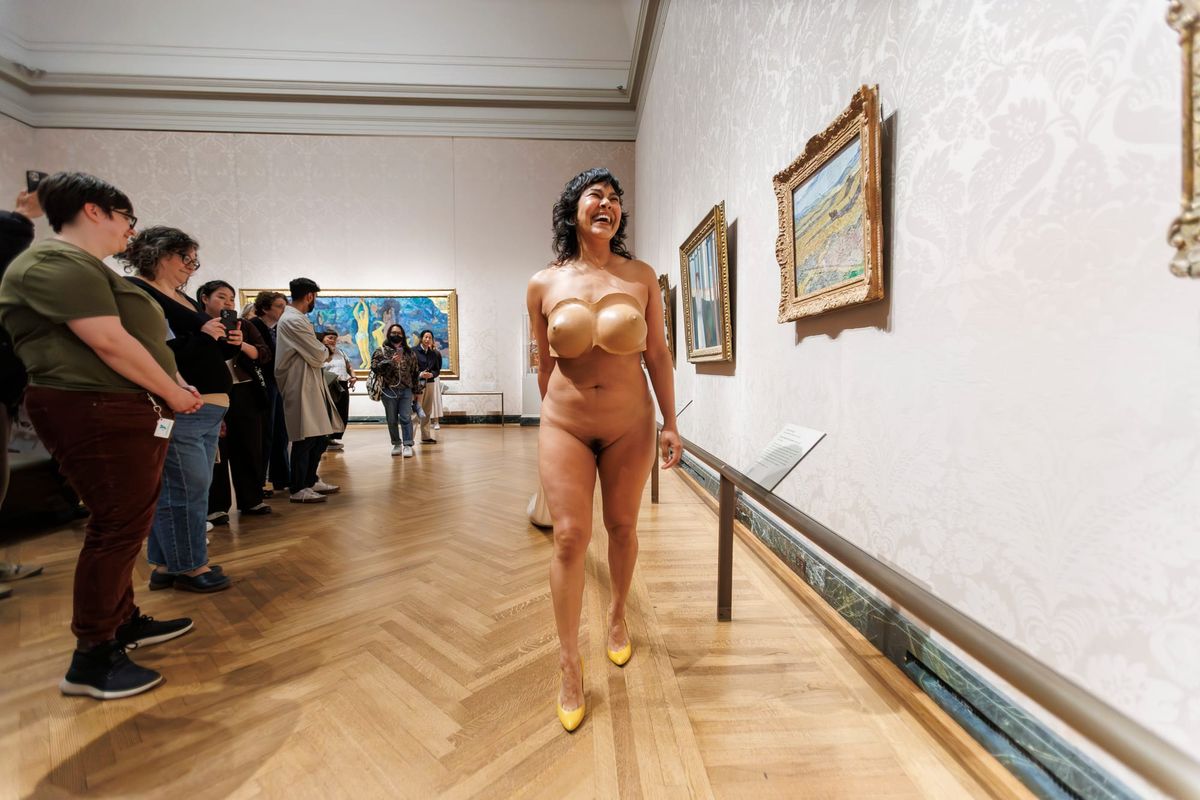
3 weeks agoThe Egyptian Modernist Inji Efflatoun gains international exposure with new biographical collection
Efflatoun's paintings address the hardships and oppressive conditions against which she agitated: images of textile workers at the loom; a hanged man, his hands bound behind him with rope; a mother at home with her newborn child; prisoners during her time.
Arts
fromwww.dw.com
1 month ago'Rose' and the piece of fabric that embodies gender politics
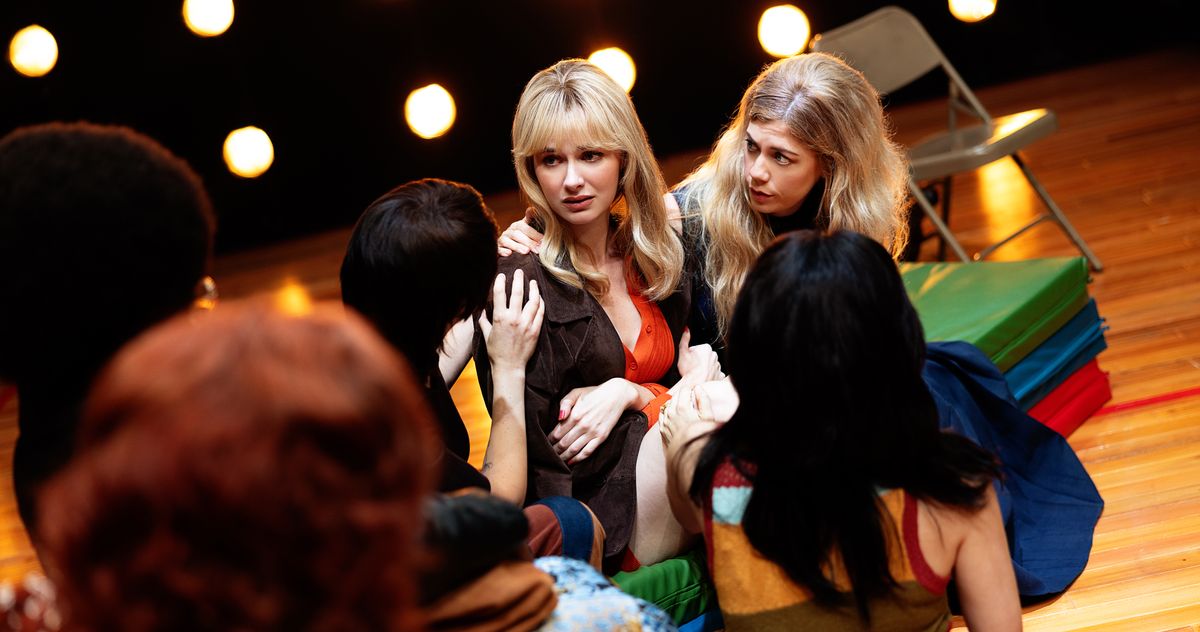
Markus Schleinzer's film 'Rose' imagines the life of a woman in the 17th century who conceals her gender, portraying her as a scarred soldier returning from war. This character claims to be the heir to an abandoned farmstead, reflecting the struggles women faced in a male-dominated society.
Film
fromThe Art Newspaper - International art news and events
1 month agoWho is Gladys Hynes? Show reinstates forgotten artist who once represented Britain at the Venice Biennale
Gladys Hynes was a protean rebel slaloming through early 20th-century Britain's avant-garde circles, training as a landscape and figure painter and later designing for Omega Workshops.
London music
fromenglish.elpais.com
1 month agoLucy Worsley, historian: The United Kingdom has always fared better with queens than with kings'
I'm the kind of historian obsessed with small details. I'm not saying that foreign policy or constitutional matters aren't important, but I enjoy the minutiae of daily life, which, when added together, can give you a complete picture of the cultural and social features of an era.
History
fromPinkNews | Latest lesbian, gay, bi and trans news | LGBTQ+ news
1 month agoSeven fabulous sapphic events to celebrate Lesbian Visibility Week
The DIVA Awards are set to be the biggest yet, celebrating LGBTQIA+ women and non-binary trailblazers across entertainment, politics, and business, featuring live performances and a live auction.
SF LGBT
fromwww.theguardian.com
1 month agoMy month in the tradwife world: I can't pretend I'm not enjoying myself at all ...'
No one I know wants to go spend their one wild and magical life being a shill for some billionaire tech asshole, says Shannon, a character in Yesteryear, the buzzy new novel about a tradwife influencer by Caro Claire Burke.
Writing
fromSlate Magazine
1 month agoShe Taught Women How to Orgasm. Decades Later, Her Impact Can Still Be Felt.
Hite learned early on that women walk a sexual tightrope: 'If you had too much sex, you could be shunned like her mother was; if you didn't have enough, you could be deserted like her grandmother.'
Books
fromwww.theguardian.com
1 month agoThe sheila is returning to Australian culture, riding on a new wave of bogan feminism' | Maria Lewis
The request is made in her signature Aussie drawl, something that musicians attempting to break into the international market would attempt to disguise in decades previous. Yet for the Amyl and the Sniffers frontwoman, everything from her peroxide mullet to proudly bogan background has become an important hallmark.
London music
fromApaonline
1 month agoIs the Household Obsolete? Charlotte Perkins Gilman on Economy, Androcentrism, and the Socialization of Care
Gilman's essay Women and Economics, written in 1898, combined her feminist and socialist ideas with evolutionary theory, arguing that the seclusion of women to the domestic sphere is unjust and unprogressive.
Philosophy


fromwww.theguardian.com
1 month agoWomen behind the lens: I grew up hating my natural hair. But I transformed that pain into something empowering'
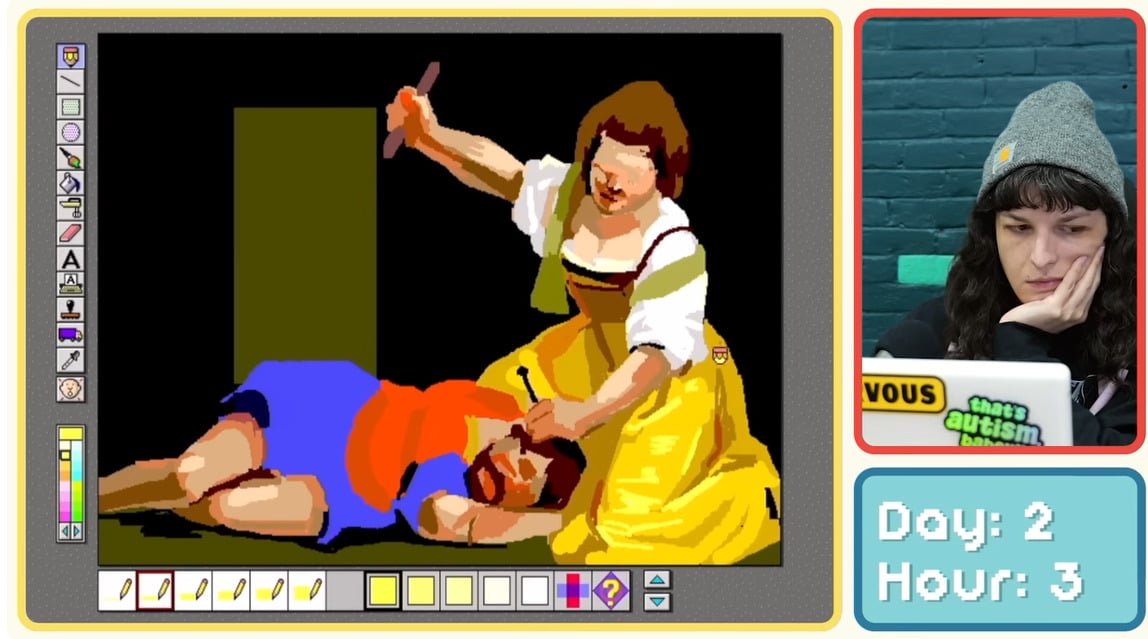
I create sculptural hairstyles using my natural hair as a material. I add some extensions, and shape it with thread and wire. A sculpture can take me from 30 minutes to more than six hours.
Writing
Writing
fromConsequence
2 months agoFelicia Day on Rewriting Mythology in The Lost Daughter of Sparta, and The Guild's Next Life: Podcast
Felicia Day's graphic novel The Lost Daughter of Sparta reimagines a forgotten character from Greek mythology, emphasizing personal identity and rebellion against traditional narratives.


UK politics
fromwww.theguardian.com
3 months agoDecades of feminism paved the road to Andrew's arrest | Rebecca Solnit
A member of the British royal family was arrested over misconduct linked to communications with Jeffrey Epstein, spotlighting feminist-driven accountability and protections for powerful figures.
Television
fromAdvocate.com
4 months agoHow a 'Mary Tyler Moore' episode and a gay actor broke new ground 53 years ago this month
The Mary Tyler Moore Show portrayed a likable gay man, normalizing homosexuality while subtly addressing social issues and developing the lead character's feminist trajectory.
fromThe Oaklandside
4 months agoRemembering Nellie Wong, prolific poet and activist from Oakland Chinatown
Nellie attended Oakland High School when her family moved to a neighborhood outside of Chinatown after World War II, the beginnings of integration for ethnic Chinese residents who'd lived under the Chinese Exclusion Act (1882-1943). Her early life, into her late 20s, was rooted in the patriarchal culture in Chinatown and the white American mainstream. That oppression did not sustain her. Nellie's intelligence, creativity, and compassion yearned to break free.
Women
Arts
fromThe Art Newspaper - International art news and events
4 months agoThe road to 'Fridamania': how Frida Kahlo became a global phenomenon
Frida Kahlo's posthumous rise transformed her from a little-known artist into a global cultural icon and commercial brand influencing multiple artistic movements.
fromScary Mommy
4 months agoI Love My GLP-1. Does That Make Me a Bad Feminist?
"They look unrecognizable." Not for the first time, my friends and I were having a conversation about GLP-1s, a type of medication that has become widely used for weight loss. As we sat getting ready for my friend's wedding, the general consensus seemed to be that the drug was being overprescribed and was not a long-term solution for losing weight and keeping it off.
Health
Women
fromIrish Independent
4 months agoPolly Vernon: The first stage of saying you don't want kids is when everyone goes "You'll change your mind". The next is when they're like, "Hurry up or you'll regret it"
Early caretaking role shaped rejection of motherhood, pursuit of social connection, belief that joyful feminism and strong social ties protect mental health.
Miscellaneous
fromwww.theguardian.com
5 months agoSpain's ruling socialist party accused of failing to act on sexual misconduct by senior men
Spain's ruling Socialist party faces reputational damage after internal sexual misconduct allegations were ignored, prompting resignations and urgent efforts to reassert feminist credentials.
fromThe New Yorker
5 months agoLetters from Our Readers
Gopnik's piece sent me back to John Ruskin, whom he cites as "the greatest of architectural critics." In "The Stones of Venice," Ruskin insists that buildings record not just the ideals of those who commissioned them but also the conditions of those who built them. The East Wing was grafted onto an original structure that was built in part by enslaved people. Its neoclassical form proclaimed republican ideals; its production betrayed them.
US politics
fromThe Local France
6 years agoWhy do millions of French people still watch 'embarrassing and old-fashioned' Miss France contest?
Younger people will tell you that it's embarrassing and old-fashioned - but the Miss France contest still has a prime-time Saturday night TV slot and attracts millions of viewers every year. Representatives for different regions have already been chosen and on Saturday night the new Miss France will be elected - with the contest a prime-time TV event that draws in millions of viewers. The TV show is expected to draw in around 7 million viewers and the Miss France final regularly makes it into the most-viewed TV lists.
France news
fromwww.theguardian.com
5 months agoIf I was American, I'd be worried about my country': Margaret Atwood answers questions from Ai Weiwei, Rebecca Solnit and more
Over 600 pages this memoir of sorts ranges from her childhood growing up in the Canadian backwoods to her grief at the death of her partner of 48 years, the writer Graeme Gibson, in 2019, with many friendships, the occasional spat and more than 50 books (including Cat's Eye, Alias Grace and the Booker prizewinning The Blind Assassin and The Testaments) in between.
Books
Right-wing politics
fromwww.theguardian.com
6 months agoHorror stories of a feminised workplace' mask the real crisis in male identity | Finn Mackay
Stereotypes about feminine workplace traits mischaracterize women and feminism; equality requires a feminist world rather than fearing a purportedly ‘feminised’ workplace.
fromwww.theguardian.com
6 months agoBoyfriends are cringe. But is the #boysober trend a feminist reclamation or a neoconservative tilt? | Lisa Portolan
Online platforms had become an extension of the romance plot, a public stage where intimacy was proof of worth, and coupledom was still the ultimate status symbol. Back then, my research showed that many people felt their lives had not truly begun until they'd met someone. Being single wasn't just a relationship status; it was an existential pause. To get a life, as the old saying went, meant to find a partner. Romance was the scaffolding of selfhood.
Relationships
fromFast Company
6 months agoDid women ruin the workplace? Maybe for the boys club
Recently, New York Times opinion columnist Ross Douthat moderated a debate on the Interesting Times podcast between Helen Andrews and Leah Libresco Sargeant, two conservative critics of modern feminism. The podcast received major blowback, starting with (but not ending with) the fact that the original headline of the conversation was "Did Women Ruin the Workplace?" Quickly, after the predictable backlash hit, the headline was changed to "Did Liberal Feminism Ruin the Workplace?"
Right-wing politics
[ Load more ]