#healthcare-support-staff
#healthcare-support-staff
[ follow ]
#healthcare #patient-care #mental-health #patient-safety #nhs #rural-health #healthcare-access #public-health
#healthcare

Healthcare
fromwww.theguardian.com
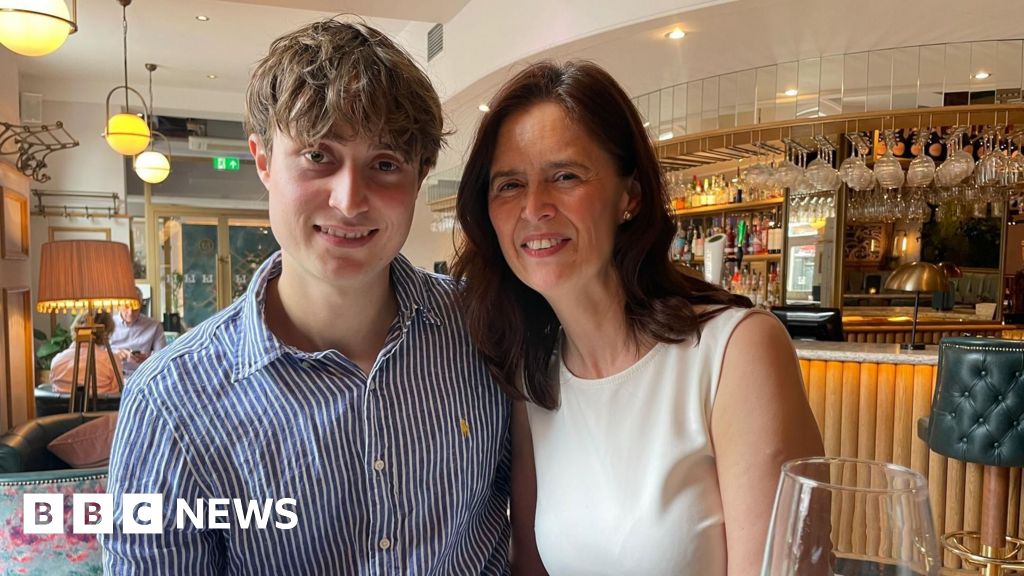
4 days agoNHS patients should be able to write up their own medical records and not have to rely on Post-it notes | Will Parman
Patients with complex health needs struggle to communicate symptoms effectively, risking important information being overlooked during medical appointments.
Healthcare
fromEntrepreneur
21 hours agoTo Help Nurses Find Jobs, She Created a Surprising AI Solution. Now It's Worth $1.65 Billion and Is Used by Over a Million Nurses.
Incredible Health revolutionizes healthcare hiring by allowing employers to apply to nurses, aiding 1.5 million U.S. healthcare workers in finding permanent roles efficiently.
Healthcare
fromwww.theguardian.com
4 days agoNHS patients should be able to write up their own medical records and not have to rely on Post-it notes | Will Parman
Patients with complex health needs struggle to communicate symptoms effectively, risking important information being overlooked during medical appointments.
Medicine
fromNonprofit Quarterly | Civic News. Empowering Nonprofits. Advancing Justice.
4 days ago'It's a Safe Space': Mobile Midwifery Clinics Meet Patients Where They Are | Nonprofit Quarterly | Civic News. Empowering Nonprofits. Advancing Justice.
Mobile midwifery clinics provide culturally sensitive care to improve maternal health outcomes for women of color in Miami-Dade County.
fromwww.aljazeera.com
4 weeks agoLebanese nurse refuses to leave her post at hospital despite loses
Despite the heart-wrenching loss of her fiancé, Narjis Bilal Salman remains committed to her role as a nurse, stating, 'I must keep helping others.' Her resilience in the face of tragedy exemplifies the strength of those working in healthcare during times of crisis.
France politics
Health
fromSilicon Canals
1 month agoI'm 66 and a doctor I'd never met before looked at my chart and said "do you have someone at home" and the way she asked it - clinical, not warm - made me realize the question wasn't about companionship, it was about whether anyone would notice if something happened to me between appointments, and I've been sitting with that distinction ever since - Silicon Canals
Social isolation in retirement creates invisibility where daily routines no longer intersect with others, risking being unnoticed for extended periods.
Brooklyn
fromBrooklyn Paper
1 month agoOp-Ed | The Brooklyn Hospital Center is abandoning nurses and patients * Brooklyn Paper
Nurses at The Brooklyn Hospital Center have lost health coverage for 40 days after management refused to contribute to health funds despite a signed contract, while executive leadership remains unaffected.


fromPsychology Today
1 week agoHow Community-Based Healthcare Builds Engagement
Most people leave doctor visits with prescriptions, but still feel unsure—instructions make sense, but no one asks about their life. In contrast, when a provider knows your name, remembers your story, and explains care in a way that fits you, the experience feels different—and that difference matters.
Healthcare
fromThe Nation
1 month agoA Motto for All Health Workers: Resist, Resist, Resist
What are scientists, clinicians, and public health practitioners supposed to do in this moment? What use is research when our patients might be deported tomorrow? Why try to stem the tide of outbreaks when the world has fallen apart? This is why: because even in these times, enlarging the scope of human knowledge matters. The search for cures still matters. The fate of individual patients still matters.
Public health
fromwww.bbc.com
2 months agoHospital camaraderie cannot be compared, says volunteer
"Hello, how are you doing? Good to see you," says Honor Cousens, as she pushes a trolley loaded with cold drinks, sweets, biscuits, toiletries, newspapers and magazines. The volunteer at the Royal London Hospital is a familiar face on the wards, and has been supporting staff and patients for many years. She is part of the Friends of the Royal London Hospital, a charity that has been running at the Whitechapel site since 1979.
Health
fromwww.independent.co.uk
2 months agoNHS support staff in affluent areas offered more career opportunities, report finds
Whether it's investigating the financials of Elon Musk's pro-Trump PAC or producing our latest documentary, 'The A Word', which shines a light on the American women fighting for reproductive rights, we know how important it is to parse out the facts from the messaging. At such a critical moment in US history, we need reporters on the ground. Your donation allows us to keep sending journalists to speak to both sides of the story.
UK news
fromBuzzFeed
2 months agoDoctors, Nurses, And EMTs Are Sharing Body Facts They Wish Everyone Knew Sooner
You get sick from staying inside, breathing the same germ-filled air. Open your windows, even for five minutes, to circulate the old air out and let in fresh air. Also, if you're taking your child to the doctor, don't wait to treat their fever because you want 'the provider to see the fever.' Your child might wait two hours to be seen, meanwhile their temperature goes up, and they might have a seizure. If you say they've been having fevers, we believe you.
Public health


fromMission Local
2 months agoS.F. healthcare workers say safety issues continue at city's clinics
But as the city's Department of Public Health follows Mayor Daniel Lurie's directions to make cuts, they wanted to make one thing clear: safety in the city's medical facilities requires more than just the presence of security personnel. It requires widespread training in de-escalation, working with patients with complex needs, and crisis response, they said. These programs are on the chopping block.
Public health
fromFast Company
2 months agoConnected data will rescue healthcare
AI plays an important role-but not by fixing fragmented data on its own. The work of organizing, connecting, and interpreting healthcare information still belongs to people and the systems they build. Where AI helps is after that foundation is in place: by bringing the right information forward at the right time, reducing the effort it takes to find what matters, and supporting better decisions in the moment of care.
Medicine
fromTruthout
1 month agoStriking Nurses From Coast to Coast Stood Up to Corporate Forces and Won
Members of the New York State Nurses Association (NYSNA), affiliated with National Nurses United, AFL-CIO, went out on a strike to protect their health insurance and pension benefits. Dania Muñoz, a nurse practitioner at Mount Sinai Hospital in New York City, explained that the private hospitals she and others were taking on are 'some of the top paid hospital systems in the country.'
Public health
fromwww.theguardian.com
1 month agoSuperhuman' healthcare workers saved NHS from collapse, Covid inquiry finds
Healthcare systems coped with the pandemic, but only just. On a number of occasions, they teetered on the brink of collapse and only coped thanks to the almost superhuman efforts of healthcare workers and all the staff who support them. Workers carried the burden of caring for the sick in unprecedented numbers. They were obliged to work under intolerable pressure for months on end.
Healthcare
fromwww.amny.com
2 months agoThree NYC Health + Hospitals locations awarded for outstanding care to patients with high-consequence infectious diseases amNewYork
NYC Health + Hospitals announced that three of its acute care hospitals have been named as recipients of the Level 2 Special Pathogen Treatment and Network Development (STAND) Award from the National Special Pathogen System (NSPS) on Thursday, Jan. 15. The three locations to earn this award were NYC Health + Hospitals/Elmhurst in Queens, NYC Health + Hospitals/Jacobi in the Bronx and NYC Health + Hospitals/Harlem in Manhattan.
Public health
fromThe Nation
2 months agoHealthcare Workers Must Continue Alex Pretti's Fight
One might ask why an epidemiologist like me would be interested in Latin American history at this moment. What drew me to that era was the key role that clinicians and public health workers played in the resistance against the dictatorship; their simultaneous push for a national healthcare program; and the ways in which this sector organized, even as more conservative physicians sided with the putschists, happy to see their more progressive colleagues jailed and persecuted.
Public health
Healthcare
fromBusiness Matters
1 month agoBuilding Better Systems: A Conversation with Healthcare Leader Daniel Tuffy
Daniel Tuffy is a healthcare leader who progressed from clinical physical therapy to executive roles, focusing on operational excellence, workforce engagement, and reducing provider burnout through trust-based leadership.
Healthcare
fromHarvard Business Review
1 month agoHealthcare Uses Specialized Language. It Needs Specialized AI, Too.
Healthcare professionals across specialties use inconsistent terminology and communication styles, creating significant translation barriers that impede care coordination and data interoperability.
fromBusiness Matters
2 months agoThe Rise of Telemedicine: How Digital Health is Reshaping Medical Equipment Demand
Between March 2020 and March 2022, over 100 million telemedicine services were delivered to approximately 17 million Australians. The Australian government invested $409 million to make telehealth permanent, whilst the UK announced £600 million for digital health infrastructure in April 2025. Patient adoption is equally impressive: 60% find telemedicine more convenient than in-person appointments, 55% report higher satisfaction with teleconsultations, and 74% of millennials prefer virtual appointments for routine care. These aren't temporary shifts; they represent a fundamental transformation in healthcare delivery.
Healthcare
[ Load more ]