#historic-disasters
#historic-disasters
[ follow ]
#climate-change #flooding #hawaii #natural-disaster #evacuations #natural-disasters #severe-weather #mental-health


#crisis-management
Mental health
fromSilicon Canals
6 hours agoThe person who thrives during a crisis and falls apart during ordinary weeks isn't broken. Their entire operating system was built for emergencies, and peace registers as a system error because they never learned what competence feels like without urgency underneath it. - Silicon Canals
Crisis-thrivers are often dysregulated, struggling with normalcy after emergencies, revealing a deeper issue with their nervous system's response to stress.
SF politics
fromFortune
3 days agoSome communities are enduring unprecedented long waits on federal disaster requests, and Democrat-led states say they're being denied | Fortune
The Trump administration approved disaster declarations for seven states, enabling federal support for recovery from extreme weather events.
Psychology
fromSilicon Canals
5 days agoNot everyone who keeps a small social circle is protecting their energy. Some of them built a wide one once, watched it reveal exactly how many people would show up during an actual emergency, and quietly restructured around the answer - Silicon Canals
Small social circles often result from past crises that reveal true friendships, rather than a preference for fewer connections.
fromwww.cbc.ca
1 hour agoMinden, Ont., declares state of emergency after massive flooding | CBC News
The town declared a state of emergency Tuesday at 2:00 p.m., citing an increasing level of water on its Gull River which flows directly through the town and more rainy, warmer weather forecasted for the next five to ten days.
Canada news
#hawaii
Agriculture
fromwww.theguardian.com
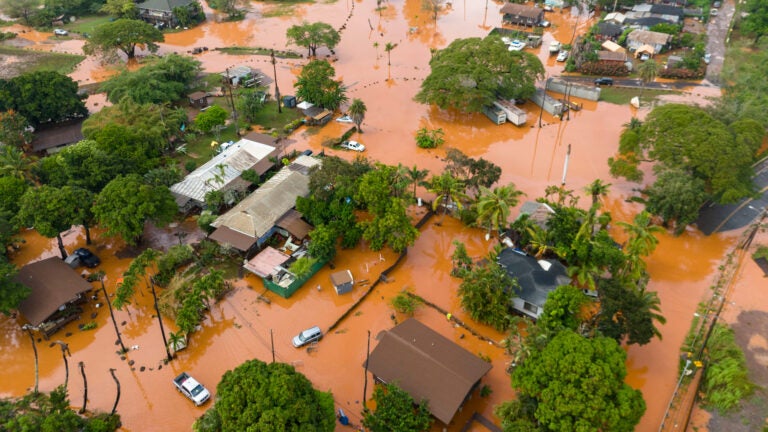
2 weeks agoI've never seen anything like it': Hawaii's small farmers begin recovery after catastrophic flooding
Severe storms devastated LewaTerra Farm, leading to significant crop loss and extensive damage across Oahu, with recovery efforts expected to be lengthy and costly.
Agriculture
fromwww.theguardian.com
2 weeks agoI've never seen anything like it': Hawaii's small farmers begin recovery after catastrophic flooding
Severe storms devastated LewaTerra Farm, leading to significant crop loss and extensive damage across Oahu, with recovery efforts expected to be lengthy and costly.
fromwww.theguardian.com
6 days agoNon-survivable': heatwaves are already breaching human limits, with worse to come, study finds
When scientists applied a new model of human survivability that takes into account the body's ability to function and stay cool depending on age, they found all six events had seen non-survivable periods for older people who could not find shade.
Environment
fromMail Online
1 month agoHazardous weather alert for 200 million as megastorm barrels across US
The storm from Sunday into Monday has the potential to become a bomb cyclone, which occurs when central pressure drops at least 0.71 inches of mercury (24 millibars) in 24 hours or less. That rapid strengthening would generate an expansive and intense wind field.
Chicago

fromTechCrunch
1 month agoGoogle is using old news reports and AI to predict flash floods | TechCrunch
While humans have assembled a lot of weather data, flash floods are too short-lived and localized to be measured comprehensively, the way the temperature or even river flows are monitored over time. That data gap means that deep learning models, which are increasingly capable of forecasting the weather, aren't able to predict flash floods.
Science
fromwww.theguardian.com
4 weeks agoHawaii faces flash flooding, blizzard conditions and landslides with more rain to come
Flash flooding has been a major problem in recent days in places such as Maui, Molokai and the Big Island, where rain had been falling between 1 and 2in (2.5 and 5cm) an hour overnight, according to the Hawaii emergency management agency.
Miami food
Psychology
fromPsychology Today
1 month agoHow to Help Communities Rebound from Crisis and Disaster
Disaster psychology provides an empirically-based framework for building community resilience and growth during crises through understanding predictable psychological phases and natural recovery mechanisms.
Mental health
fromPsychology Today
1 month agoNavigating the Messy Middle of Disaster Recovery
Disaster recovery extends beyond the initial crisis phase; year two brings psychological challenges including chronic stress, financial strain, and bureaucratic delays that impair functioning and compound trauma.
fromFortune
2 months agoAsia is one of the world's least insured places, even as it's battered by climate change and natural disasters | Fortune
A lack of insurance coverage in Southeast Asia threatens an increasingly important hub for supply chains, as the region is battered by tropical storms, major flooding, and other natural disasters. Total losses from natural disasters across Asia-Pacific last year totaled $73 billion, yet just $9 billion was insured, according to Germany reinsurance company Munich Re. That makes Asia one of the world's least insured regions against natural disasters.
Business
fromInside Higher Ed | Higher Education News, Events and Jobs
1 month agoFlood the Zone
As the Class of 2026 prepares to enter the workforce this summer, they-like last year's graduates and those already in the job market-are facing what economists now call a "low hire, low fire" economy. Whether this is driven by AI or other economic factors remains hotly debated, but the causes are beside the point for new grads looking for jobs postgraduation in an economy marked by a pullback in early-career hiring.
Higher education
fromSFGATE
3 weeks agoHawaii braces for new storm as it still recovers from the last
We're not expecting much in terms of winds, mainly just going to be flood potential. And thinking that the focus is going to be Oahu, Maui County and Big Island, with Kauai kind of being on the fringes of it versus, you know, all the Islands were impacted last time.
Environment
fromwww.theguardian.com
1 month agoA devastating force': how recent Mediterranean storms turned to tragedies
In Grazalema, Spain's wettest town, a year's-worth of rain fell in a fortnight and overloaded the karst aquifer beneath it. Water rushed into homes through floors, walls and even electricity sockets. Authorities ordered everyone to evacuate. I felt a lot of fear, said Sanchez Barea, a guesthouse owner whose home is one of hundreds still in an exclusion zone.
Miscellaneous
fromwww.theguardian.com
2 months agoThe Fukushima towns frozen in time: nature has thrived since the nuclear disaster but what happens if humans return?
Inside, there are still textbooks lying on the desks, pencil cases are strewn across the floor; empty bento boxes that were never taken home. Along the corridor, shoes line the route the children took when they fled, some still in their indoor plimsolls, as their town was rocked by a magnitude-9 earthquake on the afternoon of 11 March 2011 which went on to cause the world's worst nuclear disaster since Chornobyl.
World news
World news
fromSilicon Canals
1 month agoSingapore warns residents to avoid Pioneer, Jurong East and Bukit Timah as flash floods hit the city - Silicon Canals
Flash floods in Singapore's Pioneer, Jurong East and Bukit Timah submerged roads and disrupted daily life due to intense rainfall and saturated ground.
fromwww.theguardian.com
1 month agoWeather tracker: New Zealand hit by storms and widespread floods
A deep area of low pressure to the south-east of New Zealand's North Island swept into the region on Sunday, bringing heavy rain, gale-force winds and dangerous coastal swells that lashed exposed shorelines. The storm triggered power outages, forced evacuations and damaged infrastructure, with further impacts likely on Monday as the system lingers for a time, before tracking southwards later.
Miscellaneous
Environment
fromIrish Independent
1 month ago'There are crocodiles everywhere' - thousands are evacuated after major floods in northern Australia
Flooding in Australia's Northern Territory has displaced crocodiles, increasing human danger as police warn against water contact due to aggressive saltwater crocodiles and fast-flowing rivers.


Environment
fromNature
1 month agoClimate change and geopolitics threaten water supplies - but disaster is not inevitable
Global water systems face crisis from overuse, pollution, and climate change, requiring urgent strengthening of international water-sharing treaties with dynamic monitoring systems.
fromwww.theguardian.com
1 month agoHow extreme weather is leaving thousands of homes uninsurable
We're seeing more frequent, more severe extreme weather events and that inevitably affects claims and affects pricing it can't not. And this is happening all over the globe. More, after this week's most important reads.
Environment
Environment
fromPsychology Today
1 month agoOur Missing Climate Tools Are Psychological and Evolutionary
Humans must evolve culturally and deliberately through effective decision-making to manage climate challenges, overcoming short-term thinking as animals demonstrate rapid evolutionary adaptation to environmental change.
[ Load more ]