Online learning
fromeLearning Industry
9 hours agoeBook Launch: eLearning Designer's Notebook
Effective learning design enhances engagement, relevance, and personalization in L&D programs, improving knowledge retention and hands-on experience.
Learning roadmaps rarely slow down. They expand. New product rollouts. Compliance updates. Sales enablement cycles. Leadership programs. Platform changes. Localization requests. What used to be a manageable pipeline has become a constant stream of "must-deliver" moments. But team capacity doesn't expand at the same pace. That mismatch is why many enterprise L&D initiatives stall. Not because the strategy is wrong, or the vision is unclear, or the business doesn't value learning. They stall because execution bandwidth gets stretched past its limit.
"We don't have a platform for this." "We don't have an LMS." "We just need something simple." "We don't really have the budget for eLearning." And suddenly, every Instructional Designer and Learning Experience Designer in the room feels a tiny wave of professional panic. Because let's be honest: most of us were trained, socialized, and rewarded in environments where "good learning" was synonymous with technology. Authoring tools. Learning platforms. Interactive modules. Video. Simulations. Analytics dashboards. AI-powered everything.
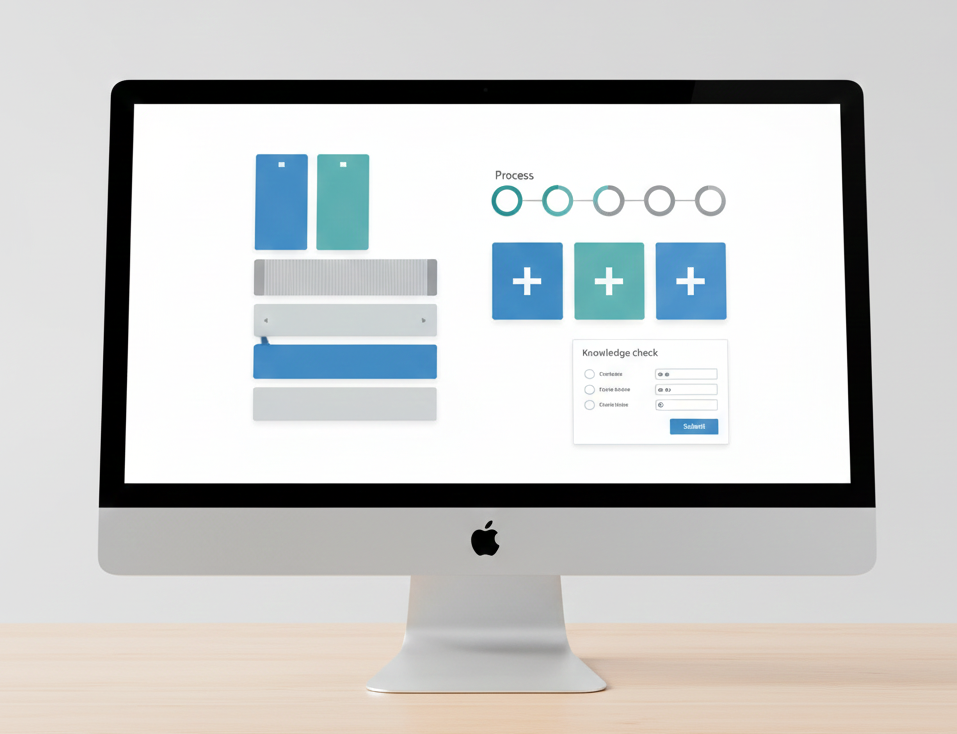
In today's digital learning environment, creating engaging and effective e-learning content requires more than just visually appealing graphics. It demands thoughtful structure, purposeful interactive design, and a deep understanding of how learners process information. Interactive experiences are not merely add-ons; they are powerful tools that can transform passive consumption into active learning. This article explores evidence-based strategies for designing interactive e-learning that delivers real learning impact.
Visuals play a crucial role in eLearning. The right images can clarify concepts, guide attention, and create an emotional connection with learners. Traditionally, sourcing or creating visuals required external tools and long design cycles. With Adobe Firefly integrated into Adobe Captivate 13, instructional designers can now generate course-ready visuals directly within their authoring environment. This integration helps streamline workflows while maintaining high visual quality.
In modern eLearning, designing content is no longer enough. Instructional Designers are expected to prove value, demonstrate impact, and continuously improve learning experiences. This is where KPIs come in. Instructional Design KPIs transform learning from a subjective experience into a measurable, strategic function aligned with organizational goals. Below are the most critical KPIs used to evaluate the quality and effectiveness of Instructional Design in eLearning. 1. Learner Engagement Rate Definition Learner engagement measures how actively learners interact with the content, activities, and learning environment
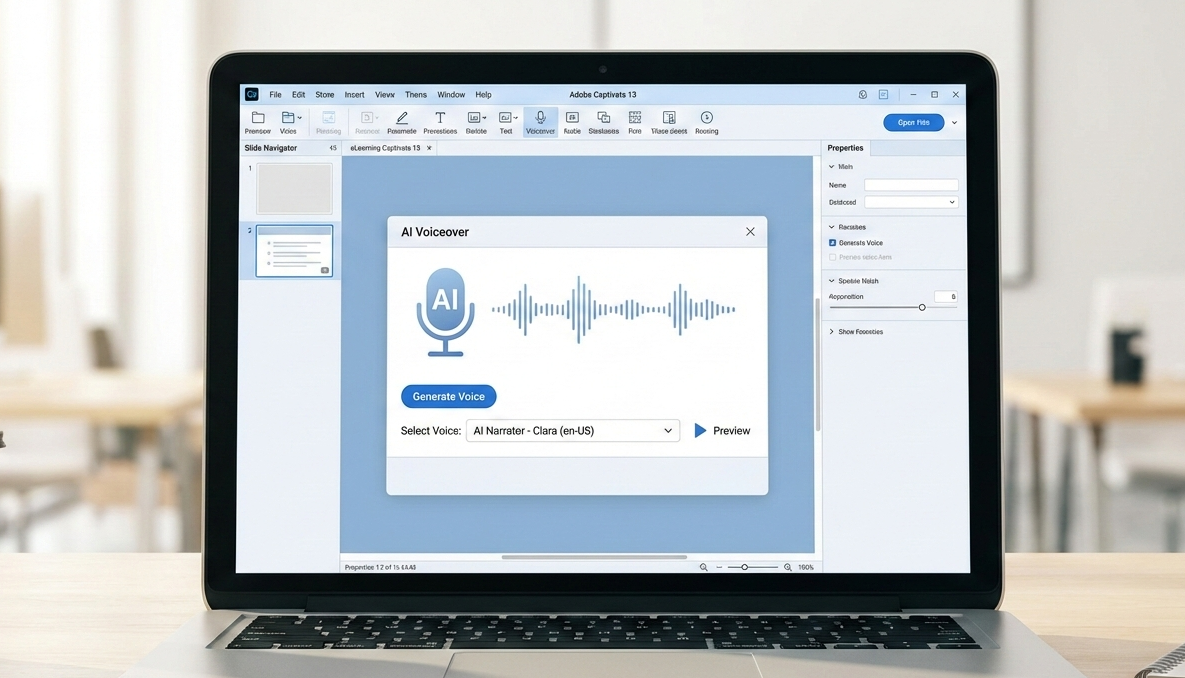
We began using GenAI in 2021 to speed up corporate training rollouts, and later expanded into AI-enabled translations to support global teams faster and more accurately. Today, our Instructional Designers use AI to build adaptive courses and unstructured learning experiences that mirror how people learn on the job across sectors such as manufacturing, healthcare, logistics, finance, energy, IT, and the not-for-profit space.
Starting a career in eLearning can be exciting but overwhelming. Where do you find the information you need? What tools should you consider? How do you ensure that the courses you develop align with the objectives? Fortunately, iSpring has created a roadmap to help you get up and running. The Instructional Designer's Notebook includes the fundamental resources, best practices, and expert tips you're looking for.
In today's fast-evolving learning environment, organizations must deliver training that is relevant, engaging, and aligned with their goals. While off-the-shelf courses offer convenience and speed, they often fail to meet specific learning needs. Custom eLearning solutions, on the other hand, allow organizations to tailor content, design, and delivery methods to fit their unique culture, skills gaps, and performance goals. This article explores how custom eLearning outperforms prebuilt alternatives, focusing on the eLearning design process, microlearning modules, and the role of eLearning content providers.
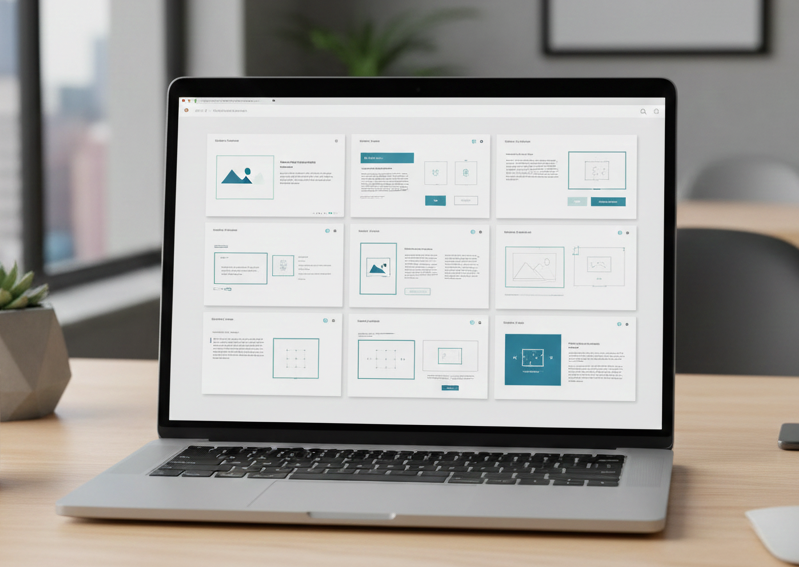
Every Instructional Designer (ID) knows the drill. You've completed your needs analysis, identified performance gaps, and gathered all your Subject Matter Expert content. Now comes the time-consuming task of creating detailed storyboards-formatting learning objectives, designing screen treatments, crafting assessment questions, and ensuring everything follows organizational standards. Hours turn into days as you meticulously structure content, proofread for errors, and maintain formatting consistency across dozens of screens. What if there was a way to reclaim 40% of that time by automating storyboard creation?
As an eLearning vendor, one of the primary aims is to develop eLearning experiences that are relevant and meaningful for every member of your audience. But how do you design L&D for the global audience that's available in diverse formats, and which questions should you ask to determine the ideal development stages for your project? This guide serves as a step-by-step roadmap for creating an action plan, defining stakeholders, setting clear goals, and more.
Artificial Intelligence (AI) is no longer just a productivity enhancer. It has evolved into a strategic organizational capability that is transforming how businesses learn, adapt, and perform. Today, success depends on an organization's ability to close the AI literacy gap-the distance between technological potential and the capability to apply AI effectively and responsibly. This shift has profound implications for Instructional Design, corporate learning, and workforce readiness.
The e-learning developer 1 plays a central role in this effort by collaborating with instructional designers, faculty and staff to design and deliver high-quality courses that meet compliance requirements and research-based standards. Beyond content development, the role supports faculty growth and creates opportunities to integrate new technologies, experiment with innovative solutions and strengthen both teaching and learning. This work ensures that students benefit from inclusive, engaging and flexible educational experiences in an evolving digital environment.