#legal-technology
#legal-technology
[ follow ]
#ai-in-law #artificial-intelligence #law-firms #access-to-justice #ai #law-firm-strategy #generative-ai

Law
fromLawSites
6 days agoAnthropic Goes All-In on Legal, Releasing More Than 20 Connectors and 12 Practice-Area Plugins for Claude
More than 20 MCP connectors and 12 legal practice plugins connect Claude to major legal platforms, enabling bidirectional tool use across contracts, e-discovery, research, and deal workflows.

fromIPWatchdog.com | Patents & Intellectual Property Law
1 week agoHow Successful Patent Practitioners Are Putting AI to Work
AI is not a substitute for legal judgment, technical understanding, claim strategy, or client counseling. When implemented properly, AI is a force multiplier. It can compress timelines, improve consistency, reduce low-value friction, provide meaningful portfolio intelligence, and allow practitioners to spend more time on the work that actually requires professional expertise.
Tech industry









#ai-integration
Artificial intelligence
fromTNW | Anthropic
1 month agoAnthropic brings Claude into Microsoft Word, and legal contract review leads its use cases
Anthropic's Claude add-in for Microsoft Word enhances document editing with AI-generated tracked changes, focusing on legal contract review and professional document management.


#access-to-justice
Law
fromCity Limits
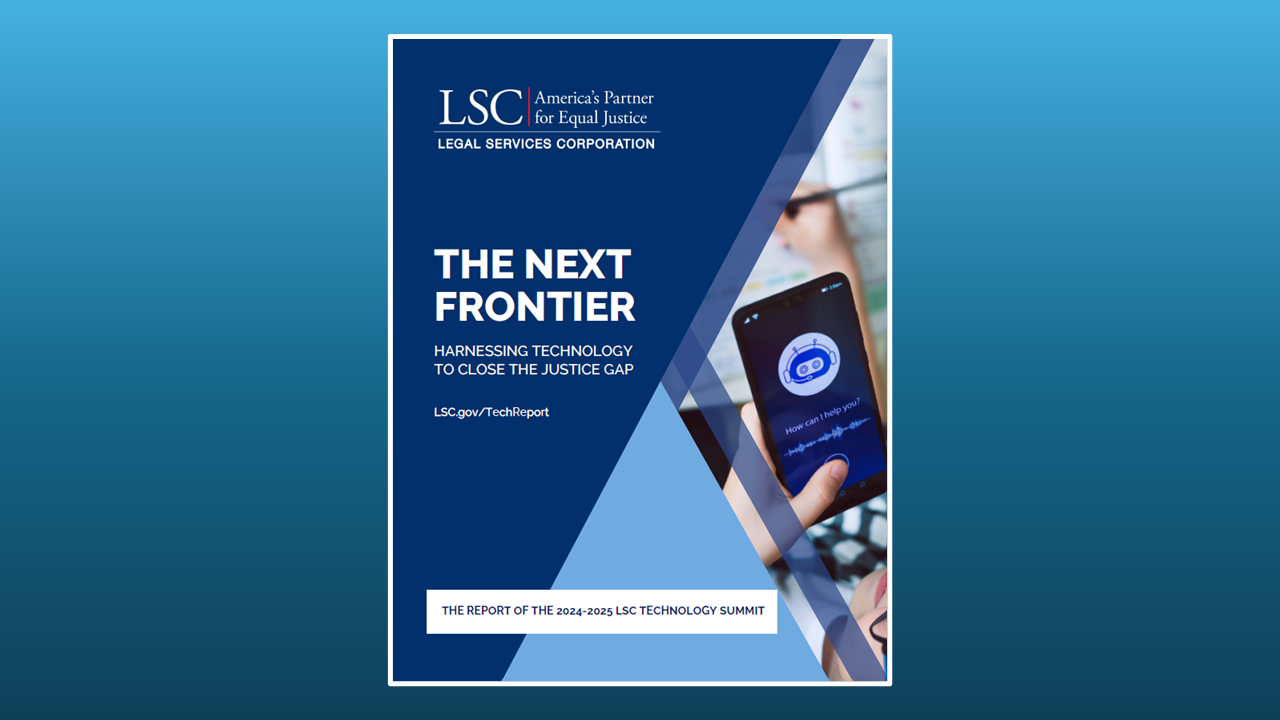
2 months agoOpinion: New York Wants to Protect You From AI Lawyers. It May Accidentally Rob You of One.
AI chatbots designed to provide accessible legal guidance face prohibition under proposed New York legislation that would criminalize unauthorized practice of law, despite addressing a critical justice gap affecting millions of unrepresented litigants.
Law
fromAbove the Law
2 months agoLegalweek 2026: The AI Bubble Literally Pops - Above the Law
Legal AI startups Harvey and Legora command massive valuations despite competition from major AI players like Anthropic and OpenAI, raising questions about sustainability and potential acquisition strategies.
Information security
fromAbove the Law
2 months agoLawyers And Cybersecurity: Talk To An Expert - Before It's Too Late - Above the Law
AI accelerates cybersecurity threats while business leaders remain complacent, creating critical vulnerabilities in law firms and organizations that struggle to respond to breaches occurring within 29 minutes.
Law
fromAbove the Law
2 months agoOpus 2 Steps Up Its AI Game With Acquisition Of A Legal Tech Startup - Above the Law
Opus 2 enhanced its litigation management software with AI capabilities from Uncover acquisition, offering both traditional detailed interface and new simplified AI-powered chatbot-like interface for document analysis and case preparation.
Venture
fromBusiness Insider
2 months agoInside the race to bring AI to the $1 trillion legal industry
Harvey and Legora, AI startups selling software to law firms, are competing intensely for market dominance, with Legora's $5.5 billion valuation and acquisition of Walter positioning it as a serious challenger to Harvey's lead.
fromAbove the Law
2 months agoThe New Way Litigators Handle Depositions Applies AI Every Step Of The Way - Above the Law
It's a deposition in a box. From the time that you agree on a date and time of the deposition to all the way past trial, these deposition tools take care of you. Filevine Depositions builds on the functionality of the Filevine platform, which means scheduling, transcripts, summaries and analysis happen in a space that's integrated with where the rest of the case data already sits.
Law
Artificial intelligence
fromenglish.elpais.com
3 months agoClaude, the ChatGPT rival shaking up AI and software: What it is and why it matters
Claude is a concise Anthropic AI chatbot trained for specific enterprise tasks, notably legal assistance, that caused major market reactions after a legal-capability update.


fromAbove the Law
3 months agoBaker McKenzie Blamed AI For Massive Layoff, But The Problem Is Much More Complicated - Above the Law
When Baker McKenzie announced plans to cut roughly 700 business services staff, the firm pegged some of the blame squarely on AI, feeding into the technology-fueled paranoia surrounding artificial intelligence. It certainly doesn't help that the AI hype cycle turns on tech gurus juicing up their VC sugar daddies with promises that AI will replace human workers any moment now,
Law
fromAbove the Law
3 months agoHow Cleary Gottlieb Created A Virtuous Cycle With Tech - Above the Law
A Virtuous Cycle If a legal tech solution has a high degree of adaptability, customers can start small and gradually secure buy-in and expansion. Initial wins create a virtuous cycle, where success leads to growth, and this growth leads to more success. A Cleary Gottlieb team that includes members of its Knowledge Management and Business Development groups has implemented such a cycle at that firm.
Law

Higher education
fromABA Journal
3 months agoOnline, part-time JD program launches at Arizona State University Sandra Day O'Connor College of Law
Arizona State University launched an online, part-time JD program to expand legal education access, support diverse students, and integrate AI and comprehensive student services.
Tech industry
fromBusiness Matters
4 months agoThe Role of Legal Tech in Enhancing Transparency for In-House Counsel and External Firms
Legal technology, especially contract management and document automation, increases operational efficiency and transparency, improving communication and trust between in-house counsel and external law firms.
Artificial intelligence
fromFuturism
4 months agoCourt System Says Hallucinating AI System Is Ready to Be Deployed After Dramatically Lowering Expectations
Alaska's probate chatbot hallucinated facts, gave incorrect legal guidance, and annoyed users with cloying sympathy instead of providing reliable help.
fromAbove the Law
4 months agoStop Calling It Legal Support: Karl Seelbach Says Deposition Tech Is Mission-Critical Infrastructure - Above the Law
Karl Seelbach wants to change that. As a personal injury defense litigator and the co-founder of Skribe.ai, he is pushing the legal industry to rethink deposition tech not as an optional upgrade but as foundational infrastructure. What he is building may be aimed at courtroom practice, but the implications reach far beyond litigation. For in-house teams who want to improve trust, clarity, and speed across their legal stack, this conversation is your wake-up call.
Law
fromwww.amny.com
4 months agoTrump, Bankman-Fried defense lawyer Marc Mukasey joins Seyfarth Shaw amNewYork
In a statement, Mukasey cited the advances in technology as a factor that drew him towards the nearly 1,000-person law firm known best for its employment law practice. If you want to win the biggest cases of the 2030s, said Mukasey in a statement. You need elite trial lawyers backed by sophisticated technology. Seyfarth blends boutique agility with a national platform. That combination of deep talent, scale, and innovation is what high-stakes litigation demands.
US politics
Law
fromBusiness Insider
4 months agoI left my dream job as a trial attorney and pivoted into AI at age 40. It showed me the power of leaving my comfort zone.
Aurora Bryant transitioned from a 15-year legal career, including DOJ trial work, to lead legal data intelligence at Relativity, leveraging AI to improve legal efficiency.


fromLawSites
5 months agoClio Reveals Leadership Roles for Former vLex Executives Following $1 Billion Acquisition
Lluis Faus will serve as strategic advisor and interim chief content officer. As the former CEO of vLex, which he and his brother founded in 2000, he brings decades of experience in legal research and content innovation to his new role overseeing Clio's content strategy. Ed Walters takes on the position of vice president, legal innovation and strategy. Walters was chief strategy officer at vLex and, before that, cofounder and CEO of Fastcase, which he founded in 1999.
Venture
Artificial intelligence
fromAbove the Law
5 months agoLike Lawyers In Pompeii: Is Legal Ignoring The Coming AI Infrastructure Crisis? (Part I) - Above the Law
AI infrastructure fragility, energy and hardware constraints, and verification burdens threaten legal overreliance and may stall promised efficiency gains.
fromAbove the Law
5 months agoAI-Driven Insights, All-In-One Functionality, Peerless Flexibility: Why More Legal Teams Are Choosing Legisway - Above the Law
Corporate legal departments are under immense pressure to deliver more value with fewer resources. The expectation to 'do more with less' is a constant challenge, with many teams reporting a 20%-30% increase in workload over the past year without a proportional increase in staffing. The daily workload is vast, spanning critical areas such as contract lifecycle management (CLM), entity oversight, litigation, and compliance.
Law
Law
fromLawSites
6 months agoHarbor Acquires Legal Tech Training Firm Encoretech in First Deal Since BayPine Investment
Harbor acquired Encoretech to strengthen training and user adoption capabilities, addressing outdated legal training and improving technology adoption across law firms and corporate legal departments.
Fundraising
fromLawSites
6 months agoClio Completes Historic $1 Billion vLex Acquisition, Announces $500 Million Series G at $5 Billion Valuation, Plus Exclusive Interview with CEO and CFO
Clio completed a $1 billion acquisition of vLex, closed $500 million Series G and $350 million debt, valuing the company at $5 billion to build a unified legal platform.
Artificial intelligence
fromAbove the Law
6 months agoThe Elephant In The Room For Legal AI Remains Elephantine Document Sets - Above the Law
AI context-window limits prevent handling terabytes of discovery, so legal tech uses batch-analysis workarounds (e.g., 10,000-document bulk review) to boost efficiency.
fromAbove the Law
6 months agoWhen The Robotic Gavel Falls: AI In Our Courts And The Lawyer's Imperative - Above the Law
The law has always been a deeply human affair: attorneys arguing, judges deliberating, juries weighing credibility, precedent, and plain old common sense. But now, something new has entered the courtroom - and it doesn't bill by the hour or even need a coffee break. Artificial intelligence (AI) has arrived, and it's quietly moving closer to the bench. AI is no longer just lurking in the background.
Law
[ Load more ]