Remote teams
fromMarTech
7 hours ago3 steps to guarantee multishoring success | MarTech
Multishoring amplifies existing processes; effective systems scale success, while fractured ones magnify chaos and incur additional costs.
"Today, more than 2,500 TEMSA motorcoaches are actively transporting passengers across North America, reflecting the brand's increasing market penetration and strong customer confidence."
This proof of concept in the manufacturing industry allows us to demonstrate how humanoid robots can act as extensions of an organization's operations by providing business context awareness and integration with existing workflows.
Operational Excellence practices alone don't guarantee success; implementation quality, organizational culture, leadership commitment, and strategic alignment determine competitive outcomes. Banks implementing identical operational improvement methodologies like Lean and Six Sigma achieve vastly different results due to factors beyond the practices themselves. Success depends on how thoroughly organizations embed these approaches into their culture, the quality of implementation execution, leadership commitment to continuous improvement, and alignment with overall business strategy.
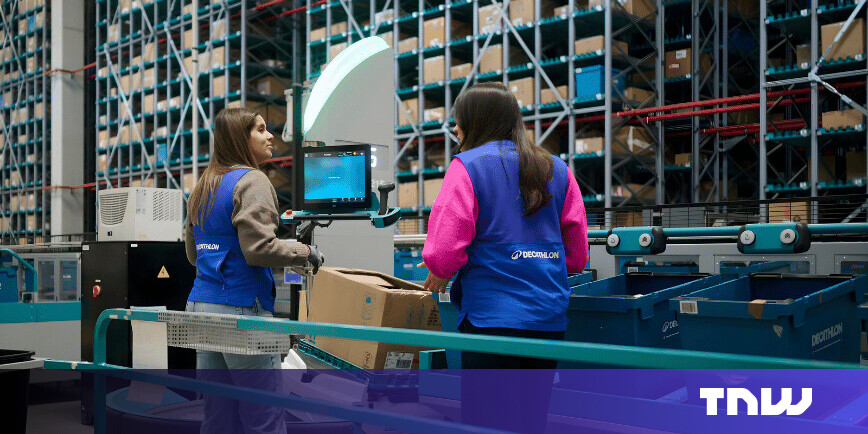
Decathlon's Portugal warehouse doubled its order preparation capacity from 57,000 to 114,000, showcasing the significant impact of Exotec's robotic systems on productivity.
In enterprise commerce, totals don't drift because someone forgot algebra. They drift because reality changes: promos expire, eligibility changes when an address arrives, catalog data updates, substitutions happen, and returns unwind prior discounts. When someone asks "why did the total change?" you need more than narration. You need evidence - a trail of facts you can replay and a pure computation that deterministically produces the same result.
Nine in ten retailers globally are planning to raise their spending on artificial intelligence (AI) to optimise their e-commerce operations over the next 12 to 24 months, with online delivery execution a key area of focus. A total of 38% of European retailers identify speed, tracking and proactive communication around the delivery process as areas where AI can deliver the greatest impact.
We are now in a time of manufacturing where precision is more than a technical necessity; it's a business requirement. The more complex, globally dispersed and demanding things get, the less slack remains in the system. Under these circumstances tolerance management has become a decisive competence and affects competitiveness not only in terms of controlling costs, ensuring quality and improving production efficiency but also for long term market success.
Whole Foods shelves sit empty after a data breach shut down its wholesale distributor. Meat packers working for JBS Foods are paralyzed as an $11 million ransomware attack takes out their processing facilities. Some 2.2 million workers at Stop & Shop and Hannaford have their personal data exposed as the result of a cyberattack on parent company Ahold Delhaize USA. These scenarios, straight from a William Gibson novel, are becoming increasingly common in supply chains across the world.
If you're a manufacturer with a $10M+ business and your website is "just there," you are losing money to competitors who treat their site like a 24/7 sales rep. If the phone isn't ringing and the inbox is empty of RFQs, it's usually because of these five specific friction points.
Most HubSpot themes are built for SaaS companies or marketing agencies. They look pretty, but they fall apart the moment you try to add a technical data table, a product catalog, or a complex RFQ form. If you run marketing for a manufacturing or engineering firm, you don't just need "white space" and "gradients." You need specification tables, downloadable CAD assets, and part number searchability.
Time and time again, we hear that modern B2B buyers have quickly adapted to online buying habits that emerged during the pandemic. You don't have to search far to find an article that references the increased number of touchpoints in a B2B sale . B uyers are self-directing their experiences throughout the customer journey and are confident they can engage with sales teams when they are ready.
End-of-line packaging often sits at the quiet end of a production line, yet it carries an outsized responsibility. This is the final checkpoint before products leave your facility, meet customers, and represent your brand in the real world. A single error here can undo hours of upstream efficiency and compromise overall product integrity. That's why building reliability into this stage is essential for both operational efficiency and customer satisfaction.
Statistics from the 2025 holiday shopping season clearly show that AI is playing a huge role in how people shop. But new research from retail payment platform Adyen found that many consumers are ready for AI to become their personal shopper. Just over half-51%-said they're open to letting AI take over the entire shopping process, including making final purchases. Millennials are the most willing to let agents do their shopping, with nearly three in five saying they are ready for such a shift.
Lead management in B2B has evolved into a systems challenge that spans teams, platforms and the entire revenue lifecycle. It is a complex engineering discipline that requires a holistic, lifecycle-driven approach rather than a simple marketing-to-sales handoff. In a recent strategy session, we examined what it takes to build a lead management engine today. We concluded that many organizations are still attempting to solve 2026 problems with a 2010 mindset.
The technology underpinning retail operations is under scrutiny in 2026 as fashion executives look to streamline systems with the aim to unlock efficiency, cut costs and meet consumer expectations for speed and personalisation in the shopping journey. At the retail event Lightspeed Edge on 12 January, Lightspeed - the unified point-of-sale (POS) and payments platform for SMEs such as Apricot Lane Boutique and Neal's Yard Remedies - convened industry leaders to explore the strategic imperative for integrated technology ecosystems over siloed systems.