According to Powell, the DOJ served the Federal Reserve with grand jury subpoenas and threatened a criminal indictment tied to his June 2025 testimony about a $2.5 billion plus renovation of Fed office buildings. Powell characterized the move as politically motivated, claiming it reflected pressure from the Trump administration to cut interest rates more sharply than the Fed's data‑dependent stance. President Donald Trump has publicly criticized Powell's performance and denied direct involvement in the DOJ action, though he has reiterated his dissatisfaction with the Fed's monetary policy. The widening dispute has rattled traditional markets, with U.S. stock futures sliding and safe‑haven assets like gold and silver surging to record levels.
He cited affordability concerns and criticized rates of 20% to 30% under the prior administration. This move represents yet another unprecedented government intrusion into the marketplace by his administration, potentially disrupting how banks price credit and manage risk. While aimed at easing consumer burdens, it raises questions about enforcement, as Trump provided no details on implementation - whether through executive action or congressional legislation. Banking groups quickly opposed it, warning of reduced credit availability.
The saying that stocks take the stairs up, and the elevator down, is definitely true. There were so many near-term downturns (which now look like extremely minor blips on the radar) which must have been downright frightening at the time. But over the long-term, even the most protracted declines didn't turn out to be much more than near-term volatility, with the stock market taking the stairs higher eventually and making a new all-time high.
Bridgewater Associates' flagship money pool posted record gains, while D.E. Shaw & Co.'s strategies soared as much as 28% to rank among the biggest hedge fund winners of 2025 when tariff-fueled market uncertainty presented a fertile hunting ground for traders. Bridgewater's Pure Alpha II macro fund returned 34% last year, its best ever, while the All Weather strategy rose 20%, a person with knowledge of the matter said, asking not to be identified discussing private information.
Undoubtedly, there's still a lot of nerves out there over the latest wave of volatility, which may very well be the start of a painful, drawn-out move lower. As to whether we're in an AI bubble, though, remains a mystery. It'll probably be the big question going into the new year. With a recent wave of relief powering hard-hit AI stocks higher in the last few sessions, it seems like AI fears might be in an even bigger bubble than the AI stocks themselves.
The markets are looking to clinch a winning week as they eye the final stretch of 2025. As things stand, all three of the major stock market averages are little changed while the CBOE volatility index is up approximately 4.7% on the day. With the exception of Nvidia ( Nasdaq: NVDA), which is tacking on almost 2% on a new deal development, Big Tech stocks are aimless. The Nasdaq Composite is looking at a 22.1% gain for the year.
"Barring any major shocks, it will be hard to fight the overwhelmingly positive seasonal period we are entering and the cleaner positioning set-up," Goldman Sachs Group Inc.'s trading desk team said in a client note, as reported by Bloomberg. "While we don't necessarily see a dramatic rally, we do think there is room to go up from here into year end."
At the core of any move back to ETFs as a major part of your portfolio is going to be looking for safety. In this market, timing when to get in and out is next to impossible, and with interest rate uncertainty and the potential of an "AI bubble." Instead of trying to hand-pick stocks in a market that is punishing earnings misses with brutal results, Vanguard ETFs solve this search by allowing you to essentially "own" the market rather than tying your fortunes up in the hands of a few simple companies.
Futures are trading higher on Monday as we head into the final trading weeks of 2025. All of the major indices were hit hard on Friday as investors began a big rotation last week out of the AI stocks that have led the market higher since ChatGPT was introduced over three years ago. The miss by Oracle Corporation ( NYSE: ORCL) seems like the final straw for many, as the Magnificent 7 have started to wobble in 2025,
A recent Allianz survey found that 64% of Americans worry more about running out of savings than actually dying. And it's easy to see why. Even if you apply a smart withdrawal strategy to your savings, there's no guarantee that your money will last as long as you need it to. You could end up living longer than expected, or the stock market could go through an extended rough patch that forces you to lock in portfolio losses.
Most people would probably be thrilled to reach the age of 50 with $3 million and a $1 million house. But this Reddit poster is having doubts about how well they're actually doing. And while that might seem surprising, the reality is that $3 million doesn't automatically guarantee financial freedom in today's economy, not when rising costs, longer lifespans, and shifting expectations can make even a large nest egg feel surprisingly fragile.
Opendoor Technologies ( NASDAQ: OPEN) went public via SPAC merger in December 2020 with a bold vision: use technology to eliminate friction from home buying and selling. The iBuyer model promised homeowners instant cash sales while buyers browsed algorithmically priced homes online. Investors initially loved it. The pandemic housing boom was rocket fuel. Low rates and remote work sent home prices soaring, and Opendoor's tech-forward approach seemed perfectly timed. But the model had a fatal flaw: buying massive inventory with borrowed money,
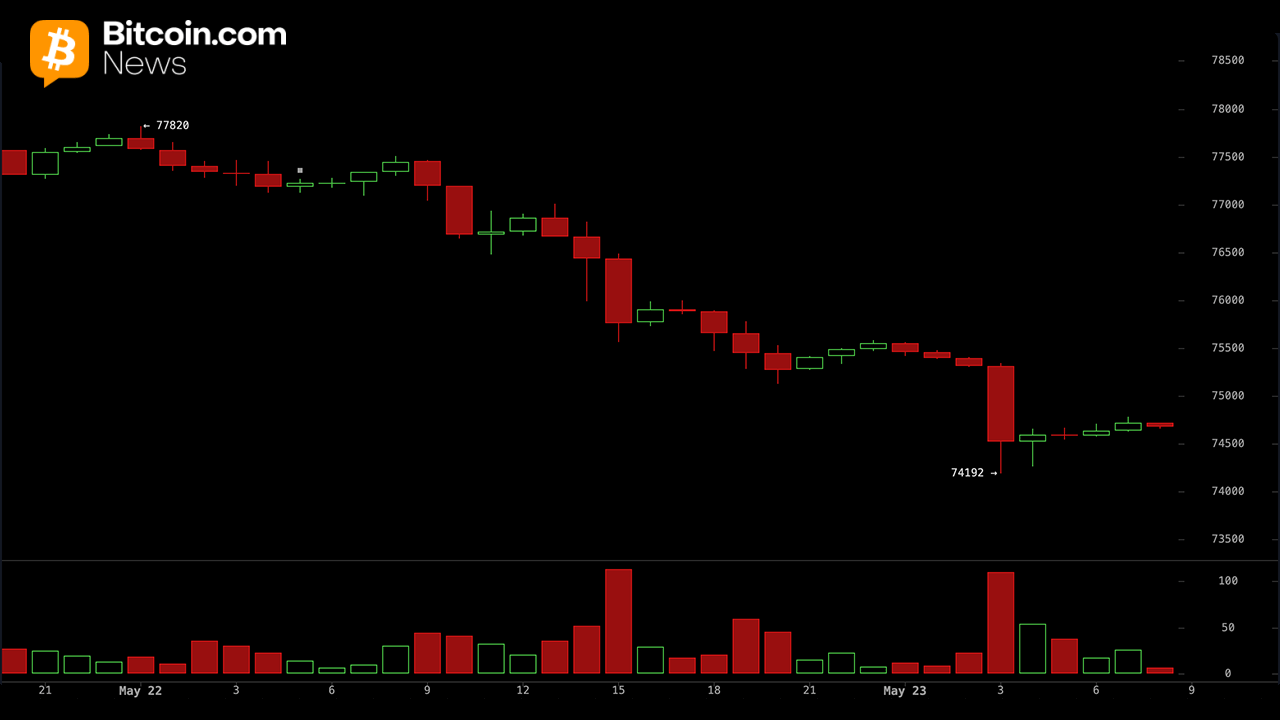
The company paid an average price of $90,615 per bitcoin during the Dec. 1-7 period, according to a regulatory filing and a statement from Executive Chairman Michael Saylor. The purchase lifts Strategy's total bitcoin holdings to 660,624 coins, accumulated for roughly $49.35 billion at an average cost of $74,696 per bitcoin. At current prices near $94,000, Strategy's bitcoin stash is valued at about $60.5 billion, leaving the firm with an estimated $11 billion in unrealized gains.
Ark Invest's Cathie Wood, who's a big investor in disruptive innovators, has been reducing her stake in AI data analytics firm Palantir ( NASDAQ:PLTR) in recent weeks. And a bit of profit-taking at quite a volatile and anxious time certainly does seem wise, especially as Dr. Michael Burry looks to keep those subscribed to his newsletter informed on his views of big tech and his bearish put positions.
If November's fickle rates are a sign of what's to come, mortgage rates will likely rise in December. Analysts went into this month with a growing sense that the Federal Reserve would vote to lower the federal funds rate at its Dec. 9-10 meeting. However, any cuts to mortgage rates related to this month's meeting will be relegated to the first week or so of December.
The stock market continues to send investors mixed messages, blending signs of resilience with hints of fragility. Economic data shows robust corporate earnings, yet labor market weakness, inflation and interest rate worries, and geopolitical tensions have sparked bouts of selling. Investors face a dilemma: commit fresh capital to equities amid record highs, or shift toward bonds and cash for protection? Just a week ago, the S&P 500 appeared poised for a 10% correction, with breadth narrowing and volatility spiking.
After yesterday's debacle in which approximately $1 trillion in market capitalization was erased from the stock market, some technology stocks are still hunting a bottom. With the Nasdaq Composite now down 3% for the month of November so far, the AI rally has lost its steam for the time being as the markets wrestle with bullish fundamentals overshadowed by negative headlines. While the selling hasn't been pretty for the bulls, it does not appear to be over, at least not yet.
The VIX, for those unfamiliar, measures expected 30-day volatility in S&P 500 options, essentially tracking how much investors will pay to protect against market swings. Readings above 20 signal heightened anxiety; readings above 40 often mark crisis points. On April 8, the VIX peaked at 52.33 after Trump's tariff announcement sent global markets into freefall. Thursday's spike stemmed from different concerns.