I guess, the worst case would be we do this and somebody takes over who's as bad as the previous person-right? That could happen. Of course, it is always a risk of war that it spawns a world more treacherous than before-and if war is forced upon us, if we have to wage it in self-defense or some other urgent interest, that might be a risk worth taking. But this war is a war of choice.
Polymarket courageously defended its choice to let its users bet on the bombings in an editorial note on the platform, stating that the "ability" to wager on events such as these "is particularly invaluable in gut-wrenching times."
Part of the reason may lie in the fact that geopolitical risks had already been significantly priced in earlier. Prior to the correction, gold had risen for four consecutive weeks, pushing prices close to $5,420/oz and creating conditions for investment funds as well as retail traders to take profits, thereby triggering a sharp short-term pullback.
In contrast, the medium-term growth outlook has seen a slight improvement, with forecasts for 2027 and 2028 both increased to 1.6%. This positive adjustment suggests a potential stabilisation in economic performance over the next few years, albeit still below historic averages.
The question worth asking is whether Lockheed's stock is riding a geopolitical wave or whether the underlying business has actually earned this move. The answer, based on Q4 2025 results and the company's production trajectory, leans toward the latter.
The stock market hates inflation. There are not many stocks that are little affected today, if any. However, safe-haven stocks may even rise due to demand. At the top of this list is Altria (NYSE: MO), the cigarette and tobacco king. People who smoke do not stop smoking, even during periods of conflict.
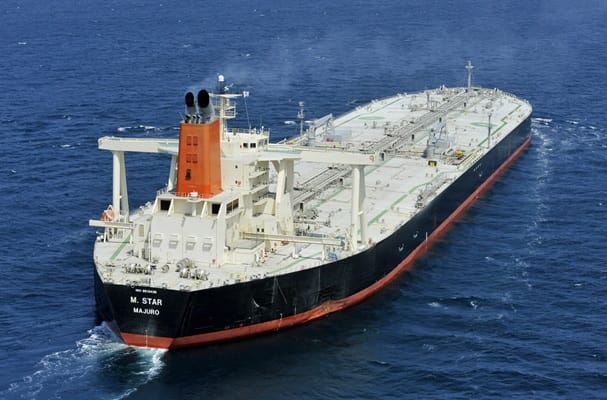
The Strait of Hormuz: The narrow waterway next to Iran is a choke point that handles a whopping one-fourth of the world's maritime oil trade and a fifth of liquefied natural gas shipments. Iran has previously threatened to close the strait. Still, "supply disruption to global markets would be limited even in the event that Iran retaliates against tanker traffic, given the expected US-led efforts to maintain supply through the Strait of Hormuz," Eurasia Group analysts wrote.
We're on a rollercoaster of AI disruption with geopolitical risks adding to the uneasy ride. Sell-offs have rocked markets as artificial intelligence tools and services threaten to disrupt sectors. High geopolitical tensions have also been the theme so far this year, with the ongoing US military build‑up in the Middle East, while the assault on Venezuela and January's stand‑off over Greenland are still front of mind.
Corey duBrowa spent much of his career advising some of the world's most scrutinized leaders-from Marc Benioff at Salesforce to Sundar Pichai at Google. Now, as CEO of global communications firm Burson, he's helping executives navigate a charged marketplace shaped by AI disruption, ICE activity, and nonstop reputational risk. He explains why reputation remains one of the most powerful (and most misunderstood) assets in business, and how leaders should decide whether, when, and how to speak up.
The meeting, held from 19 to 23 January under the theme "A Spirit of Dialogue," took place at a time when the global situation still feels uncomfortable. Inflation has eased in some places, but not enough to make central banks relaxed. Growth is holding in parts of the world and slowing in others. Debt remains high, and trade has become more political.
Taiwan Semiconductor Manufacturing Company (NYSE:TSM) is expanding production of advanced AI semiconductors to Japan, marking a significant geographic diversification for the world's leading chipmaker. The move addresses surging demand for cutting-edge chips while reducing geopolitical risk tied to Taiwan-based manufacturing. The expansion comes as TSMC reported Q4 2025 revenue of $33.73 billion, up 20.5% year-over-year, with net income climbing 35% to $15.2 billion.
The Tesla CEO argued that too many companies are underestimating their exposure to geopolitical risks posed by fragile supply chains, particularly for critical materials used in electric vehicles and energy storage. "There are so many companies out there that are asleep at the switch with regard to geopolitical risk - or they just have their head in the sand and hope nothing bad will happen," Musk said. "I'm way more paranoid than that."
Sterling has surged to $1.38 against the US dollar, its strongest level since October 2021, as a combination of US economic disruption, shifting interest rate expectations and geopolitical uncertainty weakens the greenback. Currency analysts said the move has been driven more by dollar softness than by a sudden strengthening of the pound, creating what some describe as a rare buying opportunity for consumers and businesses needing US currency.
It pushed the US dollar index to a four-year low and continues to drive gold and silver to fresh record highs this morning. Trade and geopolitical uncertainty, tied to an increasingly unreliable American friend and ally, as well as growing concerns about what will happen to the Federal Reserve's credibility once Jerome Powell leaves office (it will fly out of the window), continue to weigh on the US dollar.