Parenting
fromThe Atlantic
8 hours agoThe Thrill of Childhood Rituals
Children create their own folklore through games and traditions, which are shared across time and space.
Bregman claims, 'Today the whole of Europe risks turning into one big Venice, a beautiful open-air museum. A great destination for Chinese and American tourists. A place to admire what was once the centre of the world.' This statement encapsulates the concern that Europe is losing its cultural significance.
Fifty years later, there are still unburied dead and nameless graves. There are still people who, unknowingly, live with someone else's identity. There are still unsolved crimes and unpunished criminals.
The contemporary technology museum has emerged as a performative participant in the systems it seeks to document. The architecture of these institutions has become increasingly fluid and bold, often mirroring the velocity and complexity of the systems it houses. They operate as mediators between the human, the ecological, and the technological realms, transforming from encyclopedic warehouses into active educational engines.
We photograph people obsessively, but we rarely capture the everyday spaces where life actually happens. And when those spaces disappear, something profound goes with them. The furniture was never just furniture—it was the stage where decades of family life played out. Every scratch, stain, and worn patch told a story.
The Stasi, the secret police, were legendary for their data files. Their work was based on instilling fear, and they induced stunningly amazing numbers of East Germans into informing on their neighbors. Something along the lines of 1 in 6 East Germans were informants, whether out of fear or out of approval of what the East German government was doing.
The Stasi, the secret police, were legendary for their data files. Their work was based on instilling fear, and they induced stunningly amazing numbers of East Germans into informing on their neighbors. Something along the lines of 1 in 6 East Germans were informants, whether out of fear or out of approval of what the East German government was doing.
In 2011, the Colombian government ordered the creation of a national museum "to achieve the strengthening of the collective memory" around the decades-long armed conflict. That same year, it passed the Victims and Land Restitution Law aimed at providing victims with reparations and justice. More than just a curated collection of objects or artworks, the museum, scheduled to be inaugurated in 2018, was conceived as an archive of the violent civil war.
Hyperphantasia is a cognitive trait characterised by an abundance of vivid mental imagery. In an area of developing science (the term was only coined a decade ago), those who identify with this experience have an imagination of lifelike quality and can create detailed images and scenarios in their minds. It can also extend to multiple senses.
I noticed this shift in my own life when I started having dinner with my partner most nights, phones deliberately tucked away in another room. We made this change after too many evenings disappeared into "just checking one thing" that turned into hours of parallel scrolling. The difference was immediate and profound. Conversations went deeper. We actually looked at each other. Time seemed to stretch in the best possible way.
Part of the answer lies in the visceral nature of the game. Unlike chess, football is physical to the point of absurdity. Grown adults in body armor crash into each other over what is essentially a leather egg. There's drama in every play. You don't need a PhD in physics to appreciate a one-handed catch while somersaulting over a defender like a caffeinated acrobat.
I was thinking about this the other day while scrolling through my phone on a Saturday morning, realizing I'd been working for two hours without even noticing. Growing up, my weekends looked nothing like this. There were unspoken rules, traditions that just happened without anyone scheduling them into a calendar app. These weren't grand gestures or expensive activities. They were simple rituals that, looking back now, built something most of us are desperately trying to recreate through therapy apps and self-help books: genuine connection.
Two men reportedly fired shots at an elite police unit during a car chase in southern Germany Tuesday evening, causing a road accident in which five people were lightly injured. Officers from the Spezialeinsatzkommando (special deployment unit, or SEK) had attempted to arrest three men, aged 23, 24 and 30, in the small town of Absberg near the city of Nuremberg on suspicion of illegal possession of weapons.
When unmarked, masked federal agents grabbed an international student and forced her into an SUV on a public street in the spring of 2025, the United States entered into a new era of federal policing. At first, it was alarming - a move more commonly associated with authoritarian dictatorships than a democratically elected government with checks and balances. Now that this tactic, and others like it, have become routine, it is no longer enough to react in alarm.
"The object of the Museum is to acquire power," announces a crusty old archaeologist in Penelope Fitzgerald's 1977 satire, The Golden Child. It isn't a goal he respects. He wants the museum where he's settled into semiretirement to genuinely devote itself to educating its visitors. Instead, he correctly charges, its curators act like a pack of Gollums, hoarding "the art and treasures of the earth" for their own self-aggrandizement and pleasure.
'They're dead.' In disbelief, my response was unfiltered. 'What?' Followed by the F word. A wave of emotion rushed through me. My chest tightened. My body went cold. I could not immediately find the words to offer condolences, not because I did not feel them deeply, but because inside, my many parts were experiencing a collective shock. When you live with dissociative identity disorder (DID), news like this does not land in one place. It ricochets across all parts within.
Two men reportedly fired shots at an elite police unit during a car chase in southern Germany Tuesday evening, causing a road accident in which five people were lightly injured. Officers from the Spezialeinsatzkommando (special deployment unit, or SEK) had attempted to arrest three men, aged 23, 24 and 30, in the small town of Absberg near the city of Nuremberg on suspicion of illegal possession of weapons.
The traditional museum experience, pausing in front of an object, and absorbing its history visually or by reading its description, has long shaped how collectors and others relate to cultural treasures. Yet, over the last few decades, digital technology has quietly rewritten many of those rules, changing not only how collections are exhibited but also how they are documented, preserved, and even inherited.
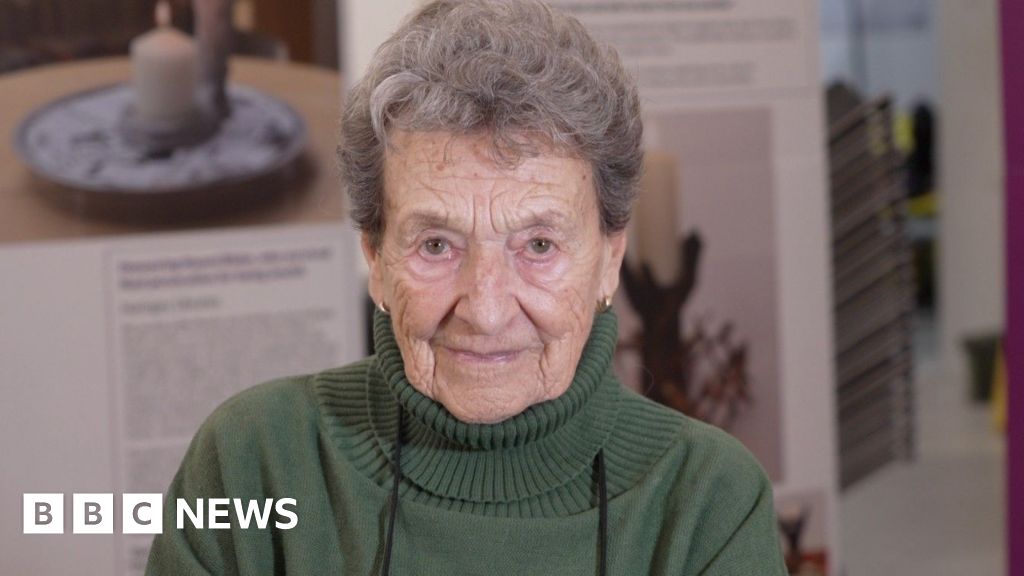
Survivors of Auschwitz, the Nazi concentration camp, laid flowers and candles at the memorial site on Tuesday, as commemorations marking its liberation 81 years ago took place around Europe and beyond. Marking International Holocaust Memorial Day, Jewish leaders across the continent warned against forgetting the extermination of millions, while some of the few remaining survivors urged ordinary people to stand up against populism and extremism.
I remember the moment this photo was taken: five years ago, on my partner Claire's birthday, in a National Trust for Scotland garden six miles east of Edinburgh. We were standing on a wooden deck, an ideal spot for pond-dipping with the kids and a lesser-known viewing platform for trainspotters. This is where my autistic son, then six, loved (and still loves) to jump in tandem with the ScotRail trains toggling back and forth in the middle distance.
Did someone with spatial-sequence synaesthesia design the calendar app on mobile phones? Because that's how time and dates look in my brain. If you say a date to me, that day appears in a grid diagram in my head, and it shows if that box is already imprinted with a holiday, event or someone's birthday. Public holidays and special events like Christmas and Easter are already imprinted for the year, and the diagram goes backwards to about 100,000BC
I had always associated scrapbooking with grandmas and bored children, so, imagine my surprise when as a twentysomething with a Big Girl Job I found myself enamoured of printing, cutting, and sticking random bits and bobs into a book. If, like me, you've racked up a disconcerting amount of screen time, you may have stumbled across a multitude of craft-inspired social media posts made primarily by young women. Described as junk journalling, the hobby is distinguishable by an affinity with collecting and storing physical mementoes, such as tickets, receipts, packaging and Polaroids.