#non-native-english-researchers
#non-native-english-researchers
[ follow ]
#higher-education #language-learning #ai #philosophy #education #research-funding #language #research-integrity
#ai



Higher education
fromEntrepreneur
5 days agoAnthropic Cofounder Majored in English Lit in College. Here's Why He Says His Degree 'Turned Out to Be Extremely Relevant.'
Jack Clark emphasizes the value of liberal arts education for AI, highlighting the importance of analytical thinking and interdisciplinary synthesis.
Intellectual property law
fromInside Higher Ed | Higher Education News, Events and Jobs
4 days agoLawmakers Question Publish-or-Perish Culture of Research
Federal lawmakers are addressing research fraud and integrity issues in scientific publishing, highlighting the flawed incentive structures in the industry.
London politics
fromwww.theguardian.com
1 week agoSix great reads: the man who let snakes bite him, masked heavy metal and the brutal reality for foreign students in the UK
Tim Friede's self-experimentation with snake bites aims to create a universal antivenom amid increasing human-snake interactions due to climate change.
Artificial intelligence
fromwww.theguardian.com
6 days agoAI learns language from skewed sources. That could change how we humans speak and think | Bruce Schneier
Large language models limit human language representation, risking changes in communication and thought patterns due to increased AI-generated text exposure.
fromNature
3 weeks agoNow is the time for scientific societies to guide global research
Modern scientific societies are increasingly vulnerable due to their dependence on membership fees and journal subscriptions, which are being challenged by the rise of virtual networking and open-access publishing.
Science
European startups
fromenglish.elpais.com
4 weeks agoWelcome, American scientists: Europe, a haven for researchers struggling under Trump
Safe Place for Science initiative successfully attracted U.S. researchers to Europe amid restrictive policies, receiving over 900 applications shortly after its launch.
fromwww.scientificamerican.com
1 month agoCan you solve these language puzzles? Test your skills with these problems from North America's biggest linguistics competition
Computational linguistics is a two-way street: You're either using a computer to do things with human language or communicate or translate or teach a foreign language, or you're using computational techniques to learn something about human languages. Her work documenting and preserving endangered languages uses a little bit of both.
Education
Higher education
fromLondon Business News | Londonlovesbusiness.com
1 month agoWhy having a UK degree still isn't getting international graduates hired? - London Business News | Londonlovesbusiness.com
A UK degree is no longer sufficient for international graduates to secure employment, highlighting a gap in employability compared to domestic graduates.
Philosophy
fromWarpweftandway
1 month agoTwo Collaborative Learning () Events This Week
The 四海为学 Collaborative Learning Project hosts two free public events: Louise Edwards discussing childhood and gender in China on March 19, and Peter Hershock exploring AI and agency from a Buddhist perspective on March 20.
Higher education
fromInside Higher Ed | Higher Education News, Events and Jobs
1 month agoNew Company Helps Community College Students Study Abroad
Transfer Abroad Network creates pathways for U.S. community college students to transfer to international universities, addressing a decades-long infrastructure gap that previously required starting as first-year students.
fromTravel + Leisure
1 month agoThis Is the Friendliest Language in the World, According to a New Study-and No, It's Not English
When respondents were asked which languages feel the most welcoming, Portuguese emerged on top, selected by 34 percent of participants. Spanish came in a close second with 33 percent of respondents calling it the friendliest, followed by Italian in third. Together, these languages form a clear cluster associated with warmth and approach.
Psychology

fromFuturism
1 month agoGrammarly Offering Manuscript Reviews by AI Versions of Recently Deceased Professors
Grammarly is now offering 'expert review' of your work by living and dead academics. Without anyone's explicit permission it's creating little LLMs based on their scraped work and using their names and reputation.
Roam Research
fromInside Higher Ed | Higher Education News, Events and Jobs
1 month agoHow Libraries Shape AI Literacy on Campus
Librarians have been actively collaborating and talking about it almost every day, whether it's creating tutorials and digital learning objectives or thinking about the conversations to have with instructors. It can feel like cognitive dissonance to be actively working with AI on a regular basis and also saying we're constantly thinking about the harms and the biases.
Higher education
Science
fromNature
2 months agoSynthesizing scientific literature with retrieval-augmented language models - Nature
OpenScholar is an open, retrieval-augmented system integrating a 45 million-paper datastore, trained retrievers, and iterative self-feedback to generate cited, up-to-date scientific literature syntheses.
Education
fromPsychology Today
1 month agoFluent at Home, Silent at Work: Growing Up Bilingual
Heritage speakers lack formal language instruction in their native language, creating gaps in professional and academic domains that they internalize as personal failure rather than systemic educational gaps.
Science
fromenglish.elpais.com
1 month agoThe growing number of US scientists moving to Spain: My colleagues are having a very hard time'
Atrae attracted over 254 applicants with 33.5% U.S.-based applicants, and 21 of 37 selected scientists are based at U.S. institutions; grants average one million euros each.
Education
fromeLearning Industry
1 month agoInternational Mother Language Day 2026: The Importance Of Multilingual Competence In Shaping A Competitive Future
Multilingual education strengthens cognitive agility, preserves mother tongues, and offers cultural and economic advantages that increase youth competitiveness in education and the workforce.
Philosophy
fromWarpweftandway
2 months agoCall for Papers - Special Issue: "Science, Technology, and East Asian Philosophy"
Special issue solicits papers examining how East Asian philosophical traditions illuminate, challenge, or reframe understandings of science and technology in historical and contemporary contexts.
Education
fromSilicon Canals
2 months ago7 words highly intelligent people use in conversation that average people mispronounce - Silicon Canals
Correct pronunciation of commonly mispronounced words often reflects extensive reading, attention to language, and habitual auditory correction rather than showing off.
Philosophy
fromApaonline
1 month agoThe Humanities Challenge: Expanding the Circle of Philosophy
Philosophy offers transformative insights and vision into human life, and public humanities must evolve beyond traditional academic formats to make philosophy accessible to broader audiences through innovative, engaging methods.
fromwww.theguardian.com
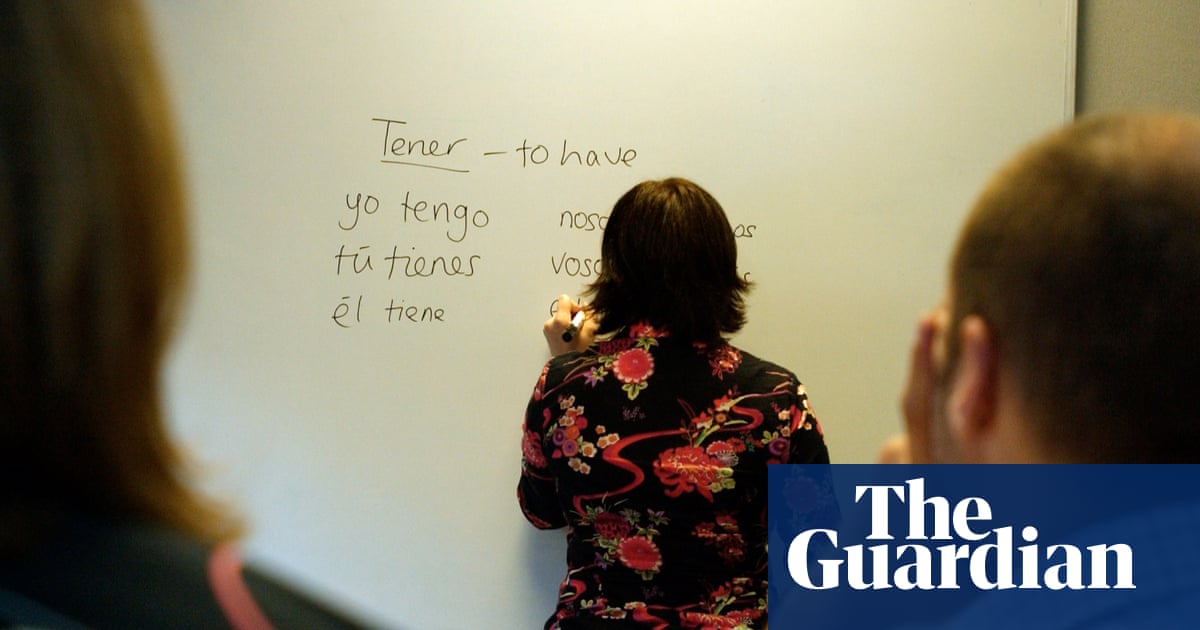
2 months agoSpanish is clearly now the world's coolest language. So why do we push British children to learn French? | Gary Nunn
Now, Gary, repeat after me: Quiero una margarita, por favor, my Spanish tutor instructs. I cringe at the butchered Spanglish my estuary accent produces. Like Del Boy Trotter ordering a cocktail: Key yeah row oon margari'a, pour far four. It's 2023, I'm 41, living in Argentina and battling the frustration and disempowerment of learning a new language at this age, longing for my elastic 11-year-old brain over this husked-out mush.
Education
fromNature
1 month agoPop-up journals for policy research: can temporary titles deliver answers?
I'm less interested in topics than in questions, and I'm less interested in publishing than I am in curation. When I've testified before Congress or dealt with an appropriations bill or a budget negotiation, this question, of what is the return on investments when you're doing R&D, comes up quite often. It's been asked by economists in very formal ways since at least the 1950s, but the data and the methods that were available were really not very strong.
Science
fromInside Higher Ed | Higher Education News, Events and Jobs
2 months agoStrategies for Supporting International Scholars (opinion)
While everyone is subject to their individual situations, for many, the process begins with an F-1 student visa, which they hold as they complete a Ph.D. over five to six years. After graduation, they may choose to transition to Optional Practical Training (OPT), which provides a year of work authorization, with a two-year extension for STEM graduates. Some may then transition to a H-1B temporary work visa, which provides for three years of work authorization and is renewable for another three years.
Higher education
Higher education
fromInside Higher Ed | Higher Education News, Events and Jobs
1 month agoExtraordinary Scholar to Lead Largest Education Research Assn.
Sylvia Hurtado, a distinguished higher education researcher, was elected the 112th president of the American Educational Research Association, becoming the second Latina and third higher education scholar in this leadership role.
Higher education
fromInside Higher Ed | Higher Education News, Events and Jobs
1 month agoJoint Review Boosts Faculty Diversity, Study Finds
Joint review of multiple faculty members for tenure and promotion increases promotion chances for Black and Hispanic professors by 16.2 percent compared to separate individual reviews.
Higher education
fromInside Higher Ed | Higher Education News, Events and Jobs
2 months agoHelping faculty build channels to audiences that matter
Higher-education communicators should enable faculty to publish directly via platforms like Substack and LinkedIn newsletters to expand reach, engagement, and institutional narratives.
Higher education
fromwww.mercurynews.com
2 months agoOpinion: Sociology is taking it on the chin. Here's how we can preserve this critical field of study.
Sociology faces politicized attacks, curricular exclusion, and erosion of departmental standing despite teaching critical thinking, inequality analysis, interdisciplinary synthesis, and scrutiny of power.
fromInsideHook
1 month agoAre the Humanities Poised for an Academic Comeback?
Many colleges and universities have made cuts in these programs, often bolstering STEM programs at their expense. It's a situation that has sparked no small amount of impassioned editorials. The headline of a recent article at The Guardian by Alice Speri referenced an 'existential crisis at U.S. universities,' and Speri's reporting features numerous examples of undergraduate and graduate programs facing cuts or outright elimination.
Higher education
Higher education
fromInside Higher Ed | Higher Education News, Events and Jobs
1 month agoWriting Accountability Groups Bring Many Benefits (opinion)
Writing accountability groups are low-cost, high-impact interventions that address structural barriers to faculty scholarly writing through protected time, peer accountability, and mentorship.
Higher education
fromInside Higher Ed | Higher Education News, Events and Jobs
2 months ago6 Takeaways From International Branch Campus Boom (opinion)
International branch campuses offer a complex alternative for U.S. universities seeking students and funding, with varied quality, political risks, and uncertain long-term prospects.
[ Load more ]