#pangram-labs
#pangram-labs
[ follow ]
#design #ai #typography #user-experience #claude-design #product-design #figma #prototyping #canva #technology


#ai
Artificial intelligence
fromMedium
3 days agoTest smart: how to approach AI and stay sane?
AI tools can enhance productivity but may compromise quality if not used critically.
Artificial intelligence
fromTechCrunch
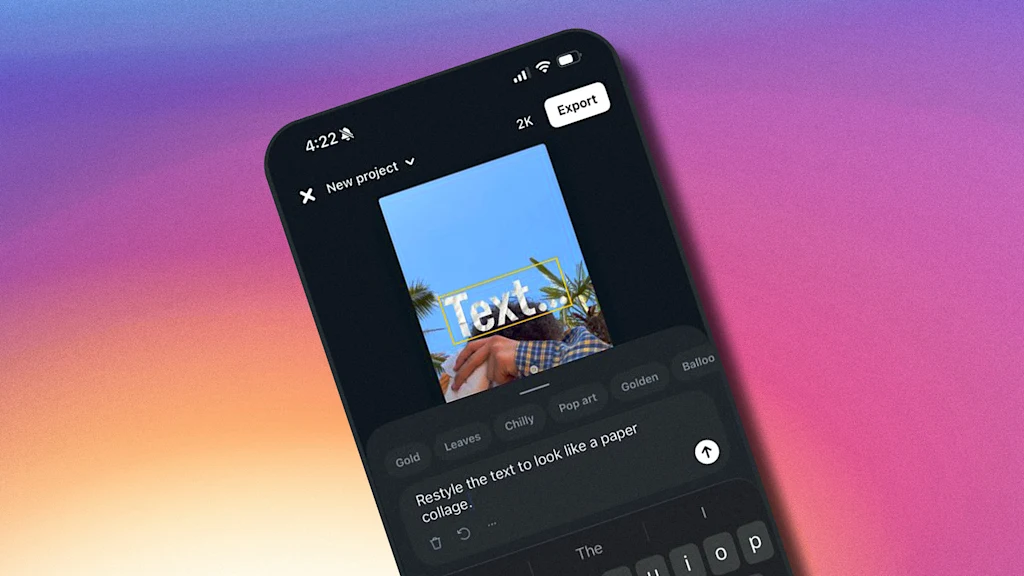
6 days agoCanva's AI assistant can now call various tools to make designs for you | TechCrunch
Canva's AI assistant enhances design workflows by allowing users to create editable designs through text prompts and automated task planning.

#typeface-design
Typography
fromI Love Typography Ltd
1 month agoSteven Heller's Font of the Month: Curve Display - I Love Typography Ltd
Curve Display is a Didone-inspired display font that balances classical elegance with experimental, abstract letterforms, making it distinctive yet accessible for contemporary graphic design.
UX design
fromLondon Business News | Londonlovesbusiness.com
6 days agoPhenomenon Studio: AI-Driven UI/UX Innovations Defining the 2026 Design Evolution - London Business News | Londonlovesbusiness.com
AI is now essential in UI/UX design, enabling anticipatory interfaces that enhance user experience and drive business success.
Typography
fromItsnicethat
1 month agoEleanor Yang merges the synthetic and organic to make typography you can touch
Synthetic Nature presents three typefaces—DNA, Mesh, and Data—that metaphorically represent life through biological, network, and computational structures, exploring how biology, computation, and culture merge.
fromSubstack
2 months ago20 Design Reference Platforms Beyond Dribbble
Static images don't show motion. You can't inspect real product structure. You don't see how interfaces evolve over time. You rarely understand what actually works in production. So I decided to go deep. I reviewed every major design reference platform I could find - not just the popular ones - and analyzed how they actually help in real-world work. The conclusion?
Mobile UX
Design
fromItsnicethat
1 month agoVisual communication that challenges convention: Phantasia on how graphic design can forge true collaboration
Phantasia, a Barcelona-based design studio founded in 2021, prioritizes meaningful projects that serve communities through intentional collaboration, diversity, and accessible communication.

fromI Love Typography Ltd
5 months agoILT Blog Redesign - I Love Typography Ltd
The main problem with the existing homepage was that, besides the most recent posts, other content, once it aged and 'fell off' the front page, was then difficult to discover. The new design makes more use of available screen 'real estate', is visually much richer, and reorganizes 18 years of posts, so that even older long-forgotten posts are more easily found.
fromI Love Typography Ltd
2 months agoSteven Heller's Font of the Month: Cattivo - I Love Typography Ltd
Infused with history, the slab cannot help but suggest the old West's frontier clichés, for such ephemera as classic wanted posters, political broadsides, cautionary warning signs, and more generic commercial applications. Cattivo is a brand-new 18-font family that, when used in any weight and size, cuts through nostalgic predictability and provides a welcome alternative to such popular Egyptian-style slab serifs as Stymie and Memphis.
Typography
fromblog.logrocket.com
2 months agoLinear design vs. minimalism, brutalism, and neumorphism - LogRocket Blog
Linear-style UIs look simple, but the theming system has to do real work. Here's how to meet WCAG 2.2 contrast requirements across light, dark, and high-contrast modes whether you're using a UI library or rolling your own tokens.
UX design
fromMedium
2 months agoThe Design Vibeshift
Something's been slowly shifting in the design zeitgeist. I've been watching my feed on X and the vibe has changed. More and more, I see designers sharing finished experiments or prototypes they coded themselves, rather than static Figma files. Moving from working on a canvas to talking to an LLM. The conversation isn't "here's a design I made" anymore... it's "here's something I shipped this afternoon."
UX design
[ Load more ]