#political-counterprogramming
#political-counterprogramming
[ follow ]
#social-media #trump #donald-trump #political-strategy #misinformation #political-advertising #authoritarianism

#political-advertising
US politics
fromLexington Herald Leader
17 hours agoAre paid influencers boosting KY political campaigns? They don't have to say
Social media influencers promoting political candidates are not legally required to disclose paid endorsements, creating a significant loophole in political advertising regulations.
Social media marketing
fromPhys
1 month agoDo political social media ads influence the outcome of elections?
Political ads on Facebook and Instagram during the 2020 U.S. election primarily targeted existing supporters rather than persuading new voters, with minimal measurable impact on electoral outcomes.
fromPsychology Today
4 hours agoThe Effects of Media Depictions or Mediaspeak on War
A whole vocabulary of mediaspeak terms applied to real life has gradually emerged. Included here, among others, are: collateral damage, neutralized, canceled, surgical strike, playbook, rules of the game, high-value target, and gamechanger.
World politics

fromInside Higher Ed | Higher Education News, Events and Jobs
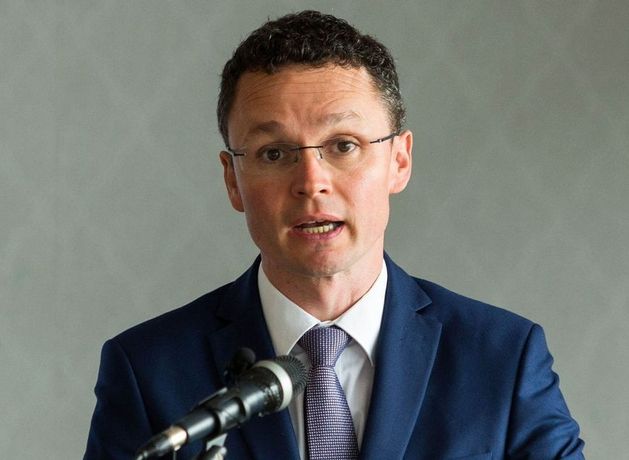
15 hours agoProgressive Media Org Launches Turning Point USA Competitor
Faiz Shakir, executive director of More Perfect Union, stated, 'We're hoping that an economic populist movement for the next generation will start through More Perfect Union on campuses.' This reflects the organization's goal to mobilize students around economic issues.
Right-wing politics
fromElectronic Frontier Foundation
2 days agoDigital Hopes, Real Power: The Rise of Network Shutdowns
In 2024 alone, authorities imposed 304 internet shutdowns across 54 countries - the highest number ever recorded. This reflects a growing trend of governments treating connectivity as a weapon.
World politics


Media industry
fromNonprofit Quarterly | Civic News. Empowering Nonprofits. Advancing Justice.
2 weeks agoPolitics in an Attention Economy | Nonprofit Quarterly | Civic News. Empowering Nonprofits. Advancing Justice.
Candidates must be cultural figures to succeed in today's American politics, navigating an attention economy shaped by algorithms.


UK politics
fromwww.theguardian.com
1 month agoWhy Populists Are Winning and How to Beat Them by Liam Byrne review a surprisingly original prescription
Liam Byrne's book attempts to address rightwing populism by advocating centrist deference to populist voters, but this approach lacks persuasiveness given populist voters are often motivated by factual myths rather than legitimate grievances.
Left-wing politics
fromWIRED
1 month agoThis Is the Next Wave of Political Fundraising
Content creators are increasingly leveraging their platforms for direct political fundraising, raising tens of thousands of dollars in single streams and establishing organized coalitions to convert followers into donors for campaigns and causes.
fromThe New Yorker
2 months agoWhat MAGA Can Teach Democrats About Organizing-and Infighting
Dare, or the Drug Abuse Resistance Education program, was created in 1983 by the Los Angeles Police Department and the Los Angeles County school district. From the start, the program was a success. Its stated goal was "to equip elementary-school children with skills for resisting peer pressure to experiment with tobacco, drugs and alcohol." The initiative was embraced by police departments and politicians, and within just a few years the Dare curriculum had spread to more than three-quarters of the country's school districts.
Non-profit organizations
fromThe Atlantic
2 months agoHow to Be a Citizen in the Information War (And Stay Sane)
Charlie Warzel opens with what it means to live in 2026, when our phones can drop us into graphic, real-time violence without warning-and when documenting that violence can be both traumatizing and politically consequential. Using recent footage out of Minneapolis as a lens, he explores the uneasy collision of algorithmic feeds, misinformation, and the moral weight of witnessing. Charlie also traces how viral documentation can puncture official narratives, pushing stories beyond political circles and even into "apolitical" corners of the internet.
Digital life
fromPsychology Today
2 months agoHow to Have Better Political Conversations
The principle of intellectual charity is fundamental to constructive political conversations. This principle states that, in any discussion, we should accept the best version of an opponent's ideas, not a distorted version or a "straw man." Exaggeration and distortion of opposing opinions (always present, to some degree, in political debates) have become the standard form of political argument in contemporary America.
Philosophy
fromElectronic Frontier Foundation
2 months agoBeware: Government Using Image Manipulation for Propaganda
A short while later, the White House posted the same photo - except that version had been digitally altered to darken Armstrong's skin and rearrange her facial features to make it appear she was sobbing or distraught. The Guardian one of many media outlets to report on this image manipulation, created a handy slider graphic to help viewers see clearly how the photo had been changed.
US politics
fromwww.theguardian.com
1 month agoPopulism': we used to know what it meant. Now the defining word of our era has lost its meaning | Oliver Eagleton
Populism may well have been the defining word of the previous decade: a shorthand for the insurgent parties that came to prominence in the 2010s, challenging the dominance of the liberal centre. But no sooner had it become the main rubric for discussing both the far left and far right than commentators began to question its validity: worrying that it was too vague, or too pejorative, or fuelling the forces to which it referred.
World politics
fromwww.dw.com
2 months agoFact check: How videos are recycled for political purposes
"Especially in times of crisis and conflicts, old videos and photos resurface on social media falsely presented in a current context," said Brittani Kollar, who leads media literacy efforts at the Poynter Institute. The US nonprofit supports fact-checking, training and media criticism. "In wars and conflicts, it's particularly hard to get video footage," she told DW. "That's why manipulated or fake videos often fill that gap, even when they've already been used in other contexts or previously identified as false."
US politics
fromPhys
1 month agoSocial media advertising suppresses voting in targeted communities, research shows
Messages intended to suppress votes can be precisely delivered to particularly vulnerable and consequential groups of people via social media and keep millions of them from casting ballots, according to a new study that is the first to quantify the effect of this kind of microtargeting on voter turnout. A team led by a researcher at the University of Wisconsin-Madison recruited more than 10,000 people across the United States-a group representative of the country's voting population-to install an app that
US politics
[ Load more ]