#settings-app
#settings-app
[ follow ]
#android #user-experience #technology #design #ai #apple #productivity #product-design #usability #ux-design


fromYanko Design - Modern Industrial Design News
2 days agoYour Phone Has 12 Calendar Apps. None of Them Look Like This - Yanko Design
The 1970s were a sweet spot in product design, especially in France, where makers were beginning to marry natural materials like wood with the new optimism of plastic.
Design
Web design
fromYanko Design - Modern Industrial Design News
1 day agoPixel 10a Just Proved a Smartphone Color Can Actually Mean Something - Yanko Design
Google's Pixel 10a Isai Blue celebrates individuality through a unique color and exclusive designs by artists with disabilities, marking a significant cultural expression.
fromEngadget
1 day agoChrome finally adds support for vertical tabs.
Google has started rolling out a small but significant update to Chrome on desktop, allowing users to organize their tabs vertically. This feature can be accessed by right-clicking on any Chrome window and selecting 'Show Tabs Vertically.'
Web development
fromMedium
2 weeks agoYou can't design what you won't maintain
Santa Cruz de Tenerife is one of the most idyllic cities in the Canary Islands. At its heart stands the jewel - the Auditorio. It's a place where talent from both worlds, New and Old, comes together. A theatre, opera, dance, and music heaven.
Berlin
fromGSMArena.com
1 week agoSamsung expands its One UI 8.5 beta program, includes older Galaxy devices
The One UI 8.5 beta program is currently available for the Galaxy S24 series, Galaxy Z Fold6, Galaxy Z Flip6, Galaxy S25 FE, Galaxy S24 FE, and Galaxy Tab S11, allowing users to enroll via the Samsung Members app.
Mobile UX
Wearables
fromZDNET
1 month agoI turned my Android phone into the perfect bedside clock - here's how
Android phones can be customized as bedside clocks with screen saver features, eliminating the need for traditional alarm clocks and allowing users to check the time without bright displays disrupting sleep.

fromSitePoint Forums | Web Development & Design Community
2 weeks agoWhat matters most for user engagement: performance or UI?
Performance is a critical factor in user engagement, where even minor delays in loading can deter users. A clean and simple user interface also contributes significantly to user retention.
UX design
fromComputerworld
1 month ago3 future Android features you can give yourself today
Thanks to the way Google's for years now been deconstructing Android and pulling OS-level pieces out of the operating system itself - so they exist as regular ol' apps and can consequently be updated quickly, frequently, and in a way that reaches everyone instantly, regardless of what phone or carrier they're using - even Android phones from eight years ago get updates numerous times a year that are all virtually equivalent to an entire iOS operating system rollout.
Gadgets
fromSearch Engine Roundtable
2 months agoGoogle Personal Intelligence App Icons In Responses
Did you know that when Google AI Mode uses Personal Intelligence, Google will add icons of the various connected Google apps used to tailor your message. So you might see a Gmail icon, or Google Photos icon or Search or something else show up as a citation or source near the responses.
Artificial intelligence
fromSlashGear
1 month agoChanging 5 Phone Settings Can Limit The Amount Of Data Apps Collect About You - SlashGear
Only about a year old at that point, the App Store was changing people's relationship with software. Users were growing accustomed to the idea that the smartphone was a digital Swiss Army Knife, its glossy touchscreen waiting to be fitted with the right tool for any job. But what the public had not anticipated as we swiped and scrolled was that our phones might begin to watch us back.
Privacy technologies
fromMacworld
2 months agoApple's obsession with ads is destroying the iPhone
Now, you might argue that I'm stretching the term "news" a little, since we've had ads in App Store search since 2016, and even this latest expansion of the program, creating multiple paid slots per query, was first floated last month. But you would be wrong, because we just learned two new nuggets of knowledge: the timeframe, and the markets which will get the extra ads first (the U.K., followed by Japan, followed by everyone else). So there.
Apple
fromMail Online
1 month agoiPhone users discover a secret design element hidden in the clock app
Normally, the icon on the home screen shows the second hand smoothly gliding around the clock face. However, when an iPhone is in Low Power Mode, the second hand begins ticking around the clock instead. 'Wait... the Clock icon on iOS ticks like quartz watch in low power mode and mechanical in normal mode???' said @ShishirShelke1. 'That's ridiculous attention to detail.' His discovery has amazed iPhone users, although many pointed out that this probably wasn't a design decision by Apple.
Mobile UX
fromGSMArena.com
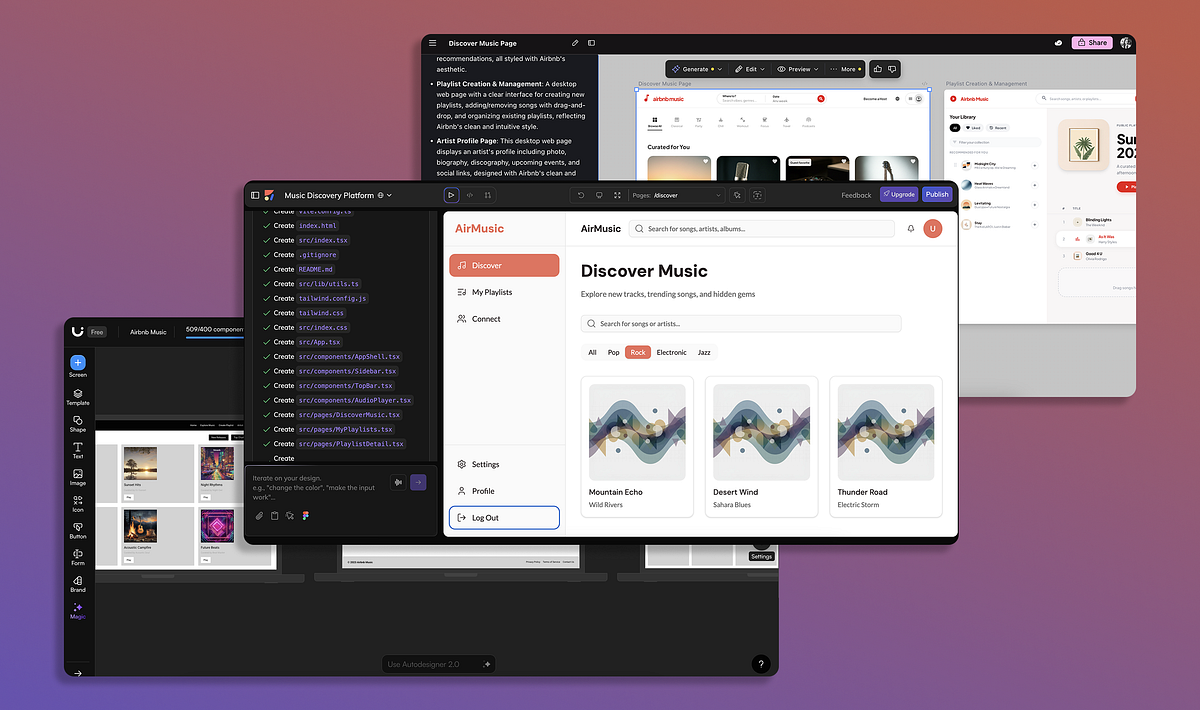
1 month agoTelegram announces redesigned interface for Android and iOS, automatic ownership transfer for groups
Telegram has announced that it's rolling out a fully redesigned interface for its Android app, making navigation and search quicker and more intuitive. The most notable change this redesign brings is the new bottom bar, which lets you quickly switch between the Chats, Settings, Profile, and other tabs. In addition to the UI redesign, Telegram "completely rebuilt" the interface code to maximize efficiency and increase responsiveness. You can head to the Settings > Power Saving menu to maximize performance and extend battery life.
Mobile UX
fromSmashing Magazine
1 month agoDesigning For Agentic AI: Practical UX Patterns For Control, Consent, And Accountability - Smashing Magazine
Autonomy is an output of a technical system. Trustworthiness is an output of a design process. Here are concrete design patterns, operational frameworks, and organizational practices for building agentic systems that are not only powerful but also transparent, controllable, and trustworthy. In the first part of this series, we established the fundamental shift from generative to agentic artificial intelligence. We explored why this leap from suggesting to acting demands a new psychological and methodological toolkit for UX researchers, product managers, and leaders.
UX design
fromMedium
2 months agoProgressive Disclosure in AI-Powered Product Design
Progressive disclosure is a well-known principle in UX design. This principle is about showing users only what they need right now, and revealing more options or information gradually as they interact or gain context. The goal is to reduce cognitive load, keep interfaces clean and approachable, and still support advanced use cases when needed. The principle of progressive disclosure can be applied not only to the user interfaces we design, but also AI tools we use.
UX design
[ Load more ]