#star-health-insurance
#star-health-insurance
[ follow ]
#healthcare #india #health-insurance #ai-in-healthcare #security #insurance #patient-care #private-capital
#healthcare




Healthcare
fromEntrepreneur
9 hours agoTo Help Nurses Find Jobs, She Created a Surprising AI Solution. Now It's Worth $1.65 Billion and Is Used by Over a Million Nurses.
Incredible Health revolutionizes healthcare hiring by allowing employers to apply to nurses, aiding 1.5 million U.S. healthcare workers in finding permanent roles efficiently.
fromBusiness Matters
4 days agoNew Bike Insurance Online for First-Time Buyers in India: A Structured Approach to Getting Started
The insurance policy for bikes is designed to provide financial protection against the risk associated with riding a two-wheeler. As per the Motor Vehicles Act 1988, every two-wheeler in India must have a minimum of third-party cover.
Bicycling
Artificial intelligence
fromFuturism
3 days agoMillions of Americans Are Talking to AI Instead of Going to the Doctor, and It's Giving Them Horrendously Flawed Medical Advice
AI chatbots are not reliable for medical advice, with failure rates exceeding 80% for ambiguous symptoms and 40% for straightforward cases.
fromTheregister
5 days agoIndian government investigating TCS after police sting
Reports indicate that an initial inquiry, triggered by a complaint relating to religious practices, has brought to light disturbing allegations involving sexual harassment, rape, and attempts at forced religious conversion of female employees by certain individuals in supervisory roles.
Women in technology
fromTechCrunch
5 days agoHBO Max comes to India via exclusive JioHotstar deal | TechCrunch
HBO Max will be available to JioHotstar subscribers as an add-on starting at ₹49 (about $0.50) per month, featuring content from HBO, Max Originals, Warner Bros. Pictures, Warner Bros. Television, and DC Studios.
Television
Healthcare
fromLondon Business News | Londonlovesbusiness.com
1 week agoBest medical insurance plans for Indian families: How real claim experiences shape smarter policy decisions - London Business News | Londonlovesbusiness.com
Choosing medical insurance should prioritize claim management over premiums and sum insured.



fromThe New Yorker
1 month agoDoctor Mike's Internet Medicine
If it continues to spread past the demarcation that we usually draw using a skin marker-we say Sharpie, but it's a skin marker-we say that this is spreading. Diagnosis: possible sepsis. Varshavski was not talking to the patient or to nursing staff. He was not even in a hospital. He was speaking into a camera in a two-bedroom apartment on the fifty-sixth floor of a building in Hell's Kitchen, in a makeshift studio where he records videos and his popular podcast.
Medicine
Canada news
fromLondon Business News | Londonlovesbusiness.com
1 month agoRocket Doctor's rural healthcare expansion reflects growing investor interest in AI-powered medicine, says venture capitalist Yazan Al Homsi - London Business News | Londonlovesbusiness.com
Rocket Doctor AI partners with Lethbridge County to provide virtual healthcare access to 10,000+ residents through licensed Alberta physicians, fully covered by Alberta Health with no user fees.
#ai-healthcare
Privacy professionals
fromTheregister
1 month agoMicrosoft Copilot now boarding your health information
Microsoft launches Copilot Health to store healthcare data and provide personalized wellness insights through AI, while explicitly disclaiming it is not medical advice and cannot diagnose or treat conditions.

Healthcare
fromLondon Business News | Londonlovesbusiness.com
3 weeks agoBupa to offer preventative care to customers before illness strikes - London Business News | Londonlovesbusiness.com
Bupa introduces 'Prevention Pathways' for proactive healthcare, targeting serious conditions before symptoms arise, benefiting over 200,000 customers by 2027.
fromTheregister
2 months agoDoctors told to pull back from Palantir's NHS data platform
It is the view of the BMA that doctors working in the NHS can no longer provide the tacit endorsement that using a product implies and must immediately take steps to explore refusing any non-direct care usage of Palantir's Federated Data Platform, with a view to moving away from the platform entirely in time, when a suitable alternative can be put in place.
UK politics
fromEntrepreneur
2 months agoHow to Keep Your Health Plan Costs Manageable - Without Shortchanging Your Team
If you run a business, there's a familiar email you probably opened this fall: the one from your benefits broker with your 2026 health insurance renewal. You scroll. You see a double-digit increase, and your stomach drops. You want to do right by your team. You also have a P&L to protect. And the three standard options you're handed - pay the increase, raise deductibles or push more cost onto employees - all feel bad in different ways.
Business
fromClassic Yoga
7 months agoThe New Rule For Health Insurance Coverage - Classic Yoga
Health insurance plays a vital role in safeguarding Indians from mounting healthcare costs. With medical inflation rising and hospital bills becoming unaffordable, having robust individual health insurance is no longer an option but a necessity. Recognising this, the Indian insurance regulator made a crucial change in April 2024. Now, health insurance and individual health insurance plans must cover hospitalisation cases where the patient is admitted for as little as two hours.
Yoga
Artificial intelligence
fromTechCrunch
2 months agoAs AI jitters rattle IT stocks, Infosys partners with Anthropic to build 'enterprise-grade' AI agents | TechCrunch
Infosys is partnering with Anthropic to integrate Claude models into its Topaz AI platform to build autonomous enterprise-grade AI agents for complex workflows.
Miscellaneous
fromAol
1 month agoWhy is WhatsApp's privacy policy facing a legal challenge in India?
India's Supreme Court is scrutinizing WhatsApp's 2021 privacy policy, requiring the platform to give users greater control over data sharing with Meta and allow continued app use without sharing data for advertising.
fromFortune
2 months agoPatient private capital is needed to help Asia plug its healthcare gaps | Fortune
Asia's healthcare challenges include aging populations, rising disease, and strained infrastructure, but the crisis is better understood at the kitchen table, where families decide what conditions to treat, and what to ignore, according to their savings. While the APAC region makes up 60% of the world's population, the region accounts for a mere 22% of global healthcare spending. According to the World Health Organization, most developing Asian countries spend just 2-3% of GDP on health, and in many cases public
Public health
fromwww.dw.com
2 months agoIndia tightens AI rules for social media platforms
Now platforms have three hours to remove content requested by authorities. Previously, they had a 36-hour window to take down such content. Under India's IT rules, authorities can order the removal of content deemed illegal under any of its laws, including those related to national security and public order. India's new rules require labelling of AI content It will also be mandatory for platforms like Instagram, TikTok, Facebook and YouTube to clearly label what the government calls "synthetically generated information."
Artificial intelligence
Healthcare
fromFortune
1 month agoSunway Healthcare surges in first trading day, with hospital demand set to rise in a wealthier and older Malaysia | Fortune
Sunway Healthcare's 2.9 billion ringgit IPO surged 28% on first trading day, becoming Malaysia's largest IPO in nearly a decade, capitalizing on growing healthcare demand from an aging, wealthier population.
Miscellaneous
fromTechCrunch
1 month agoIndia disrupts access to popular developer platform Supabase with blocking order | TechCrunch
India's government blocked Supabase under Section 69A of the Information Technology Act on February 24, causing widespread access disruptions across multiple internet providers without publicly stating a reason.
Public health
fromThe Atlantic
1 month agoMAHA, Subdued
Casey Means, nominated for surgeon general, moderated her unconventional health views during Senate testimony, emphasizing her Stanford medical degree while previously promoting psychedelics, raw milk, and skepticism toward vaccines and birth control.
Healthcare
fromTechRepublic
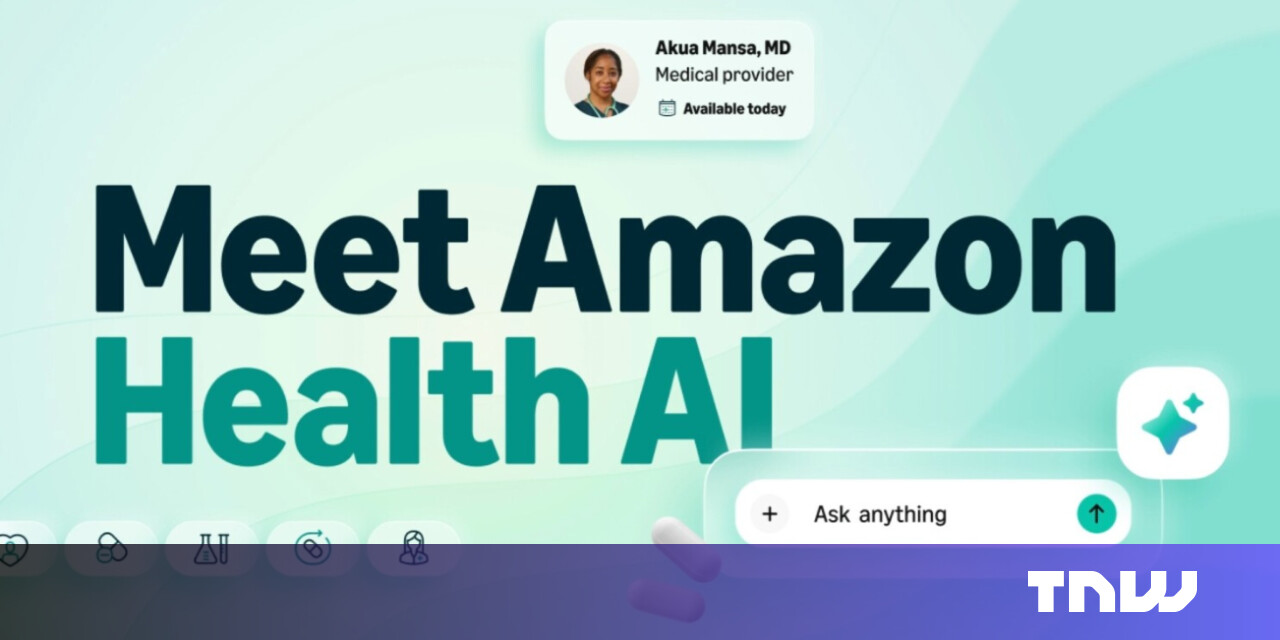
1 month agoAmazon Expands Health AI to Its Retail App, Offering Prime Members Free 24/7 Virtual Care
Amazon expands Health AI from its clinic app to Amazon.com and the Amazon app, positioning itself as an AI-powered healthcare entry point integrated with its retail ecosystem.
Healthcare
fromAlleywatch
1 month agoAnterior Raises $40M to Eliminate Administrative Burden Draining Healthcare Resources
Anterior's AI platform automates healthcare administrative workflows, reducing prior authorization cycles by 75% and achieving 182-second approval times while maintaining 99.24% clinical accuracy across 50M covered lives.
fromIrish Independent
1 month agoIrish Life and Level Health to both hike medical insurance premiums
Increases in the cost of delivering healthcare continue to be a challenge for health insurers and these rising costs are outpacing general inflation. Consequently, the price of medical care, medicines and treatments is increasing at a higher rate than everyday household expenses.
Healthcare
Healthcare
fromFortune
2 months agoWhen AI meets healthcare, how should payers react? | Fortune
AI can fully automate most transaction-oriented payer jobs, significantly boost knowledge and relationship work productivity, and replace many interpreter and doer roles, transforming payer operations and member services.
fromBusiness Matters
2 months agoThe Rise of Telemedicine: How Digital Health is Reshaping Medical Equipment Demand
Between March 2020 and March 2022, over 100 million telemedicine services were delivered to approximately 17 million Australians. The Australian government invested $409 million to make telehealth permanent, whilst the UK announced £600 million for digital health infrastructure in April 2025. Patient adoption is equally impressive: 60% find telemedicine more convenient than in-person appointments, 55% report higher satisfaction with teleconsultations, and 74% of millennials prefer virtual appointments for routine care. These aren't temporary shifts; they represent a fundamental transformation in healthcare delivery.
Healthcare
fromMedCity News
2 months agoThe Digital Health M&A Wave Is Finally Here - MedCity News
The Covid-19 pandemic spurred a rapid expansion of health tech companies, and new market realities post pandemic meant it was only a matter of time before some consolidated. Indeed, investors in recent years predicted greater M&A activity only to never see it materialize either in 2024 or 2025. But 2026 may be the year the predictions do come true. Consider the deals announced in just over a month:
Healthcare
[ Load more ]