#travis-teixeira
#travis-teixeira
[ follow ]
#contemporary-art #photography #illustration #residential-architecture #photojournalism #installation-art


fromHyperallergic
1 week agoTaking a Seat at Robert Therrien's Table
Robert Therrien's 'Under the Table' is a 10-foot-tall sculpture that captivates visitors, inviting them to experience its scale and intricacies from below. The piece exemplifies Therrien's ability to transform everyday objects into monumental art.
Arts
Graphic design
fromItsnicethat
3 weeks agoDiogo Potes' paintings take poetic licence to a whole new level
Diogo transitions from two decades of client-focused graphic design to liberated painting, abandoning narrative cohesion and readability constraints for experimental, textured, and visually transgressive work.
fromItsnicethat
3 weeks agoBraulio Amado on why there is unlimited inspiration in the world, if only we become "crazy enough to look for it"
Braulio gives the crowd an incredible insight into a decade's worth of poster designs for Good Room, revealing how he finds inspiration in the most mundane things just by paying attention to what has 'already been designed' and remixing it into something new.
Design
#contemporary-art

Arts
fromwww.london-unattached.com
1 month agoPatrizio di Massimo, Between Us
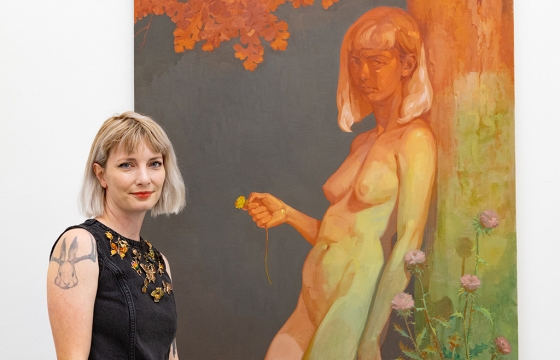
Art history progresses through revolutionary innovations that eventually integrate into existing traditions, as demonstrated by Patrizio di Massimo's contemporary portraits displayed alongside early 20th-century Futurist works at the Esoterick Collection.
Arts
fromdesignyoutrust.com
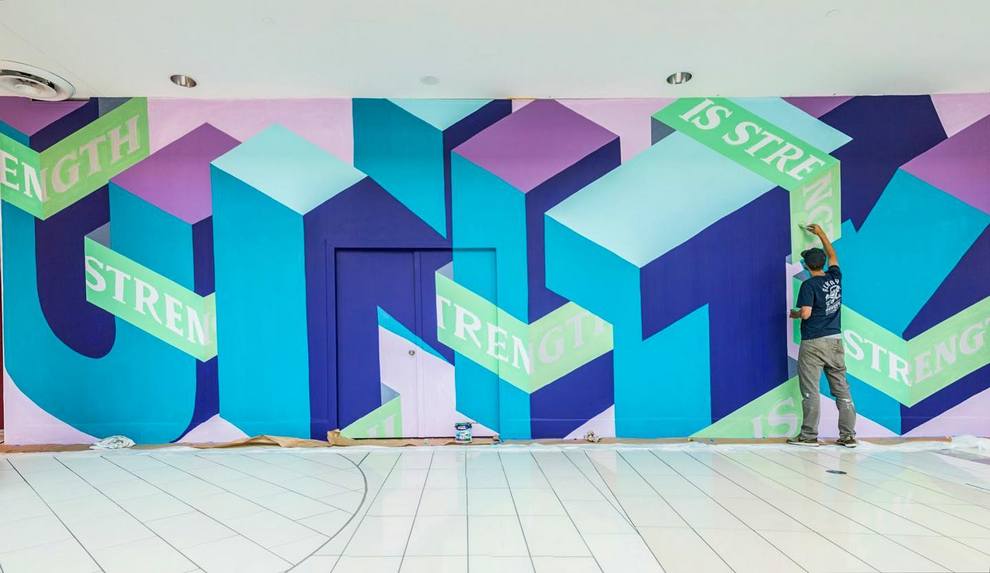
2 months agoArtist Reshapes Walls And Spaces With Explosive Typographic Murals That Turn Buildings Into Giant, 3D Messages
A diverse collection of contemporary visual artworks and projects showcases imaginative sculptures, illustrations, modified objects, and installations spanning surreal, tribal, reclaimed-material, and whimsical themes.

Design
fromThe Art Newspaper - International art news and events
3 weeks agoSao Paulo pop-up exhibition spotlights spherical home by architect Eduardo Longo
The fifth edition of an annual art, architecture, and design exhibition opens in São Paulo, featuring six galleries, over 50 artists, and newly commissioned works across two landmarks including a spherical home designed by architect Eduardo Longo.
Arts
fromArtnet News
3 weeks agoInside the First Edition of Conductor: The Art Fair of the Global Majority
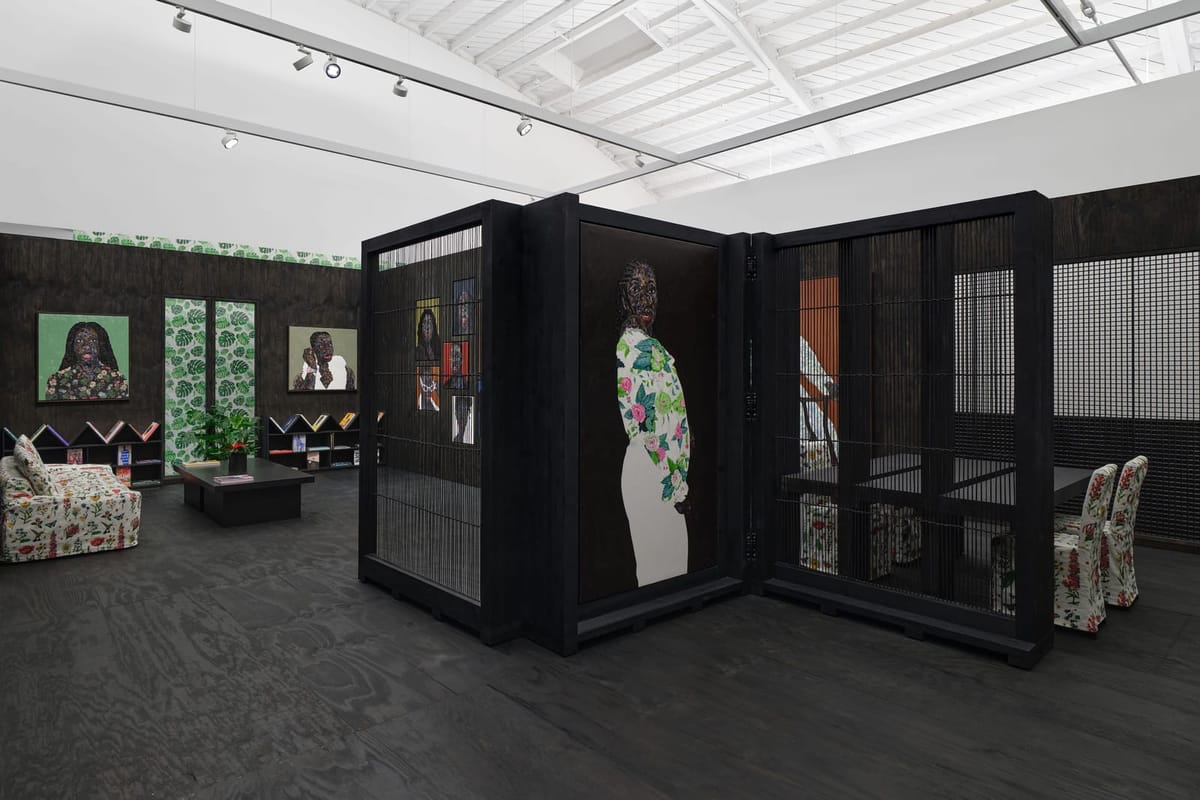
Conductor: Art Fair of the Global Majority debuts April 30-May 3, 2026, centering artists from Africa, Latin America, Asia, the Caribbean, the Middle East, Oceania, and Indigenous nations historically underrepresented in New York's art market.
fromwww.scientificamerican.com
1 month agoHow a poet uses AI to write and why her work is now at MoMA
Poetry and artificial intelligence can appear as oppositesone deeply human; the other cold and mechanical. Sasha Stiles sees them as expressions of the same impulse. Poetry, the Kalmyk- American poet argues, is one of our most ancient and enduring technologies, a system of meter and rhyme invented to store vital information. She views AI as its natural heir. Stiles's path to AI began with literature, not code.
Artificial intelligence
fromThe Art Newspaper - International art news and events
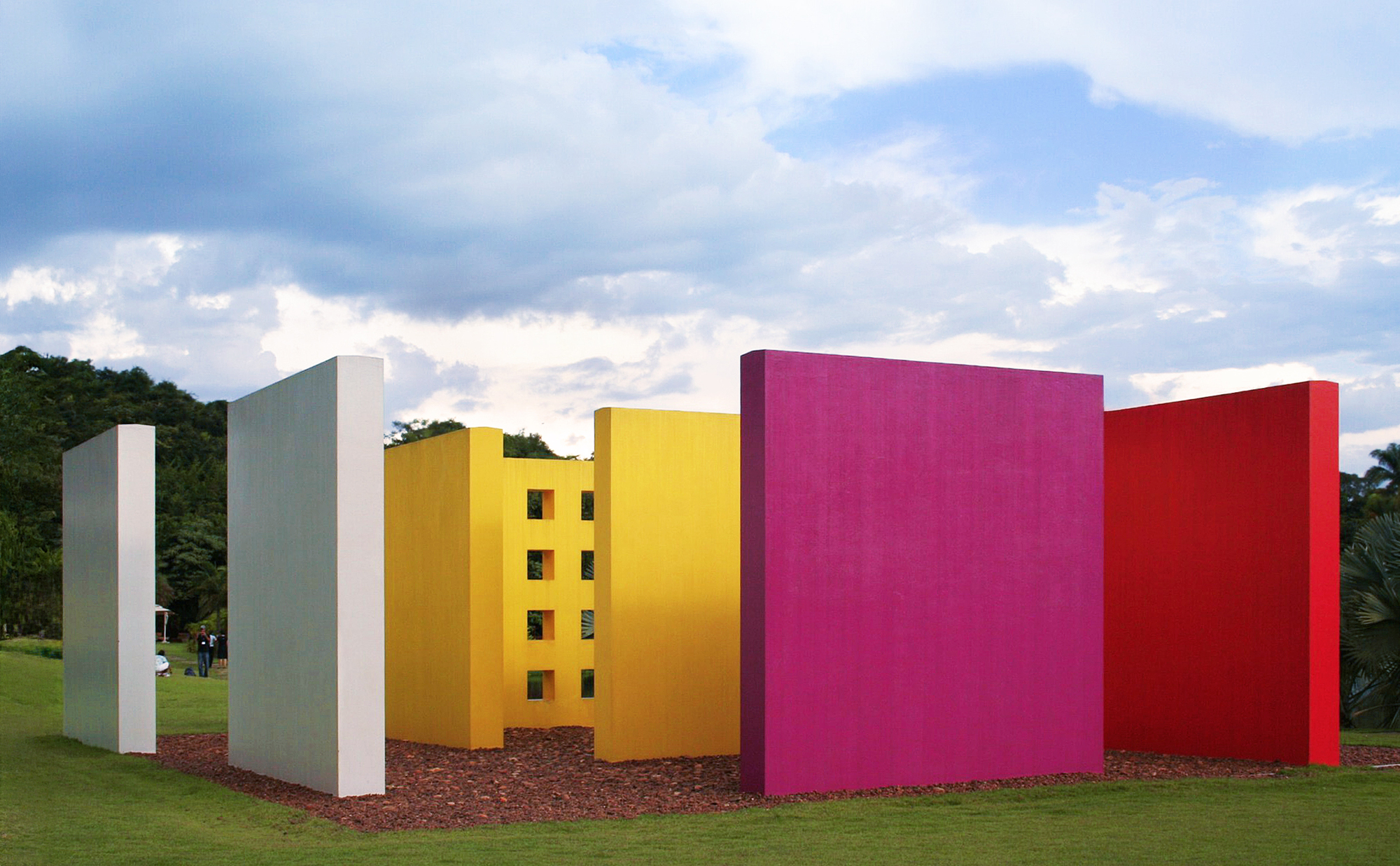
3 weeks agoNew public art biennial to take over Dallas's urban greenbelt park
I wanted to translate that idea into public space, to imagine the trail as a site of encounter between visitors and works by artists whose visual language already centres otherworldly beings, creatures or ecologies. In that meeting, the strange or unfamiliar hopefully becomes a source of curiosity and interconnectedness.
Arts

Arts
fromHi-Fructose Magazine - The New Contemporary Art Magazine
4 weeks agoF. Scott Hess: Art History & The Dreams of a Reluctant Realist - Hi-Fructose Magazine
Artist F. Scott Hess transformed a 40-year-old fever dream about art history into a detailed 54" x 96" painting that explores his complex relationship with artistic legacy and fame.
from48 hills
1 month agoBetween worlds with Sky Hopkina's visual poetry - 48 hills
While Hopkina, who is based in New York and Massachusetts, has been included in many local group exhibitions and screenings, Basso dives deep into the artist's work with six films created over a nine-year period. As a member of the Ho-Chunk Nation/Pechanga Band of Luiseño Indian, Hopkina's use of poetry and atmospheric aesthetics is not only visually compelling, but mines the edges of linguistic, visual, and cultural legibility.
Film
fromThe Art Newspaper - International art news and events
1 month agoVenice Biennale details revealed, Beatriz Gonzalez and Tracey Emin in London-podcast
Following the tragic death of Koyo Kouoh last May, the details of her final project- In Minor Keys, the international exhibition of the 2026 Venice Biennale-were unveiled this week by the collaborative team that will carry through her vision for the show.
Arts
fromDesign Milk
1 month agoInside Lee Broom's Latin American Exhibition at Diez Company
Now, he celebrates his first major presentation in Latin America, in congruence with Mexico City Art Week 2026 and ZSONAMACO, showcasing on an ideal stage inside one of the city's most architecturally layered interiors. Titled The Resident, the site-responsive installation, created during a residency at the Diez Company house, transforms the historic showroom into an immersive tableau where more than 50 works negotiate the boundaries between collectible design, contemporary art, and spatial theater.
Design
Design
fromdesignboom | architecture & design magazine
2 months agoluca poian plans transit history museum in madrid with lightweight, inflatable facade
A translucent-ETFE-clad EMT Museum on the former Vicente Calderón site will celebrate Madrid's transit history with adaptable industrial-inspired spaces and civic-focused public programming.


Arts
fromThe Art Newspaper - International art news and events
1 month agoMore than 600 works by Afro-Brazilian artists returned to Brazil
A voluntary repatriation returned 666 Afro-Brazilian works from Detroit to Muncab in Salvador, marking Brazil's largest cultural repatriation and a symbolic act of reparation.
fromColossal
2 months agoRegina Silveira Pieces Together an Evolving Narrative of Latin America
Regina Silveira has spent the better part of three decades considering the relationship between media and meaning, particularly as it relates to Latin America. First presented in 1997, "To Be Continued..." features 100 black-and-white reproductions of photos, newspaper clippings, propaganda, advertisements, and more. Silveira nests each image into an oversized puzzle piece, which cuts off faces and scenes to leave fragments of pop culture icons, flora and fauna, and even the occasional mugshot spliced next to one another.
Arts
Arts
fromwww.amny.com
1 month agoKing Paris shows the sovereignty of light through his contemporary masks on display in Manhattan | amNewYork
Embellished masks and reflective surfaces in West African traditions use radiance and material brilliance to convey authority, spiritual meaning, and social order through performance.
Arts
fromdesignyoutrust.com
2 months agoArtist Paints Smoky Lounges And Quiet Strangers, Letting Halffinished Details Turn Viewers Into Coauthors Of The Scene
A wide-ranging visual roundup showcases creative reinterpretations, vintage design, activist art, photography, illustration, and humorous cultural works spanning contemporary and historical styles.
fromHi-Fructose Magazine - The New Contemporary Art Magazine
2 months agoPedro Pedro transforms The Everyday into Vibrant Inanimate Portraits - Hi-Fructose Magazine
One of the great things about making art is discovering something that sprang from seemingly nowhere. In retrospect it looks logical but in the moment it's an epiphany and suddenly it's exciting to explore it. My studio is across the street from Creative Woodworking and they have a box where they put scrap wood for anyone who wants it and it's irresistible to me.
Arts
Arts
fromOregon ArtsWatch * Arts & Culture News
2 months agoVizArts Monthly: Existential Journeys * Oregon ArtsWatch
February exhibitions center on universal human experiences—happiness, grief, cultural resilience, and connection to nature—expressed through contemporary, site-specific, and group exhibits.
fromJuxtapoz
1 month agoJuxtapoz Magazine - Oscar Murillo: "el pozo de agua" @ kurimanzutto, Mexico City
OSCAR MURILLO (b. 1986, La Paila, Colombia) has developed a multifaceted and challenging practice that spans painting, collaborative projects, video, sound and installation. Through each body of work, the artist probes ideas of collectivity and shared culture, demonstrating a commitment to the power of material presence alongside complex meditations on contemporary society. A focus on the social dimension that sits on the border between performance and events is also central to Murillo's practice.
Arts
fromdesignboom | architecture & design magazine
1 month agoradical and spherical 'casa bola' to host upcoming sao paulo exhibition ABERTO5
For ABERTO5, the itinerant exhibition series is set to open next month at Casa Bola, Eduardo Longo's spherical residence in São Paulo, opening the architect's private home to the public as the setting for its fifth edition. From March 7th to May 31st, 2026, ABERTO returns to Brazil after its Paris chapter at Le Corbusier's Maison La Roche (read more here) and shifts its attention to one of the city's most unique dwellings.
Arts
Arts
fromThe Art Newspaper - International art news and events
2 months agoA gifted colourist and civic-minded storyteller: touring show celebrates US artist Noah Davis
Noah Davis's posthumous survey demonstrates his mastery of color, narrative subtlety, art-historical erudition, and rising market and museum recognition.
[ Load more ]