#treasuries
#treasuries
[ follow ]
#inflation #federal-reserve #interest-rates #treasury-yields #investment-strategy #sp-500 #monetary-policy
#sp-500

Business
fromLondon Business News | Londonlovesbusiness.com
16 hours agoS&P 500 rebounds nearly 9% from its lows - London Business News | Londonlovesbusiness.com
The S&P 500 is recovering, driven by strong earnings growth expectations and improved market sentiment, despite ongoing geopolitical risks and high inflation.
#dollar-index

World politics
fromLondon Business News | Londonlovesbusiness.com
1 day agoDollar rebounds as US Hormuz blockade revives inflation concerns and lifts yields - London Business News | Londonlovesbusiness.com
The dollar index rose due to escalating geopolitical tensions in the Middle East and concerns over inflation.

World politics
fromLondon Business News | Londonlovesbusiness.com
1 day agoDollar rebounds as US Hormuz blockade revives inflation concerns and lifts yields - London Business News | Londonlovesbusiness.com
The dollar index rose due to escalating geopolitical tensions in the Middle East and concerns over inflation.
US politics
fromwww.theguardian.com
11 hours agoTrump pick to lead Federal Reserve has assets worth over $100m, disclosures indicate
Kevin Warsh's financial disclosures reveal assets exceeding $100 million, including significant investments and commitments to divest if confirmed as Federal Reserve governor.

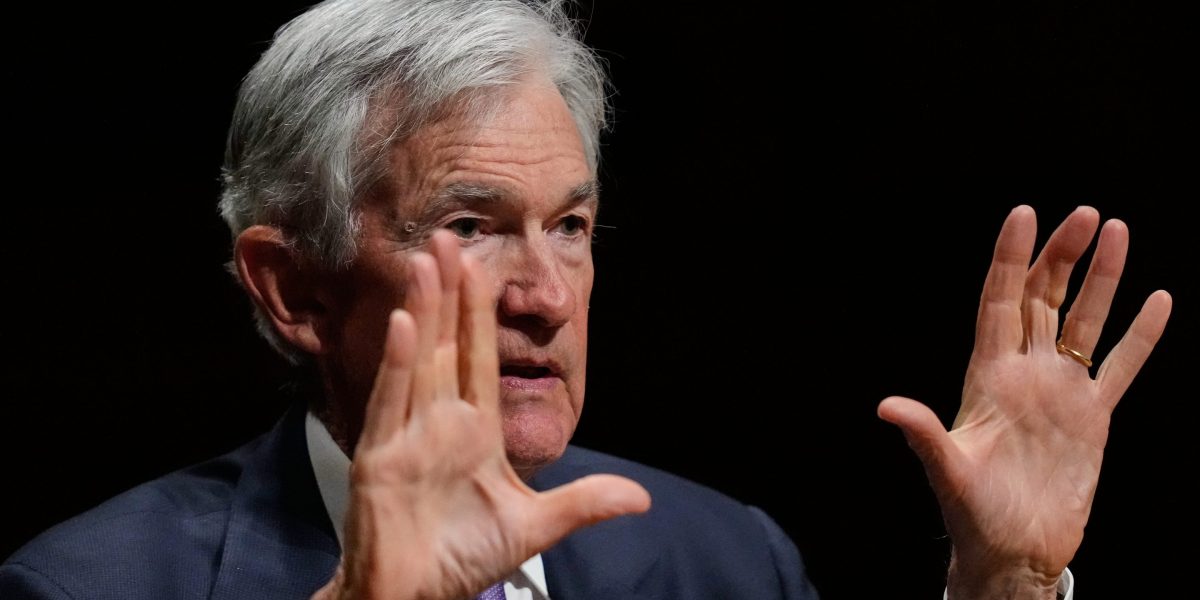
fromFortune
1 day agoWall Street is the biggest winner of the Iran war - and the S&P 500 just turned positive for the year | Fortune
At 7:46 a.m. Monday, Doornbos had posted on X that Iranian officials were still considering a U.S. proposal to end the war, 'centering around uranium enrichment.'
Media industry
fromLondon Business News | Londonlovesbusiness.com
1 day agoMarkets surge on easing tensions, but warning signs gather beneath the surface - London Business News | Londonlovesbusiness.com
U.S. equity markets delivered a strong performance over the past week, supported by improving geopolitical sentiment and renewed investor confidence, with all major indices recording gains exceeding 3%.
Europe news
Retirement
fromFortune
5 days agoU.S. government is spending $88 billion a month in interest on national debt, equal to its spending on both defense and education combined | Fortune
The U.S. national debt exceeds $39 trillion, with interest payments reaching $529 billion in the first half of the fiscal year.
fromFortune
6 days agoU.S. had a national debt 'home run' in its grasp, says Jamie Dimon-the government did nothing with it, and now its best option is crisis management | Fortune
"The best way to deal with the problem is to actually deal with the problem, to acknowledge it, to work on it," Dimon stated, emphasizing the urgency of addressing the national debt.
US politics
from24/7 Wall St.
1 day agoStock Market Live April 13: S&P 500 (SPY) Back in the Red as Oil Gushes Higher
"Effective immediately, the United States Navy, the Finest in the World, will begin the process of BLOCKADING any and all Ships trying to enter, or leave, the Strait of Hormuz," Trump said in a post on his social media platform, Truth Social, as highlighted by CNBC.
World news
fromLondon Business News | Londonlovesbusiness.com
2 weeks agoUS dollar stable near recent highs - London Business News | Londonlovesbusiness.com
Escalating geopolitical risk continued to dominate global markets' concerns, with safe-haven demand keeping the dollar index anchored near a multi-week high.
World politics
World politics
fromLondon Business News | Londonlovesbusiness.com
2 weeks agoUS dollar stable after successive gains - London Business News | Londonlovesbusiness.com
Escalating Middle East tensions are influencing market sentiment, keeping the dollar stable and impacting US Treasury yields amid inflation concerns.
fromFortune
2 weeks agoBond yields are falling even as oil tops $102, showing that Wall Street fears recession more than inflation | Fortune
"Oil prices are higher again this morning, but Treasury yields are lower as the risks to economic growth begin to take precedence over the risks to inflation," Oxford Economics said in a note on Monday.
World news
Business intelligence
from24/7 Wall St.
1 month agoThe 4 ETFs To Buy Before The Fed Lowers Rates And Shoots Them Higher
The Federal Reserve paused rate cuts in January 2026 after three cuts, creating market uncertainty that underprices assets benefiting from future cuts, with four ETFs positioned to capitalize on eventual rate reductions.
from24/7 Wall St.
2 days agoIgnore Hormuz - 3 Energy ETFs That Can Rally No Matter What Happens
Instead of trying to predict whiplashing oil prices, consider investing in energy ETFs like the Invesco WilderHill Clean Energy ETF and First Trust North American Energy Infrastructure. These ETFs provide exposure to sectors such as pipelines and shipping, independent of oil price fluctuations.
Business
from24/7 Wall St.
1 month agoInterest Rates Are Heading Down - These 3 Stocks Win Big When They Do
In my view, interest rates are more likely than not going to head lower over the course of 2026 and into 2027. I'm not saying we're due for a pandemic-like selloff, but I do think that weakness in the labor market is likely more protracted than the government data suggest. As such, I do think the makeup of the Federal Reserve, and which way many of its presidents and voting members lean (toward providing support for the labor market over battling inflation) could lead to much faster rate cuts than many think.
Retirement
from24/7 Wall St.
1 week agoThe Federal Reserve's Nightmare Scenario Is Taking Shape and the Stock Market Should Pay Attention
The New York Fed's Survey of Consumer Expectations indicated that one-year inflation expectations rose to 3% in March, with gas price expectations jumping to 9%, the highest since March 2022.
Business
fromLondon Business News | Londonlovesbusiness.com
1 month agoDollar surges on geopolitical risks and rising yields
Crude oil breaking above the USD 100 threshold has revived inflation concerns, pushing US Treasury yields higher across the curve. However, Friday's labour market report revealed a significant deterioration in employment conditions, with the economy losing 92,000 jobs in February, its largest contraction in several months.
World news
from24/7 Wall St.
1 week agoUSHY Yields 6.58% While VIX Sits at the 96.5th Percentile, A Risky Tradeoff
USHY seeks to track the investment results of the ICE BofA US High Yield Constrained Index, composed of U.S. dollar-denominated, high yield corporate bonds, providing broad exposure in a low-cost wrapper.
Business
US news
fromLondon Business News | Londonlovesbusiness.com
2 months agoDow Jones pulls back sharply as yields rise and tariff risks return - London Business News | Londonlovesbusiness.com
Dow Jones' sharp sell-off reflects systemic re-pricing driven by rising Treasury yields, higher-for-longer rate expectations, and an earnings-season market focus shift.
Business
fromLondon Business News | Londonlovesbusiness.com
3 weeks agoWhere is the US Dollar Index heading amid rising bond yields? - London Business News | Londonlovesbusiness.com
The US Dollar Index strengthens due to Federal Reserve's hawkish stance, elevated Treasury yields, and geopolitical tensions, with limited rate cuts expected through 2027.
from24/7 Wall St.
2 months ago3 ETFs to Buy ASAP Before Jerome Powell's Term Ends in May
Warsh served on the Fed's Board of Governors from 2006 to 2011, making him the youngest person ever appointed to that role at age 35. During the 2008 financial crisis, he was part of Ben Bernanke's inner circle and served as an intermediary with Wall Street. He negotiated survival plans for firms like Morgan Stanley (NYSE:MS). He later resigned from the Fed due to disagreements over its balance sheet expansion policies.
US politics
Business
fromFortune
4 weeks agoU.S. debt is competing with a record supply of corporate bonds, which is pushing up the cost of federal borrowing just as war spending piles up | Fortune
Record corporate bond issuance driven by AI capital expenditure and geopolitical factors is increasing Treasury yields and raising borrowing costs for the federal government.
fromFortune
2 months agoBonds 101: What investors need to know about the 'shock absorber of the portfolio' | Fortune
Many investors regard bonds as the frumpier cousins to stocks. Their prices rarely pop or plummet. They usually deliver a lower return, and-aside from a glamorous cameo in the 1980s thriller Die Hard-they are not part of popular culture in the same way as, say, GameStop or Tesla shares. They are, though, a critical part of any well-managed portfolio, and with the stock market looking particularly frothy, this may be more true than ever.
Business
Business
fromFortune
2 months agoSomething weird is going on with gold and interest rates, and a top Wall Street analyst sees inflation risks rewriting market logic | Fortune
The historical inverse correlation between gold prices and real interest rates has broken down since 2022, indicating investor anxiety and demand for alternative assets.
from24/7 Wall St.
2 months agoRed-Hot Jobs Report Will Delay Fed Rate Cuts-Lock In These 5 Ultra-High-Yield Dividend Giants
In addition, if the January consumer price index number, to be posted on Friday, comes in below expectations, there may be no rate cuts until the summer, if then. The best move for growth and income investors seeking solid passive income is to start adding top companies now, as interest rates will rise with no help from the Federal Reserve.
Business
[ Load more ]