#vicious-creature
#vicious-creature
[ follow ]
#wildlife-conservation #animal-behavior #wildlife-management #animal-welfare #urban-wildlife #mountain-lion
fromwww.scientificamerican.com
1 week agoSee these ziti-sized fish scale a 50-foot waterfall
During major floods, thousands of tiny fish convene at Luvilombo Falls in the upper Congo River Basin to undertake a peculiar vertical migration, described for the first time today in Scientific Reports.
OMG science
fromMail Online
1 week agoBritain has just 20 years to save its wildlife, experts warn
'Our results show that the next 20 years are critical,' lead author Dr Rob Cooke told the Daily Mail. 'By around 2050, we reach a point where the choices we make on emissions and land use will largely determine whether Britain moves towards a much more degraded or a much more nature‑positive future.'
Environment
fromwww.scientificamerican.com
1 week agoThese snakes steal poison from their preyhere's how they know they have enough
Red-necked keelback snakes possess a potent toxin derived from the toads they consume, which can cause severe harm to predators like mongooses. The snakes store these toxins in specialized nuchal glands.
Pets
Psychology
fromwww.scientificamerican.com
3 weeks agoThese fish can tell when you're staring
Fish can perceive when they or their offspring are being watched and respond with increased aggression, demonstrating attention attribution abilities previously documented mainly in primates, birds, and domestic animals.
fromHigh Country News
1 month agoCoyotes and cougars and rats, oh my! - High Country News
An unnamed tourist saw it and told Aidan Moore, who works for Alcatraz City Cruises. Moore told SFGATE that he was initially skeptical, but the guest's iPhone footage left little room for doubt. The video shows, not a sea lion or an otter, but an actual Canis latrans, doggedly dogpaddling, then clambering out of the water, noticeably shaky and struggling to settle tired paws on the craggy rocks.
California
fromwww.npr.org
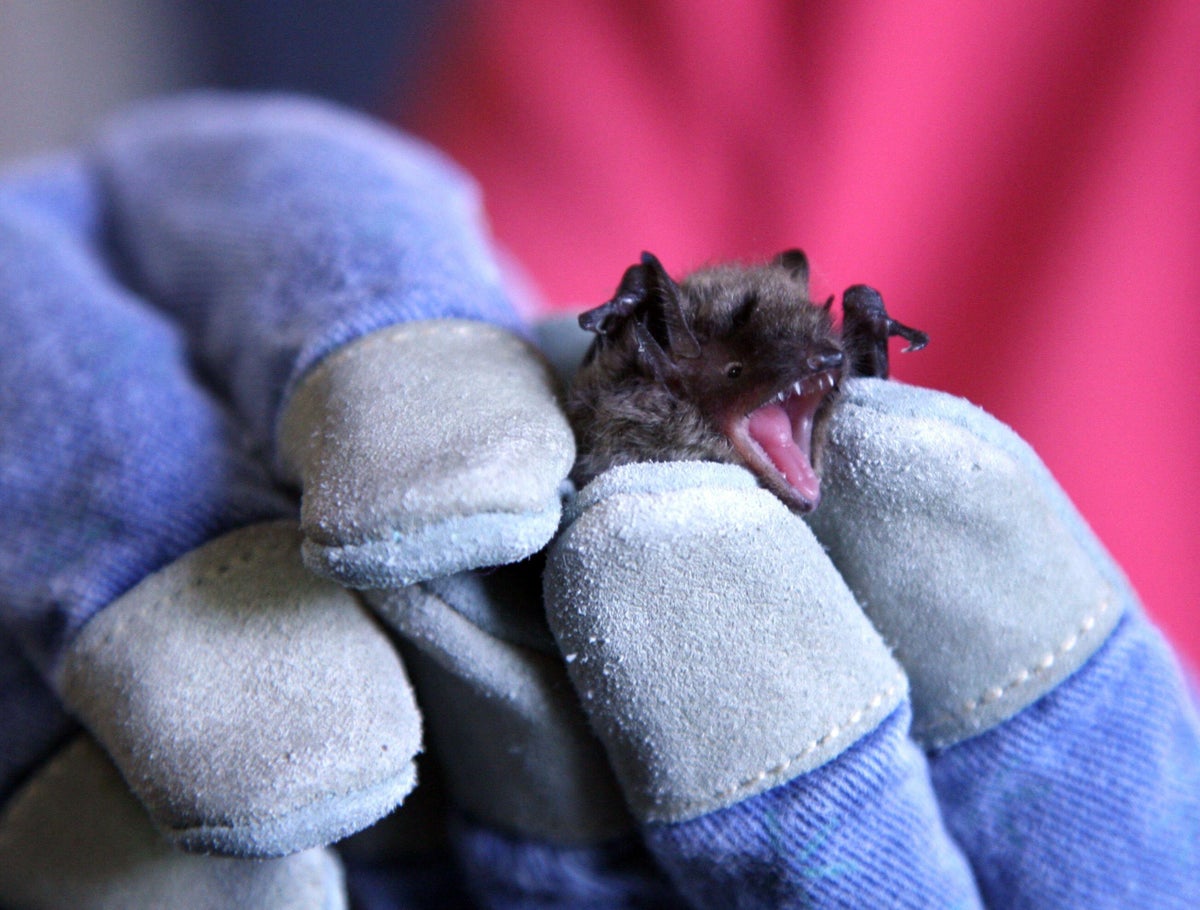
4 weeks agoVaccinating bats could be good for people. But how do you vaccinate a bat?
Bats carry a lot of very deadly pathogens like Ebola virus, Nipah, Hendra, coronavirus, and also rabies virus. People are finding more and more bat-borne viruses. When such viruses are transmitted to humans, the results are often fatal so there's a lot of interest in trying to prevent spillover in the first place.
Coronavirus
Pets
fromwww.scientificamerican.com
4 weeks agoWhat would happen if snakes disappeared like in Zootopia 2? An investigation
Zootopia 2 defends snakes as misunderstood creatures while highlighting their critical ecological importance as mesopredators that control rodent populations and sustain food chains.
Chicago Bears
fromCalifornia Post
1 month agoDeadly apex predator being mulled for release in California after 100-year absence
California lawmakers are considering reintroducing grizzly bears through Senate Bill 1305, which would require a scientific assessment and consultation with Native American tribes about restoring the species extinct in the state for over a century.
fromArs Technica
1 month agoWhy are vertebrate eyes so different from those of other animals?
We think that in this early deuterostome, the median eye contained both ciliary and rhabdomeric cells. As a result, both cellular lineages were incorporated into a single, ancient, cyclopean eye, which later evolved into the vertebrate eyes.
Science
fromNature
1 month agoUsing mosquitoes to vaccinate bats could curb the spread of deadly diseases
In a study published in Science Advances, researchers in China fed Aedes aegypti mosquitoes blood that contained either a vaccine against Nipah virus or the rabies virus. The viruses, contained in the vaccines, replicated inside the insects and reached their salivary glands, allowing them to pass on the vaccine when feeding on bats or when the bats ate the insects.
Coronavirus
fromwww.theguardian.com
1 month agoI love midges because I know what their hearts look like': is the passion for taxonomy in danger of dying out?
When Borkent stops working, biting midges risk becoming an orphan group, a term that taxonomists give for a branch of the web of life that is no longer being studied. It is a pattern playing out across the field, he says. I am one of the last few standing. It's crisis all around. As the taxonomic community ages, we are not being replaced.
OMG science

Film
fromwww.theguardian.com
2 months agoThe Shepherd and the Bear review two endangered species scrap for survival in the Pyrenees
Brown bears have been reintroduced to the Pyrenees, creating conflict between conservation efforts and shepherds whose traditional livestock-based livelihoods are endangered.
fromwww.bbc.com
1 month agoFox family reunited after cubs found hiding in car
Our workshop has encountered all kinds of issues with vehicles over the years, but a set of fox cubs is a brand new one for us. At first, our technician thought they might be rats because the cubs are grey, rather than the typical red you would expect of a fox they gave him quite a fright.
Pets
fromwww.scientificamerican.com
2 months agoHow zoos are preparing animals for this weekend's massive winter storm
In Texas, the Houston Zoo has prepared its buildings and barns with heaters designed to withstand extreme conditions, the zoo said in a blog post on Friday. Animals will have access to extra hay and bedding, and food was stocked in advance. Across the Zoo, sensitive plants are being protected with coverings, and generators are positioned to provide backup power if needed, the blog post said.
US news
fromYanko Design - Modern Industrial Design News
1 month agoWhen Zoo Design Tells the Story of Life Itself - Yanko Design
The House of Elements, set to become the crown jewel of Orientarium Zoo in Łódź, Poland, takes the classical elements (earth, ice, water, fire, and air) and transforms them into a 6,000-square-meter narrative experience. Rather than designing a building where you walk from exhibit to exhibit, VMA created a continuous downward-then-upward journey that mirrors the evolution of life itself. Designer: VMA Design Studio for Orientarium Zoo
Design


fromwww.theguardian.com
2 months agoFrom scorpions to peacocks: the species thriving in London's hidden microclimates
London is the only place in the UK where you can find scorpions, snakes, turtles, seals, peacocks, falcons all in one city and not London zoo. Step outside and you will encounter a patchwork of writhing, buzzing, bubbling urban microclimates. Sam Davenport, the director of nature recovery at the London Wildlife Trust, emphasises the sheer variation in habitats that you find in UK cities, which creates an amazing mosaic of wildlife.
London
fromThe Conversation
2 months agoSome companies claim they can 'resurrect' species. Does that make people more comfortable with extinction?
Less than a year ago, United States company Colossal Biosciences announced it had "resurrected" the dire wolf, a megafauna-hunting wolf species that had been extinct for 10,000 years. Within two days of Colossal's announcement, the Interior Secretary of the US, Doug Burgum, used the idea of resurrection to justify weakening environmental protection laws: "pick your favourite species and call up Colossal". His reasoning appeared to confirm critics' fears about de-extinction technology. If we can bring any species back, why protect them to begin with?
Philosophy
fromwww.theguardian.com
2 months agoExperience: a bear moved into my house
The next morning, I checked the critter-cams and saw the bear again, now captured by a camera I'd placed by a little mesh-covered opening near the small basement under my house. I watched as a massive shape emerged from the hole. My brain refused to believe it. The bear looked too large to fit in that tiny gap. I watched it again, shocked. My hands started to sweat.
Environment
fromThe Atlantic
1 month agoHow Many Wolves Is Enough?
The wolves arrived in May of last year, just days after Paul Roen had driven his cattle back up to their summer pasture in Northern California's Sierra Valley. He started finding the bleeding bodies of calves-some still alive, so badly paralyzed that they'd need to be shot. After weeks of this, Roen finally saw a kill himself. "One wolf grabbed a cow and spun her around, while another grabbed a calf," he told me. "He tore it into three pieces in 30 seconds."
Environment
Environment
fromFortune
1 month agoAnimal behavioralists saved a rhino with bleeding eyes by giving it eye drops, in a "ridiculous idea" gone right | Fortune
Voluntary training allowed caretakers to safely administer eyedrops to an endangered white rhino in Zimbabwe, preserving vision and protecting a community reintroduction program.
fromwww.scientificamerican.com
2 months agoWhat's scarier than a spider? A fake giant spider
What's scarier than a spider? A really big spider, of course. A newfound defensive tactic takes advantage of this idea: researchers documented spiders building giant spiderlike silhouettes on their webs to ward off predators. These decoys are an example of web decorations that some spiders are known to produce, often to prevent getting eaten, avoid bird strikes or attract prey.
Science
fromNature
2 months agoDaily briefing: The battle over the identity of the first animals
Wooden objects carrying the marks of carving and use could be the oldest wooden tools ever found. Researchers dated the artefacts, found in what is now Greece, to 430,000 years ago - and suggest they might have been made by early Neanderthals or their ancestors, Homo heidelbergensis. A separate study describes 480,000-old flint-knapping tools made from antler and elephant bone, from what is now the United Kingdom.
Science
Environment
fromwww.independent.co.uk
2 months agoGrey squirrels could be given contraceptives to control numbers
Government supports research into a contraceptive 'pill' for invasive grey squirrels alongside pine-marten reintroduction, landowner grants and volunteer control to protect red squirrels and woodlands.
fromHigh Country News
2 months agoWhere giant kangaroo rats - and other critters - thrive - High Country News
It was a race against nightfall. As he hurried across the sandy, bristling landscape of California's Carrizo Plain, ecologist Ian Axsom stopped every 10 yards to place an aluminum live trap on the ground, eventually distributing traps over an area the size of two baseball fields. Against the rolling playas and tawny mountains, the traps glinted with golden remnants of the September dusk.
Environment
fromwww.theguardian.com
2 months agoThe Guardian view on risks from biodiversity collapse: warnings must be heeded before it's too late | Editorial
Originally due to be published in the autumn, the review appears to have had some sections removed. An earlier version is reported to have included warnings about the risks of eco-terrorism and the growing likelihood of war between China, India and Pakistan due to competition over a shrinking water supply from the Himalayas.
Environment
[ Load more ]