#windborne-systems
#windborne-systems
[ follow ]
fromIPWatchdog.com | Patents & Intellectual Property Law
7 years agoInventors inspired by humpback whales make a more efficient wind turbine
Dewar, Watts and Fish's invention has the potential to make an impact on worldwide energy consumption, particularly as we increasingly rely on green technology. Their work shows how nature can serve as a source of inspiration and innovation and how following this inspiration might lead to refreshing and unconventional technological advances.
OMG science
Alternative transportation
fromYanko Design - Modern Industrial Design News
1 week agoSemicircular Wings give this Hybrid eVTOL an 800 Mile Range with 30% Less Power Consumption - Yanko Design
The channel wing concept, developed by Willard Ray Custer, is being revived by HopFlyt for efficient VTOL aircraft.
Alternative transportation
fromYanko Design - Modern Industrial Design News
1 week agoThis Hydrogen Business Jet Emits Nothing But Water and Could Change Private Aviation Forever - Yanko Design
Beyond Aero's BYA-I One hydrogen-electric business jet has completed its Preliminary Design Review, advancing towards commercial entry in 2030.

fromTechCrunch
3 weeks agoHow fusion power works and the startups pursuing it | TechCrunch
Fusion power seeks to use the energy released from the fusing of atoms to generate electricity. Humans have known how to fuse atoms for decades, from the hydrogen bomb to various fusion devices built in labs.
Science
#building-integrated-photovoltaics



Renovation
fromYanko Design - Modern Industrial Design News
1 month ago5 Solar Panel Designs So Beautiful You'd Never Know They're Generating Power - Yanko Design
Buildings are evolving from energy-efficient structures into active power generators through integrated photovoltaic technology and aesthetic solar solutions.
Design
fromArchDaily
4 weeks agoRethinking Architecture at the Scale of Planetary Systems
Contemporary architecture operates within interconnected technological systems—energy networks, data infrastructures, and global logistics—that fundamentally shape what can be built, its affordability, performance, and waste production.
Bicycling
fromwww.cyclingnews.com
1 month agoWind tunnel tested: Can the four-year-old Enve Melee stay relevant in a hyper-aero landscape?
The ENVE Melee is an all-rounder aero race bike with a higher stack height than competitors, featuring a two-piece integrated bar and stem design that accommodates modern WorldTour pro positioning preferences.
Design
fromArchDaily
1 month agoFacing the Age of Robots? Material Innovation in Architectural Structures
Robotic technology in construction extends beyond automation and cost reduction to fundamentally reshape architectural design, material experimentation, and construction methodologies through collaborative human-robot workflows.
fromArchDaily
1 month agoHow Architecture Is Learning to Generate Its Own Energy
Photovoltaic (PV) solar energy represents a modular technology that can be manufactured in large-scale facilities, generating economies of scale, while also being adaptable to small-scale applications. From residential rooftop systems to large-scale power generation installations, photovoltaic solar energy has established itself as a cost-effective option for electricity production in many countries around the world.
Environment
fromYanko Design - Modern Industrial Design News
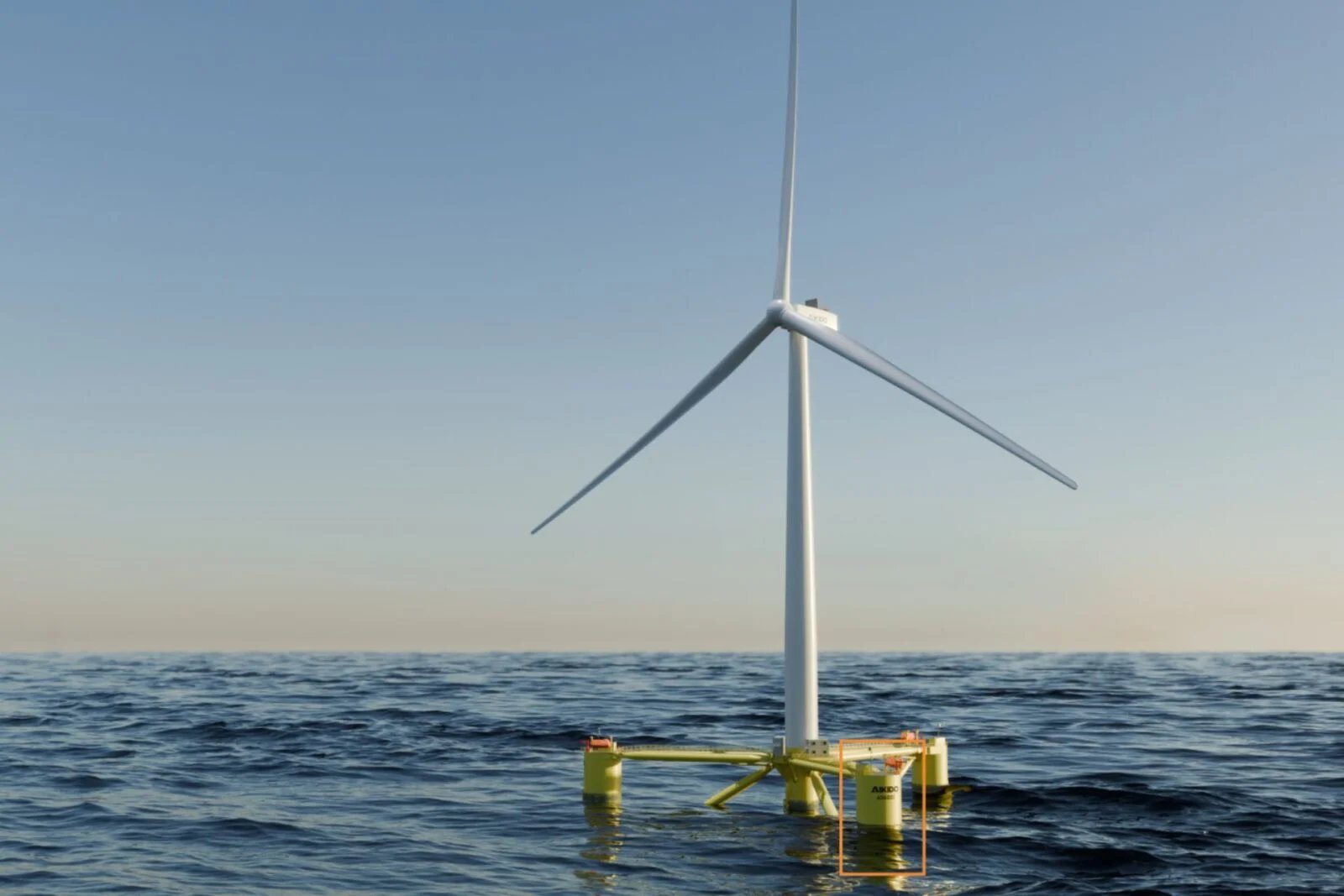
2 months agoThis Silent Wind Turbine Solves Sailing's Power Problem - Yanko Design
There's something romantic about sailboats that still speaks to us in this hyper-connected age. The idea that you can harness nothing but wind and water to glide across the ocean feels almost magical. But here's the reality check: even the most old-school sailor needs power these days. Your GPS has to stay on, your radar needs juice, those navigation lights aren't optional, and let's be honest, nobody wants to lose their phone charge mid-voyage.
Gadgets

fromTechCrunch
1 month agoFlapping Airplanes on the future of AI: 'We want to try really radically different things' | TechCrunch
There's just so much to do. So, the advances that we've gotten over the last five to ten years have been spectacular. We love the tools. We use them every day. But the question is, is this the whole universe of things that needs to happen? And we thought about it very carefully and our answer was no, there's a lot more to do.
Artificial intelligence
fromInfoQ
2 months agoHolistic Engineering: Organic Problem Solving for Complex Evolving Systems
I'll be talking about holistic engineering or the practice of factoring in your technical decisions, designs, strategies, all the non-technical factors that are actually forces that influence your organic socio-technical problem space. As much as you can see in this canyon how natural forces have influenced the shape of the earth, so you can see the color. You can see all the different layers.
Software development
fromwww.theguardian.com
1 month agoExtreme heat lab: enduring the climate of the future
"So whenever people think about hot weather, they always talk about the temperature," he says. "There's two issues with that. First of all, most people don't realise that the temperature is measured in the shade. So if you're in direct solar radiation, the amount of heat stress you're exposed to is much greater as it will stress your body out a lot more."
Public health
fromAeon
2 months agoIn solarpunk cities of the future, tech follows nature's lead | Aeon Essays
In Indra's Net of pearls and jewels, every gem reflects every other, a shimmering image of interdependence. This ancient Vedic metaphor for connection across the cosmos also illuminates what the environmental philosopher Glenn Albrecht first proposed in 2014as 'theSymbiocene': the era after the Anthropocene, in which human technologies take their cues from living systems and work in partnership rather than through dominance.
Philosophy
Apple
fromYanko Design - Modern Industrial Design News
2 months agoSteel Is Dead: 5 Titanium Products That Just Replaced It in 2026 - Yanko Design
Titanium's strength-to-weight, corrosion resistance, and recyclability enable thinner, durable, premium-feeling products while supporting sustainable, long-lasting design.
fromDesign Milk
2 months agoThe Valo eVTOL Will Revolutionize Urban Air Mobility
During peak rush hour, it can take two hours to reach New York's JFK Airport from Manhattan. In Sao Paulo, like other major metropolises and multi-city conurbations, traffic has gotten so bad that many look upward rather than downward to get around quickly. Outdated metro networks are also congested. For a long time, rudimentary helicopters have been the only urban air mobility option but there are significant limitations to the now well-worn technology.
Tech industry
fromdesignboom | architecture & design magazine
2 months agoaerogel-covered drone flies inside burning buildings to help firefighters in rescue missions
FireDrone is an aerogel-covered that can help firefighters in rescue missions by surveying for victims inside burning buildings. The assistive device aims to be the 'flying eye' in extreme environments so humans can be sure of who are and what is inside a site before going in. The FireDrone flying machine resembles a small quadcopter with its four arms and spinning propellers, but unlike regular drones, the parts of the device are built to survive high temperatures.
Gadgets


Environment
fromArchDaily
1 month agoHow to Design with the Rain: Architectural Strategies for Rainwater Collection across Climates
Architecture must shift from water disposal to active rainwater collection, storage, and reuse through climate-specific design strategies that address distinct precipitation patterns and regional environmental demands.
fromWIRED
2 months agoNo One Is Quite Sure Why Ice Is Slippery
The reason we can gracefully glide on an ice-skating rink or clumsily slip on an icy sidewalk is that the surface of ice is coated by a thin watery layer. Scientists generally agree that this lubricating, liquidlike layer is what makes ice slippery. They disagree, though, about why the layer forms. Three main theories about the phenomenon have been debated over the past two centuries. Last year, researchers in Germany put forward a fourth hypothesis that they say solves the puzzle.
Science
fromBig Think
2 months agoHow "tribology" became a new industrial science
the automation of heavy machinery enabled plants to operate continuously, increasing productivity and revenue. The downside was that any small hiccup was acutely felt, cascading through the production line. At first, it was assumed that inadequate lubrication of factory equipment was causing parts to seize up or break apart. And so, the Lubrication and Wear Group of the Institution of Mechanical Engineers, along with the Iron
Science
fromwww.archdaily.com
1 month agoWaterfrom Design's Office / Waterfront Design
Studio Millspace Text description provided by the architects. Throughout eight months of design and on-site work, we realized that what truly matters is not the completeness of drawings, but the intuition shaped by being present. Around 70% of the layout was defined early on, while the remaining 30% was deliberately left without a set functionallowing light, behaviors, and moods to participate in forming the space.
Design
Environment
fromArchDaily
1 month agoCan Shading Become Energy? From Passive Facades to Productive Envelopes
Facades can generate significant renewable energy by integrating colored photovoltaic shutters that combine shading, daylight control, and electricity production without adding envelope complexity.
fromwww.scientificamerican.com
2 months agoThe physics of Penisgate' and how ski jumpers fly
In the run-up to this year's Winter Olympics, and even as the Games have got underway, a scandal has been brewing: allegedly, some competitive ski jumpers may have artificially enlarged their crotch area by injecting their genitals with engorging chemicals or stuffing their underwear to create bigger bulges. The apparent reason: to alter their suit measurementsski jumpsuits are precisely tailored to jumpers' bodiesand, reportedly, to gain a boost in jumps. The allegations, first reported by a German media outlet and since dubbed Penisgate, have caught not only the Internet's attention but also the World Anti-Doping Agency's eye, although no athletes have been implicated by name.
Science
fromArchDaily
2 months agoCircular Composites: Designing for a Sustainable Future
One of the earliest large-scale examples of composite materials can be found in the Great Wall of China, where stone, clay bricks, and organic fibers such as reeds and willow branches were blended to create a resilient and lasting structure. These early techniques reveal a timeless intuition: distinct materials, when combined thoughtfully, produce properties unattainable by any single element.
Environment
fromdesignboom | architecture & design magazine
2 months agoIAAC ecological architecture students build a shelter that helps fight wildfires in the pyrenees
Forestone Cabin is a experimental dwelling designed and built by the 2025 cohort of IAAC - Institute of Advanced Architecture of Catalonia's Master in Ecological Architecture and Advanced Construction, as part of the Bio for Piri initiative. Led by the Fundació Catalunya La Pedrera and funded by the Biodiversity Foundation with European Next Generation funds, this initiative promotes regenerative forestry and the sustainable use of local timber from Pyrenean forests, specifically in Alinyà (Lleida).
Design
fromWIRED
2 months agoHow to Use Physics to Escape an Ice Bowl
I don't know who invented this crazy challenge, but the idea is to put someone in a carved-out ice bowl and see if they can get out. Check it out! The bowl is shaped like the inside of a sphere, so the higher up the sides you go, the steeper it gets. If you think an icy sidewalk is slippery, try going uphill on an icy sidewalk. What do you do when faced with a problem like this? You build a physics model, of course.
Science
fromArchDaily
2 months agoWhen Light Meets Energy in Glass Ceilings
From the large industrial roofs and galleries of the 19th century to the contemporary atriums of museums and public buildings, glass has been a recurring material in shaping large and monumental interior spaces. More than a technological or engineering solution, these horizontal glazed planes introduce a distinct luminous quality: light that comes from above. Unlike lateral daylight entering through façades, zenithal light is more evenly distributed, reduces harsh shadows, and lends spaces a sense of continuity and openness that is difficult to achieve otherwise.
Design
fromYanko Design - Modern Industrial Design News
2 months agoThe Navy's Batwing Fighter Jet Promises Mach 4 Speed... But It's Still Just A Concept - Yanko Design
David versus Goliath stories captivate us, especially when David brings a slingshot that looks like alien technology. Enter Stavatti Aerospace, a 25-person firm from Niagara Falls taking on Boeing and Northrop Grumman for one of the most lucrative defense contracts in naval aviation. Their weapon of choice? The SM-39 Razor, a fighter design so visually striking it demands a double-take. The triple-fuselage "Batwing" configuration breaks from a century of conventional aircraft architecture, presenting a form that's more science fiction than traditional aerospace engineering.
Science
[ Load more ]