#bottle-caps
#bottle-caps
[ follow ]
#sustainability #recycling #circular-economy #upcycling #plastic-waste #environmental-impact #business-strategy
#recycled-plastic
Design
fromdesignboom | architecture & design magazine
1 day agorecycled plastic remolds into sculptural coral and maritime-inspired accessories
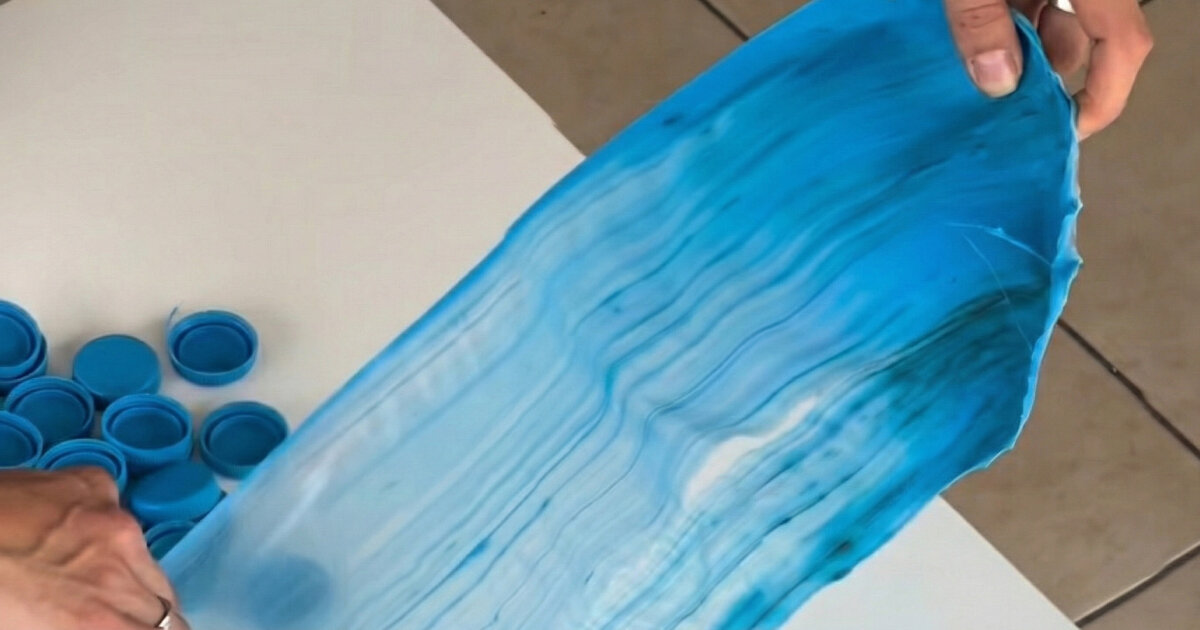
Rushera transforms recycled plastic into coral-like sculptural accessories through innovative fabrication methods, merging synthetic waste with natural forms.
Design
fromdesignboom | architecture & design magazine
1 day agorecycled plastic remolds into sculptural coral and maritime-inspired accessories
Rushera transforms recycled plastic into coral-like sculptural accessories through innovative fabrication methods, merging synthetic waste with natural forms.

Design
fromYanko Design - Modern Industrial Design News
8 hours agoIssey Miyake's Most Beautiful Material Was Always the Scrap - Yanko Design
Satoshi Kondo's exhibition transforms discarded paper from garment production into art, highlighting the beauty and memory in what is typically considered waste.
Deliverability
fromLondon Business News | Londonlovesbusiness.com
1 week agoPaper vs plastic: Choose mailing bags that support your growing e-Commerce brand - London Business News | Londonlovesbusiness.com
Choosing the right mailing bags impacts costs, returns, and customer satisfaction as ecommerce brands scale.
Renovation
fromdesignboom | architecture & design magazine
4 days agorecycled ocean-plastic tiles, timber, and stone shape tropical house on costa rica's coast
Casa Milagros integrates local materials and tropical principles into contemporary architecture, creating a seamless connection between interior spaces and the surrounding landscape.
fromArchDaily
3 weeks agoDesigning for Obsolescence in an Age of Perpetual Upgrades
In the nineteenth century, entire railway networks became obsolete almost overnight, not due to physical deterioration, but because of changes in the technical standards that supported them. The expansion of railroads across Europe and North America adopted different track gauges, and as a dominant standard gradually emerged, these infrastructures became incompatible with one another.
Renovation
Fashion & style
fromEntrepreneur
1 month agoYour 'Organic' TShirt Still Hurts the Planet More Than You Think
Organic and sustainable fashion brands undermine their environmental messaging by packaging products in excessive single-use plastic, contradicting their eco-friendly positioning and contributing significantly to global plastic waste.
Fashion & style
fromBusiness Matters
1 month agoWhy Sustainable Fashion is More Than Just a Trend: Clothing, Bags, and Accessories for a Better Future
Sustainable fashion has moved from niche to mainstream as consumers increasingly demand transparency about production, labor practices, and environmental impact of clothing and accessories.
Miscellaneous
fromwww.theguardian.com
1 month agoA delightful day at the dump: The trick is not to leave with more stuff than I arrived with!'
A recycling centre's ReUse shop in London salvages discarded items including unusual specimens like embalmed animals, vintage furniture, and antiques to resell rather than send to landfill.


fromTasting Table
1 month agoThat Empty Potato Chip Bag Probably Doesn't Belong In Your Recycling Bin - Tasting Table
While you might assume that potato chip bags or other snack bags are recyclable, most are made from mixed materials. This means that the bags may contain plastic on the outside and an inner lining of plastic and aluminum film or foil. While the individual materials may be recyclable on their own, the only way they could be used is if the recycling facility has the means by which to separate the materials.
SF food
fromFast Company
1 month agoThese designers made a sustainable new building material from corn
This corn-based construction material was made by Manufactura, a Mexican sustainable materials company, and it imagines a second life for waste from the most widely produced grain in the world. The project started as an invitation by chef Jorge Armando, the founder of catering brand Taco Kween Berlin, to find ways he could reintegrate waste generated by his taqueria into architecture. A team led by designer Dinorah Schulte created corncretl during a residency last year in Massa Lombarda, Italy.
Science
Design
fromdesignboom | architecture & design magazine
2 months agowearable collection repurposes leftover leather powder as translucent composite material
OBRO converts leather manufacturing offcuts into semi-transparent PVC composite by embedding finely ground leather powder to create visually layered, tactile, durable sheets.
fromDaily Coffee News by Roast Magazine
2 months agoReport: Sustainability Must Be Embedded Into Core Buying Practices to Drive Change
"Ironically, many if not most of these 'sustainability' projects remain disassociated from companies' core procurement strategies, meaning the coffee produced from these projects is not necessarily bought by the companies involved, or only in minimal quantities," the paper states. "And for the coffee that is purchased, prices do not factor into the project design, despite the fact that price is the single variable impacting farmer income that is in the direct control of companies."
Coffee
fromEarth911
2 months agoGuest Idea: 7 Solutions to Give Your Old Sunglasses a Second Life
Just like that coffee cup, eyewear is a complex fusion of materials. Metal hinges are screwed into polymer frames, which hold chemically-coated lenses. This mix of metals, plastics, and coatings means standard sorting machines cannot process them. As a result, they are rejected as contamination and sent directly to landfills, where they contribute to non-biodegradable waste. Unlike a disposable paper cup, however, a pair of sunglasses is built for durability. Its high-quality components make it a perfect candidate for repair, reuse, or reinvention.
Environment



fromwww.theguardian.com
2 months agoRecycled plastic packaging claims are misleading, say experts
Europe's supermarket shelves are packed with brands billing their plastic packaging as sustainable, but often only a fraction of the materials are truly recovered from waste, with the rest made from petroleum. Brands using plastic packaging from Kraft's Heinz Beanz to Mondelez's Philadelphia use materials made by the plastic manufacturing arm of the oil company Saudi Aramco. The Saudi state-owned holding opposes production cuts under the UN plastic treaty and is the world's largest corporate greenhouse-gas emitter (over 70m tonnes up to 2023).
Environment
fromTasting Table
2 months agoThe Eco-Friendly Countertop Material That's Surprisingly Durable - Tasting Table
It's likely that you've encountered recycled glass countertops without realizing it. They're far from the hippie-style broken-glass mosaic art of yesteryear, instead presenting as sleek, highly polished, professional slabs with intriguing bits of confetti-style color trapped inside. That's the recovered glass bits set into a binding material such as resin, cement, or concrete, and then smoothly polished so that the composite surface feels like stone.
Remodel
fromdesignboom | architecture & design magazine
2 months agorecontextualizing human hair waste as potential raw material for design
This research-based design project by Laura Oliveira investigates discarded as a potential raw material for sustainable design applications. Human hair is produced continuously and in large quantities through everyday grooming practices, yet it is almost always treated as waste once separated from the body and typically disposed of in landfills. Despite its material properties, strength, flexibility, and durability as a keratin-based protein fiber, its remains uncommon within design and research contexts.
Design
fromwww.theguardian.com
1 month agoThey pushed so many lies about recycling': the fight to stop big oil pumping billions more into plastics
Then she read an article in this newspaper, just over eight years ago, and discovered that fossil fuel companies had ploughed more than $180bn (130bn) into plastic plants in the US since 2010. It was a kick in the teeth, says Gardiner. You're telling me that while I am beating myself up because I forgot to bring my water bottle, all these huge oil companies are pouring billions She looks appalled. It was just such a shock.
Environment
fromdesignboom | architecture & design magazine
2 months agocompostable plastic bags made of seaweed are designed to break down and not be recycled
They write, 'through clever processing changes, this material is now stronger, more beautiful, and available in higher volumes at a lower price point.' The design remains the same with the frosted look, and this time, it can carry loads better but still lasts only as long as it's needed. After use, the bags can be placed in home compost or industrial compost systems, where they break down into healthy soil.
Environment
[ Load more ]