#camilla-barnes
#camilla-barnes
[ follow ]
#literature #memory #coming-of-age #memoir #identity #aging #narrative-technique #literary-fiction #film-adaptation

Psychology
fromwww.theguardian.com
1 month agoReaders reply: which are more like life, novels or films?
Films and novels employ fundamentally different narrative techniques to convey character psychology, with neither medium inherently more realistic than the other due to their diverse stylistic approaches.
Relationships
fromScary Mommy
1 month agoRomance Duo "Christina Lauren" Talk About Romance Versus Reality & The Current Projects
Christina Lauren co-authors normalize intimate wellness discussions through romance writing and partnerships, emphasizing realistic female experiences in both fiction and real life.
fromwww.theguardian.com
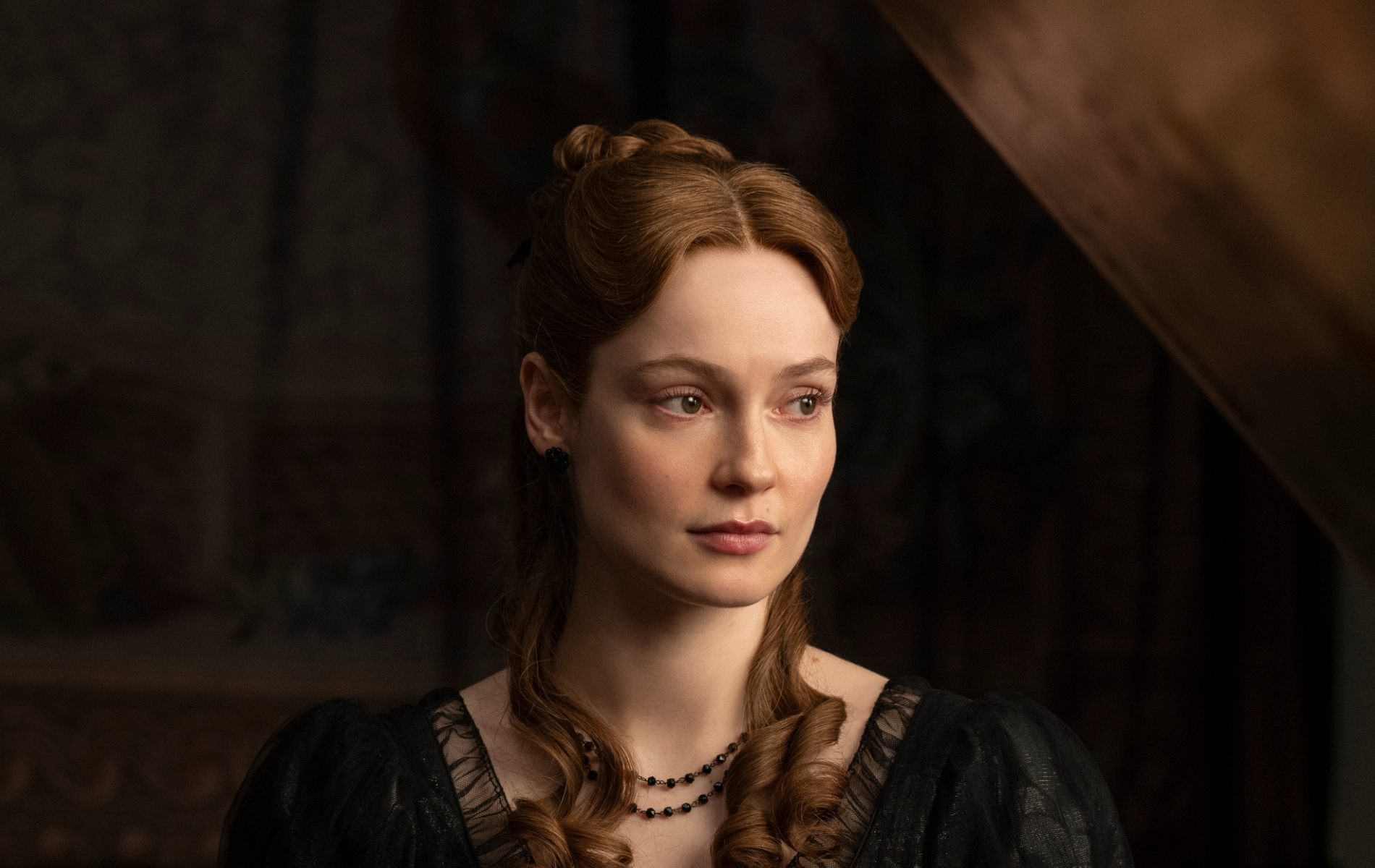
2 weeks agoA new Austen drama made me wonder: is the fate of bookish young women really so different today? | Rhiannon Lucy Cosslett
To be a clever, bookish teenage girl is to spend a certain amount of time standing on the sidelines, feeling invisible to boys. There seemed to be a natural division: you could be smart or pretty, but you could not be both.
Books
Television
fromwww.mercurynews.com
1 month agoWhat to watch: Saucy Vladimir' does justice to Julia May Jonas novel
Four new TV series offer diverse viewing options: Vladimir on Netflix combines smart humor with steamy content, American Classic provides feel-good comedy, Young Sherlock delivers entertainment on Prime Video, and 56 Days offers addictive drama, while Dolly provides horror thrills.


Books
fromwww.npr.org
1 month agoAuthor Luke Kennard talks about his novel, 'Black Bag'
Luke Kennard's novel 'Black Bag' fictionalizes a 1967 psychology experiment where a silent, bagged actor in a classroom gradually becomes liked by students through repeated exposure, exploring how familiarity transforms perception.
Writing
fromwww.theguardian.com
1 month agoThe Other Bennet Sister review the bookish Pride and Prejudice sister gets her turn in the spotlight
Mary Bennet from Pride and Prejudice has become the focus of numerous retellings and adaptations, most notably Janice Hadlow's bestseller adapted into a 10-part television series.
fromwww.theguardian.com
2 months agoThe Bed Trick by Izabella Scott review a bizarre story of sexual duplicity
In September 2015, Gayle Newland stood trial accused of sex by deception. It was alleged that she created an online identity as a man and used this character, Kye Fortune, to lure another woman into a sexual relationship, which was consummated repeatedly with the assistance of a blindfold and a prosthetic penis. The woman believed she was having sex with Kye until one day her ring caught on his hat and she felt long hair.
US news
Books
fromwww.theguardian.com
1 month agoAlmost Life by Kiran Millwood Hargrave review a will-they-won't-they queer romance
Almost Life chronicles a decades-long romance between two women beginning in 1970s Paris, exploring queer love, missed opportunities, and the consequences of life choices across different social contexts.
fromwww.theguardian.com
2 months agoBernardine Evaristo renews call to diversify school curriculum in England
There has been progress in the diversity of texts on offer in the GCSE English literature curriculum, but uptake in schools is still low with just 1.9% of GCSE pupils in England studying books by authors of colour, up from 0.7% five years ago, according to a report. Compiled by the campaign group Lit in Colour, the report says progress is too slow and that
Education
fromThe Nation
2 months agoBarbara Pym's Archaic England
Thatcher rose to power on the back of a campaign to Make Britain Great Again-a promise to reverse the previous two decades of austerity, imperial contraction, and stagnating modernization. By 1979, the country was undeniably in decline-not just materially but on a more ineffable level, too. Divested of the unifying effect of global superpower status, the increasingly dis-United Kingdom's common identity was now an open, and anxious, question.
UK politics
Music
fromwww.npr.org
1 month agoWhy music has become such a big part of the romance novel reading experience
Romance novel readers increasingly use pop music playlists to enhance their reading experiences, creating a community that bridges book fandom and music fandom, exemplified by Charli XCX's Wuthering Heights album.
Books
fromwww.theguardian.com
1 month agoBetter than Wuthering Heights? The Brontes' novels ranked!
Charlotte Brontë's debut novel The Professor was rejected nine times before publication, while her second novel Jane Eyre achieved immediate success, and Anne Brontë's Agnes Grey drew authentically from her governess experience.
fromwww.theguardian.com
1 month agoWuthering Heights is at its heart a story of class and race. Emerald Fennell has got it all wrong | Rhiannon Lucy Cosslett
Admittedly, this one came with a fair few red flags, from the casting of Margot Robbie (simply too old, Cathy is a teenager) and Jacob Elordi (simply too white, Heathcliff, while his origins are uncertain, is described as darker skinned) to the unhinged marketing and crass brand tie-ins. Nevertheless, I was still excited to see it. So why did I leave the cinema not only bored, but feeling a little bit sad?
Film
Books
fromwww.theguardian.com
1 month agoDaisy Johnson: I wasn't a fan of David Szalay, but Flesh is a masterpiece'
Reading shapes identity across life stages, from childhood memories through formative teenage years to adult perspectives, with specific books creating lasting connections and inspiring creative ambitions.
Books
fromwww.theguardian.com
1 month agoSaba Sams: I've no interest in reading Wuthering Heights again'
Jacqueline Wilson's unflinching approach to children's literature, alongside works by authors like Gwendoline Riley and Clarice Lispector, demonstrates that literary courage and emotional complexity resonate more powerfully than conventional safety or virtuousness.
Books
fromJezebel
1 month agoCross Ballerina Farm with 'Rosemary's Baby' and You Get the New Novel 'Trad Wife'
Saratoga Schaefer's novel reimagines forced pregnancy horror by having the protagonist actually birth and parent demon spawn, subverting traditional tropes while exploring reproductive autonomy through a supernatural lens.
Books
fromwww.theguardian.com
1 month agoThey by Helle Helle review a novel to make the reader slow down and take notice
A Danish novel explores the deepening bond between a teenage daughter and terminally ill mother through minimalist prose that captures unspoken emotional intimacy and life's quiet, defining moments.
Books
fromwww.theguardian.com
1 month agoBen Markovits: I used to think any book concerned with people falling in love can't be very good'
Reading shaped formative years through detective stories, fantasy epics, and memoirs that provided companionship and escape during frequent moves and family transitions.
Books
fromwww.theguardian.com
1 month agoBecoming George by Fiona Sampson review the remarkable story of a cross-dressing 19th century novelist
George Sand's life exemplifies self-invention through her transgressive choices, including wearing trousers and pursuing unconventional relationships while establishing herself as a major 19th-century writer.

fromwww.theguardian.com
2 months agoMay We Feed the King by Rebecca Perry review a dazzling puzzle-box of a debut
We are initiated into a world in which historically accurate foodstuffs can be ordered online a half oyster shell, the exposed flesh shining as if with the freshest brine, is 31.25 for a single piece and begin to understand one of the most striking things about this novel: its insistence upon detail, its utter specificity, set against a deliberate lack of specificity regarding the larger details that the reader's mind naturally itches to fill in.
Books
fromThe New Yorker
2 months ago"This Is How It Happens," by Molly Aitken
You are leaving work, your suit still damp from the morning's downpour, the skin on your palms peeling. You are clutching two supermarket bags, tins of cream soup and tuna knocking against one another. The rain is hard and your anorak is cheap. You are on your way to Stockbridge, to your parents' house, which only your father inhabits now that your mother is gone.
Books
fromTODAY.com
2 months agoAmerican Girl's Samantha is All Grown Up In New Novel. Elder Millennials Will Swoon
For those unfamiliar with the beloved heroine, Samantha is one of the first three historical characters introduced by American Girl in 1986. Samantha, Swedish immigrant Kirsten and WWII homefront heroine Molly demonstrated courage, compassion and resilience. Along with an 18-inch doll, each 9-year-old character was featured in a series of easy chapter books; kids could follow each fictional story as well as the historical context surrounding it.
Books
Books
fromThe Atlantic
1 month agoWhen Did Literature Get Less Dirty?
Philip Roth's Zuckerman Unbound functioned as a response to the controversial reception of Portnoy's Complaint, with Roth's protagonist expressing regret over writing sexually explicit material that drew accusations of anti-Semitism and misogyny.
fromwww.theguardian.com
1 month agoAs If by Isabel Waidner review surreal doppelganger story
As the trophy takes the form of an elusive UFO, Corey Fah an outsider unfamiliar with the baffling inner workings of the system is unable to collect or even confirm the award. Waidner has said that the novel was partly inspired by the experience of winning the Goldsmiths prize for their previous work Sterling Karat Gold, and by the ephemeral nature of success, with its unfamiliar contexts of social power and opportunity.
Books
fromAnOther
1 month agoMadeleine Dunnigan's Jean Is a Skilful Character Study in Teenage Angst
Jean is, in the words of its author, a novel about "alienation, told from the inside out". Set at a reform school over the sweltering summer of 1976, the heat rises as Jean fights (and fucks) the other boys, conflict and desire coalescing until the novel reaches its conclusion: his decision to walk out of his life for good. Dunnigan explores the ethics of early sexual experiences, British class dynamics and the crushing weight of - particularly masculine - conformity.
Books
fromianVisits
1 month agoWho really made Dickens? New exhibition credits the women he depended on
Charles Dickens's novels are often criticised for their idealised passive female characters, but as the Dickens Museum now shows, he was, in life and in death, surrounded by formidable, intelligent and independent women. A new exhibition at the museum shifts attention away from Dickens as a solitary genius and instead places women at the centre of his creative world and cultural afterlife.
Books
Books
fromwww.theguardian.com
1 month agoOn Morrison by Namwali Serpell review a landmark appraisal of the great novelist's work
Toni Morrison's novels demand rigorous formal analysis that prioritizes narrative strategies and craft over sociopolitical readings, revealing complexity and deliberate difficulty.
[ Load more ]