Careers
fromInc
17 hours agoMore Workers-and Employers-Are Looking Abroad for Jobs They Can't Find at Home
Workers are increasingly open to relocating abroad for job opportunities due to tight labor markets and economic pressures.
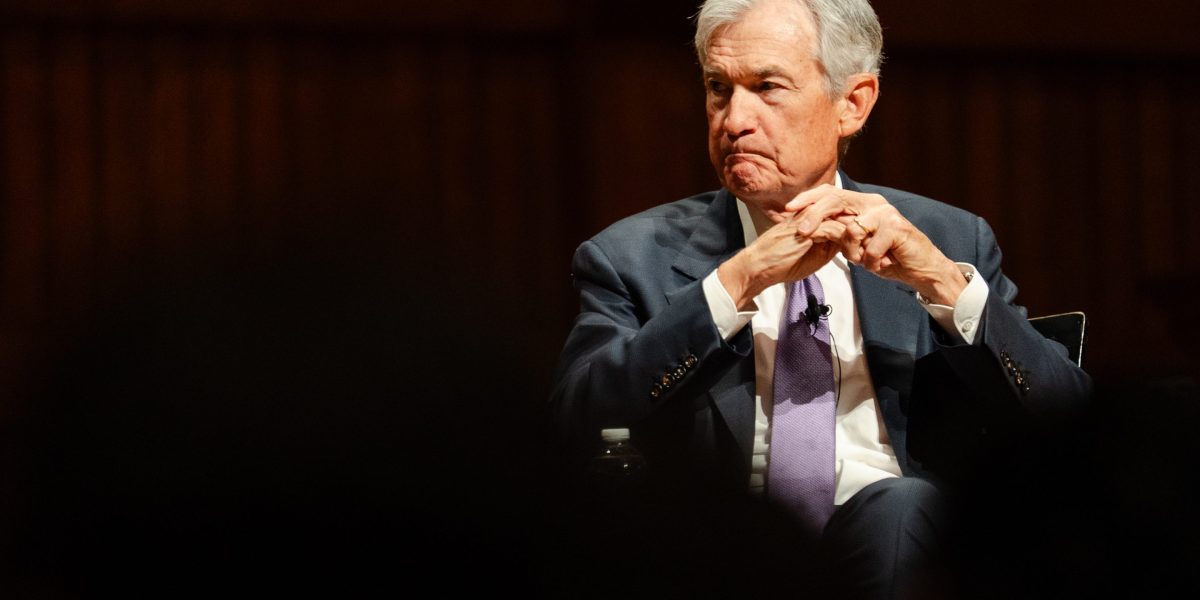
The most senior officials from the US Federal Reserve, the European Central Bank, and the Bank of England are expected to take part in a desktop stress test to respond to another Lehman Brothers-style collapse.
Nearly half of firms (48%) expected turnover to grow over the next 12 months in the first quarter of the year, up from 42% in the final quarter of 2025.
Hassett acknowledged that grocery prices have improved, but electricity prices remain high, along with health insurance and airline fares, indicating ongoing inflationary pressures.
Dollar weakness matters enormously for emerging market equities because most of these companies earn revenues in local currencies. When the dollar softens, those earnings translate into more dollars for U.S.-based investors, giving the portfolio a currency tailwind on top of any underlying business performance.
Ongoing conflict in the Middle East continues to disrupt global markets and oil prices, adding a persistent layer of uncertainty for UK firms. This geopolitical instability is driving higher cost pressures and intensifying concerns around supply chains and energy security, all of which are critical factors in strategic business decision making.
The Government is considering the possibility of enhanced tax credits for multinational companies, which include major players like Apple, Eli Lilly, and Microsoft.
U.S. financial markets experienced a volatile week, largely influenced by geopolitical developments in the Middle East and fluctuations in energy prices. Investor sentiment was driven primarily by external events rather than domestic fundamentals.
Weak performance in several service sectors offset gains in retail and wholesale trade, reinforcing concerns about the pace of economic recovery. Japan relies heavily on oil imports from the Middle East, making it particularly sensitive to disruptions in the region.
The tensions between the United States and Iran have pushed oil prices higher, raising fears of energy-driven inflation, which helped support both the dollar and Treasury yields. The 10-year yield has climbed to its highest level in roughly two weeks.
Global-E posted $220.8 million in revenue, up 25.5% year-over-year, with gross margins at 45.1%. The company generated $13.2 million in net income, but profit margin remained razor-thin at 0.83%. Operating margin reached 7.7%, showing the business model works operationally, but capital efficiency remains a problem. Return on equity sits at just 0.81%, meaning the company barely generates returns on deployed capital. That's the core issue Wall Street keeps circling back to.
Companies enter new markets with momentum. Press coverage looks promising. Campaigns launch on schedule. Local teams are hired. Early dashboards suggest traction. Then progress slows. Customer interest plateaus. Partnerships take longer than expected. Internally, the conversation almost always turns to execution. Messaging must not be clear enough. The market probably needs more education. What I have learned is that this conclusion is usually wrong. What looks like market resistance is more often a signal that the brand is communicating from the wrong position.
The International Monetary Fund has warned mounting geopolitical tensions and an escalation of Donald Trump's tariff war could hit global economic growth and trigger a backlash in financial markets. In an update as Trump threatens to impose tariffs on Nato allies opposed to his ambitions in Greenland, the Washington-based fund said a renewed eruption in trade tensions was among the biggest risks to global growth in 2026.