#developmental-disorders
#developmental-disorders
[ follow ]
#autism #adhd #neurodiversity #mental-health #parenting #child-development #education #child-behavior

#adhd
Psychology
fromPsychology Today
5 days ago6 Ways ADHD Can Hide Autism
ADHD can overshadow autistic traits, leading to misdiagnosis and misunderstanding of individuals with both conditions.
Mental health
fromPsychology Today
6 days agoThe Link Between High Functioning Anxiety and ADHD
ADHD can manifest as perfectionism, leading to internal stress despite outward appearances of responsibility.



#neurodiversity
Mental health
fromIndependent
3 weeks agoAsking for a friend: 'My son has just been diagnosed with autism and ADHD. My husband also got tested and has ADHD. How will all this affect our relationship?'
Navigating the challenges of neurodiversity in a family can be overwhelming, especially with multiple diagnoses affecting communication and relationships.
Relationships
fromSilicon Canals
3 days agoA clinical psychologist explains that the adult children who check on their aging parents most often aren't the favorites - they're usually the ones still hoping for a conversation they stopped expecting years ago - Silicon Canals
The favored child often receives love, while the other sibling seeks recognition and validation through ongoing efforts and communication.
#parenting
Parenting
fromSilicon Canals
4 days agoChildren who grew up in the 1960s and 70s without structured schedules didn't just learn independence - they built an internal compass that modern children, supervised into adolescence, are rarely given the chance to develop - Silicon Canals
Children today have less freedom and fewer opportunities to solve problems independently compared to previous generations.
Parenting
fromSilicon Canals
4 days agoChildren who grew up in the 1960s and 70s without structured schedules didn't just learn independence - they built an internal compass that modern children, supervised into adolescence, are rarely given the chance to develop - Silicon Canals
Children today have less freedom and fewer opportunities to solve problems independently compared to previous generations.
Psychology
fromSilicon Canals
4 days agoThere's a specific kind of adult who can sense when a room is about to shift in mood three seconds before anyone else notices, and it isn't intuition, it's a skill they developed as a child in a house where missing that signal cost them something. - Silicon Canals
Emotional intelligence is a learned skill developed in unpredictable environments, not an innate trait or gift.
fromeLearning Industry
4 days agoDiagnostic Assessment In Education: A Strategic Guide For K-12 And Higher Ed Teachers
A diagnostic assessment is a pre-instruction evaluation used to identify learners' prior knowledge, skill gaps, and misconceptions before teaching begins. Its purpose is not to grade performance, but to inform decisions about teaching, pacing, and support.
Education
fromPsychology Today
1 week agoMy Child Has Autism: How Do I Know the Program Is Working?
If the application of behavioral techniques does not produce large enough effects for practical value, then the application has failed. Practical value is whatever you define as meaningful for your child's life.
Mental health
fromwww.npr.org
1 month agoNew autism group meets to counter MAHA's 'ideological agenda'
We in the autism science and advocacy community were just appalled at the way he went about selecting members. The current committee has been hijacked by a narrow ideological agenda that does not reflect either the broad autism community or the state of autism science.
US news
fromDaily Mom magazine
3 weeks agoSpecial Needs Summer Camp For Children, Special Needs Camp
Special needs summer camps are specialized programs designed for children and young adults with a range of disabilities, including autism spectrum disorder (ASD), ADHD, Down syndrome, and other developmental or physical challenges.
Parenting

fromenglish.elpais.com
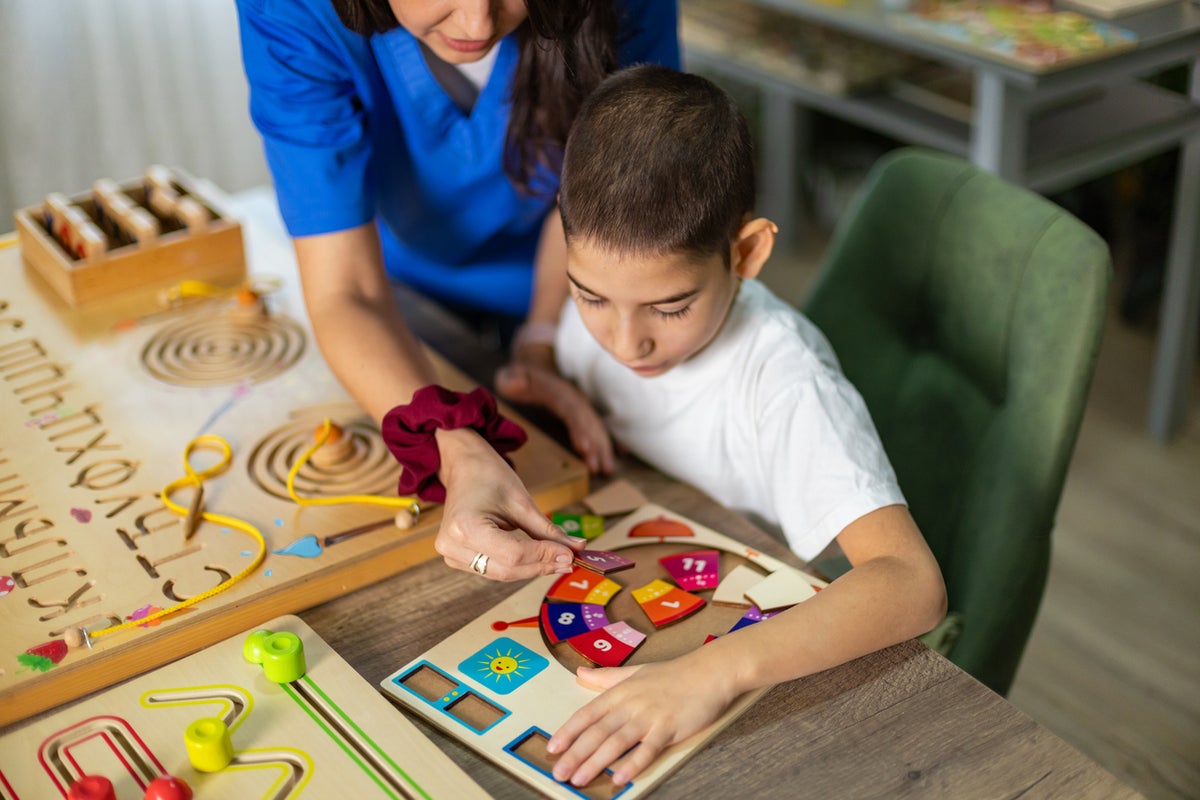
2 months agoThe incidence of autism is similar in boys and girls, although boys are diagnosed earlier
The findings of a study conducted on a sample of 2.7 million people in Sweden over a 35 year period, and published this Thursday in the medical journal BMJ, suggest that the male to female ratio of Autism Spectrum Disorder (ASD) has decreased over time. In early childhood, before the age of 10, the male to female ratio is 3:1 (the most widely accepted ratio a few years ago was 4:1).
Medicine
fromPsychology Today
2 months agoThe Science of Belonging for People With IDD
Developmental disabilities are actually quite common. In the United States, about 1 in 6 children has a developmental disability (CDC, 2024). Intellectual and developmental disabilities (IDD) are a group of neurodevelopmental conditions usually present at birth that affect the trajectory of a person's physical, intellectual, and/or emotional development (National Institute of Child Health and Human Development, 2021). Conditions such as Down Syndrome, Autism, Fragile X, Cerebral Palsy, and others are examples of intellectual or developmental disabilities.
Public health
fromPsychology Today
2 months ago3 Common Cognitive Patterns Experienced by People With ADHD
Polyvagal theory, introduced in 1994 by psychologist Stephen Porges, highlights the role of the autonomic nervous system in regulating our health and behavior. Our lived experience of engaging with the world is impacted by external environmental cues, internal physical sensations, and relational experiences (e.g., an impression of connection, safety, and trust between individuals). Neuroception is our body's unconscious surveillance system that shifts us into one of three autonomic states needed to respond to a situation: rest-and-digest (social and safe), fight-or-flight (mobilization), or shutdown/collapse (immobilization).
Psychology
Parenting
fromwww.theguardian.com
1 month agoLife with my autistic sons: How do you explain all the worries, the sleepless nights?'
A father balances caring for elderly parents with disabilities while raising autistic sons and maintaining a large social media presence documenting his family's experiences.
fromPsychology Today
1 month agoWhat Parents Should Know About Oppositional Defiant Disorder
When a child is labeled "oppositional," adults often assume the problem is the child. In my experience as a child psychiatrist, the truth is often much more complicated. Both families sought out these schools, believing they were giving their children the best education possible. Instead, the schools failed their children, labeling them "oppositional" and "defiant" rather than addressing the root causes of their behavior.
Mental health
[ Load more ]