#dietrich-enns
#dietrich-enns
[ follow ]


fromThe Oaklandside
3 days agoRemembering Carl Anthony, architect who brought racial equity analysis to environmental movement
Carl Cokine Anthony redefined the relationship between racial equity, regionalism, and the environment, establishing a foundation for future environmental justice initiatives.
East Bay (California)
fromArchDaily
3 weeks agoArchitectures of the Gaze: 25 Viewpoints for Experiencing the Landscape
Viewpoints are structures designed for observing the landscape from elevated positions. They act as devices that organize the gaze and establish a direct relationship between the body and the territory.
Philosophy
#sustainable-architecture
Design
fromdesignboom | architecture & design magazine
2 weeks agoreversible cultural pavilion activates public space in frankfurt 2026
Spain's pavilion for World Design Capital 2026 emphasizes reversible cultural infrastructure and sustainable design through innovative materials and construction methods.
Renovation
fromIrish Independent
3 days agoSelf-build story: 'It awakened something in me; I probably did it in a past life. But I've finally found a really creative career that I love'
A West Cork bungalow combines Irish and French design elements, focusing on light and texture to create a Mediterranean-inspired family home.
fromwww.dw.com
2 months agoThe city that swapped parking for green space
Though they're individually tiny, parking spots quietly play a dominant role in shaping urban landscapes. Most US cities dedicate at least 25% of their developable land to them. Some, even more. That land usage doesn't only determine the way a city looks. It also means covering large swathes of urban areas in heat-absorbing asphalt, which contributes to making summers hotter and heightens the risk of flooding since it prevents drainage during storms and heavy rainfall.
Miscellaneous
Miscellaneous
fromArchDaily
1 month ago7 Unbuilt Masterplans Reimagining Urban Futures Through Ecology and Collective Space
Unbuilt urban masterplans explore adaptive spatial frameworks that recalibrate mobility, ecology, and collective life through climate-responsive design and public space integration across diverse global contexts.
Renovation
fromArchDaily
4 weeks agoTransforming a Concrete Shell into a Wooden Interior Shaped by the Sea
A Mediterranean harbor house renovation transforms a raw concrete shell into a material-driven interior that echoes maritime atmosphere through spatial organization, natural materials, and carefully controlled views of the surrounding landscape.
fromArchDaily
1 month agoHeritage Without Permanence: When Architecture Endures by Disappearing
A Gothic cathedral can take centuries to complete. A world exposition pavilion may stand for six months. A ritual structure in Kolkata rises and vanishes within five days. Yet each draws pilgrimage, shapes collective memory, and reorganizes urban life. If heritage has long been defined by what endures, architecture repeatedly shows that cultural authority can also belong to what gathers people.
Design
Design
fromdesignboom | architecture & design magazine
2 months agopeter pichler designs this 'museum depot' to resemble a grassy tyrolean peak
A grass‑roofed, low‑slung museum depot in Bolzano centralizes over one million South Tyrol cultural objects, integrating conservation, research, and public access within a cohesive campus.
fromArchDaily
2 months agoHouse of the Seasons / New Architekten + Jutta Albus Architektur
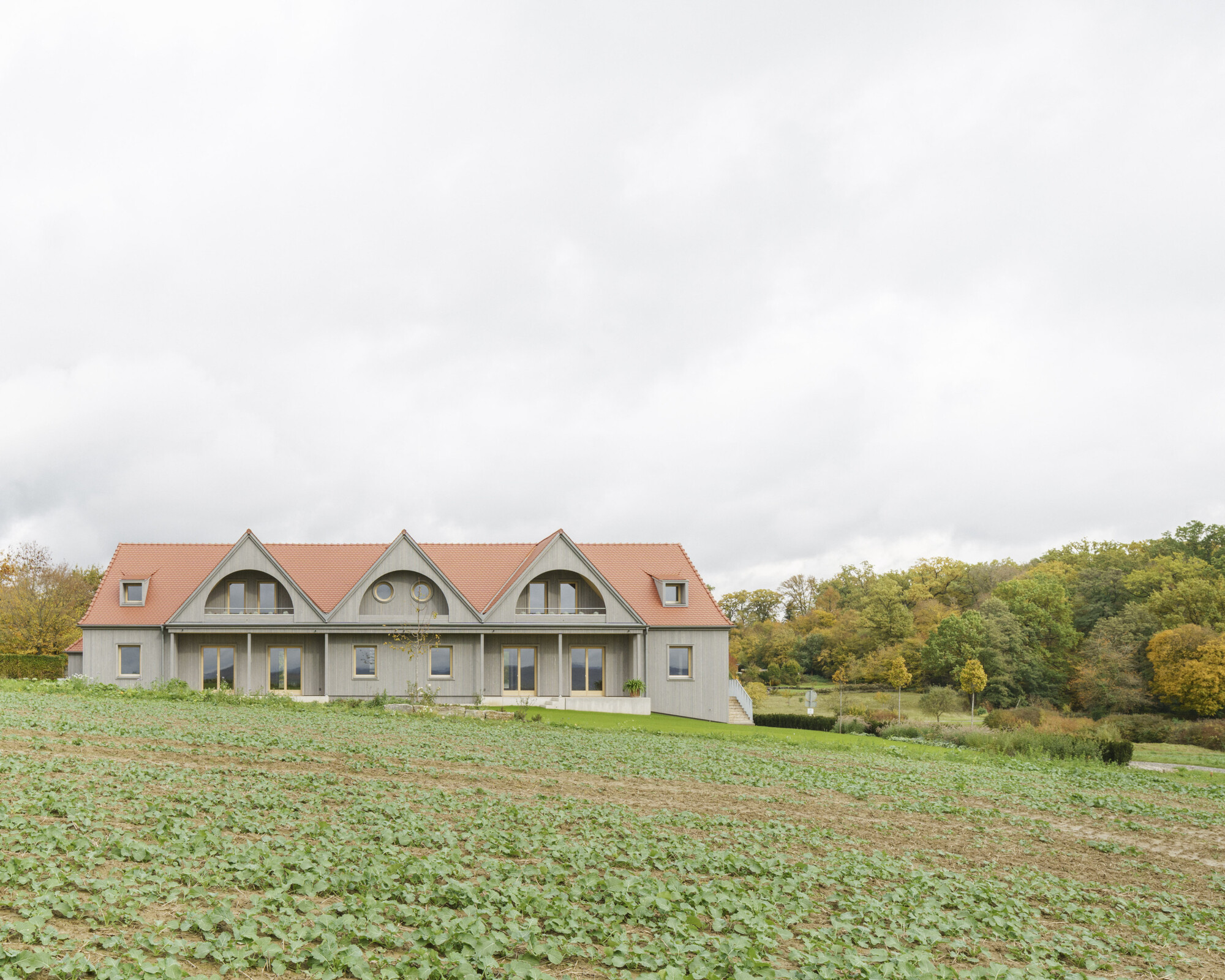
In line with the objectives of the German "Building Type E" initiative, which has already received broad political and professional support, the Climate Pavilion can be seen as an applied architectural experiment.
Design
fromArchDaily
2 months agoShaping Architectural Continuity: 25 Revitalization Projects Across Historic, Industrial, and Natural Sites
Heritage sites constitute complex spatial archives in which architecture, history, and collective memory converge. They encompass a wide spectrum of contexts-from archaeological remains, ancient and historic townscapes, UNESCO-listed landscapes, to early modern civic structures and industrial infrastructures. Yet these environments confront challenges: climate change, urban transformation, disaster, shifting social needs, and the gradual erosion of material fabric. Revitalization and restoration projects respond to these conditions by positioning architectural and spatial practice as an active mediator between preservation and the contemporary topologies.
Renovation
[ Load more ]