#economic-growth-and-interest-rates
#economic-growth-and-interest-rates
[ follow ]
#federal-reserve #interest-rates #inflation #monetary-policy #oil-prices #labor-market #sp-500 #jerome-powell



#sp-500


Business
fromLondon Business News | Londonlovesbusiness.com
3 days agoS&P 500 rebounds nearly 9% from its lows - London Business News | Londonlovesbusiness.com
The S&P 500 is recovering, driven by strong earnings growth expectations and improved market sentiment, despite ongoing geopolitical risks and high inflation.
Business
fromLondon Business News | Londonlovesbusiness.com
3 days agoS&P 500 rebounds nearly 9% from its lows - London Business News | Londonlovesbusiness.com
The S&P 500 is recovering, driven by strong earnings growth expectations and improved market sentiment, despite ongoing geopolitical risks and high inflation.


fromLondon Business News | Londonlovesbusiness.com
4 days agoMarkets surge on easing tensions, but warning signs gather beneath the surface - London Business News | Londonlovesbusiness.com
U.S. equity markets delivered a strong performance over the past week, supported by improving geopolitical sentiment and renewed investor confidence, with all major indices recording gains exceeding 3%.
Europe news
fromFortune
5 hours agoThe bond market would be a big casualty of the U.S. debt crisis, former Treasury secretary says | Fortune
"That's a dangerous thing," he said Thursday during an interview with Bloomberg TV, describing a scenario where demand and prices for Treasuries fall as foreign interest in the market declines.
Business


Artificial intelligence
fromFortune
2 weeks ago'Inflationary surge': Fed economists warn AI hype is overheating the economy whether or not the technology ever delivers | Fortune
AI optimism may hinder productivity and contribute to short-term inflation as households and businesses react to perceived future gains.

Business
from24/7 Wall St.
10 hours agoCharles Schwab Gets Dual Price Target Boosts From Deutsche Bank and JPMorgan: Is the Brokerage Giant Ready to Run?
Charles Schwab received price target increases from Deutsche Bank and JPMorgan following strong Q1 earnings, indicating confidence in its financial outlook.
US politics
fromwww.theguardian.com
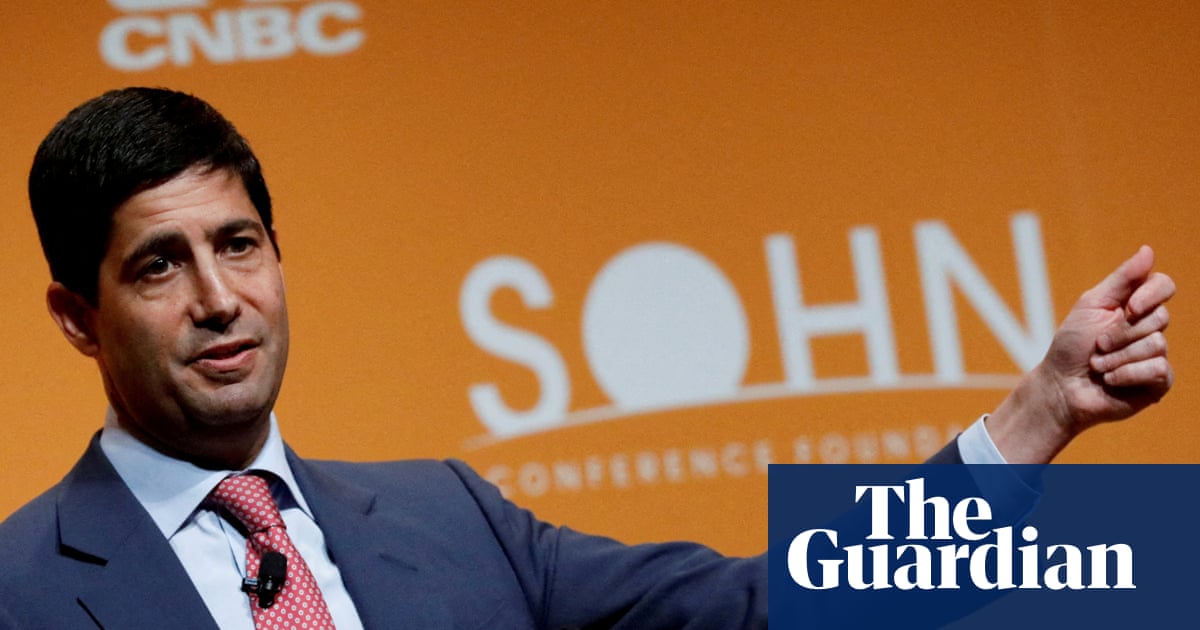
3 days agoTrump pick to lead Federal Reserve has assets worth over $100m, disclosures indicate
Kevin Warsh's financial disclosures reveal assets exceeding $100 million, including significant investments and commitments to divest if confirmed as Federal Reserve governor.
from24/7 Wall St.
9 hours agoThis 1 Commodity ETF Is up 42% as It's the Perfect Inflation Hedge
The Invesco DB Commodity Index Tracking Fund (NYSEARCA:DBC) is up 42% over the past year, and nearly 29% year-to-date. These gains reflect a war that has scrambled global commodity supply chains from crude oil to wheat to fertilizer.
Business

World politics
fromLondon Business News | Londonlovesbusiness.com
2 weeks agoUS dollar stable after successive gains - London Business News | Londonlovesbusiness.com
Escalating Middle East tensions are influencing market sentiment, keeping the dollar stable and impacting US Treasury yields amid inflation concerns.
fromwww.aljazeera.com
4 weeks agoUS Fed keeps interest rates steady amid economic, geopolitical uncertainty
The Committee seeks to achieve maximum employment and inflation at the rate of 2 percent over the longer run. Uncertainty about the economic outlook remains elevated. The implications of developments in the Middle East for the US economy are uncertain, the central bank said in a statement announcing its policy decision and referring to its Federal Open Market Committee.
US politics
from24/7 Wall St.
1 month agoInterest Rates Are Heading Down - These 3 Stocks Win Big When They Do
In my view, interest rates are more likely than not going to head lower over the course of 2026 and into 2027. I'm not saying we're due for a pandemic-like selloff, but I do think that weakness in the labor market is likely more protracted than the government data suggest. As such, I do think the makeup of the Federal Reserve, and which way many of its presidents and voting members lean (toward providing support for the labor market over battling inflation) could lead to much faster rate cuts than many think.
Retirement
from24/7 Wall St.
1 week agoThe Federal Reserve's Nightmare Scenario Is Taking Shape and the Stock Market Should Pay Attention
The New York Fed's Survey of Consumer Expectations indicated that one-year inflation expectations rose to 3% in March, with gas price expectations jumping to 9%, the highest since March 2022.
Business
US Elections
fromFortune
4 weeks ago'A month ago, no one would have believed this': June Fed rate hike odds just surpassed rate cut odds as stagflation fears grow | Fortune
War in Iran drives energy prices higher, reducing probability of Fed rate cuts this year and increasing stagflation concerns that could undermine Trump's economic agenda.
fromThe American Conservative
1 month agoU.S. GDP Growth Slowed for Q4 2025
U.S. economic growth cooled significantly in the fourth quarter of 2025, which the Trump administration attributed to last fall's record-long federal government shutdown and softer consumer spending. Gross domestic product rose at a 1.4 percent seasonally adjusted, inflation-adjusted annual rate in the final three months of last year, the Commerce Department said Friday, well below the 2.5 percent pace expected by economists.
Right-wing politics
fromLondon Business News | Londonlovesbusiness.com
1 month agoDollar surges on geopolitical risks and rising yields
Crude oil breaking above the USD 100 threshold has revived inflation concerns, pushing US Treasury yields higher across the curve. However, Friday's labour market report revealed a significant deterioration in employment conditions, with the economy losing 92,000 jobs in February, its largest contraction in several months.
World news
US news
fromLondon Business News | Londonlovesbusiness.com
2 months agoUS Inflation: Disinflation returns, rate cuts to follow - London Business News | Londonlovesbusiness.com
US inflation eased in January to 2.4% with disinflationary signs raising the prospect of two interest-rate cuts in 2026 if the trend continues.
fromLondon Business News | Londonlovesbusiness.com
2 months agoBetterthanexpected US jobs data clouds path of interestrate cuts - London Business News | Londonlovesbusiness.com
Even though confidence is seeping out of the US economy, employers are taking a glass‑half‑full approach and have taken on more staff than expected. While there could be anomalies in this delayed data release, given the chaos of the partial government shutdown, it does indicate that the US economy is continuing to show resilience. This has helped propel the internationally focused FTSE 100 higher in afternoon trade, as prospects for the world's largest economy appear more upbeat.
US news
fromLondon Business News | Londonlovesbusiness.com
2 months agoDollar struggle and monetary policy shape the next phase - London Business News | Londonlovesbusiness.com
The resilience of gold above $4,800 per ounce at this stage reflects a delicate and complex balance between traditional supporting factors and emerging pressures-one that cannot be superficially interpreted or reduced to the movement of the dollar alone. It is true that the U.S. dollar's retreat from its recent peaks, after failing to sustain its recovery momentum from a four-year low, provided gold with a short-term breather and attracted some buyers.
Business
[ Load more ]