#einsteins-theories
#einsteins-theories
[ follow ]
#quantum-mechanics #general-relativity #black-holes #cosmology #physics #quantum-physics #thermodynamics
Philosophy
fromOpen Culture
4 days ago"The Most Intelligent Photo Ever Taken": The 1927 Solvay Council Conference, Featuring Einstein, Bohr, Curie, Heisenberg, Schrodinger & More
The late 19th and early 20th centuries marked the beginning of the quantum revolution in physics, challenging existing scientific understanding.


#quantum-mechanics
Philosophy
fromwww.scientificamerican.com
1 month agoA 100-year-old theory might explain what's wrong with quantum mechanics
Pilot wave theory, developed by Louis de Broglie a century ago, potentially resolves quantum mechanics' paradoxes by describing particles guided by attendant waves rather than existing in superposition.
Science
fromwww.scientificamerican.com
1 month agoApril 2026: Science history from 50, 100 and 150 years ago
California's 1969 education guidelines mandated equal classroom time for Genesis creation accounts and evolutionary theory, reflecting broader cultural resistance to scientific authority in public institutions.
fromBig Think
1 month agoHow Einstein revolutionized the meaning of "where" and "when"
We now recognize that even ideas like "when" and "where" are subject to the laws of Einstein's relativity, and that in relativity, space and time are not absolute quantities, but rather are relative to each and every unique observer.
Science
fromFast Company
1 month agoTop 'I told you so' moments in the history of science
During the pandemic, many researchers expressed reluctance to share their ideas for fear of professional repercussions, such as losing credibility or funding. This culture of silence is particularly detrimental in critical situations like a pandemic, where new ideas could save lives.
OMG science
fromBig Think
2 months agoEinstein the "lone genius" is a complete myth
Perhaps the most commonly told myth in all of science is that of the lone genius. The blueprint for it goes something like this. Once upon a time in history, someone with a towering intellect but no formal training wades into a field that's new to them for the first time. Upon considering the field's issues, they immediately see things that no one else has ever seen before.
Science
#gravitational-waves
OMG science
fromwww.scientificamerican.com
1 month agoA boom in gravitational waves leaves scientists with more questions than answers
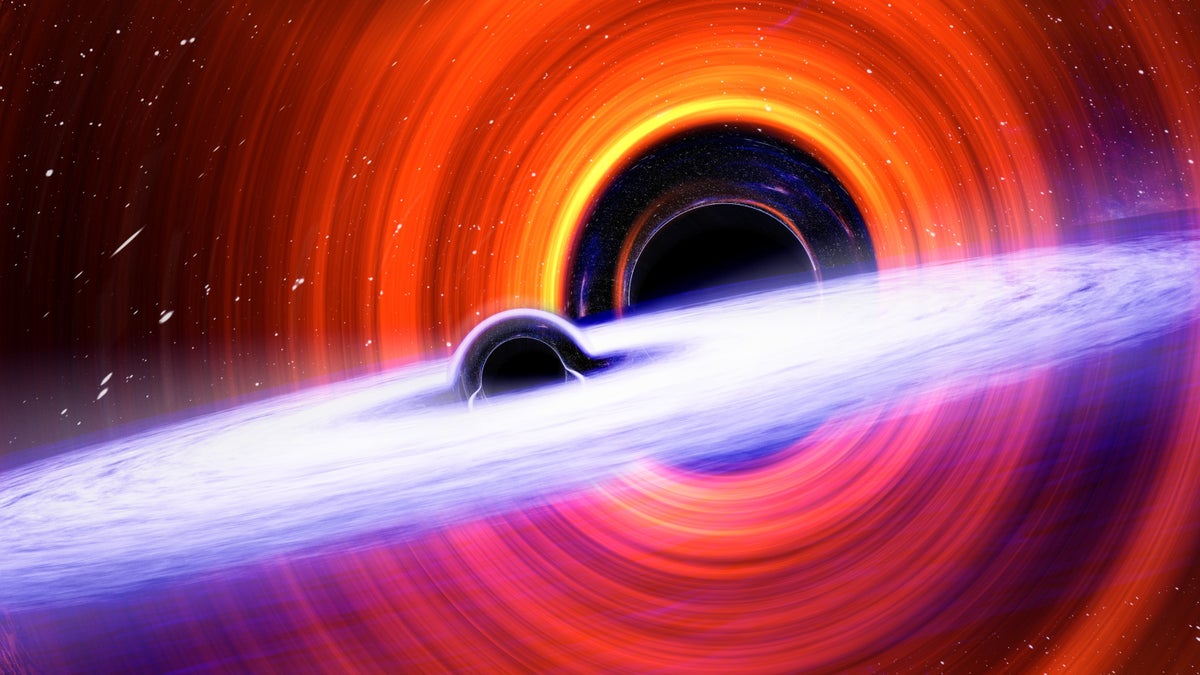
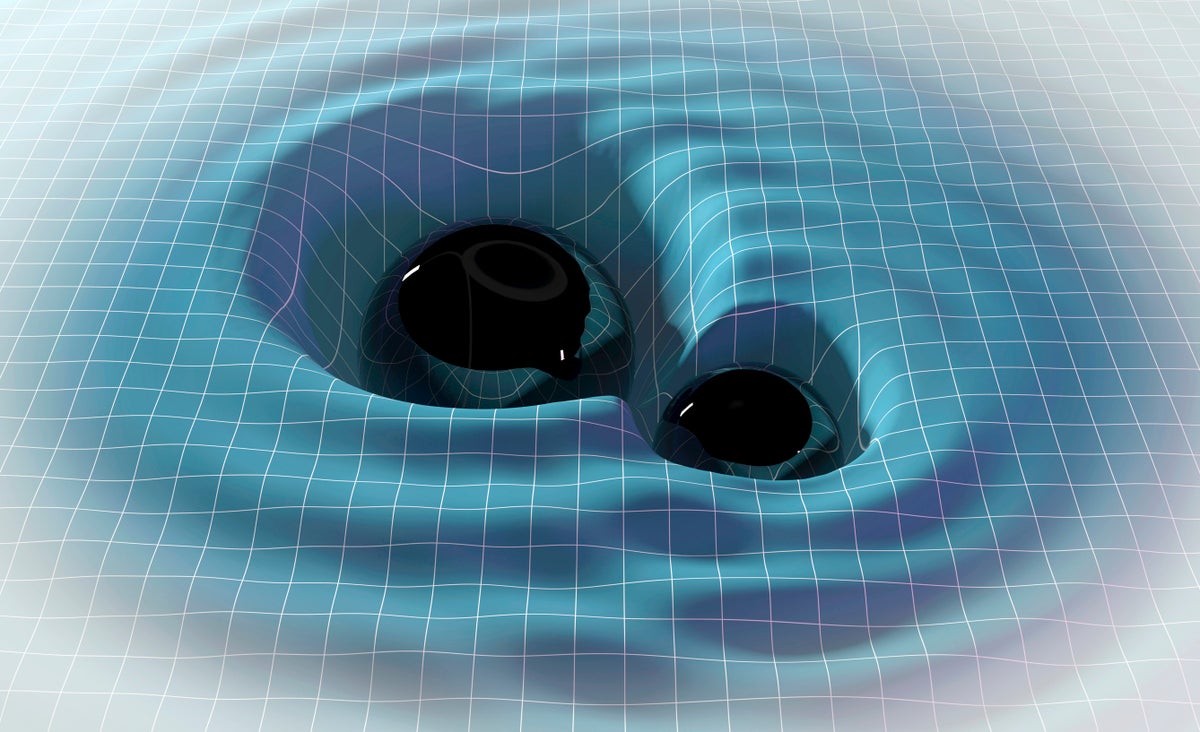
A global network of gravitational-wave observatories has detected 218 candidate events, revealing complex structures in cosmic mergers and providing unprecedented insights into the universe.
OMG science
fromwww.scientificamerican.com
1 month agoNewly discovered ripples in spacetime put Einstein's general relativity to the test
A global network of gravitational wave observatories has more than doubled detections of cosmic collisions, revealing a universe filled with black holes, neutron stars, and their mergers with unprecedented variety and characteristics.
fromwww.scientificamerican.com
2 months agoMarch 2026: Science history from 50, 100 and 150 years ago
Any object or concept can be represented as a form, a topological surface, and consequently any process can be regarded as a transition from one form to another. If the transition is smooth and continuous, there are well-established mathematical methods for describing it. In nature, however, the evolution of forms usually involves abrupt changes and perplexing divergences, or transformations. Because these transformations represent sudden disruptions of otherwise continuous processes, Rene Thom of the Institut des Hautes Etudes Scientifiques in France termed them elementary catastrophes.
Science

Science
fromwww.scientificamerican.com
2 months agoThe Schrodinger equation is getting a glow-up for its 100th birthday
Including observers within the Schrodinger equation reveals new perspectives and may redefine boundaries of quantum mechanics, addressing enduring mysteries about measurement and reality.
fromBig Think
1 month agoAsk Ethan: Can quantum entanglement survive a black hole?
According to Einstein's General Relativity, for every black hole that exists within the Universe, there are only three properties that go into it that matter in any way: the black hole's total mass, the black hole's net electric charge, and the black hole's intrinsic angular momentum, and that's it. It doesn't matter what type of matter went into the black hole in order to form it; all that matters is its mass, charge, and angular momentum.
Science
[ Load more ]