#equitable-funding
#equitable-funding
[ follow ]
#philanthropy #homelessness #education #new-york-city #zohran-mamdani #funding #higher-education #civil-rights
#philanthropy






Fundraising
fromNonprofit Quarterly | Civic News. Empowering Nonprofits. Advancing Justice.
18 hours agoBridging Funders to the Front Lines: Pluralism and Greater Philanthropic Opportunity | Nonprofit Quarterly | Civic News. Empowering Nonprofits. Advancing Justice.
Movement-rooted philanthropic intermediaries are essential for addressing future challenges in the nonprofit sector and advancing equity.
NYC LGBT
fromNonprofit Quarterly | Civic News. Empowering Nonprofits. Advancing Justice.
6 days agoPepper Spray and the Courage to Stay | Nonprofit Quarterly | Civic News. Empowering Nonprofits. Advancing Justice.
Philanthropy and wealth work reveal insights about power, belonging, and democracy through narratives and community experiences.
Social justice
fromNonprofit Quarterly | Civic News. Empowering Nonprofits. Advancing Justice.
6 days agoAfter the Breaking: A Black Feminist Response to Retrenchment | Nonprofit Quarterly | Civic News. Empowering Nonprofits. Advancing Justice.
The world is fracturing, revealing authoritarianism, while philanthropy struggles to adapt, necessitating new visions for justice and community-centered practices.
Fundraising
fromNonprofit Quarterly | Civic News. Empowering Nonprofits. Advancing Justice.
1 week agoPhilanthropy's Drag Coefficient: When Process Costs More Than Failure | Nonprofit Quarterly | Civic News. Empowering Nonprofits. Advancing Justice.
Philanthropy is a financial loss with no return, burdened by excessive processes that consume resources meant for deployment.
fromEntrepreneur
15 hours agoWhy Passion Isn't Enough to Scale a Nonprofit
Most nonprofits begin with passion, and for good reason. A founder identifies a critical need and brings together a team that cares deeply enough to act. That kind of energy is what makes the early days possible. It drives long hours, resourceful problem-solving and a deep commitment to impact.
Non-profit organizations






fromPsychology Today
1 day agoHow Community-Based Healthcare Builds Engagement
Most people leave doctor visits with prescriptions, but still feel unsure—instructions make sense, but no one asks about their life. In contrast, when a provider knows your name, remembers your story, and explains care in a way that fits you, the experience feels different—and that difference matters.
Healthcare

fromArtnet News
1 day agoIMLS Spared in Legal Battle-But Threat of Budget Cuts Looms
The U.S. Department of Justice reached a settlement in the lawsuit filed last April by the American Federation of State, County and Municipal Employees union and the American Library Association, agreeing to leave IMLS intact and allowing it to continue its work supporting libraries and museums across the country.
Arts


fromwww.housingwire.com
1 day agoGeorgia LIHTC credit match stays in place for now
Georgia's program ranks among the most generous in the country, with many states offering their own versions of a match with the federal LIHTC program, often focusing on preserving existing affordable housing rather than building more.
Real estate
Social justice
fromNonprofit Quarterly | Civic News. Empowering Nonprofits. Advancing Justice.
5 days agoWeakening the Equal Credit Opportunity Act Will Widen Inequality | Nonprofit Quarterly | Civic News. Empowering Nonprofits. Advancing Justice.
The CFPB's proposed changes to ECOA threaten to weaken protections against lending discrimination.
Online Community Development
fromwww.housingwire.com
4 days agoCDFIs could draw institutional capital for climate projects
There is a strong desire for collaboration between institutional investors and community development financial institutions, but barriers exist due to perceived risks and lack of standardization.
NYC LGBT
fromSan Francisco Bay Times
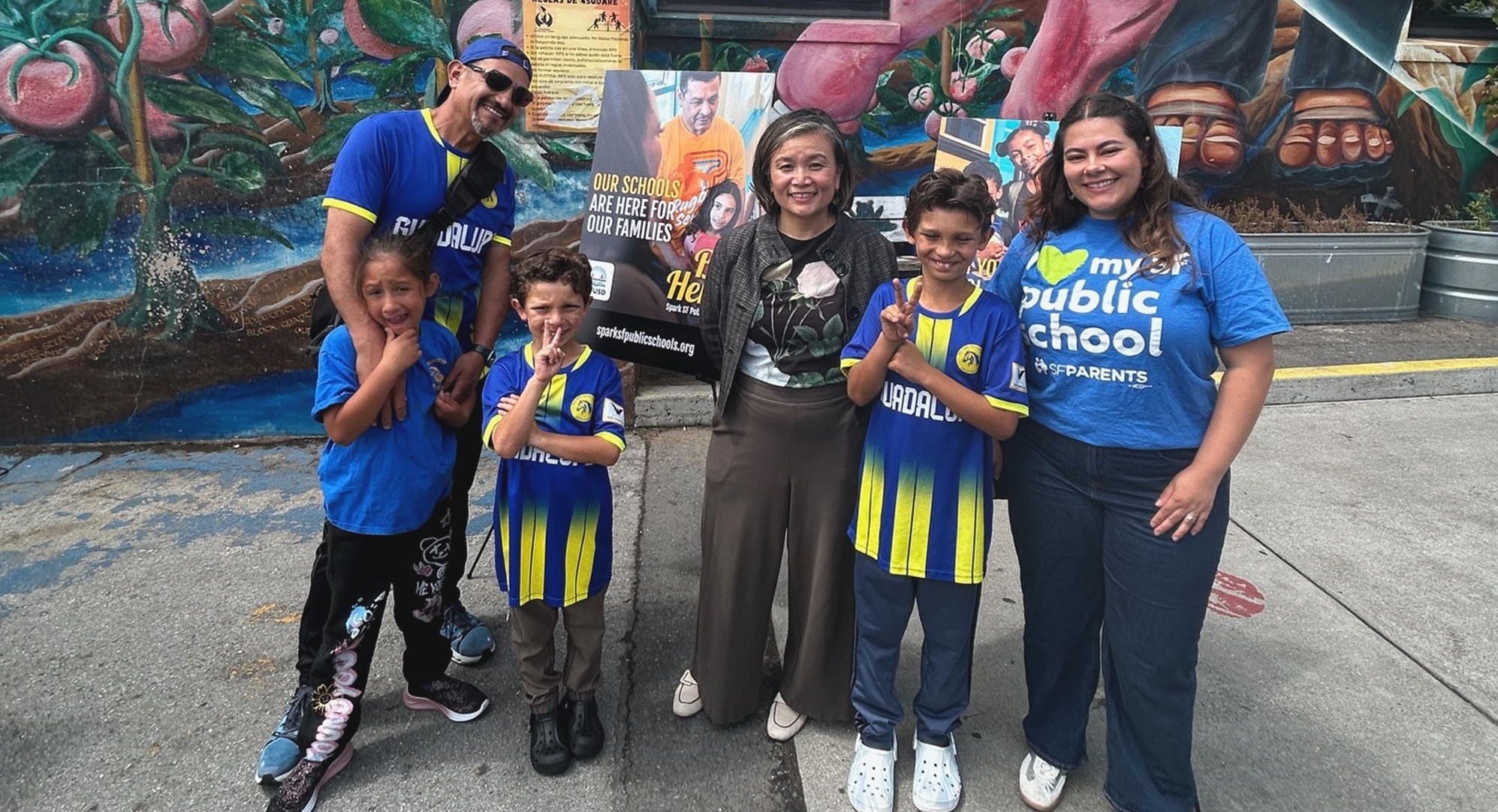
4 days agoShow of Hope Gala Pays Tribute to Dedicated Social Worker Alberto Rangel - San Francisco Bay Times
Alberto Rangel, a dedicated social worker, was honored posthumously for his commitment to the community after being tragically killed in a hospital incident.
Non-profit organizations
fromNonprofit Quarterly | Civic News. Empowering Nonprofits. Advancing Justice.
1 day agoThe Meaningful Reset: Designing Nonprofits to Survive Board-Staff Conflict | Nonprofit Quarterly | Civic News. Empowering Nonprofits. Advancing Justice.
Nonprofit organizations face unique challenges due to emotional investment, leading to conflicts that require careful analysis and intentional resolution.
fromSan Jose Spotlight
1 day agoContract dispute delays Homekey Palo Alto opening - San Jose Spotlight
The Homekey project at 1237 San Antonio Road has been in the works since fall 2023, when city and state leaders touted its importance in addressing the local and regional housing crisis.
Mission District
fromApaonline
5 days agoOn the Insufficiency of Current Gender Equality Policies in Academia and the Necessity of a Cultural Shift
In 2021, women held only 28% of professorships in higher education and research institutions, even though they comprised 48% of PhD students, according to data gathered from a sample of 900 EU and non-EU institutions.
Philosophy
Non-profit organizations
fromNonprofit Quarterly | Civic News. Empowering Nonprofits. Advancing Justice.
21 hours agoWhy Americans Give: New Research Finds 5 Distinct Profiles for Generosity | Nonprofit Quarterly | Civic News. Empowering Nonprofits. Advancing Justice.
Generosity in the U.S. is diverse and varies by individual motivations and demographics, contrary to the belief that it has eroded.
Social justice
fromNonprofit Quarterly | Civic News. Empowering Nonprofits. Advancing Justice.
5 days agoSpeaking Up Almost Cost Me My Job, but We Built Power Anyway | Nonprofit Quarterly | Civic News. Empowering Nonprofits. Advancing Justice.
Workplace issues stem from structural problems, leading to burnout and low morale among staff in a nonprofit setting.
Media industry
fromNonprofit Quarterly | Civic News. Empowering Nonprofits. Advancing Justice.
2 weeks agoPolitics in an Attention Economy | Nonprofit Quarterly | Civic News. Empowering Nonprofits. Advancing Justice.
Candidates must be cultural figures to succeed in today's American politics, navigating an attention economy shaped by algorithms.
Non-profit organizations
fromInside Higher Ed | Higher Education News, Events and Jobs
5 days agoDefunding MSIs Doesn't Just Hurt Minority Students
The White House proposes significant cuts to funding for minority-serving institutions, threatening their role in providing economic mobility and workforce training.
Higher education
fromInside Higher Ed | Higher Education News, Events and Jobs
1 week agoEducation Dept. Scraps Some Civil Rights Agreements
The Trump administration rescinded agreements protecting transgender students' rights in schools, claiming previous interpretations of Title IX were ideologically driven.
fromNonprofit Quarterly | Civic News. Empowering Nonprofits. Advancing Justice.
2 weeks agoYou Don't Have to Be Unionized to Be United | Nonprofit Quarterly | Civic News. Empowering Nonprofits. Advancing Justice.
The labor of this kind of organizing was invisible and deeply exhausting. In a precarious workplace, where a so-called 'performance review' could amount to job loss, organizing meant building a bridge while standing on it.
Social justice
fromHarvard Business Review
2 weeks agoTreat Nonprofits as Strategic Partners, Not Just Philanthropic Recipients
Most for-profit companies still confine nonprofit relationships to corporate philanthropy. Donations flow through foundations, annual reports highlight community contributions, and nonprofit engagement is framed as evidence of corporate responsibility.
Non-profit organizations
Non-profit organizations
fromNonprofit Quarterly | Civic News. Empowering Nonprofits. Advancing Justice.
3 weeks agoDisability Inclusion Isn't "Special Needs"-It's Smart Philanthropy | Nonprofit Quarterly | Civic News. Empowering Nonprofits. Advancing Justice.
Cuts to special education oversight threaten funding and services for millions of children with disabilities, risking progress in disability inclusion.
Online Community Development
fromNonprofit Quarterly | Civic News. Empowering Nonprofits. Advancing Justice.
1 month agoWellbeing Is Infrastructure | Nonprofit Quarterly | Civic News. Empowering Nonprofits. Advancing Justice.
NPQ launches a seven-part series examining how technology, systems, and processes shape workplace wellbeing and organizational sustainability in nonprofits.
US politics
fromNonprofit Quarterly | Civic News. Empowering Nonprofits. Advancing Justice.
2 months agoFunders Must Support Advocates Fighting Back Against Pronatalism | Nonprofit Quarterly | Civic News. Empowering Nonprofits. Advancing Justice.
The Trump administration prioritized pronatalist policies grounded in reproductive futurism, promoting heteronormative family ideals while eroding rights for transgender, queer, and marginalized people.
fromNonprofit Quarterly | Civic News. Empowering Nonprofits. Advancing Justice.
1 month agoRotating the Clipboard Built Our Workplace Democracy | Nonprofit Quarterly | Civic News. Empowering Nonprofits. Advancing Justice.
Losing staff could be detrimental to the projects we worked on, and there was a growing dissatisfaction with how meetings were run. These mostly one-sided discussions left the quieter half of us feeling pushed aside, like our thoughts didn't matter much. If things stayed this way, I worried the good people on our team would start quitting one by one.
Non-profit organizations
fromwww.theguardian.com
1 month agoReaders reply: what would be the most socially useful way to spend a billion dollars?
I've always thought it would be good to acquire an old warehouse in every town throughout the land and convert it into low-rent community workspaces for artists, local charities and small businesses getting off the ground. A kind of people's WeWork. What would others do with a humungous, but not unlimited, pile of dosh to benefit society? Roland Freeman, West Yorkshire Send new questions to nq@theguardian.com.
Left-wing politics
Food & drink
fromwww.theguardian.com
1 month agoWhy food justice isn't being served in America
Food justice advocates often misrepresent South Central Los Angeles as a resource-depleted food desert lacking grocery stores and knowledgeable residents, contradicting anthropological research documenting abundant food retail and community food practices.
fromNonprofit Quarterly | Civic News. Empowering Nonprofits. Advancing Justice.
2 months agoPhilanthropy Must Defend the Right to Bear Witness | Nonprofit Quarterly | Civic News. Empowering Nonprofits. Advancing Justice.
"Are you okay?" These were Alex Pretti's last words, said to a woman after ICE agents had tackled and pepper-sprayed her. Videos from bystanders show Pretti holding up a phone, attempting to document what was happening before he himself was pepper-sprayed, wrestled to the ground, and killed by those officers. He lost his life not for committing violence, but for documenting it, and stepping in to protect someone facing it.
US politics
fromNonprofit Quarterly | Civic News. Empowering Nonprofits. Advancing Justice.
2 months agoThis Is Not a Retreat | Nonprofit Quarterly | Civic News. Empowering Nonprofits. Advancing Justice.
The change in the administration's tactics in Minneapolis is not a retreat. Instead, they are regrouping and planning another mode of attack, with the hopes that their repression might be met with resistance that is easier to control and contain. People who garner their relevancy and power through the dehumanization and oppression of others will do whatever it takes to cling to their soulless sense of self.
US politics
Higher education
fromInside Higher Ed | Higher Education News, Events and Jobs
1 month agoDiversity, Equity, Inclusion and Access in the Real World
Higher education should focus on doing one thing well for a specific community rather than attempting to serve everyone, mirroring successful niche business models.
US politics
fromNonprofit Quarterly | Civic News. Empowering Nonprofits. Advancing Justice.
2 months agoS.O.S.-Nonprofits Need Funding for "Staff Operating Support" | Nonprofit Quarterly | Civic News. Empowering Nonprofits. Advancing Justice.
Invest significantly in the nonprofit workforce through new funding to restore sector momentum, address chronic underinvestment, and recognize nonprofits as major employers.
Fundraising
fromNonprofit Quarterly | Civic News. Empowering Nonprofits. Advancing Justice.
1 month agoWho's Doing the Work? How to Shift Power and Not Just Workloads | Nonprofit Quarterly | Civic News. Empowering Nonprofits. Advancing Justice.
Authentic community participation in philanthropy requires affected communities to actively shape strategy, influence funding decisions, and hold funders accountable, moving beyond traditional top-down donor-controlled models.
US politics
fromNonprofit Quarterly | Civic News. Empowering Nonprofits. Advancing Justice.
2 months agoThe Long-Term Futures Work of Building a Better Democracy | Nonprofit Quarterly | Civic News. Empowering Nonprofits. Advancing Justice.
Sustained long-term strategies and expanded democracy-focused infrastructure are required to address rising attacks and root causes beyond short-term responses.
Social justice
fromNonprofit Quarterly | Civic News. Empowering Nonprofits. Advancing Justice.
2 months agoGrowing a Solidarity Economy | Nonprofit Quarterly | Civic News. Empowering Nonprofits. Advancing Justice.
Solidarity economy centers people and planet and needs expanded capital, responsive infrastructure, international solidarity, and compelling stories to connect and scale cooperative practices.
Fundraising
fromNonprofit Quarterly | Civic News. Empowering Nonprofits. Advancing Justice.
2 months agoGiving Bigger, Organizing More Boldly: Centering Disability Justice | Nonprofit Quarterly | Civic News. Empowering Nonprofits. Advancing Justice.
Centering Disability Justice reveals marginalized edges hold deep lessons and requires investing wealth and inheritance into movement infrastructure for collective liberation.
Fundraising
fromNonprofit Quarterly | Civic News. Empowering Nonprofits. Advancing Justice.
2 months agoFor Movements to Win, Organize People and Money | Nonprofit Quarterly | Civic News. Empowering Nonprofits. Advancing Justice.
Private philanthropy should be abolished because wealth stems from extraction and state failure; resources and accountability must shift to grassroots, community-controlled systems of care.
[ Load more ]