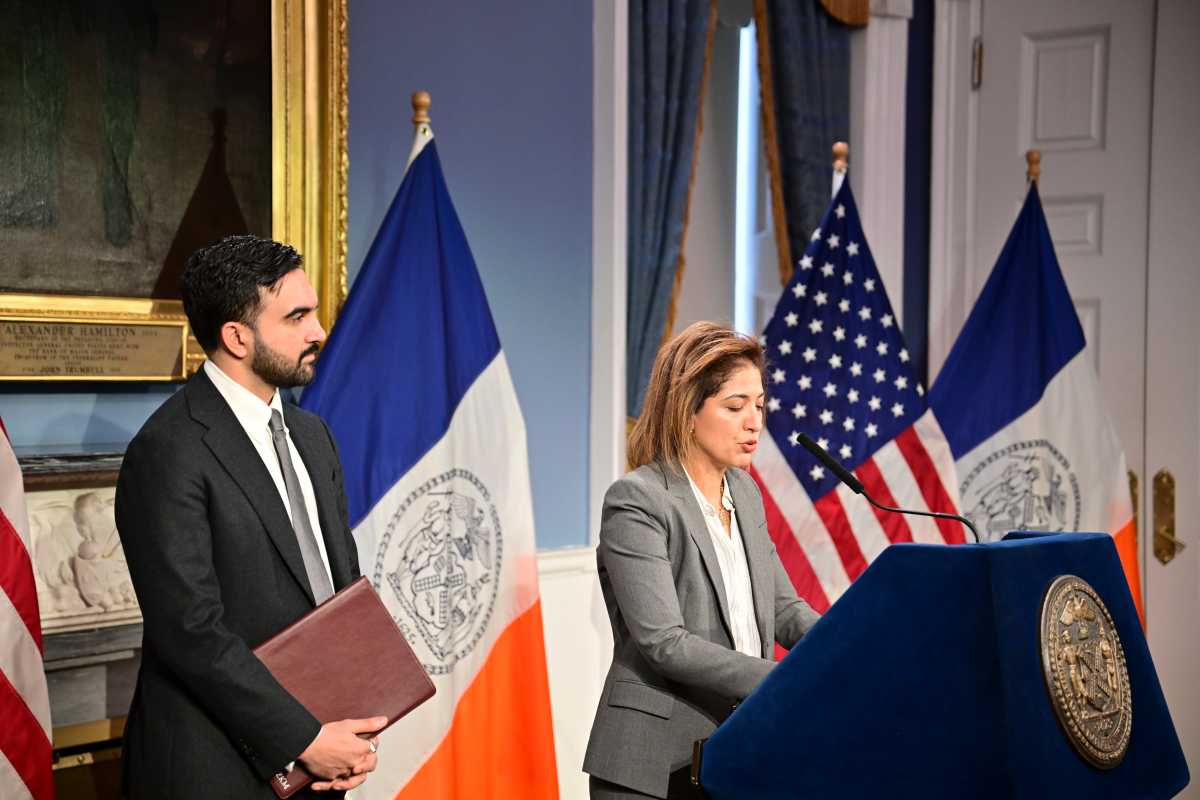
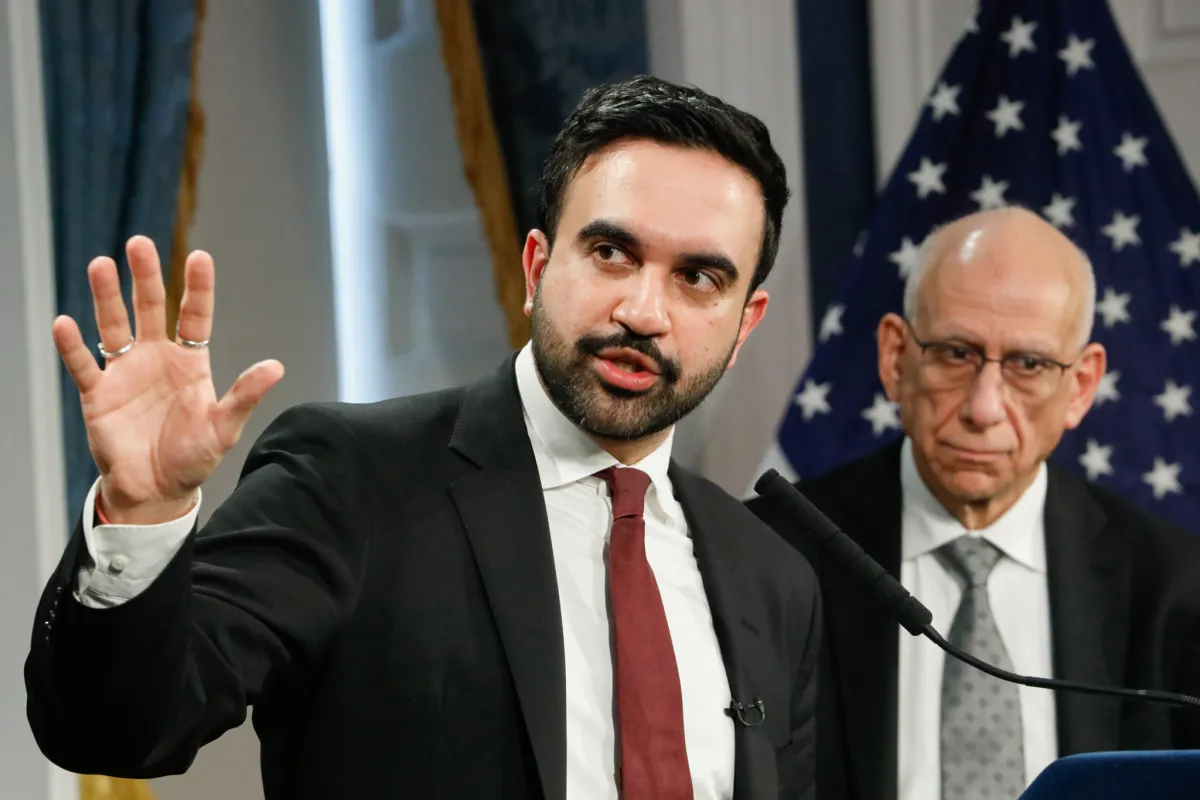
"The snow is coming down heavily across our city, and I can think of no better excuse for New Yorkers to say home, take a long nap or take advantage of our public library's offer of free access to Heated Rivalry on e-book or audiobook for anyone with a library card," Mamdani - who was elected mayor of the city in November - said during a press conference, making those standing with him chuckle.
I remembered walking through the Big Apple, watching as Senegalese rickshaw drivers gathered around to watch the game on their phone, and as Algerian street vendors cried in mirth seeing their team win the trophy after 29 years. And I realized that, apart from the Prince Moulay Abdellah Stadium, there wasn't a better place in the world to watch the AFCON Final than New York City.
For a mayor who has become so closely associated with a foreign policy conflict thousands of miles away, Zohran Mamdani does relatively little to directly address it. Follow his public pronouncements, press conferences, and social media posts, and you'll find a relentless focus on the local: an executive order cutting fees for small businesses, a mayoral appointment to combat racial discrimination, a ride in a taxi to announce a new TLC commissioner.
President Donald Trump and New York Mayor Zohran Mamdani (D) have reportedly stayed in touch since their surprisingly friendly meeting in the Oval Office. Prior to officially being sworn in as New York's next mayor, Mamdani went to the White House for a much-anticipated meeting with the president. During his campaign, Mamdani repeatedly vowed to combat Trump's agenda should he win the then-upcoming election.
Today is moving day, Mamdani told reporters during a Jan. 12 press conference at the mansion. Tonight will be the first night that I sleep in Gracie. We are so grateful to all of those who have already welcomed us to the Upper East Side, and I'm delighted to be back in the borough where I grew up, within walking distance of many of the museums that I went to as a teenager in this city, he said.
From time to time, a piece of vocabulary comes along which the public didn't realize it was missing and soon enough can't live without. "Commie Corridor"-to designate the precincts of Queens and north Brooklyn overrun with youthful lefties-is one such phrase, a zippy addition to the city's lexicon of pop anthropology. Its sudden currency was the handiwork of Michael Lange, a twenty-five-year-old political analyst and member of the Democratic Socialists of America, who used it in his Substack newsletter back in June, just as early voting in the Democratic primary began. Zohran Mamdani, Lange wrote, might just be able to win, if he could inspire staggering turnout in this "young and hungry" base; when Mamdani pulled it off, the New York Times published Lange's analysis, bringing the coinage to a wider readership.
Mayor Mamdani now wants a plan to bring all facilities back in compliance with rules about capacity and other standards. On Tuesday morning, New York City Mayor Zohran Mamdani issued an executive order requiring the Department of Social Services and Department of Homeless Services (DHS), in tandem with the Law Department, to create a plan to phase out the use of emergency shelters for migrants that don't meet longstanding city standards.
Mamdani's campaign is unique and his success extraordinary in several respects: he went from polling at 1% to defeating his opponents by a landslide margin in just over one year; his campaign recruited over one hundred thousand volunteers, engaging first-time voters and immigrants typically overlooked or deliberately excluded from electoral politics; and his platform was centered on affordability-not only the most deeply felt issue for the vast majority of New Yorkers (and, increasingly, others around the country),
I was briefed this morning on the U.S. military capture of Venezuelan President Nicolas Maduro and his wife, as well as their planned imprisonment in federal custody here in New York City. Unilaterally attacking a sovereign nation is an act of war and a violation of federal and international law. This blatant pursuit of regime change doesn't just affect those abroad, it directly impacts New Yorkers, including tens of thousands of Venezuelans who call this city home.
Mamdani signed an executive order on Jan. 1 that repealed every executive order former Mayor Adams signed between Sept. 26, 2024 the date Adams was indicted on federal campaign fraud charges that were later dropped and Dec. 31, 2025. Among those revoked orders were a ban on city officials boycotting, divesting or sanctioning Israel (something which Mamdani had previously supported), directions for the NYPD to examine ways to keep protesters away from houses of worship (issued weeks after an Upper East Side synagogue demonstration), and the city's adoption of the International Holocaust Remembrance Alliance (IHRA) definition of antisemitism, which some have said can treat criticism of the Israeli government's actions as antisemitic.
On his very first day as @NYCMayor, Mamdani shows his true face: he scraps the IHRA definition of antisemitism and lifts restrictions on boycotting Israel. This isn't leadership. It's antisemitic gasoline on an open fire, the foreign ministry said in a post on X. Mamdani revoked an Adams-era order that adopted the International Holocaust Remembrance Alliance's definition of antisemitism, which the previous administration said included demonizing Israel and holding it to double standards as forms of contemporary antisemitism.
This third possibility has often been overlooked by commentary around Zohran Mamdani's election as New York City mayor. However, this scenario fits the tenure of John Vliet Lindsay perfectly: a New York mayor who, from 1966 to 1973, passed progressive legislation that leftists would dream of winning today, but whose administration nonetheless oversaw an erosion of working-class power. Because of this failure, Lindsay's good intentions and accomplishments were largely for naught.
Billionaires raised fortunes against him. The president threatened to strip his citizenship. Mainstream synagogues slandered him as the spawn of Osama Bin Laden and Chairman Mao. But today, Zohran Mamdani became the first socialist mayor of New York City. For all the hysteria, when I look at Mamdani, I didn't see some radical departure from the past. I see him as the heir to an old and venerable Jewish tradition that of Yiddish socialism which helped build New York.
New York law spells out that four-year mayoral terms start on the January 1 after elections. To avoid any ambiguity about who's in charge of America's most populous city, it has become a tradition to hold a small midnight swearing-in. Mamdani has chosen as the site of his midnight oath the Old City Hall subway stop, which was decommissioned in the middle of the previous century and is accessible only a few times a year through guided tours.
I asked him and some of his advisers if there were cities that had pulled this off that New York could emulate, places that had managed to meaningfully lower the cost of living. None sprang to mind," the article stated.
Right now is an opportunity for me to introduce myself as I am, and the focus of what my administration will be. Because it's very much in line with what many Staten Islanders care deeply about - which is not only their ability to afford to live in New York City, but also build a life in New York City.
Only days remain until Zohran Mamdani ascends the throne of New York City, and nearly all his great opponents have given up. Andrew Cuomo, vanquished. Financier Bill Ackman, reduced to congratulations for the mayor-elect and even offers of support. Donald Trump, singing his praises after inviting him over to hang. Maybe the great socialist boogeyman isn't so scary after all.