Media industry
fromThe Motley Fool
1 hour agoThe S&P's New High Is Anything but Blah | The Motley Fool
Netflix's Q1 2026 results showed a beat largely due to a one-time $2.8 billion fee, but growth appears to be slowing.
U.S. equity markets delivered a strong performance over the past week, supported by improving geopolitical sentiment and renewed investor confidence, with all major indices recording gains exceeding 3%.
At 7:46 a.m. Monday, Doornbos had posted on X that Iranian officials were still considering a U.S. proposal to end the war, 'centering around uranium enrichment.'
The VIX closed last week at almost 27, an 11% jump on the final trading day, and early signals this week show it climbing further. The fear gauge now sits at its 93rd percentile over the past year, meaning volatility has been this elevated or higher only 7% of trading days in the last 12 months.
EWP is a pure-play bet on Spanish large-cap equities. It tracks the MSCI Spain Index and holds roughly 30 publicly traded Spanish companies, giving investors concentrated exposure to a single economy rather than the blended eurozone exposure you'd get from a broader fund. The ETF has been around since March 1996 and currently holds about $1.9 billion in net assets.
iShares MSCI EAFE ETF (NYSEARCA:EFA) tracks the MSCI EAFE Index, covering large- and mid-cap equities across developed markets in Europe, Australasia, and the Far East, explicitly excluding the US and Canada. The fund has been running since August 2001, carries $77.8 billion in assets, and charges 32 basis points annually. For a fund of this size and history, that cost is competitive.
Financial markets were firmly in the red as investors reacted to the Middle East conflict intensifying, with stocks down across Asia and Europe. Gold also fell, which suggests investors are once again liquidating assets that have previously served them well, or they are reacting to a further strengthening in the US dollar.
The failure of peace talks between the United States and Iran and renewed tensions surrounding the Strait of Hormuz have strengthened demand for the US dollar as a safe haven, putting direct pressure on silver.
Energy prices remain the main driver of investor sentiment. Brent Crude is still trading above $85 a barrel-approximately 20% higher than before the latest flare-up in regional tensions-raising fresh concerns about the inflationary impact of prolonged instability.
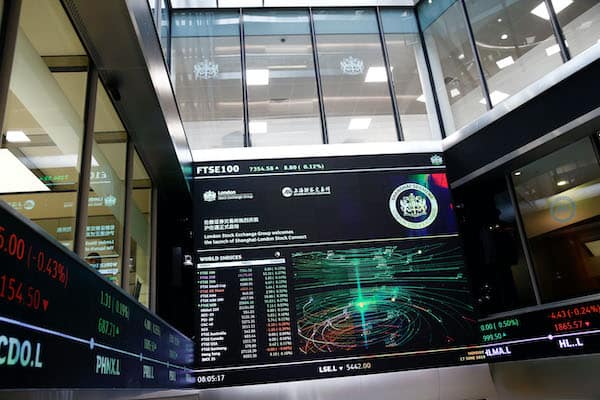
London's Footsie is in a footloose mood again, with higher metals prices buoying mining stocks and corporate results from financial giants surprising on the upside. The index has scaled fresh heights in early trade, with investors showing enthusiasm for London-listed stocks amid global uncertainty.
Markets were also bruised as a planned €220bn tie-up between mining giants Glencore and Rio Tinto was shelved. The pair have had a long-running, on-off engagement that has seen them try to tie the knot before. "Many wondered whether it might be third time lucky when Rio Tinto and Glencore got back around the table to discuss a deal which would have created the world's biggest mining company - but today it emerged it was not to be,"
European markets have kicked off on a negative fitting in a day that looks jampacked full of potential obstacles that will leave many be believing they are best served sitting it out for now. In a week that has seen a new front runner for the fed chair position, today's FOMC interest rate decision provides the basis for market rate expectations in the months ahead.
The markets are seeing green across the board amid a near Goldilocks scenario in the economy. The latest jobs report reveals that conditions are neither too not nor too cold, with 130,000 jobs added last month, surpassing economist's most bullish of estimates, while the unemployment rate edged lower to a surprising 4.3% from 4.4% month-over-month. What it means for the Fed and interest rates will depend largely on the latest inflation data, with the CPI due out at the end of the week.
Market volatility is high, with the VIX index up 5% in today's session. The latest inflation data came in better than expected, offering what should become relief for markets. Consumer prices rose 2.4% year over year last month, a cooler reading that brings inflation back toward levels last seen in mid-2025. As the gauge edges closer to the Federal Reserve's 2% target, expectations for an eventual rate cut are likely to gain momentum, even as this week's labor market data reflected strength.