#facial-blindness

[ follow ]
Psychology
fromSilicon Canals
5 hours ago

Neuroscience reveals that the calmest person in any crisis isn't naturally fearless - their brain learned to delay panic because their childhood required them to be functional before they were allowed to be afraid - Silicon Canals

Calmness under pressure is a learned response, not merely a personality trait or temperament.

#neurodiversity
Psychology
fromPsychology Today
3 days ago

Is Anyone 'Neurotypical'? There Is No Universal Neurotype

Neurodiversity encompasses a wide range of cognitive abilities, and no individual can be strictly classified as 'neurotypical.'
Psychology
fromPsychology Today
3 days ago

Is Anyone 'Neurotypical'? There Is No Universal Neurotype

Neurodiversity encompasses a wide range of cognitive abilities, and no individual can be strictly classified as 'neurotypical.'
Mindfulness
fromSilicon Canals
1 week ago

The older I get the more I notice that my body remembers arguments my mind has forgiven. A tone of voice, a specific pause before someone speaks, a door closing at a certain speed. Forgiveness turned out to be a cognitive event that the nervous system never agreed to. - Silicon Canals

Forgiveness involves both conscious decisions and unconscious bodily responses, highlighting the complexity of emotional healing beyond mere intention.
Science
fromNews Center
2 weeks ago

Light Impacts How the Brain Perceives and Remembers Threats - News Center

Light influences how animals perceive threats and make risk avoidance decisions, impacting understanding of related human behaviors and disorders.
#face-pareidolia
Psychology
fromMail Online
5 days ago

Why you see Jesus in your toast: Faces in objects are perceived as MEN

Face pareidolia leads to a bias in perceiving male faces over female faces in inanimate objects.
Psychology
fromMail Online
5 days ago

Why you see Jesus in your toast: Faces in objects are perceived as MEN

Face pareidolia leads to a bias in perceiving male faces over female faces in inanimate objects.
Berlin
fromFast Company
2 weeks ago

How distance changes perception: The making of an observer

Understanding the United States involves navigating complex cultural and institutional landscapes shaped by personal experiences and global interactions.
Psychology
fromSilicon Canals
6 days ago

People who are extremely good at reading a room often have no idea how to simply be in one. The scanning never stops. The social radar that everyone admires is the same system that prevents them from ever fully arriving anywhere, because arriving would require turning it off. - Silicon Canals

Emotional intelligence often acts as a surveillance system that hinders genuine connection rather than enhancing it.
Mental health
fromPsychology Today
2 weeks ago

The Late-Diagnosed Mind: ADHD and Autism in Adults

Undiagnosed ADHD and autism in adults lead to significant psychological costs, including high rates of anxiety and depression.
Philosophy
fromThe Conversation
3 weeks ago

Human vision: what we actually see - and don't see - tells us a lot about consciousness

Significant visual processing occurs unconsciously in the brain, as demonstrated by blindsight and inattentional blindness phenomena where people perceive visual information without conscious awareness.
fromPsychology Today
3 weeks ago

The Erasure That Altered Who "Counts" as Autistic

In 1925, Sukhareva clearly described older boys who were writing for a school newspaper in a great literary style, playing musical instruments, creating art, connecting deeply with nature and select individuals, and holding on to their ethical principles. They also had sensory sensitivities, limited motor coordination, intense idiosyncratic interests, and difficulties with socializing.
Writing
#psychology
Psychology
fromPsychology Today
1 week ago

What Makes Painful Memories Stick

Painful memories linger because they signal threats to core psychological needs, making them psychologically urgent and demanding more cognitive processing.
Psychology
fromSilicon Canals
2 weeks ago

Psychology says people who have no close friends aren't usually socially incompetent - they have a pattern-recognition ability that makes small talk feel like cognitive torture - Silicon Canals

People with a high need for cognition find surface-level conversations exhausting and prefer deep, meaningful discussions.
Psychology
fromPsychology Today
1 week ago

What Makes Painful Memories Stick

Painful memories linger because they signal threats to core psychological needs, making them psychologically urgent and demanding more cognitive processing.
Psychology
fromSilicon Canals
2 weeks ago

Psychology says people who have no close friends aren't usually socially incompetent - they have a pattern-recognition ability that makes small talk feel like cognitive torture - Silicon Canals

People with a high need for cognition find surface-level conversations exhausting and prefer deep, meaningful discussions.
Psychology
fromSilicon Canals
1 week ago

Psychology suggests the most attractive person in the room is almost never the one trying hardest to be - because effort in the direction of attractiveness is visible, and visibility of effort is the one thing that reliably cancels the effect it's trying to produce - Silicon Canals

Authenticity is more appealing than effortful perfection in social interactions.
Psychology
fromSilicon Canals
1 week ago

Psychology says if someone secretly dislikes you they'll almost never say it out loud - but their body will, in the microseconds before they've decided what their face is supposed to be doing, and learning to read those moments is one of the more uncomfortable social skills available to anyone willing to develop it - Silicon Canals

Microexpressions reveal true emotions faster than conscious control, providing insights into feelings that words may conceal.
fromMail Online
1 month ago

Incredible map reveals how the brain processes different emotions

They created an artificial 'mental map', with pleasantness along one axis and bodily reactions along the other, and charted how the brain responded while watching clips from films. The results revealed clear groupings in the way that our brains represent emotion - with guilt, anger and disgust in one corner and happiness, satisfaction and pride in the other.
Science
Pets
fromwww.scientificamerican.com
1 month ago

The real science behind the mind-melding world of Hoppers

Hoppers blends fantastical animal communication with real consciousness research, exploring scientifically plausible concepts like consciousness transfer and animal communication decoding.
Psychology
fromSilicon Canals
1 week ago

People who remember exactly what you ordered last time, what song you mentioned once, and which side of the bed you prefer aren't just thoughtful. They grew up scanning rooms for shifts in mood and tone, and the attentiveness everyone admires was originally a surveillance system built for survival. - Silicon Canals

Social attentiveness often stems from childhood survival mechanisms rather than inherent generosity or thoughtfulness.
#memory
Mental health
fromPsychology Today
1 month ago

The Brain Beneath the Label

Schizophrenia may represent two distinct biological pathways with different cortical-subcortical balance, explaining why some patients like John Nash maintain cognitive function while others experience severe decline.
Science
fromPsychology Today
1 month ago

How the Brain Interprets Faces Into Social Messages

Facial expressions emerge from coordinated activity across multiple brain regions operating on different timescales, from rapid motor signals to slower stable representations, creating socially meaningful and well-coordinated gestures.
Psychology
fromPsychology Today
2 weeks ago

How to Think About the Brain

The brain operates through localization, with specific areas dedicated to distinct tasks, despite outdated and simplistic representations of its function.
Mental health
fromPsychology Today
1 month ago

When Autism and ADHD Travel Together

AuDHD—being both autistic and ADHD—affects 50-70% of autistic people and 20-65% of ADHD individuals, yet remains underdiagnosed due to diagnostic overshadowing and historical clinical restrictions.
Mindfulness
Forgetting is essential for human functioning, filtering irrelevant information and enabling emotional recovery, though it creates practical problems with necessary tasks that require deliberate memory strategies.
Psychology
fromSilicon Canals
2 weeks ago

9 signs your brain is wired for pattern recognition in a way most people never develop, and it almost always traces back to how unpredictable your childhood environment was - Silicon Canals

Heightened pattern recognition often stems from childhood adversity, not genetic gifts, as the brain adapts to unstable environments for survival.
Productivity
fromPsychology Today
1 month ago

Executive Function Myths That Need to Go

Executive function struggles do not reflect character or morality, and myths conflating the two harm personal growth and self-compassion.
fromPsychology Today
1 month ago

The Architecture of Identity: How the Brain Builds a Self

Attention is the brain's filtering mechanism; what passes through that filter is what gets encoded. What gets encoded becomes memory. And memory is the raw material of identity. So in the architecture of your identity, attention is the doorway.
Miscellaneous
fromPsychology Today
1 month ago

The Deception of Depression

Depression is insidious. For people suffering from depression, joy is elusive. Depression is not only a general feeling of sadness or being down and out. It is a serious condition and needs attention. People suffering from depression cannot just get over it and move on. They need support, healing, and to discover the epicenter of their pain.
Mental health
fromBig Think
1 month ago

The brain after blindness: How newly-sighted people build a visual world

If we told them to look at the face, they could usually manage it. But they were mostly looking at the hands. The Prakash children eventually learn to look at faces when spoken to - usually a few months after their surgeries. Their experiences reveal that seeing doesn't come naturally the moment a person is cured of blindness. Newly-sighted people must learn to see.
Science
fromPsychology Today
1 month ago

AI Spots Brain Disorders in Seconds From Scans

According to University of Michigan neuroscientists, not only can their AI vision language model diagnose neurological disorders from MRI scans with high performance accuracy, but it also has foundation model capabilities, making it a flexible, general-purpose solution that can be tailored for a wide variety of medical imaging. "These results demonstrate that Prima has foundation model properties, and reported performance will continue to improve with additional health system training data and larger compute budgets," wrote the study's authors in the preprint.
Artificial intelligence
Psychology
fromPsychology Today
3 weeks ago

3 Ways a Good Memory Becomes a Curse

Human memory reconstructs experiences through emotion, bias, and prediction rather than recording them accurately, making vivid memories prone to distortion and false beliefs despite feeling reliable.
Law
fromwww.scientificamerican.com
2 months ago

Video evidence and eye witness accounts: The science behind why people see different things

The same police dashcam footage of a 2007 high-speed chase and collision produced sharply different interpretations, culminating in the Supreme Court ruling for the officer.
#profound-autism
Medicine
fromwww.scientificamerican.com
2 months ago

New study challenges an old assumption about autism diagnosis

Women and men are almost equally likely to receive autism diagnoses by adulthood, indicating many girls are underdiagnosed in childhood and miss critical care.
Marketing tech
fromThe Drum
2 months ago

Why the future of ad testing might live inside your head

Clinical-grade EEG headsets measure real-time emotion and predict ad performance, shifting campaign testing from surveys to brain data.
Psychology
fromSilicon Canals
4 weeks ago

Psychology says people who remember the exact location of every item in their childhood home - which drawer, which shelf, which cupboard - aren't sentimental, their brain mapped that house the way a body maps a minefield, and the precision that looks like nostalgia is actually surveillance that never turned off - Silicon Canals

Detailed childhood home memories reflect survival-based hypervigilance rather than nostalgia, with brains mapping familiar spaces like tactical terrain to navigate unpredictable or chaotic environments.
Philosophy
fromMail Online
2 months ago

Scientist claims your memories are merely illusions

The Boltzmann Brain hypothesis proposes that current memories may be spontaneous random-fluctuation brain states rather than reliable records of an external past.
Artificial intelligence
fromMail Online
1 month ago

Can you tell the difference between real and AI-generated people?

People are overconfident in their ability to distinguish AI-generated faces from real ones and perform only slightly better than chance.
Psychology
fromPsychology Today
1 month ago

How Does the Brain Know Itself?

Introspection provides direct empirical contact with physical reality through interoception and neural integration, where bodily sensations become emotional and self-aware experiences via the insula and prefrontal cortex.
Psychology
fromBusiness Insider
1 month ago

The 10-second trick to spot a liar, according to a psychopathy researcher

Open-ended and unexpected questions make it harder for people with dark personality traits to lie convincingly.
Mindfulness
fromPsychology Today
2 months ago

From Neurons to Networks

AI evolved into a psychological mirror that externalizes attention and imagination, challenging emotion, meaning, relational depth, and requiring mindfulness to preserve human agency.
Science
fromNature
2 months ago

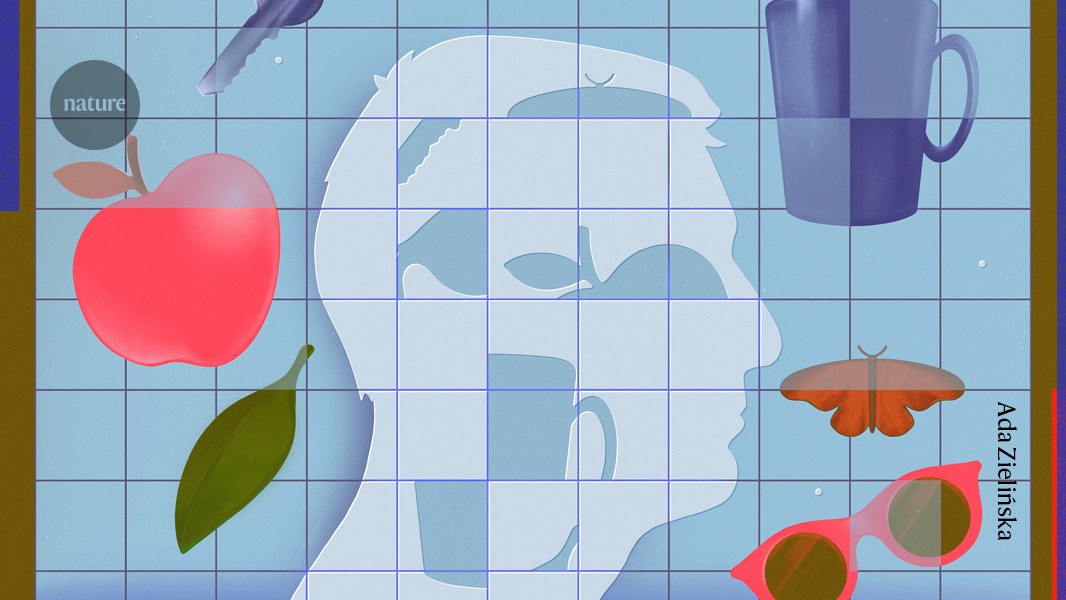
Mistaken identity and the psychology of human recognition

Eyewitness evidence reliability is questioned while a geological society's fossil collection is examined during its move from its London home.
Psychology
fromwww.theguardian.com
1 month ago

Charismatic and extremely confident': how to recognise and handle a psychopath

Psychopathic and dark personality traits exist on a continuum across all social levels, from families to institutions, affecting approximately 1% of the general population at clinical levels.
#aphantasia
fromPsychology Today
2 months ago

Why Your Eyes Like What Your Eyes Like

Real estate with ocean views, stunning mountain vistas, and wide-open green spaces sell at premium prices because humans find those settings pleasing [1-5]. Certain color combinations in fashion-such as brown and forest green-blend harmoniously, while others, such as hot pink and orange, clash. And our eyes like certain proportions in visual objects (like buildings and human faces) but not others.
Science
Mental health
fromPsychology Today
1 month ago

The Effect of Family History on Brain Injury

Knowing one’s family history and cultural roots is essential to reclaim identity, process grief, and repair relationships after catastrophic brain injury.
Science
fromPsychology Today
2 months ago

How Meaning Emerges From Brain Circuitry

Meaning arises from distributed, context-dependent neural assemblies that link sensory-motor patterns, learned associations, evolutionary history, and goal-directed circuits to produce 'aboutness.'
#dsm
Psychology
fromPsychology Today
1 month ago

Are We Hard-Wired to Be Xenophobic?

Out-group animosity stems from both upbringing and evolutionary survival pressures, but can be managed through conscious awareness and behavioral control.
Mental health
fromPsychology Today
1 month ago

Diagnosing Schizophrenia With Machine Learning

Machine learning models trained on clinical text can predict schizophrenia within five years, enabling earlier detection and potentially improving prognosis.
Science
fromNature
1 month ago

Daily briefing: What we know about autism and ageing - and what we don't

Autism diagnoses among adults are rising while the effects of autism on ageing remain poorly understood.
Science
fromwww.scientificamerican.com
1 month ago

Speech sounds are a blurhere's how your brain sorts them out

High-gamma brain-wave power drops about 100 milliseconds after word boundaries, marking word endings and tracking native-language fluency.
Psychology
fromSilicon Canals
1 month ago

Psychology says the people who remember exact dates, what someone was wearing, and the precise words used during painful moments aren't holding grudges. Their memory encoded the detail because their nervous system classified that moment as a survival event - Silicon Canals

Emotionally significant events create vivid 'flashbulb memories' through amygdala activation and stress hormones, prioritizing survival-relevant information over mundane details.
Psychology
fromSilicon Canals
1 month ago

Psychology says people who feel a wave of sadness at dusk even on good days are experiencing these 5 patterns - and it connects to something so ancient in the human brain that psychologists say the feeling predates language itself - Silicon Canals

Twilight melancholy is a real neurochemical phenomenon where serotonin, dopamine, and cortisol levels shift as daylight fades, creating evening sadness rooted in evolutionary biology rather than psychological choice.
Mental health
fromSilicon Canals
2 months ago

Psychology says people who fade into the background in groups usually possess these 8 hidden strengths that others completely miss - Silicon Canals

Quiet or background people possess important, measurable strengths—acute observation, social insight, and stabilizing influence—that often go unnoticed yet support groups and relationships.
Psychology
fromPsychology Today
1 month ago

Seeing Is Not Always Knowing: The Limits of Visual Authority

Humans' biological impulse to help others misfires when sighted people use mental shortcuts instead of listening to blind people's expert knowledge about navigating their own needs.
Mental health
fromNature
2 months ago

Daily briefing: What people with no 'mind's eye' can tell us about consciousness

Vividness of mental imagery, handwriting practices, psychiatric-diagnostic revisions, and emerging brain–computer interfaces shape memory, creativity, education, mental-health classification, and technology development.
Mental health
fromPsychology Today
2 months ago

When Emotions Feel Out of Control in ADHD, BPD, and PTSD

Emotional dysregulation involves sudden, intense, persistent emotional responses that feel uncontrollable, often caused by brain-function differences, stress, or trauma.
Psychology
fromSilicon Canals
1 month ago

Research suggests that people who need a full day alone after socializing aren't antisocial, their brains are processing every interaction at a level most people skip entirely - Silicon Canals

People requiring recovery after socializing possess Sensory Processing Sensitivity, a neurological trait causing deeper social information processing that demands greater cognitive resources than typical social interaction.
fromSilicon Canals
1 month ago

What neuroscience reveals about people who lie awake replaying conversations from six hours ago - Silicon Canals

Rumination activates the default mode network (DMN) - the brain's self-referential processing system. This is the neural circuitry that fires when you're thinking about yourself in relation to others: your identity, your social standing, your mistakes. It's the brain asking, over and over, What does this say about me?
Psychology
fromPsychology Today
2 months ago

Flashed Face Distortions Across the Visual Field

In 2011, researchers Jason Tangen, Sean Murphy, and Matthew Thompson at the University of Queensland discovered a striking visual illusion while preparing a set of face images for a study. As they were going quickly through the faces to check their spatial alignment, they started noticing that the faces appeared highly distorted, almost cartoonish. They then realized that these distortions were most pronounced when the faces were flashed about 4-5 times per second in peripheral vision.
Psychology
fromSilicon Canals
1 month ago

What neuroscience reveals about people who replay conversations in their head for hours after they happen - Silicon Canals

Neuroscientists have a name for the brain network that fires up when you're not focused on an external task: the default mode network, or DMN. It's the constellation of regions - the medial prefrontal cortex, posterior cingulate cortex, and angular gyrus among them - that hums to life when you daydream, reflect on yourself, or think about other people's mental states.
Psychology
Psychology
fromSilicon Canals
1 month ago

What neuroscience reveals about people who cry easily and why it signals a nervous system that processes the world more deeply, not more weakly - Silicon Canals

Frequent crying reflects heightened sensory processing sensitivity and deeper cognitive processing, not emotional fragility or malfunction.
Psychology
fromSilicon Canals
1 month ago

What neuroscience reveals about people who need to be alone after socializing - Silicon Canals

Introversion involves lower dopamine reactivity to social stimuli and higher acetylcholine activation during solitude, not a draining social battery that recharges.
fromwww.theguardian.com
2 months ago

I see time as a grid in my mind. I remember the birthdays of friends I haven't seen for 65 years

Did someone with spatial-sequence synaesthesia design the calendar app on mobile phones? Because that's how time and dates look in my brain. If you say a date to me, that day appears in a grid diagram in my head, and it shows if that box is already imprinted with a holiday, event or someone's birthday. Public holidays and special events like Christmas and Easter are already imprinted for the year, and the diagram goes backwards to about 100,000BC
Psychology
fromPsychology Today
1 month ago

Are Frontal Lobe Breakups Real?

There are lots of reasons why relationships fall apart; all kinds of incompatibilities can doom romance. Some are trivial, but occasionally there might be something more profound at the root of an estrangement. Recently, the concept of the "frontal lobe breakup" appeared in popular culture. The idea is that the final stage of development in the executive regions of the brain-the frontal lobes-changes someone's perspective about their relationship. The onset of advanced cognitive skills in one partner creates a gap in maturity too big to bridge.
Psychology
Psychology
fromPsychology Today
2 months ago

Can the Mere Sight of Something Tempting Affect Your Memory?

Heavier drinkers show attention narrowing: alcohol images are remembered better but impair memory for immediately subsequent items.
Psychology
fromPsychology Today
2 months ago

Am I Left-Handed or Mixed-Handed?

Handedness exists in three forms: left, right, and mixed, with many individuals unaware of mixed-handedness and mixed-handedness measurable by questionnaires.
Psychology
fromPsychology Today
2 months ago

When Two Brains Meet

Human brains are wired to seek and reward social connection; even brief moments of joint attention and acknowledgment produce meaningful neural and psychological benefits.
fromHarvard Gazette
2 months ago

Cognitive scientist explains how we 'see' what isn't real - Harvard Gazette

Yes and no, says cognitive scientist Tomer Ullman, the Morris Kahn Associate Professor of Psychology, who with Halely Balaban recently published a paper titled "The Capacity Limits of Moving Objects in the Imagination." If you're like most people, you probably thought about some of these things, but not others. People build mental imagery hierarchically, starting with the ideas of "person," "room," "ball," and "table," then placing them in relation to one another in space, and only later filling in details like color.
Psychology
Psychology
fromPsychology Today
1 month ago

3 Green Flags of Neurodiversity-Affirming Autism Evaluations

Neurodiversity-affirming autism assessments center the individual's lived experience through respectful, collaborative evaluation and avoid stereotype-based diagnoses.
fromPsychology Today
1 month ago

Daily Prophets: How Your Brain Predicts the Future

I am a worrier, and have been for most of my life. At some point, someone dear and smart teased me that I worry about the wrong things. The things that hit me, she noted, were never the things I worried about. For a while that left me feeling like an incompetent worrier-until my research caught up. I realized that the things I worry about often don't end up hurting me precisely because worrying helps me diffuse them ahead of time.
Psychology
Psychology
fromPsychology Today
2 months ago

Why Perception Isn't Just What We Sense

Perception is constructed by the brain using multisensory integration and shortcuts, producing illusions and differing sensory interpretations in autism and ADHD.
Psychology
fromMail Online
2 months ago

Common health condition indicates a woman might be a PSYCHOPATH

Hyperthyroidism is associated with higher psychopathy, Machiavellianism, and sadism, along with greater antagonism and reduced empathic functioning.
[ Load more ]