#fiber-vs-fwa
#fiber-vs-fwa
[ follow ]
#fcc #fiber-internet #broadband #telecommunications #starlink #rural-connectivity #att #broadband-infrastructure
fromArs Technica
21 hours agoFCC exempts Netgear from ban on foreign routers, doesn't explain why
"If the router Conditional Approval process follows a similar pattern, Chinese-origin manufacturers like TP-Link may face a presumptive denial, while companies with manufacturing in allied nations like Taiwan, Vietnam, or South Korea could find an easier path."
European startups






fromTelecompetitor
2 days agoLiveOak Fiber secures new fiber expansion funding
LiveOak Fiber has achieved rapid expansion in a short period of time. What differentiates LiveOak Fiber is our fiercely local operating model. We have full-time local teams on the ground delivering installation, support, and community engagement, and with this new funding, we are positioned to accelerate our build-out and continue gaining momentum across our footprint.
Online Community Development



fromEngadget
6 days agoAmazon's satellite internet service is scheduled for mid-2026 availability
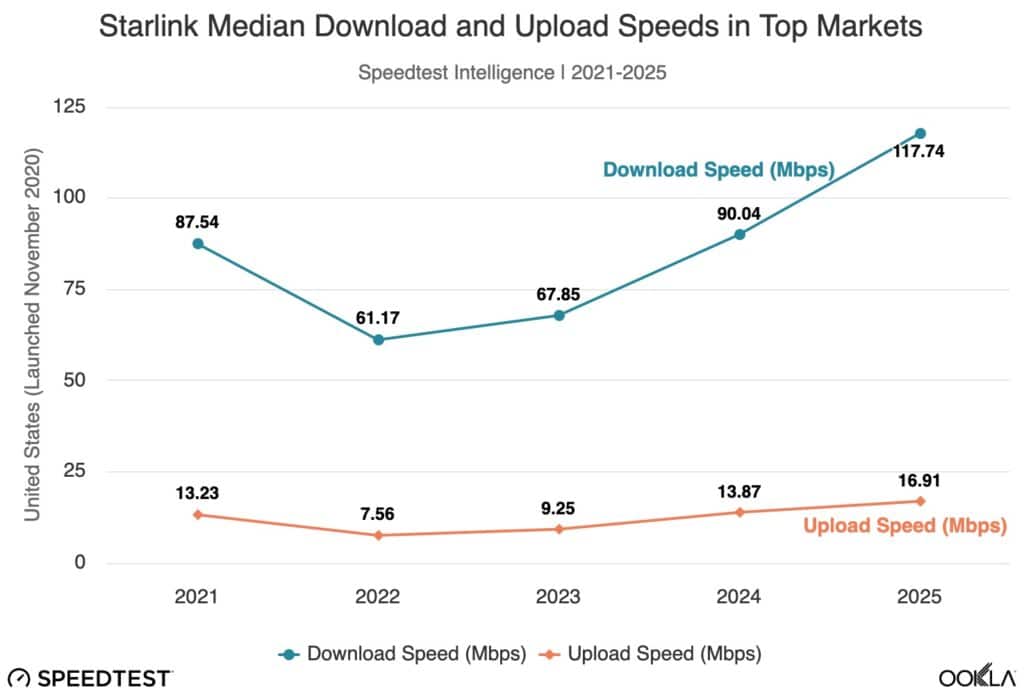
Amazon Leo will support download speeds up to 1 Gbps, which is significantly faster than Starlink's typical range of 45 to 280 Mbps, potentially revolutionizing satellite internet access.
European startups
fromTelecompetitor
2 weeks agoRecord fiber spending during next five years: Study
The firm's study, 'North American Fiber Broadband Report: FTTH Review and Forecast 2026-2030,' indicates that nearly $200 billion will be spent on fiber over the next five years, highlighting a significant investment in fiber-to-the-home services.
Roam Research
Marketing tech
fromTelecompetitor
4 weeks agoVendors introduce tools for the AI + broadband world: Roundup
Major vendors announce AI-integrated networking solutions for broadband service providers, including Wi-Fi 8 access points, unified platforms, and enhanced cloud services designed for enterprise edge optimization and agentic AI deployment.
fromTelecompetitor
1 month agoUniversal Service critical to network sustainability: Report
A 40% reduction in USF support would mean that broadband operators couldn't continue operations on existing networks, threatening the long-term viability of broadband access in rural areas. About half of the cost of network operating expenses are due to labor costs, which rise faster than inflation in rural areas.
Non-profit organizations
UK news
fromComputerWeekly.com
1 month agoAltnets 'force to be reckoned with' in UK broadband | Computer Weekly
UK independent broadband providers (altnets) are matching established brands' full-fibre growth rates, gaining market share through superior customer service and competitive pricing despite sector consolidation pressures.
#bead-program



Non-profit organizations
fromTelecompetitor
1 month agoNTIA's Roth addresses remaining BEAD funds
The BEAD Program achieved $21 billion in savings through Trump Administration reforms, with officials now determining how to allocate remaining funds while considering permitting improvements, workforce training, public safety communications, and addressing unserved locations.
fromTheregister
1 month agoGoogle's fiber biz and Stonepeak's Astound Broadband merge
Google Fiber, now just GFiber, will merge with Stonepeak's Astound Broadband to create a new network provider. Stonepeak will hold a majority ownership stake, while the existing GFiber executive team will run the company. According to the pair, the move gives GFiber the external capital and necessary focus to drive its next phase of expansion, allowing it to buildout its fiber footprint across the US.
Tech industry
fromTelecompetitor
1 month agoTime to sunset rules mandating copper maintenance: USTelecom
The goal of the new USTelecom program is to show consumers, businesses, civic leaders, and policymakers why maintaining legacy copper for the small portion of end users is not an efficient approach. A key part of this is explaining why modern technology is better.
Digital life
Digital life
fromTelecompetitor
1 month agoFiber access grew in the last half of 2025, but 5G growth slowed: Analysis
Fiber internet providers accelerated expansion to 8.4% growth in late 2025, adding 5.2 million addresses and achieving 99%+ coverage in 182 counties, while overall served locations increased and unserved locations decreased by 8.4%.
fromTelecompetitor
1 month agoHow municipal networks compare with provider competitors: Ookla report
Eight of the municipal networks studied beat their local provider competitors in median upload speed. Sherwood Broadband - in the town of the same name in Oregon - was the only one to beat its local competitor in median download speed.
Online Community Development
Artificial intelligence
fromFast Company
1 month agoAI is changing how people use AT&T home internet-and helping stabilize the network
AI adoption is fundamentally changing home internet usage patterns, with upload traffic now growing twice as fast as download traffic, driven by increased AI system interactions.

Digital life
fromTelecompetitor
1 month agoNational Broadband Master Plan looks to create secure national network
NEO Network Development proposes a five-year National Broadband Master Plan to build underground fiber infrastructure alongside U.S. transportation routes, connecting critical facilities and treating broadband as essential utility infrastructure.

Miscellaneous
fromTelecompetitor
1 month agoOokla and Ericsson demo measuring and validation of 5G network slices
Ericsson and Ookla demonstrated a methodology to measure and validate 5G network slices, enabling real-time verification of service-level agreements and quality of experience for consumers and enterprises.
fromTelecompetitor
2 months agoAI requires stronger upload connections among U.S. carriers: Report
Ookla said the growing use of ChatGPT and other AI tools places much more demand on mobile networks than the typical activities of browsing social media and the web, watching videos, texting, and making the occasional phone call. As a result, more speed and expanded capabilities will be necessary. The report said advanced AI capabilities like AI-enabled glasses will put a particular strain on upload connections in the future.
Tech industry
Gadgets
fromZDNET
2 months agoFrontier is now part of Verizon: Here are all the deals you can take advantage of now
Verizon acquired Frontier, expanding fiber reach and offering bundled promotions including six months free fiber, discounted mobile lines, device incentives, and business bundle discounts.
US news
fromTelecompetitor
1 month agoStudy calls for federal broadband pricing database, finds pricing disparity in Louisville
A study of Louisville broadband pricing reveals higher per-Mbps rates in lower-income neighborhoods, despite lower monthly bills, indicating disparate pricing practices across communities.
fromTelecompetitor
2 months agoMobile problems few, experience strong: J.D. Power study
"Despite generational differences in the types of problems experienced, one thing is clear: wireless network quality is strong," Carl Lepper, J.D. Power senior director of technology, media and telecom, said in a prepared statement about the mobile study.
Mobile UX
Online Community Development
fromTelecompetitor
1 month agoStates and NGOs must bridge senior broadband gap: AARP
32% of older Americans lack home broadband access, affecting 19 million seniors, with disparities among low-income, oldest, and least-educated populations requiring urgent policy solutions.
fromMedium
2 months agoHow Fiber Networks Support Edge Computing
Edge computing is a type of IT infrastructure in which data is collected, stored, and processed near the "edge" or on the device itself instead of being transmitted to a centralized processor. Edge computing systems usually involve a network of devices, sensors, or machinery capable of data processing and interconnection. A main benefit of edge computing is its low latency. Since each endpoint processes information near the source, it can be easier to process data, respond to requests, and produce detailed analytics.
Tech industry
fromTelecompetitor
2 months agoClosing the global digital divide requires low-band spectrum: GSMA analysis
Spectrum below 1 GHz could significantly boost 4G and 5G coverage in rural areas, according to the report from GSMA Intelligence. Rural areas depend heavily on low-band spectrum because it allows signal to travel further and penetrate better through barriers such as buildings. Rural residents spend twice as much time connected to low bands as their urban and rural counterparts.
Digital life
[ Load more ]