#frescoes
#frescoes
[ follow ]
#art-history #michelangelo #raphael #renaissance-art #cultural-heritage #art-exhibition #art #exhibition



fromOpen Culture
5 days agoWatch La Linea, the Popular 1970s Italian Animations Drawn with a Single Line
Simplicity is not the goal. It is the by-product of a good idea and modest expectations. Paul Rand's La Linea exemplifies this principle, evolving from a cookware mascot to a beloved character.
Typography
fromWorld Wild Schooling
4 days agoThese 12 Spots in Italy Are a Digital Nomad's Dream Come True
Rome is famed for its rich history, iconic ancient landmarks, and delicious cuisine. When you're not working from an internet cafe or coworking space, you'll find yourself stepping back in time at the Colosseum or tucking into local cuisine.
Digital life
fromThe Art Newspaper - International art news and events
3 days agoThe Big Review: Rothko in Florence
In the hushed, monastic cells of Florence's Museo di San Marco, Mark Rothko's canvases pulse with spiritual intensity. Rothko's paintings are a new arrival, part of the city's latest major exhibition.
Arts

fromdesignboom | architecture & design magazine
2 weeks agorenaissance church in piacenza glows with scenographic lights in davide groppi's exhibition
The central nave of Sant'Agostino becomes the spine of the exhibition, as the designer divides the space using white, geometric volumes through freestanding architectural forms that visitors can move through.
SOMA, SF
fromArtnet News
6 days agoPainting Has Entered Its Performance Era | Artnet News
Much of Instagram's video content is organized around transformation-the virtual magic of the before-and-after and clips that show cause and effect. A person makes pasta from scratch in 20 seconds via edits that compress time-intensive labor.
Arts
Higher education
fromHarvard Gazette
1 month agoLike seeing art of Roman chapels in technicolor for first time - Harvard Gazette
Students learned centuries-old stucco sculpting techniques through hands-on practice, gaining deeper understanding of Renaissance and Baroque artists' material choices and creative processes.
Renovation
fromThe Art Newspaper - International art news and events
1 month agoMonumental Rubens ceiling painting revealed once more after two-year renovation
Rubens's monumental Whitehall Ceiling at Banqueting House reopens after extensive renovations, now featuring wheelchair accessibility and improved climate control systems.
#michelangelo

Arts
fromUntapped New York
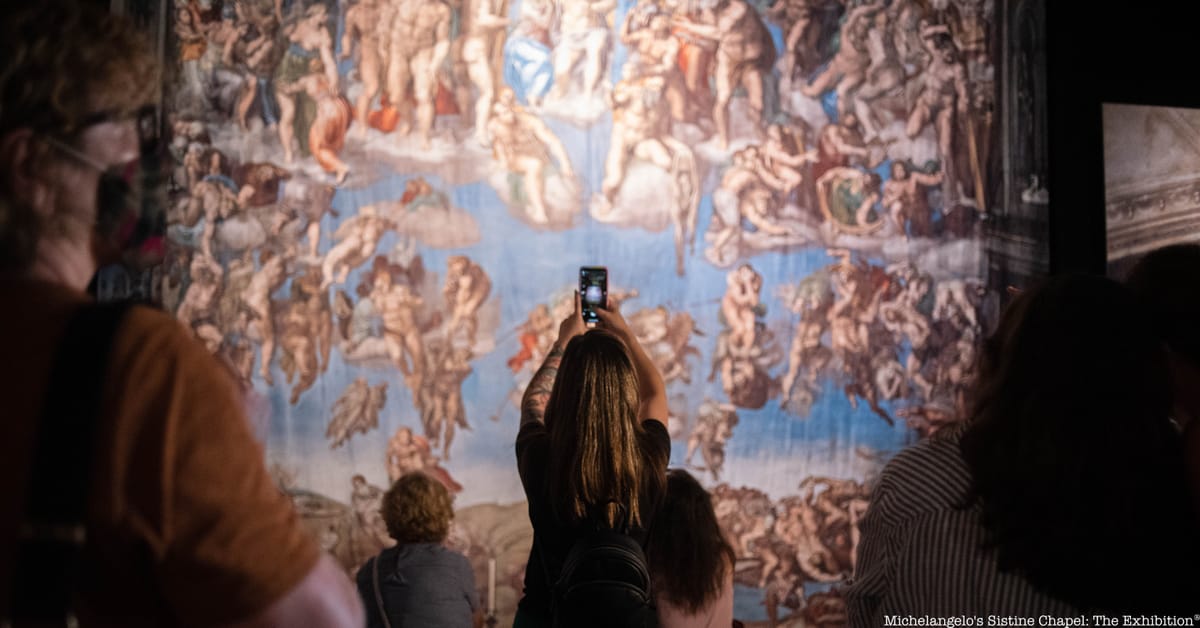
1 year agoMichelangelo's Sistine Chapel Comes to Brookyln - Untapped New York
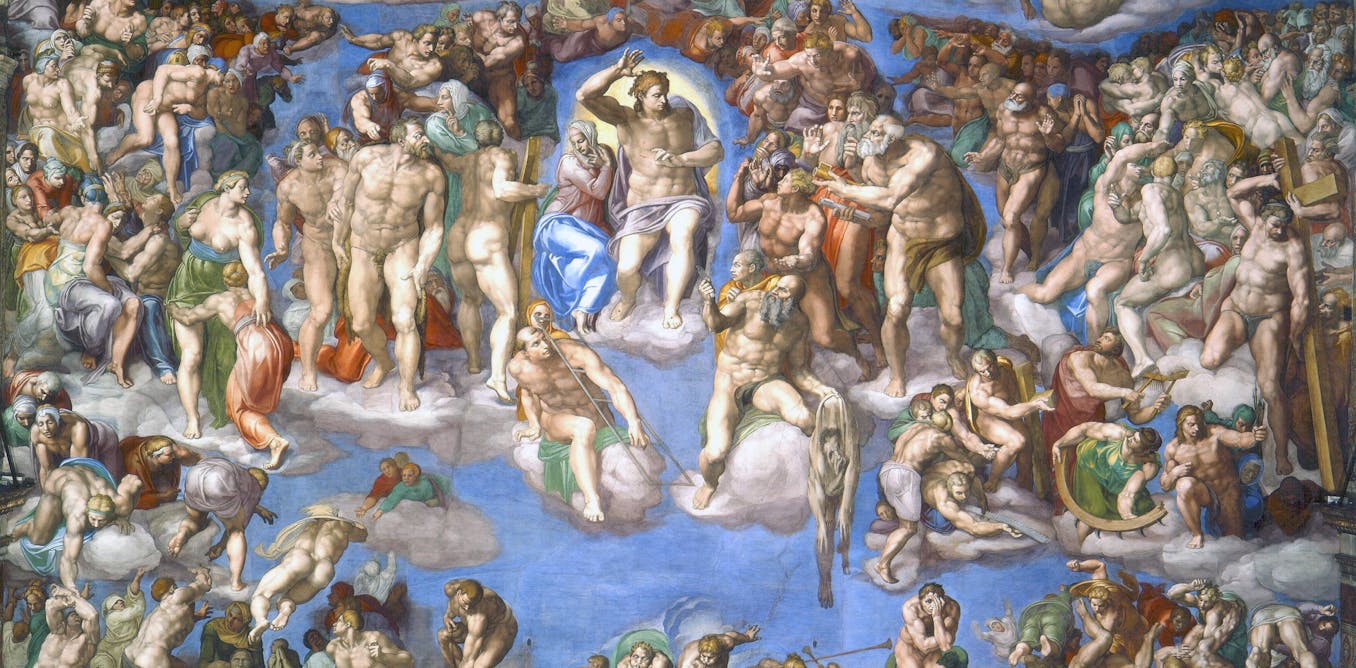
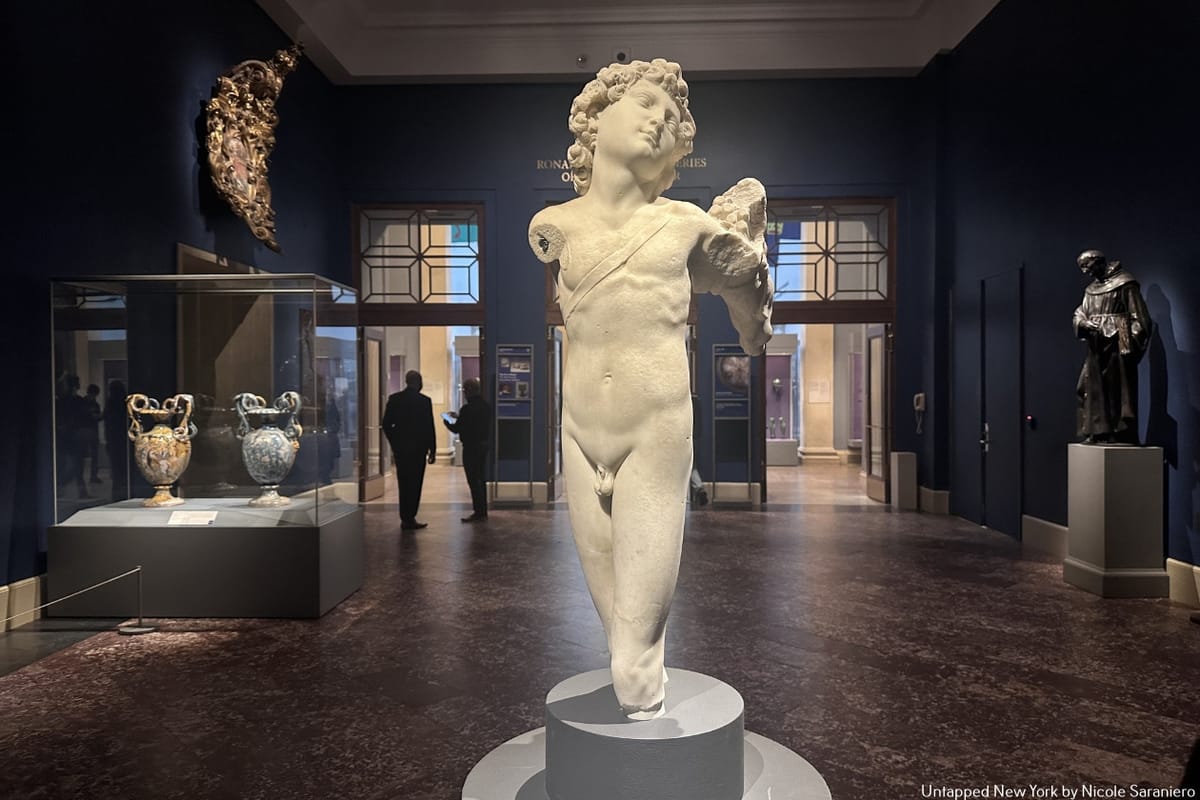
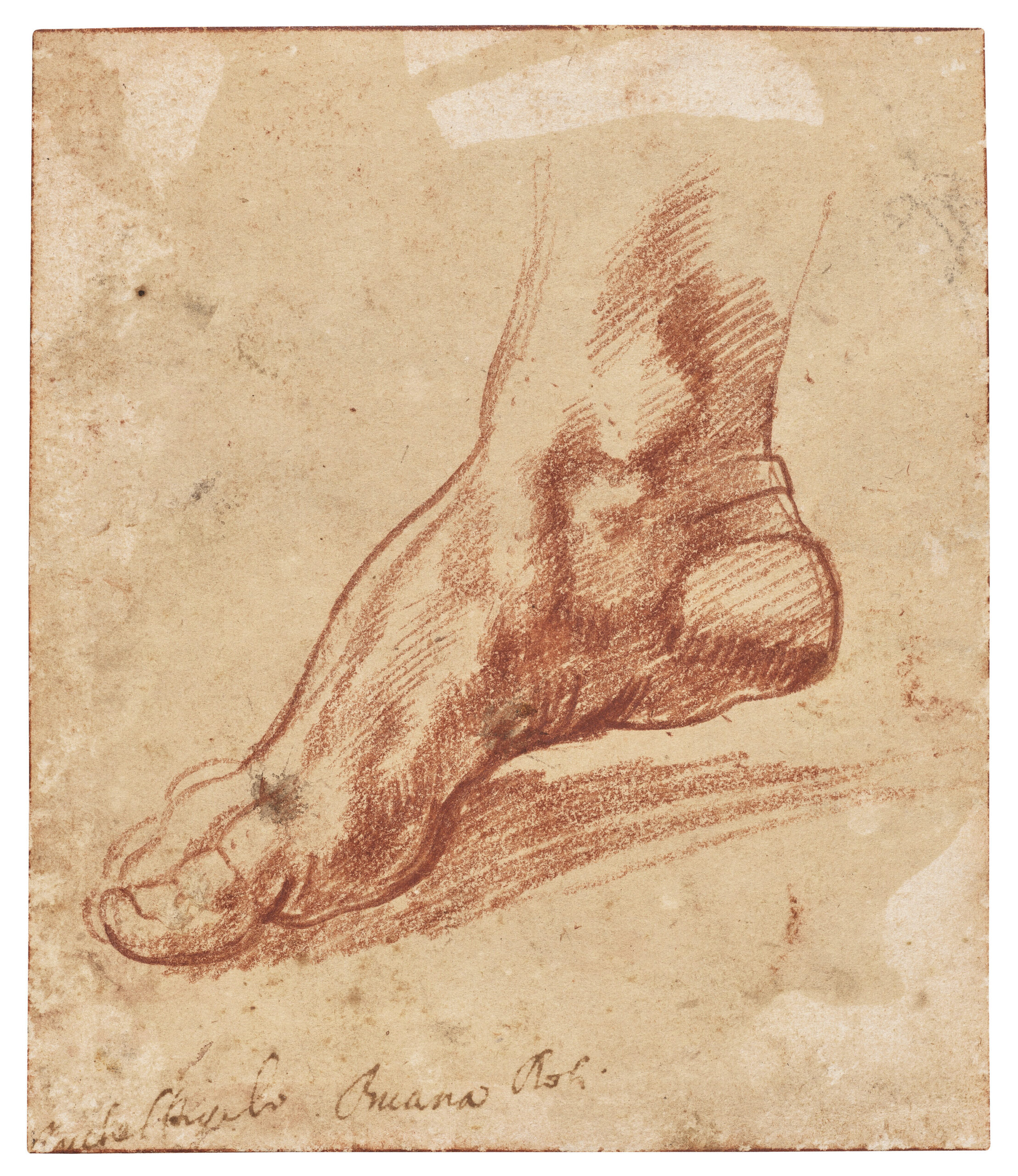
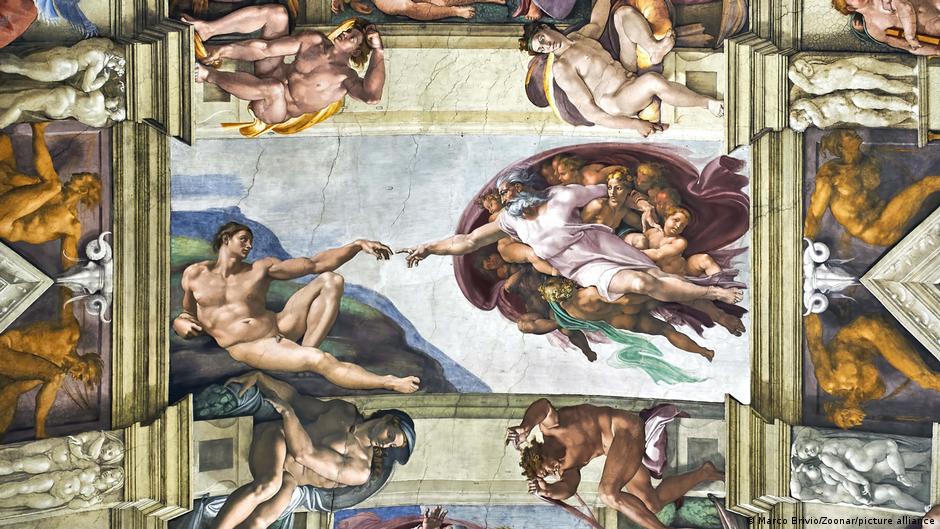
Life-sized high-definition reproductions of Michelangelo's Sistine Chapel frescoes are exhibited in Brooklyn, offering viewers five-times-closer, brushstroke-level detail and multilingual audio tours.
fromTravel + Leisure
2 months ago25 of the Best Things to Do in Florence
Pallabazzer recommends seeing the historic center of Florence at different times of the day. In the early morning, you'll get to experience it "without noise and the pressing pace of crowds." Midday brings droves of visitors, but the destination is "bathed in sunshine." In the evening, "the lights of the street lamps stretch out over the Lungarni [the streets along the Arno River], creating a truly magical effect."
Travel

History
fromMedievalists.net
1 month agoMedieval Bronze Doors by Donatello Return to Florence After Restoration - Medievalists.net
Donatello's fifteenth-century bronze doors have been restored and returned to the Old Sacristy of San Lorenzo in Florence, showcasing innovative sculptural techniques and Medici family patronage.
fromwww.scientificamerican.com
2 months agoThe search for Leonardo da Vinci's DNAhow modern forensic science is trying to crack a 500-year-old puzzle
About ten years ago researchers across a wide range of disciplines, from forensic science and genetics to art history, got together with the goal of finding the Renaissance artist's DNA. Da Vinci had no children, and his remains were disturbed during the French Revolution. The hope is that uncovering his DNA could open the door to a number of discoveries, including new tools for authenticating artwork and potential clues about da Vinci's uncanny way of seeing the world.
Science
fromApartment Therapy
1 month agoThis Soothing Italian Philosophy Transforms the Way I Do Everything
"Piano piano" is an old Italian saying that sounds nonsensical, but is actually full of wisdom, especially if you, like me, are finding yourself wishing away these frigid winter days and hoping spring and summer gets here fast. These days, I've found myself rushing from one thing to the next, frustrated at the smallest things, from post office lines to just missing my train. And I'm ready to make a change.
Mindfulness
Arts
fromThe Art Newspaper - International art news and events
3 weeks agoOne of Donatello's most important bronze statues is being restored: should it ever be shown outdoors again?
Donatello's Gattamelata statue is undergoing restoration and its future location remains uncertain after being moved indoors due to corrosion.

fromOpen Culture
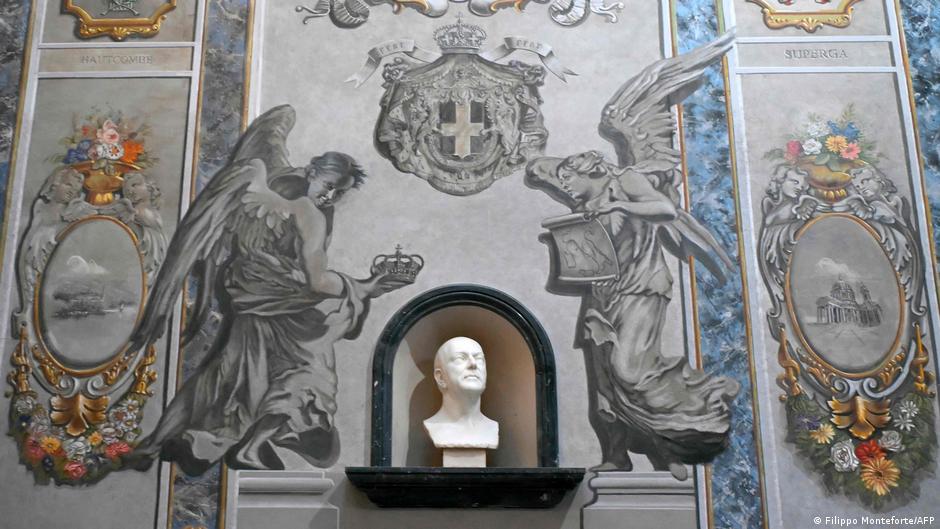
1 month agoRoman Statues Weren't White; They Were Once Painted in Vivid, Bright Colors
One tenet of classical idealism is the idea that Roman and Greek statuary embodied an ideal of pure whiteness-a misconception modern sculptors perpetuated for hundreds of years by making busts and statues in polished white marble. But the truth is that both Greek statues and their Roman counterparts were originally brightly painted in riotous color.
History
History
fromMedievalists.net
1 month agoGiotto and Saint Francis Featured in Major Medieval Art Exhibition in Italy - Medievalists.net
Italy's 2026 exhibition celebrates Saint Francis's 800th death anniversary by showcasing Giotto's revolutionary artistic innovations and their impact on medieval sacred art across Umbria.
History
fromwww.thehistoryblog.com
1 month agoEtruscan urn's polychromy restored after 1966 Florence flood
The Bottarone Urn, a 425-380 B.C. Etruscan alabaster cinerary urn depicting a married couple, was restored to its original vivid polychromy after 60 years of mud damage from Florence's 1966 Arno River flood, revealing Egyptian blue pigment for the first time.
Arts
fromThe Art Newspaper - International art news and events
1 month ago'It has nothing to do with Michelangelo': expert wades in on painting newly attributed to Renaissance master
Belgian art historian Michel Draguet claims to have discovered a Michelangelo painting from the 1540s, but leading Renaissance experts dispute the attribution based on artistic style analysis.
History
fromOpen Culture
1 month agoRome in 1890 Captured in Color Photographs: The Colosseum, Forum, Trevi Fountain & More
English gentlemen completed their education through the Grand Tour of Europe, primarily Italy, which profoundly influenced Romantic poets like Byron and shaped their artistic vision of classical civilization in ruins.
fromwww.theguardian.com
2 months agoAI analysis casts doubt on Van Eyck paintings in Italian and US museums
An analysis of two paintings in museums in the US and Italy by the 15th-century Flemish artist Jan van Eyck has raised a profound question: what if neither were by Van Eyck? Saint Francis of Assisi Receiving the Stigmata, the name given to near-identical unsigned paintings hanging in the Philadelphia Museum of Art and the Royal Museums of Turin, represent two of the small number of surviving works by one of western art's greatest masters, revered for his naturalistic portraits and religious subjects.
Arts
fromwww.theguardian.com
2 months agoBring it back': Sicilians say Antonello da Messina's Ecce Homo belongs with them
levelled much of the city. Along with homes, churches and monuments, invaluable historical sources and documents were lost, including works by Messina's greatest son, Antonello da Messina, the artist widely credited with transforming the course of Renaissance art. In the space of half a minute, a city's memory and that of one of the greatest painters in history was buried alongside its people.
Arts
[ Load more ]