#energy-markets
#energy-markets
[ follow ]
#oil-prices #strait-of-hormuz #supply-and-demand #strategic-petroleum-reserve #inflation #middle-east-conflict
#inflation

World politics
fromFortune
1 week agoSupply shocks weren't random. They were strategic-and should be seen as 'supply coercion' instead, former Fed official says | Fortune
Inflation spikes can stem from deliberate supply coercion through chokepoints, not absorbable supply shocks, requiring different policy thinking.
Business
from24/7 Wall St.
1 week agoHere Are Thursday's Top Wall Street Analyst Research Calls: Commercial Metals, Doximity, Draftkings, Hut 8, Illumina, Lowe's, TeraWulf, Starbucks, Whirlpool, Wix.com, and More
Inflation-driven rate expectations lifted equities while pushing long-end Treasury yields higher, raising mortgage rates and pressuring oil despite falling inventories.
fromwww.aljazeera.com
3 days agoThe GCC should insure itself against the next Strait of Hormuz crisis
The crisis caused by the US-Israel war on Iran has affected the member states of the Gulf Cooperation Council (GCC) at different levels. Oman has barely felt any shock as its ports and terminals continue operating as usual. Saudi Arabia and the United Arab Emirates have been able to reroute some oil exports through terminals in Yanbu and Fujairah, respectively, to bypass the Strait of Hormuz. Kuwait, Bahrain and Qatar, on the other hand, have been practically cut off from the global market and are facing the prospect of economic contraction.
World news
#geopolitical-conflict
World politics
fromwww.theguardian.com
2 months agoIf oil price shocks weren't bad enough, Trump's war could have other unintended consequences | Adam Hanieh
US-Israeli conflict with Iran disrupts global energy markets, with Brent Crude exceeding $100/barrel, threatening household bills worldwide and potentially strengthening China-Russia relations.
#fuel-duty
UK politics
fromLondon Business News | Londonlovesbusiness.com
1 week agoHauliers warn fuel duty hike risks worsening crisis triggered by Middle East conflict - London Business News | Londonlovesbusiness.com
Business groups urge abandoning a planned September fuel duty rise, warning it would compound inflation and raise logistics, food, and household costs amid Middle East-driven energy disruption.
UK politics
fromLondon Business News | Londonlovesbusiness.com
1 week agoReeves poised for fuel duty U-turn as Iran war drives surge in petrol prices - London Business News | Londonlovesbusiness.com
Fuel duty increases planned for September face pressure as Iran-related disruption drives sharp petrol and diesel price rises, worsening cost-of-living impacts.
Business
from24/7 Wall St.
1 week agoChevron's CEO Just Warned of Physical Oil Shortages. This $6 Offshore Driller Is Up 171% and Still Trades Below Book Value
Physical shortages are expected as inventories, shadow-fleet tankers, and strategic reserves are drained simultaneously, boosting demand for available oil barrels.
fromTechCrunch
1 week agoGeothermal startup Fervo Energy pops 33% in IPO debut fueled by AI data center demand | TechCrunch
Fervo Energy, the geothermal energy startup, saw its market valuation surpass $10 billion in its public market debut, an increase driven by demand for AI data centers - and the energy that can power them.
Venture
World news
fromFortune
2 weeks agoMarkets sell off as U.S.-Iran ceasefire plans go nowhere, leaving Trump with a military option to reopen the Strait of Hormuz | Fortune
Peace prospects with Iran weakened, increasing risks to Strait of Hormuz access, energy supplies, and potential U.S. military action.
#iran



World news
fromLondon Business News | Londonlovesbusiness.com
3 weeks agoOil slides as IRGC allows 'safe stable passage' through Strait of Hormuz - London Business News | Londonlovesbusiness.com
Global energy markets declined sharply as Iranian authorities indicated safe shipping through the Strait of Hormuz, suggesting a potential easing of regional tensions.


World politics
fromLondon Business News | Londonlovesbusiness.com
4 weeks agoOil cartel rocked as UAE exits Opec amid Strait of Hormuz chaos - London Business News | Londonlovesbusiness.com
UAE's withdrawal from OPEC escalates tensions in global energy markets and signals strain within the oil-producing bloc.
World news
fromLondon Business News | Londonlovesbusiness.com
4 weeks agoMiddle East oil shock could cost the world economy hundreds of billions - London Business News | Londonlovesbusiness.com
A crisis in the Middle East could reduce the global economy by $1 trillion due to disruptions in oil supply and rising energy prices.



fromLondon Business News | Londonlovesbusiness.com
1 month agoUltra-wealthy line up major portfolio shifts as Iran shock drives global reset - London Business News | Londonlovesbusiness.com
"This is a system shock," says Nigel Green, CEO of deVere Group. "You have a material energy supply disruption and a structural shift toward fragmentation."
World news
fromwww.theguardian.com
1 month agoBP hails exceptional' trading as oil prices soar in Iran war
BP's oil trading result is expected to be exceptional in the first quarter of its financial year, driven by significant market volatility after Tehran's effective closure of the key strait of Hormuz shipping route.
Business
from24/7 Wall St.
1 month agoWall Street Upgrades Cheniere Energy as Iran War Reshapes Global LNG Demand
Citi's upgrade reflects a broader geopolitical reality reshaping global energy markets. The Iran war is accelerating the flight of European and Asian buyers toward secure, long-term U.S. LNG supply contracts.
Business
#gasoline-prices
World news
fromFortune
2 months agoTrump officials say gas prices will return to normal in 'a few more weeks,' but his own Energy Department says it will be 2027 | Fortune
Average U.S. gas prices reached $3.84 per gallon, up 31% in one month due to Middle East conflict, with prices unlikely to drop below $3 per gallon soon despite administration claims.
World politics
fromFortune
2 months agoNatural gas prices in Texas plunge deep into negative territory and producers are burning it off, while the rest of the world braces for shortages | Fortune
A geographic divide in energy markets has led to negative natural gas prices in West Texas while Europe and Asia face shortages.
#middle-east-conflict

Europe news
fromLondon Business News | Londonlovesbusiness.com
2 months agoCEBR: UK Energy Bills Set to Exceed 2,100 - London Business News | Londonlovesbusiness.com
The Middle East conflict is reviving inflationary pressures in the UK due to rising energy prices, but the impact differs from previous geopolitical disruptions.
World politics
fromFortune
2 months agoGoldman's top international execs say the Iran war has parallels to the Russia's invasion of Ukraine, but there are key differences | Fortune
Goldman Sachs executives assert that despite Middle East conflict similarities to the 2022 Russia-Ukraine shock, fundamental market conditions differ significantly, with central banks unlikely to respond hawkishly unless the conflict becomes protracted or energy markets face renewed pressure.
Europe news
fromIrish Independent
2 months agoSimon Harris says energy supports coming 'very shortly' as gas prices soar after strikes on Middle East energy infrastructure
European natural gas prices surged approximately one-third in a single day following Iranian missile strikes on Qatar's major LNG export facility, with analysts assessing potential long-term supply disruptions.
UK politics
fromwww.independent.co.uk
2 months agoIran oil attacks trigger 35% gas price spike and fears of interest rate rises
Britain increases defensive support for Gulf states following Iran's missile attacks on regional energy infrastructure, raising concerns about inflation and interest rates across Europe.
World news
fromwww.businessinsider.com
2 months agoTop economist Steve Hanke says Iran is channeling Muhammad Ali and could deal a 'knockout blow' to the US
Iran employs a rope-a-dope strategy by absorbing military pressure while disrupting global trade through Strait of Hormuz control, potentially delivering an economic knockout to the US.
World politics
fromFast Company
2 months agoThe Strait of Hormuz has been weaponized before. A look at past disruptions to the critical oil waterway
Iran has halted nearly all traffic through the Strait of Hormuz during conflict with the U.S. and Israel, disrupting global oil supply and causing fuel prices to surge.
World news
fromwww.mediaite.com
2 months agoBessent Tells Maria Bartiromo Trump May Soon Unsanction Iranian Oil' to Drive Down Oil Prices
The Trump administration strategically targets Iranian military infrastructure while preserving oil production, coordinating with Treasury to release sanctioned Russian and Iranian oil reserves to stabilize global energy prices during escalating military operations.
fromLondon Business News | Londonlovesbusiness.com
2 months agoUS futures slide as inflation fears and Fed outlook weigh on risk appetite - London Business News | Londonlovesbusiness.com
Rising inflation concerns, hawkish monetary policy signals, and escalating geopolitical tensions weighed on risk assets. Energy markets are adding to the pressure. Oil prices surged following renewed attacks on energy infrastructure in the Middle East, intensifying concerns about inflationary pressure.
Business
UK news
fromLondon Business News | Londonlovesbusiness.com
2 months agoBoE warns inflation will soar due to the escalating Middle East crisis - London Business News | Londonlovesbusiness.com
The Bank of England raised its CPI inflation forecast to 3.5% for Q3 2026, attributing the increase to Middle East conflict causing energy market shocks, and maintained interest rates at 3.75% while signaling unlikely rate cuts in 2026.
fromenglish.elpais.com
2 months agoTrump's desperate attempts to curb soaring oil prices
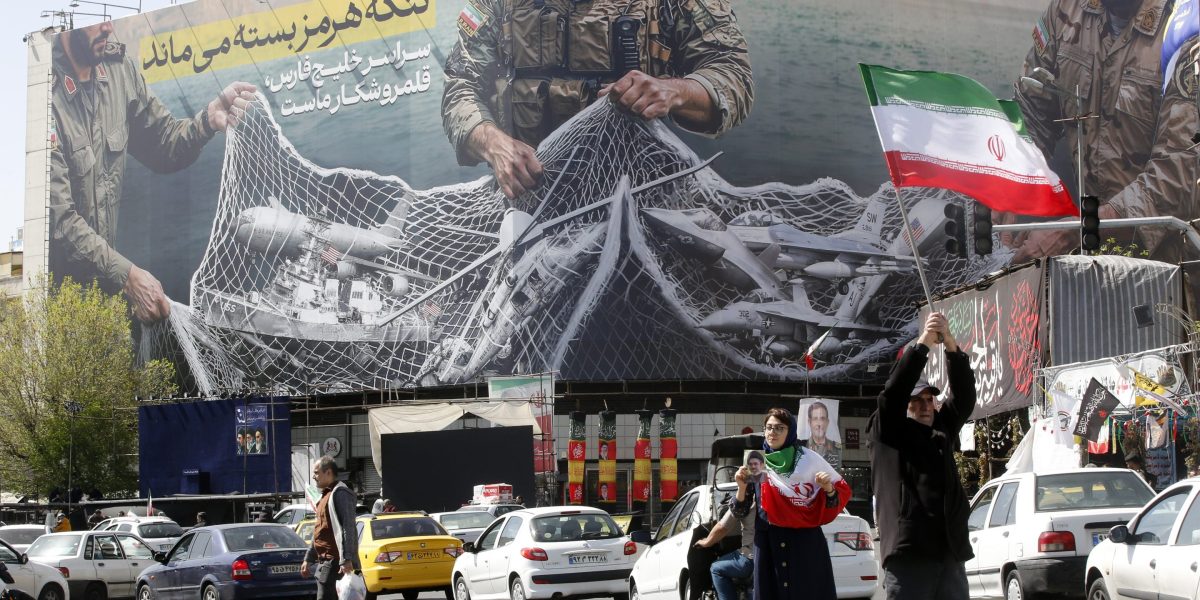
The Iranian military's blockade of the Strait of Hormuz in retaliation for the U.S. and Israeli airstrikes on Tehran has sent energy markets into turmoil. A quarter of the world's natural gas, a fifth of its crude oil, and tons of critical materials for fertilizers and other petroleum products pass through this strategic Persian Gulf waterway.
World politics
US politics
fromFortune
2 months agoWhite House suspends the Jones Act for 60 days. Analysts see a gas price impact of 3 cents | Fortune
The Trump administration temporarily waives the Jones Act for 60 days to address energy market disruptions and supply chain issues caused by the U.S.-Israel conflict with Iran.
#jones-act-waiver
US politics
fromwww.npr.org
2 months agoTrump temporarily waives the Jones Act to try to lower gas prices
The Trump administration issued a 60-day Jones Act waiver to reduce shipping costs and potentially lower gasoline prices following geopolitical tensions, though experts question its effectiveness in significantly lowering pump prices.
World news
fromLondon Business News | Londonlovesbusiness.com
2 months agoCrude oil remains elevated as supply risks turn into actual disruptions - London Business News | Londonlovesbusiness.com
Oil prices have surged 40-50% since late February due to actual Middle East supply disruptions, with Brent at USD 103.6 and WTI near USD 95, as Iran's attacks on production facilities materialize real supply losses rather than anticipated risks.
World news
fromFortune
2 months agoThere's an oil price scenario that would bring the US economy to a 'standstill; | Fortune
War in Iran blocks the Strait of Hormuz, removing eight million barrels daily from global oil supply—the largest disruption in history—causing oil prices to surge and threatening economic growth worldwide.
fromLondon Business News | Londonlovesbusiness.com
2 months agoThe significant events in the global economy over the past week - London Business News | Londonlovesbusiness.com
Weak performance in several service sectors offset gains in retail and wholesale trade, reinforcing concerns about the pace of economic recovery. Japan relies heavily on oil imports from the Middle East, making it particularly sensitive to disruptions in the region.
UK news
Business
from24/7 Wall St.
2 months agoWilliams CEO: U.S. natural gas production is America's true superpower
The U.S. produces 40% more natural gas than it consumes domestically, establishing a structural export advantage and making natural gas a national superpower that insulates domestic prices from global market chaos.
Europe news
fromLondon Business News | Londonlovesbusiness.com
2 months agoTrump Weighing Up Fresh Tariff Framework and Markets - London Business News | Londonlovesbusiness.com
European markets decline amid rising energy prices and stagflation concerns, while defence stocks gain on Iran conflict tensions and oil prices surge past $94 despite IEA's strategic reserve release.
US news
from24/7 Wall St.
2 months agoHere Are Thursday's Top Wall Street Analyst Research Calls: Arista Networks, Crocs, General Mills, GoDaddy, Jabil, Lumentum, MercadoLibre, Shopify, and More
Futures trade lower amid Strait of Hormuz tensions while oil prices surge 5%, driving mixed stock market performance with the Dow down 0.61% and Nasdaq up 0.08%.
Germany news
fromwww.independent.co.uk
2 months agoGermany, Austria say they'll release oil from reserves in response to 400 million barrel request
Germany, Austria, and Japan are releasing oil reserves following an IEA request for 400 million barrels to address energy price spikes from regional conflict.
[ Load more ]