#hidden-history

[ follow ]
East Bay (California)
fromSFGATE
10 hours ago

Native American remains discovered on UC Berkeley campus

Native American remains were found at UC Berkeley during construction, with authorities confirming they are not linked to a crime.
History
fromwww.dw.com
18 hours ago

Teen discovers first ancient Greek artifact found in Berlin

A 13-year-old discovered a rare ancient Greek coin from Troy in Berlin, revealing potential links between ancient Greece and northern Europe.
Medicine
fromNature
3 days ago

Landmark ancient-genome study shows surprise acceleration of human evolution

Human evolution has accelerated over the past 10,000 years, with significant gene variants identified in ancient populations from western Eurasia.
Arts
fromHarvard Gazette
4 days ago

When Egyptians made blue - Harvard Gazette

Egyptian blue, the first synthetic pigment, revolutionized art and materials, created around 3100 B.C. through advanced Egyptian pyrotechnology.
fromOregon ArtsWatch * Arts & Culture News
2 days ago

Exploding myth in the American West * Oregon ArtsWatch

The frontier myth has proven to be one of the most powerful and enduring stories in American history, erasing or altering the history of people of color and women in the West.
History
fromThe Art Newspaper - International art news and events
14 hours ago

Petroglyphs and cave paintings, some more than 4,000 years old, discovered in Mexico

The discovery comes on the heels of other recent discoveries of Mesoamerican and colonial-era sites and artefacts during archaeological salvage work associated with planning a new 232km passenger rail line between Mexico City and Querétaro.
History
Arts
fromHyperallergic
1 week ago

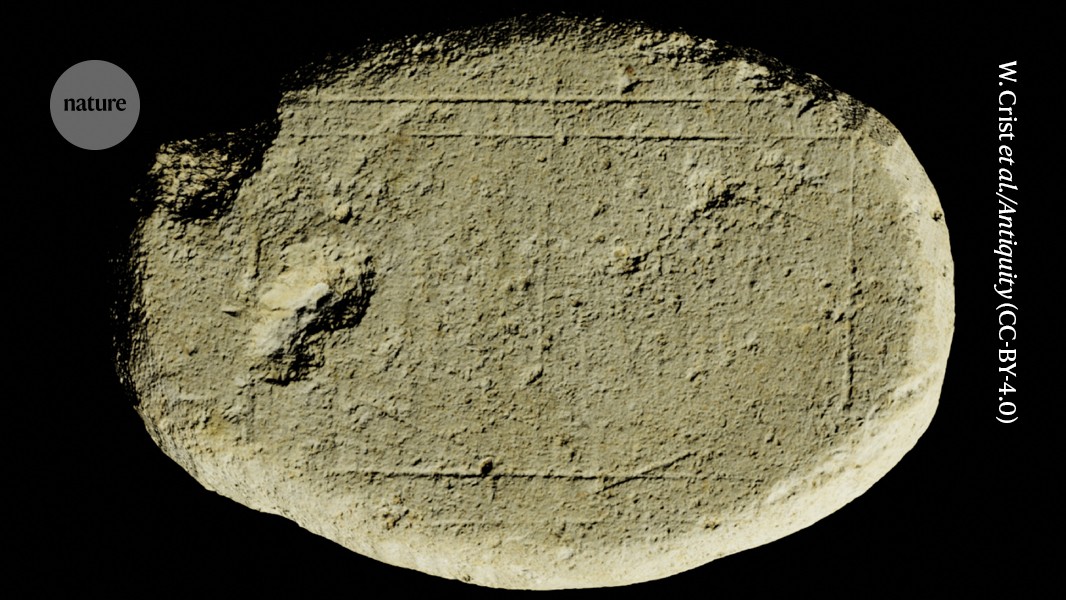
Dice Are 6,000 Years Older Than Previously Believed, Study Says

More than 600 two-sided dice crafted by Native Americans have been identified, dating back over 12,000 years, predating known dice from the Bronze Age.
#archaeology
fromMail Online
2 months ago
Science

Historic discovery older than Egypt's Great Pyramid rewrites history

12,000-year-old sewn animal hides and crafted items from Oregon caves show advanced Ice Age North American textile and tool skills.
fromwww.theguardian.com
2 months ago
Science

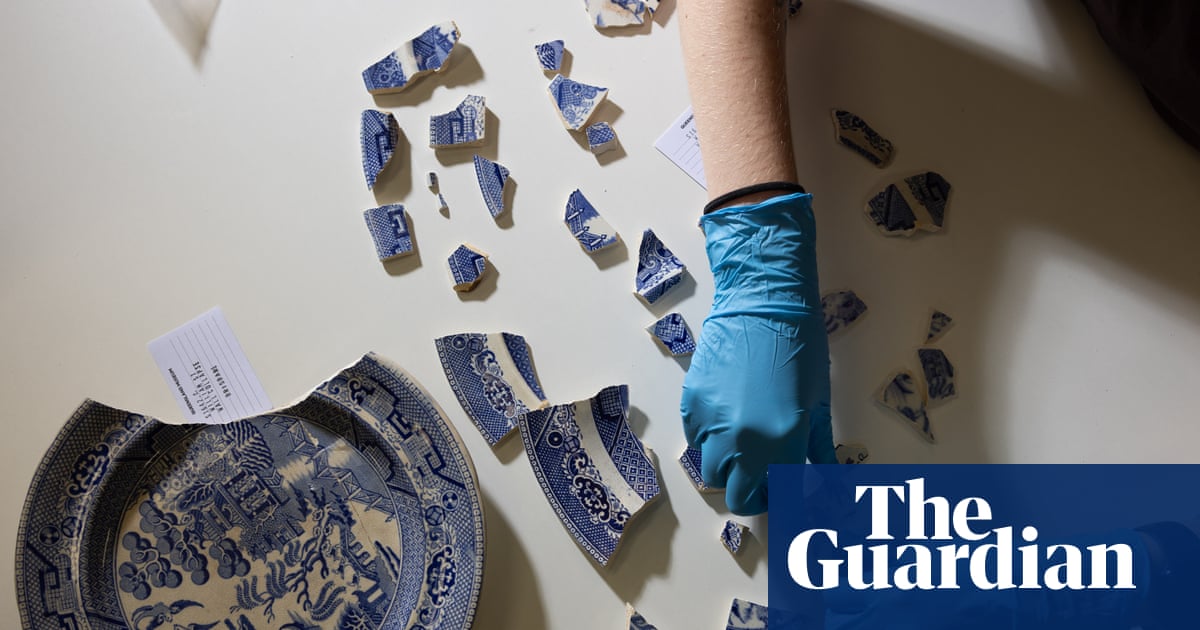
Archaeology against the clock: the race to salvage fragments of early Brisbane

Young archaeology students in Brisbane are cataloguing 19th-century ceramic fragments, reflecting growing salvage archaeology activity amid urban development and heritage preservation.
History
fromwww.theguardian.com
3 days ago

Hidden treasures: Spanish archaeologists discover trove of ancient shipwrecks in Bay of Gibraltar

Spanish archaeologists have documented over 30 shipwrecks in the Bay of Algeciras, revealing a rich maritime history from the fifth century BC to WWII.
History
fromMedievalists.net
4 days ago

New Medieval Books: Flattening the Medieval Earth - Medievalists.net

The myth of medieval flat earth originated around 1600, contrary to the belief that medieval people thought the Earth was flat.
#native-american-history
fromwww.theguardian.com
6 days ago
History

Native Americans were gambling with dice 6,000 years earlier than anyone else, study says

Native American hunter-gatherers used dice for gaming over 12,000 years ago, predating similar practices in other cultures by thousands of years.
fromArs Technica
2 weeks ago
History

Ice Age dice show early Native Americans may have understood probability

Native Americans used dice for games of chance over 12,000 years ago, predating Old World dice by millennia.
History
fromwww.theguardian.com
6 days ago

Native Americans were gambling with dice 6,000 years earlier than anyone else, study says

Native American hunter-gatherers used dice for gaming over 12,000 years ago, predating similar practices in other cultures by thousands of years.
History
fromArs Technica
2 weeks ago

Ice Age dice show early Native Americans may have understood probability

Native Americans used dice for games of chance over 12,000 years ago, predating Old World dice by millennia.
Independent films
fromVulture
4 weeks ago

Palestine 36 Portrays a Historical Period Often Overlooked by the West

Annemarie Jacir's Palestine 36 uses restored archival images to challenge misconceptions about Palestine before the establishment of Israel.
Roam Research
fromArs Technica
4 weeks ago

Study pinpoints when bow and arrow came to North America

North Americans adopted the bow and arrow about 1,400 years ago, replacing the atlatl and dart, with rapid adoption in the south and gradual replacement in the north.
Alternative medicine
fromArs Technica
1 month ago

Never mind Band-Aids, Neanderthals had antiseptic birch tar

Neanderthals likely used birch tar for medicinal purposes, including treating infections and insect bites, beyond its known use as a weapon adhesive.
fromThe Local France
1 month ago

Mysterious ancient skeletons discovered sitting upright in France

Similar to four others unearthed nearby earlier this month, it is sitting upright at the bottom of a one-metre-wide pit. The skeleton's hands are resting in its lap. Like the others, its back is against the eastern wall, its face directed westward.
France news
History
fromwww.nytimes.com
3 weeks ago

Humans Had Dogs Before They Had Farming, Ancient DNA Confirms

Dogs were domesticated by hunter-gatherer societies in Europe around 14,000 years ago, predating agriculture.
Arts
fromHyperallergic
3 weeks ago

UK Museums Hold Over 260,000 Human Remains, Report Finds

UK museums hold over 263,000 human remains, with significant collections from former British colonies, raising ethical concerns.
History
fromNature
1 week ago

How DNA forensics is transforming studies of ancient manuscripts

Tim Stinson's curiosity about DNA in ancient manuscripts led to the emergence of a new field in manuscript studies.
fromThe Art Newspaper - International art news and events
1 month ago

Mummies and other human remains held in UK museums raise serious ethical questions, warn scholars

The significant number of ancestors held in UK museums is extremely distressing and symbolic of the colonial origins of these collections. We hope that the responses gathered by The Guardian will be shared with the relevant communities to support them in bringing their ancestors home.
London
#ancient-egypt
Science
fromNature
1 month ago

How pollutants and poo paint a picture of past civilizations

Environmental archaeologists extract mud cores from swamps to analyze molecular biomarkers like coprostanol, revealing ancient human population trends and behaviors.
OMG science
fromMail Online
1 month ago

Scientists recreate the lost languages of ancient humans

Scientists reconstructed ancient human species languages by analyzing fossilized skeletal imprints of soft tissues like the larynx, tongue, and brain, revealing that Neanderthals likely spoke languages understandable to early Homo sapiens.
#british-museum
History
fromMedievalists.net
2 weeks ago

Medieval "Giant" with Trepanned Skull Discovered in Mass Grave - Medievalists.net

A 9th-century mass grave in England reveals remains of young men, suggesting violent conflict during the Viking conquest of East Anglia.
Arts
fromArtnet News
1 month ago

Archaeologists Identify Lost Medieval Village in Polish Forest | Artnet News

Researchers in Poland have located Stolzenberg, a lost medieval village in Pomerania, using metal detection and geophysical surveys that revealed 1,500 surface anomalies including coins and building remnants.
History
fromWorld History Encyclopedia
2 weeks ago

Truths Wrapped in Fiction: Mesopotamian Naru Literature: Originality in Writing Ancient Bestsellers

Originality in ancient literary works was less valued than in modern times, with authors often assuming identities of famous figures.
Business
fromFast Company
2 months ago

Navigating the ghosts of cultures past

Organizational culture constantly changes; leaders must discern which legacy cultural elements to retain and which to remove while balancing enduring beliefs with adaptive practices.
Agriculture
fromArs Technica
1 month ago

Re-creating the complex cuisine of prehistoric Europeans

Hunter-gatherer-fishers across Eastern Europe combined specific regional foods into distinct preparations, mixing fish with berries, legumes, grasses, and vegetables rather than relying on fish alone.
fromwww.theguardian.com
1 month ago

Ways to Traverse a Territory review documenting an ancient and disappearing way of life

Here dwells the indigenous Tzotzil community which has kept a pastoral way of life against the march of time. Apart from the odd forest ranger and passerby, Ruvalcaba's film focuses almost entirely on the Tzotzil women. Together, they tend herds of sheep which they still shear by hand, and use traditional tools for spinning yarns and natural dye for fabrics.
Film
US politics
fromEmptywheel
2 months ago

Third Cave's a Charm

Republicans will block expiration of Bush tax cuts; Democrats could see a $3.6 trillion tax increase in 2012 if Obama does not act.
Philosophy
fromBig Think
2 months ago

Buried alive, leeched, and attacked with a poker: The dark history of nostalgia "cures"

Nostalgia was historically treated as a dangerous, physical illness linked to bodily symptoms and fatal outcomes before becoming viewed as a largely benign emotion.
Books
fromNature
1 month ago

Brain mysteries and Bronze Age diplomacy: Books in brief

Lionel Penrose's mid-twentieth century research connected genetic abnormalities to hand creases, establishing the hand as a significant diagnostic tool across multiple medical disciplines.
Miscellaneous
fromThe New Yorker
1 month ago

The Hidden History of Native American Enslavement

Indigenous slavery in the Americas lasted centuries under various names, and a public history project aims to accurately document and recognize this historical reality.
E-Commerce
fromBuzzFeed
2 months ago

12 Grandparent Memory Books And Journals To Chronicle Family Histories

BuzzFeed Shopping provides service-focused product recommendations prioritizing readers, vetting products, fact-checking claims, exposing fake deals, and offering authentic, inclusive choices across price points.

#heritage
History
fromMail Online
1 month ago

Roman artifact found in the Americas shatters New World history

A Roman terracotta head discovered in a sealed Mexican tomb in 1933 suggests Roman contact with the Americas around 200 AD, predating Columbus by over a thousand years.
fromemptywheel
2 months ago

How Do You Want Your Family to Remember You? - emptywheel

The Stasi, the secret police, were legendary for their data files. Their work was based on instilling fear, and they induced stunningly amazing numbers of East Germans into informing on their neighbors. Something along the lines of 1 in 6 East Germans were informants, whether out of fear or out of approval of what the East German government was doing.
US politics
fromApaonline
2 months ago

Threading the Needle: Can We Respect Local Knowledge While Resisting Misinformation?

It's common knowledge that we are awash in misinformation that can have severe negative consequences for society. When people hold false beliefs about the safety of vaccines, the outcomes of elections, or the causes of climate change, it is much more difficult for them to make responsible decisions on behalf of their families and communities. It is tempting to respond to this challenge by insisting that expert scientists know best and to dismiss those who challenge the experts.
Philosophy
fromMail Online
2 months ago

Long-lost Egyptian scroll fuels debate over real-life biblical giants

An ancient Egyptian papyrus held by the British Museum has been cited as possible evidence supporting some of the Bible's most controversial claims about giants. The 3,300-year-old document, known as Anastasi I, has been in the museum's collection since 1839 and has recently resurfaced on the Associates for Biblical Research, renewing interest in its possible links to biblical accounts. The papyrus describes encounters with the Shosu people, said to stand 'four cubits or five cubits' tall, up to eight feet in height.
Books
Science
fromNature
2 months ago

Daily briefing: Scientists delve into the smells of history

Researchers recreate historical smells and use imaging, AI, and biomedical advances to probe heritage, ancient human timelines, medical rescue devices, and rare-disease genetics.
History
fromMedievalists.net
1 month ago

Two Medieval Men Found Buried in Prehistoric Site - Medievalists.net

Medieval men were buried in the Menga dolmen, a Neolithic monument in Spain, over 4,000 years after its construction, demonstrating the site's enduring symbolic importance across millennia.
Philosophy
fromArchDaily
2 months ago

When Do Buildings Begin to Matter? Rethinking Heritage in Local Time

Global heritage systems prioritize longevity and material authenticity rooted in European slow-growth models, disadvantaging rapidly changing cities where cultural time operates unevenly.
Science
fromFuturism
2 months ago

Scientists Investigating 2,000-Year-Old Artifact That Appears to Be a Battery

A reconstructed Baghdad battery configuration could have produced about 1.4 volts, comparable to a modern AA battery, using a porous clay separator and an electrolyte.
fromMedievalists.net
1 month ago

New Medieval Books: Approaching Records of the Household and Wardrobe - Medievalists.net

The Household and Wardrobe Accounts are English records that document the daily needs of the king and his family. This book serves as a guide to these sources, showing how they can be used and what valuable insights they offer into medieval government.
History
History
fromMedievalists.net
1 month ago

Newly Discovered Document Confirms a 'Legendary' African King - Medievalists.net

An Arabic document from Old Dongola confirms King Qashqash's historical existence and reveals how Nubian rulers exercised power through coordinated gift exchanges with subordinates and merchants.
#roman-archaeology
fromHyperallergic
1 month ago

How White Elites Drained Ancient Art of Its Color

In the autumn of 2022, Max and I walked up the iconic steps of the Metropolitan Museum of Art in New York City to visit Chroma: Ancient Sculpture in Color. As the young son of a professional classicist, and a burgeoning one himself, my museum partner already knew about the ancient history of painted statues when we began to explore the galleries. Max's knowledge seemed the exception rather than the rule.
Arts
History
fromwww.thehistoryblog.com
1 month ago

Origin of repatriated erotic mosaic uncovered

A Nazi-looted mosaic depicting an intimate domestic scene was repatriated to Pompeii, but research revealed it originated in Latium, not Pompeii or its surrounding region.
Arts
fromBig Think
2 months ago

The last masters: The international effort to preserve an ancient craft

Intangible cultural heritage like traditional Damascus steelmaking can vanish when supporting material and social conditions disappear, prompting international safeguarding efforts.
Arts
fromianVisits
2 months ago

Why the most interesting things in museums are sometimes the ones that aren't there

Absence of displayed objects and apology labels often draws visitor attention, provoking curiosity and stories while also disappointing those seeking specific artifacts.
fromMail Online
2 months ago

Mysterious symbols spanning the globe hint at a lost civilization

His investigation began after identifying recurring giant T-shapes, three-level indents, and step pyramids carved into ancient stones worldwide. 'These specific symbols that are built in different size proportions, and the symbols are found in ancient stones around the world, are not supposed to exist; no cultures are supposed to have any cross-platform,' LaCroix explained. The symbols appear in locations ranging from Turkey's Van region to South America and Cambodia.
History
fromThe Art Newspaper - International art news and events
2 months ago

When it comes to restitution, how can museums solve a problem like inalienability?

When Thomas Jefferson wrote about the "inalienable" rights of man in the US Declaration of Independence 250 years ago, it's possible he lifted the term from the French. And long before it was ever used as an adjective to describe human rights, it defined royal property. To this day, "inalienability" remains a cornerstone of public collections in France-and many other countries-impacting museums and their ability to deaccession, including for purposes of restitution.
Arts
History
fromwww.theguardian.com
2 months ago

Apocalypse no: how almost everything we thought we knew about the Maya is wrong

Classic Maya lowlands likely supported up to 16 million people during AD 600–900, implying unprecedented population density, complex agriculture, and advanced urban organization.
History
fromBuzzFeed
1 month ago

People Are Sharing The Most Interesting Things They've Discovered About Their Ancestors

Descendants discovered ancestors including a Greek-knighted inventor who saved grape crops, writer E.T.A. Hoffman, and bank robber Pretty Boy Floyd.
fromBuzzFeed
1 month ago

50 Historical Photos That Are So Shocking, They're Changing My Perception Of The Entire World

I recently gained a new obsession, and I'm ready to share it with the world: finding and analyzing rare vintage images. A picture speaks a thousand words, and these photographs tell us more about history than a textbook chapter ever could. So even if you think history is boring, I'm well-equipped to change your mind, and give you some delicious food for your brain to chew on today.
History
History
fromMail Online
2 months ago

Father of alien archaeology says pyramids not built by human hands

Erich von Däniken claimed extraterrestrials aided ancient civilizations in building pyramids, but archaeological evidence attributes pyramid construction to organized human labor.
History
fromMedievalists.net
2 months ago

Previously Unknown Medieval Chronicle Discovered - Medievalists.net

A previously unknown 8th-century Maronite chronicle (dated 712–13 CE) offers early Christian perspective on Arab-Islamic expansion and Late Antique religious-political change.
History
fromwww.thehistoryblog.com
1 month ago

1,000-year-old gold-filled tomb unearthed in Panama

A richly furnished elite Coclé tomb (800–1000 A.D.) at El Cano reveals ornate gold and ceramics, indicating centralized chiefdoms with long-distance exchange and ritual complexity.
fromThe Atlantic
2 months ago

How I Traced My Ancestor's Journey From Slavery to Freedom

The librarian sat me in front of a microfilm reader and brought out roll after roll of film. I stayed there for hours, squinting to decipher the archaic handwriting in the Free Negro Book, which was published annually in South Carolina before the Civil War. The names in each year's edition were alphabetized, but only roughly-all of the surnames starting with A came before all of the surnames starting with B, but Agee might come before Anderson, or it might come after.
History
History
fromenglish.elpais.com
2 months ago

The underground odyssey that led archaeologists to a Zapotec burial site

Looting revealed a hidden Zapotec Tomb of the Owl near La Cantera, which took six years to locate and links to the ancient Zapotec civilization.
History
fromMedievalists.net
2 months ago

New Online Course: The Americas during the Middle Ages - Medievalists.net

An online six-week course examines indigenous peoples of North America and Mesoamerica (500–1500 CE), emphasizing diverse peoples, environments, lifestyles, and pre-contact historical trends.
fromThe New Yorker
2 months ago

Easter Island and the Allure of "Lost Civilizations"

Finding out what actually happened in the deep past can be a slog, so when ancient history is packaged as mystery-spine-tingling but solvable-it's hard to resist. Who doesn't want to know how a lost civilization got lost, or where it might be hiding? The trouble is that what gets touted as a lost civilization often turns out to have been there all along.
[ Load more ]