#historical-exhibitions
#historical-exhibitions
[ follow ]
#cultural-heritage #brooklyn-museum #archaeology #museums #exhibition #3d-scanning-technology #accessibility
World news
fromThe Art Newspaper - International art news and events
2 days agoIn a month of war, Iran's cultural heritage has suffered huge damage
Iran's war has caused severe damage to cultural heritage, infrastructure, and loss of life, notably impacting sites like Golestan Palace and Chehel Sotoun Palace.
fromMedievalists.net
2 days agoMedieval Gold Discovery Goes on Display in Newcastle - Medievalists.net
We are delighted to unite these incredible archaeological finds from across the North for our latest exhibition. From Roman silver discovered along Hadrian's Wall to 9th-century gold found by a Newcastle University student, this is a rare opportunity to see these scattered treasures displayed alongside one another.
History
fromThe Art Newspaper - International art news and events
1 week agoArchaeologists create map revealing extent of damage to Iran heritage sites
"It doesn't matter what [story] you want to tell-maps help bring it to life, they help you connect to spaces. And it has to be interactive. You have to be able to read, to click."
World news
Arts
fromIrish Independent
2 days ago'You have to step in and experience it' - artists on the rise of AI-generated art and the 'essential' gallery visit
Miriam Fitzgerald Juskova's exhibit combines paper quilling with mathematics, showcasing intricate art that engages viewers and emphasizes the value of handmade creations.
fromwww.amny.com
2 weeks agoWhat to know about For the Win' exhibit coming to the American Museum of Natural History | amNewYork
For the Win brings together an extraordinary collection of objects that commemorate the defining moment of victory in sports, meticulously crafted from spectacular gems and minerals, and explores how athletics can resonate far beyond the field of play, Museum President Sean M. Decatur said.
Golden State Warriors
fromArchDaily
4 weeks agoArchiving the Technosphere: How Museum Architecture Mediates Human-Made Systems
The contemporary technology museum has emerged as a performative participant in the systems it seeks to document. The architecture of these institutions has become increasingly fluid and bold, often mirroring the velocity and complexity of the systems it houses. They operate as mediators between the human, the ecological, and the technological realms, transforming from encyclopedic warehouses into active educational engines.
Science
History
fromianVisits
3 weeks agoLooted from a royal palace: The medieval jug now on display in London
A medieval English bronze jug looted from Ghana's Asante kingdom reveals how European luxury goods became valued ceremonial objects through trans-continental trade networks before colonial appropriation.
Paris food
fromwww.theguardian.com
1 month agoAn ugly year for the Louvre: where does the world's biggest museum go from here?
Laurence des Cars resigned as Louvre president after a year marked by staff strikes, infrastructure crises, a major heist, and ongoing operational challenges despite a €1 billion renovation plan.
Miscellaneous
fromThe Art Newspaper - International art news and events
1 month agoComment | Art is more than its original context
Understanding art's original context enriches appreciation, yet modern viewing conditions and lost contexts require adapting how we engage with artworks across different settings and time periods.
London
fromCN Traveller
3 weeks agoThis fascinating new exhibition, an hour from London, is the hottest ticket for history buffs this summer
Hever Castle presents a comprehensive exhibition on Anne Boleyn, Henry VIII's second wife, marking 500 years since their courtship that led to the Church of England's establishment.
fromThe Art Newspaper - International art news and events
1 week agoComment | Museums must be the leaders in a moral revolution
Bregman claims, 'Today the whole of Europe risks turning into one big Venice, a beautiful open-air museum. A great destination for Chinese and American tourists. A place to admire what was once the centre of the world.' This statement encapsulates the concern that Europe is losing its cultural significance.
Arts
fromwww.thehistoryblog.com
1 month agoExplore 3D models of Met masterpieces
More than 100 art works have been scanned in ultra-high resolution with portable laser scanners that could image objects that are unmoveable and could not be scanned by traditional machines. That data combined with photogrammetry techniques that puzzle together thousands of photographs to create a photorealistic composite.
London
fromThe Art Newspaper - International art news and events
1 month agoBlockbuster show on ancient Egyptian pharaoh Ramses II opens in London
A major exhibition featuring over 180 ancient Egyptian treasures from Ramses II's reign opened in London near Battersea Power Station, running through May 31, with proceeds funding Egyptian archaeological research and conservation.
Arts
fromMedium
3 weeks agoAI in Museums: How the Cleveland Museum of Art Built AI-Powered Experiences That Actually Work
Cleveland Museum of Art demonstrates decade-long, thoughtful AI implementation focused on accessibility and discovery rather than novelty, prioritizing meaningful visitor engagement over flashy technology.
History
fromMedievalists.net
1 month agoDreaming of Owning a Medieval Artefact? Here's Your Chance - Medievalists.net
TimeLine Auctions' March 3 online sale features hundreds of medieval historical objects including a 13th-century Limoges cross, 1224 Chinese armor, Viking silver mount, and Anglo-Saxon brooch.
US politics
fromwww.independent.co.uk
2 months agoInside the hunt for British Museum's missing treasures
The Independent funds on-the-ground, paywall-free investigative reporting while a six-person British Museum team celebrates breakthroughs in tracing missing Greek and Roman treasures with a golden bell.
Arts
fromThe Art Newspaper - International art news and events
3 weeks agoArt communities and heritage in Iran, moderate recovery in the art market, Sydney Biennale-podcast
Cultural communities in Iran and Lebanon respond to Middle East conflict while heritage sites face damage, alongside global art market recovery and contemporary art installations addressing regional tragedies.
Design
fromThe Art Newspaper - International art news and events
1 month agoHow an artist's sketch was turned into a museum
A museum design translates a blue-house and white-tower sketch into a tiled architectural language reflecting regional materials, cultural markers, and historic South–West Asian trade links.
fromAeon
2 months agoThere's a gentle artistry to a museum taxidermist's craft | Aeon Videos
This short captures Tim Bovard, the staff taxidermist for the Natural History Museum of Los Angeles County, as he reflects on over five decades spent perfecting his craft. Sparked by a childhood fascination with the museum's dioramas that never faded, Bovard has devoted his career to shaping what he calls the 'illusion of life' - a process that requires both scientific precision and imaginative interpretation.
Philosophy
LGBT
fromThe Art Newspaper - International art news and events
1 month agoThe US struggles with history, Stephen Friedman Gallery closes, Tudor Heart pendant acquired by the British Museum-podcast
Cultural divisions and contested historical representation surface before the US 250th, amid art-market upheavals and the British Museum's acquisition of the Tudor Heart.
fromArs Technica
1 month agoMuseums incorporate "scent of the afterlife" into Egyptian exhibits
Her team's analysis of the residue samples contained beeswax, plant oils, animal fats, bitumen, and resins from coniferous trees such as pines and larches, as well as vanilla-scented coumarin (found in cinnamon and pea plants) and benzoic acid (common in fragrant resins and gums derived from trees and shrubs). The resulting fragrance combined a "strong pine-like woody scent of the confers," per Huber, mixed in with "a sweeter undertone of the beeswax" and "the strong smoky scent of the bitumen."
Science
History
fromMedievalists.net
1 month agoEast Roman Archaeology: Goals and Challenges, with Marica Cassis - Medievalists.net
Archaeology reveals material evidence of daily life, settlement patterns, and economic systems in the East Roman world that textual sources cannot provide, while facing challenges in establishing itself as a distinct field separate from classical and Islamic archaeology.
#3d-scanning-technology
Arts
fromOpen Culture
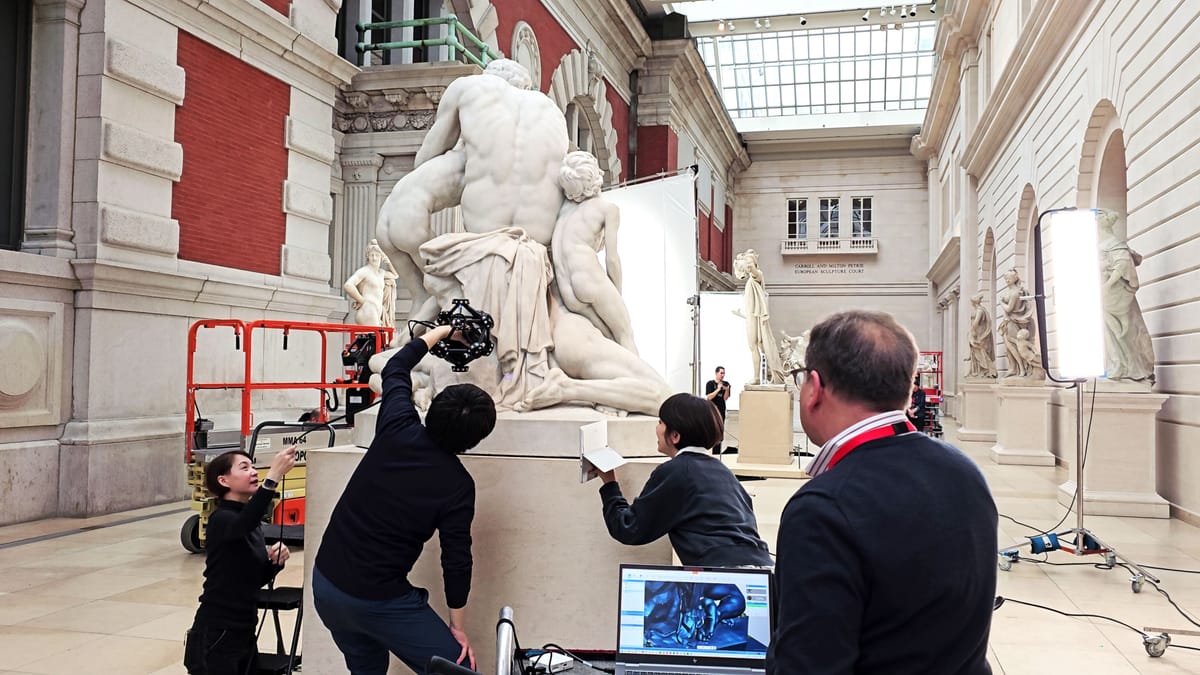
3 weeks agoThe Met Releases High-Definition 3D Scans of 140 Famous Art Objects: Sarcophagi, Van Gogh Paintings, Marble Sculptures & More
The Metropolitan Museum of Art now offers high-definition 3D scans of its artifacts, enabling unprecedented close examination and interaction with masterpieces through digital zoom, rotation, and augmented reality technology.
Arts
fromColossal
4 weeks agoThe Met Introduces High-Definition 3D Scans of Dozens of Art Historical Objects
The Metropolitan Museum of Art and other institutions now offer 3D digital models of artworks, enabling detailed examination of textures, materials, and hidden details impossible to see in person or through standard digital images.
Arts
fromThe Art Newspaper - International art news and events
1 month agoRoyal Ontario Museum picks Nicholas R. Bell as next leader
Nicholas R. Bell becomes the new director and chief executive of the Royal Ontario Museum, taking over from Joshua Basseches on July 6, 2025, bringing experience from leading the Glenbow Museum in Calgary.
Arts
fromwww.theguardian.com
1 month agoThe Guardian view on an explosion of solo exhibitions by women: move over old masters | Editorial
Major UK art institutions are finally increasing exhibitions of female artists after decades of severe underrepresentation, marking a significant shift from historical gender disparities in museum programming.
Arts
fromArtnet News
1 month agoThe Art Boom in the Middle East, Are Old Masters Cool Now?, and a Fresco Fracas in Italy | Artnet News
Art Basel Qatar raises questions about cultural power redistribution, while contemporary art's focus on Old Masters reflects market pressures, and a removed church fresco in Rome highlights tensions between restoration, iconography, and political imagery.
fromwww.thehistoryblog.com
1 month agoMosaics displayed under floor of new Istanbul museum
An intact mosaic from Late Antiquity discovered during restoration of a historic municipal building in Istanbul is now a floor again, covered in plexiglass and welcoming visitors to the new Zeytinburnu Mosaic Museum. Visitors of Turkey's newest museum move across elevated glass walkways, suspended right above the original floors themselves. The mosaics are not relocated fragments mounted on walls, but surfaces that remain exactly where they were first laid, preserving their context for all to see.
History
Arts
fromThe Art Newspaper - International art news and events
1 month agoUK exhibition celebrates the artisans throughout history who went to war
Frontline-made objects salvaged from battlefields reveal the skills, identities, and lived experiences of ordinary soldiers across conflicts from the World Wars to modern wars.
History
fromTime Out London
1 month agoA new 'Cleopatra' immersive experience in London will be all about Ancient Egypt
Cleopatra: The Experience opens at Immerse LDN as a 3,000 square metre, nine-gallery immersive exhibition tracing the late Ptolemaic dynasty with artefacts, AR, VR and staged environments.
Arts
fromThe Art Newspaper - International art news and events
2 months agoMuseum wall texts are an art in their own right-but will they survive the digital age?
Museums should balance providing contextual wall text and inviting wordless, personal interpretation to make art accessible and meaningful to diverse visitors.
fromThe Art Newspaper - International art news and events
2 months agoIn the age of AI, can art expertise be digitised?
Recently, AI decided that a painting long thought to be a copy of Caravaggio's The Lute Player is actually by the master, while another version of the same subject, previously thought to be authentic, is not. Both conclusions were disputed by the former Metropolitan Museum of Art curator Keith Christiansen. A similar debate erupted in March 2025 when AI declared that portions of The Bath of Diana, also long believed to be a copy, could have been painted by Peter Paul Rubens.
Arts
fromThe Art Newspaper - International art news and events
1 month agoWhen it comes to restitution, how can museums solve a problem like inalienability?
When Thomas Jefferson wrote about the "inalienable" rights of man in the US Declaration of Independence 250 years ago, it's possible he lifted the term from the French. And long before it was ever used as an adjective to describe human rights, it defined royal property. To this day, "inalienability" remains a cornerstone of public collections in France-and many other countries-impacting museums and their ability to deaccession, including for purposes of restitution.
Arts
fromColossal
2 months agoIn 'Reading the Rooms,' Gretchen Scherer 'Opens Up' Historic, Art-Filled Spaces
For Gretchen Scherer, centuries-old rooms in grand houses and institutions serve as the foundation for an ongoing series of paintings of luminous interiors. She starts with photos sourced online, from books, and that she snaps herself, in addition to drawing inspiration from artists like Narcissa Niblack Thorne, who commissioned meticulously crafted miniatures of period rooms to house her vast collection of 1:12-scale furniture. Scherer then tries to "open up" the space, as she describes it, toying a bit with perspective.
Arts
Arts
fromTime Out London
1 month agoThis underrated, tiny west London museum is celebrating its 100th birthday with a blockbuster year of exhibitions in 2026
Leighton House celebrates its 100th year with exhibitions and workshops showcasing its history, international influences, Arab Hall origins, and restored collections.
fromwww.theguardian.com
1 month agoAI analysis casts doubt on Van Eyck paintings in Italian and US museums
An analysis of two paintings in museums in the US and Italy by the 15th-century Flemish artist Jan van Eyck has raised a profound question: what if neither were by Van Eyck? Saint Francis of Assisi Receiving the Stigmata, the name given to near-identical unsigned paintings hanging in the Philadelphia Museum of Art and the Royal Museums of Turin, represent two of the small number of surviving works by one of western art's greatest masters, revered for his naturalistic portraits and religious subjects.
Arts
[ Load more ]