Books
fromThe Atlantic
1 day agoThe First Draft of Cultural History
Gossip serves as the rough draft of news, with Lena Dunham's memoir providing unique insights into Millennial art and culture.
What does it mean to subscribe to something? Whether we mean a belief or a magazine, the definition is complicated. I began subscribing to The New Yorker when I was a sophomore in college; more than 30 years later, I have yet to stop and I feel strongly that I never will. Yet during some of those years-okay, many of them-the weekly issues have piled up in my home and gone mostly unread between biannual days of bingeing and purging. If these reading habits could somehow be converted into digital clicks, the resulting "traffic report" might look like I don't want the product at all.
No single musician better represents that contribution and its nearly forgotten history than pianist Sidney Porter. From 1941 until his untimely death in 1970, he cast a 6'8" shadow over Portland's jazz scene as both a performer and nightclub owner. Two months after he died, more than 3,000 people filled the Hoyt Hotel in a 10-hour show of respect that included 20 bands and more than 160 musicians.
At first sight, Winslow Homer's " The Brush Harrow," which depicts two young boys, a horse, and a harrow against an arid landscape, evokes a feeling of somber isolation - but it's hard to pinpoint why. During a talk by curator Horace D. Ballard at the Harvard Art Museums on Jan. 29, visitors learned that Homer painted the scene in 1865, as the Civil War was ending, making the emotional underpinnings of the work clearer.
To deny one's own experiences is to put a lie into the lips of one's own life. It is no less than a denial of the soul. The concept I stick to - my core principle - is simple: I write in plain English, and only when I actually have something to say.
It was the first Wednesday of December and the last One-Page Wednesday of 2025. Hosted by Portland novelist Emme Lund (The Boy with a Bird in His Chest) at the Literary Arts bookstore, the free monthly event is an open mic that functions more like a public writers' group. Students, aspiring writers, and National Book Award-winning authors hang out and read aloud one page from a work in progress.
A little rice? A little soup? I'd rather die reading the early texts you sent about my breasts. I wouldn't take a picture- infidelity!- and so instead had conjured them with words, for which, with words, you gave me back a tongue we dragged across the skin of common thought. Such is our lot, our shared disease or gift. Like Bernini's angels propped somewhere in Rome
Dilara, the protagonist of this début novel, is consumed by the absence of a stable home in her life. She and her family flee Turkey, where she is from, after a failed coup in 2016. When they end up in Italy, something inexplicable happens: Dilara's bathroom transforms into a cell in an infamous prison on the outskirts of Istanbul.
A writer is a kind of magician. Their job is to create living, three-dimensional people out of the ordinary stuff of ink and paper. This is no easy task, because readers can't literally hear, touch, or observe a character. Everything that defines a human being in real life-the physical space they occupy, or how they smell, feel, and sound-is stripped away, replaced by description. But authors have one major, mystical advantage: They can show you what's happening inside of someone's brain.
You are leaving work, your suit still damp from the morning's downpour, the skin on your palms peeling. You are clutching two supermarket bags, tins of cream soup and tuna knocking against one another. The rain is hard and your anorak is cheap. You are on your way to Stockbridge, to your parents' house, which only your father inhabits now that your mother is gone.
The book that changed me as a teenager Donald Barthelme's Sixty Stories, because he was having such a good time and seemed so so smart, but was also mischievous and irreverent. It may sound corny but these stories made me grasp the existence of a world of art and literature. And Barthelme lived in Houston, where I was growing up, yet he was a major world writer.
At least one fundamental human trait persists in the smartphone era: People seem to love a challenge. The internet teems with viral competitions, gamified health apps, and "life-maxxing" exercises of many kinds. Even those who resist the lure of screens-by, for instance, reading books-are frequently doing so with a kind of competitive zeal. A University of Pennsylvania professor has built a strict, rules-based classroom cult around reading.
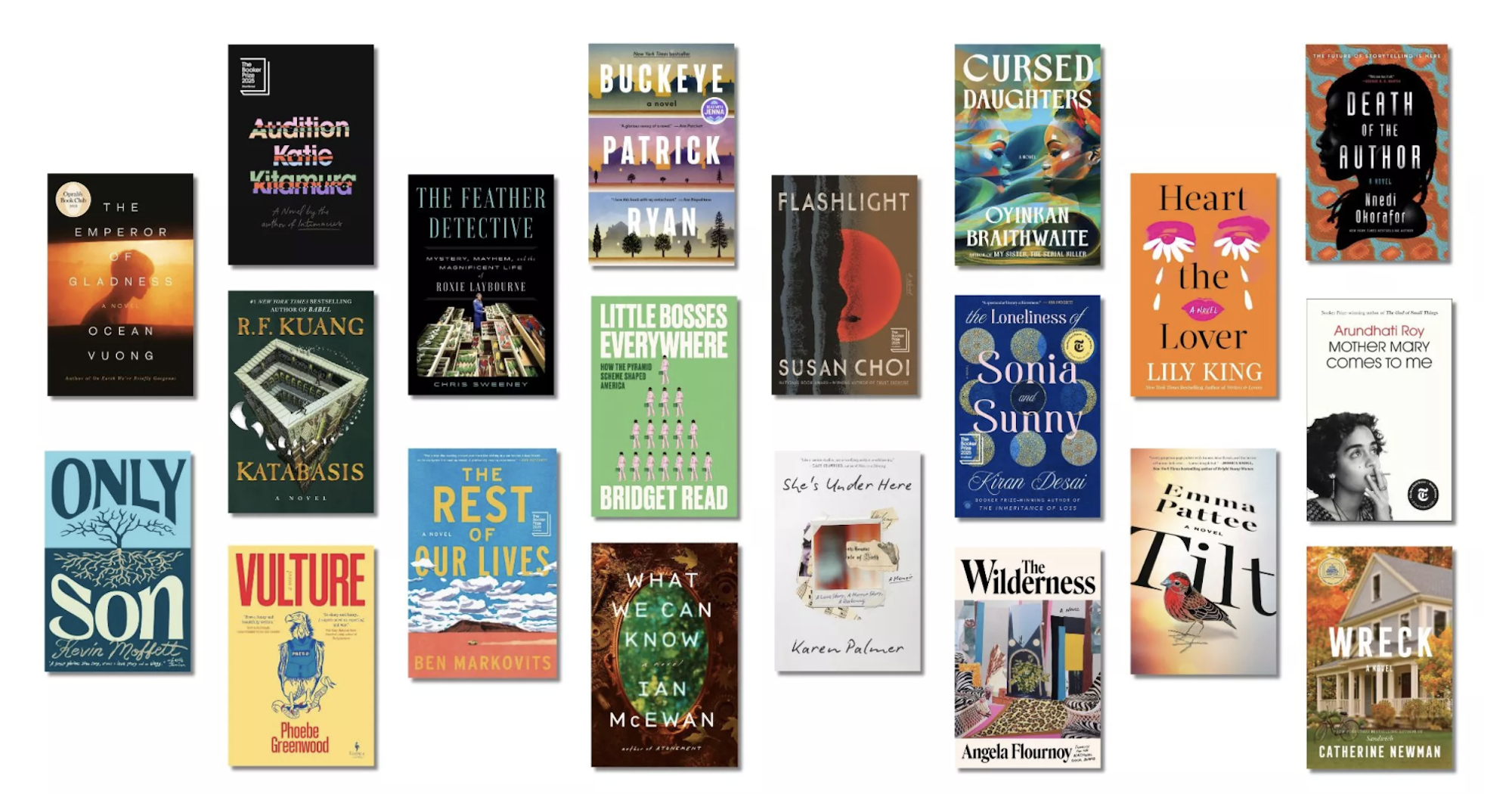
If you're hunkering down ahead of the big winter storm this weekend, we want to make sure you're well prepared. Yes, with batteries, flashlights, toilet paper, and food but perhaps most importantly with good reading material. We looked back through some recent interviews and Books We Love, our annual year-end reading guide, to find snowy suggestions to get you through the storm.