#jwt
#jwt
[ follow ]
#cybersecurity #age-verification #security #privacy #identity-management #vpn #access-control #password-managers





Privacy professionals
fromWIRED
4 weeks agoIf You Don't Have One, I Recommend a Free Dark Web Monitoring Service
Dark web monitoring services track compromised data across public hacker forums and databases to alert users when their personal information appears in breaches, though most breached data is found on the clear web rather than the dark web itself.
Privacy professionals
fromWIRED
4 weeks agoDo You Need an Identity Protection Service for Safe Browsing?
Identity theft protection services function as insurance products offering reactive compensation for damages rather than active prevention, with coverage details and sub-benefit caps critically affecting actual protection value.
Privacy technologies
fromAzure DevOps Blog
3 weeks agoAuthentication Tokens Are Not a Data Contract - Azure DevOps Blog
Authentication tokens should only validate authorization, not serve as data interfaces; upcoming encryption will make token payloads unreadable, breaking applications that decode token claims.
#ai-agent-security
Information security
fromTechzine Global
4 weeks agoOkta launches platform to secure AI agents
Okta for AI Agents provides organizations with discovery, access management, and immediate revocation capabilities to secure non-human identities and address the 88 percent of organizations experiencing AI agent security incidents.
Privacy technologies
fromArs Technica
3 weeks agoWorld ID wants you to put a cryptographically unique human identity behind your AI agents
World ID's Agent Kit enables AI agents to prove human authorization through iris-verified identity tokens, allowing websites to distinguish legitimate automated requests from malicious Sybil attacks.
fromInfoQ
1 month agoPlatforms for Secure API Connectivity With Architecture as Code
Building APIs is so simple. Caveat, it's not. Actually, working with tools with no security, you've got a consumer and an API service, you can pretty much get that up and running on your laptop in two or three minutes with some modern frameworks. Then, authentication and authorization comes in. You need a way to model this.
Web frameworks
Privacy professionals
fromwww.socialmediatoday.com
1 month agoConcerns with third party partner could derail LinkedIn's verification push
LinkedIn implements expanded verification requirements for company, workplace, and executive-level roles to combat scams and misrepresentation, though concerns about verification partner Persona may hinder progress.
fromTheregister
2 months agoMatrix messaging gaining ground in government IT
FOSDEM 2026 Amid growing interest in digital sovereignty and getting data out of the corporate cloud and into organizations' ownership, the Matrix open communication protocol is thriving. The project was co-founded by Matthew Hodgson and Amandine le Pape, and The Reg FOSS desk met both at this year's FOSDEM for a chat about what's happening with Matrix. The Register has covered Matrix and its commercial Element side quite a few times over the years,
Software development
fromblog.logrocket.com
2 months agoWhat are the key challenges in scaling MFA for large organizations? - LogRocket Blog
Most design specs break down in development because they're built for designers, not developers. This article shows how to write specs that reflect real-world logic, states, constraints, and platform behavior not just pixels. Rafael Basso Jan 20, 2026 11 min read A practical guide to AI in UX design, covering predictive UX, generative assistance, personalization, automation, and the risks of overusing AI. Shalitha Suranga Jan 14, 2026 11 min read
UX design


Information security
fromTheregister
1 month agoMicrosoft OAuth scams abuse redirects for malware delivery
Microsoft warns of ongoing OAuth abuse scams using phishing emails and URL redirects to deliver malware and compromise organizational devices, primarily targeting government and public-sector entities.


Privacy technologies
fromSitePoint Forums | Web Development & Design Community
1 month agoIs It Safe to Use Virtual Numbers for OTP-Based App Testing?
Virtual phone numbers enable developers to test OTP-based authentication systems safely without exposing personal information or creating account limitations.
Information security
fromThe Hacker News
1 month agoMicrosoft Warns OAuth Redirect Abuse Delivers Malware to Government Targets
Microsoft warns of phishing campaigns exploiting OAuth redirect mechanisms to bypass email and browser defenses, targeting government and public-sector organizations to deliver malware without stealing credentials.


Information security
fromSecurityWeek
2 months agoWebinar Today: Identity Under Attack - Strengthen Your Identity Defenses
Adopt an identity-first security strategy to protect sensitive data, meet compliance requirements, and balance security, user experience, and operational efficiency against identity threats.
fromNieman Lab
1 month agoWhy "magic links" and passcodes are taking over news logins
Passwords get hacked all the time, but they can't be hacked if they don't exist...this allows a small team like 404 to spend less time managing security administration, and more time investing in bringing you stories you care about.
Privacy technologies
fromWIRED
1 month agoPassword Managers Share a Hidden Weakness
An FBI informant helped run the Incognito dark web market and allegedly approved the sale of fentanyl-laced pills, including those from a dealer linked to a confirmed death, WIRED reported this week. Meanwhile, Jeffrey Epstein's ties to Customs and Border Protection officers sparked a Department of Justice probe. Documents say that CBP officers in the US Virgin Islands were still friendly with Epstein years after his 2008 conviction, illustrating the infamous sex offender's tactics for cultivating allies.
Information security
fromLogRocket Blog
1 month agoHow to design 2FA: Comparing methods, user flows, and recovery strategies - LogRocket Blog
2FA or two-factor authentication is a specific type of multi-factor authentication. As the name suggests, 2FA requires two distinct forms of user verification factors to access a specific protected, registered user-only software system. In the past, software teams used only a one-factor authentication strategy with users' passwords, but nowadays, with growing security concerns and user authentication evolution, every digital product uses 2FA with password-based authentication, starting from simple SMS OTPs (One Time Tokens) to futuristic AI-powered adaptive 2FA methods and high-security hardware keys.
Information security
Information security
fromThe Hacker News
2 months ago[Webinar] Securing Agentic AI: From MCPs and Tool Access to Shadow API Key Sprawl
Agentic AI that can execute code expands attack surface through Machine Control Protocols; securing MCPs, APIs, and shadow keys is essential to prevent automation-driven breaches.



Information security
fromKotaku
1 month agoHackers Raise The Alarm About Discord's Recent Age-Verification Partner - Kotaku
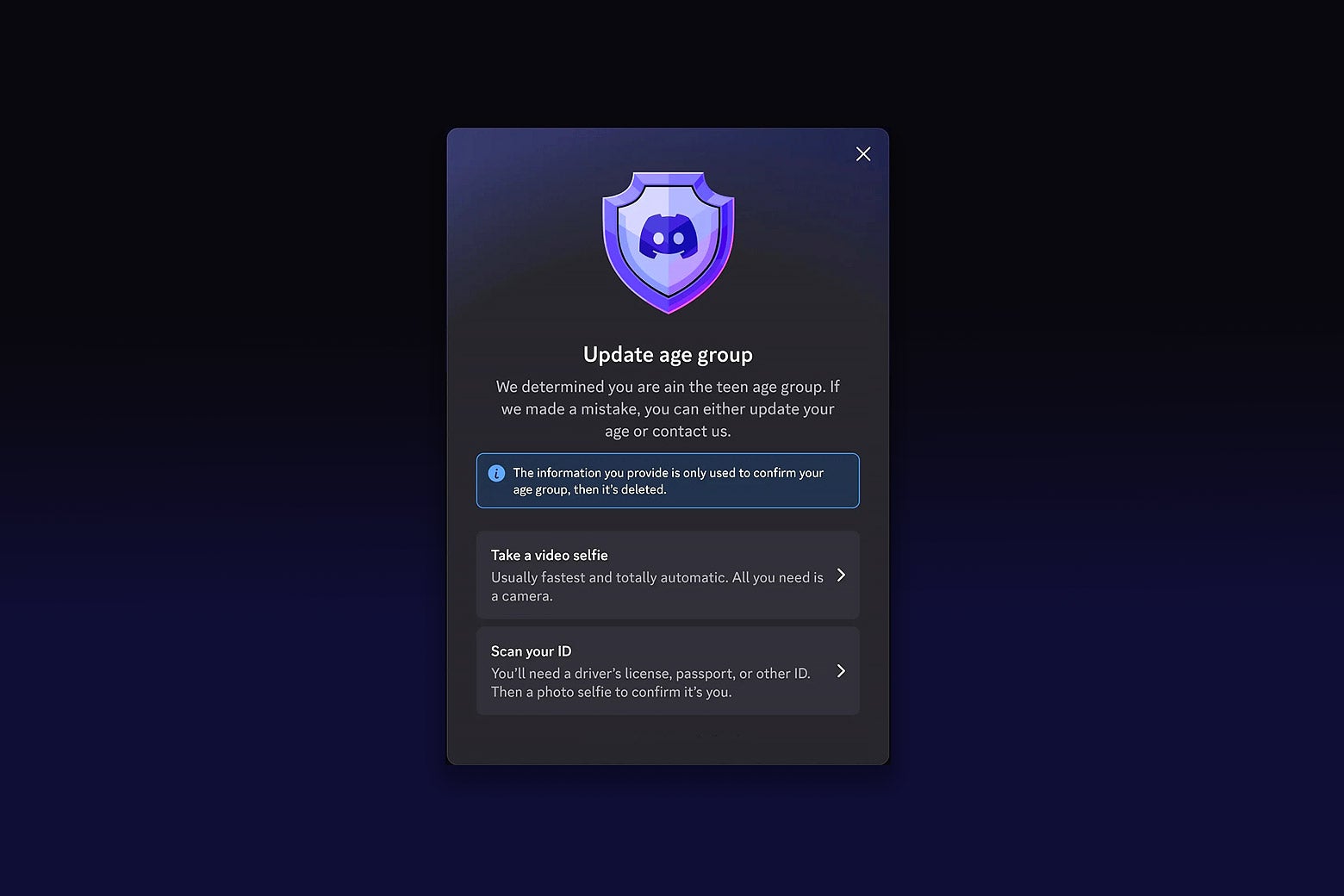
Persona's weak security enabled hackers to access biometric data and revealed extensive surveillance, including facial scanning against watchlists, raising privacy and government-collaboration concerns.
fromThe Hacker News
2 months agoPassword Reuse in Disguise: An Often-Missed Risky Workaround
Near-identical password reuse occurs when users make small, predictable changes to an existing password rather than creating a completely new one. While these changes satisfy formal password rules, they do little to reduce real-world exposure. Here are some classic examples: Adding or changing a number Summer2023! → Summer2024! Appending a character Swapping symbols or capitalization Welcome! → Welcome? AdminPass → adminpass Another common scenario occurs when organizations issue a standard starter password to new employees, and instead of replacing it entirely, users make incremental changes over time to remain compliant.
Information security
fromComputerworld
1 month ago11 steps to smarter Google account security
While you're thinking about third-party add-ons for your computer and phone, take a moment to review everything you have installed on both fronts and consider how many of those programs you actually still use. The fewer cracked windows you allow on your Google account, the better - and if you aren't even using something, there's no reason to keep it connected.
Information security
fromThe Hacker News
1 month agoMalicious npm Packages Harvest Crypto Keys, CI Secrets, and API Tokens
"The sample retains Shai-Hulud hallmarks and adds GitHub API exfiltration with DNS fallback, hook-based persistence, SSH propagation fallback, MCP server injection with embedded prompt injection targeting AI coding assistants, and LLM API Key harvesting," the company said. The packages, published to npm by two npm publisher aliases, official334 and javaorg, are listed below - Also identified are four sleeper packages that do not incorporate any malicious features -
Information security
fromDataBreaches.Net
2 months agoCloudflare whacks WAF bypass bug that opened side door for attackers - DataBreaches.Net
Cloudflare has fixed a flaw in its web application firewall (WAF) that allowed attackers to bypass security rules and directly access origin servers, which could lead to data theft or full server takeover. FearsOff security researchers reported the bug in October through Cloudflare's bug bounty program, and the CDN says it has patched the vulnerability in its ACME (Automatic Certificate Management Environment) validation logic with no action required from its customers.
Information security
[ Load more ]