#m4-mac-mini
#m4-mac-mini
[ follow ]
#apple #technology #macbook-air #apple-silicon #macbook-neo #macbook-pro #performance #m5-chip #ai-performance



Apple
fromYanko Design - Modern Industrial Design News
3 hours agoYou Can Now Own the Actual Motherboard from the First iPhone, Sealed Inside The 17 Pro - Yanko Design
Caviar's Apple 50th anniversary collection features unique iPhones embedding historical components, demonstrating the commercial power of Apple mythology.
#apple-m5-chips
Apple
fromArs Technica
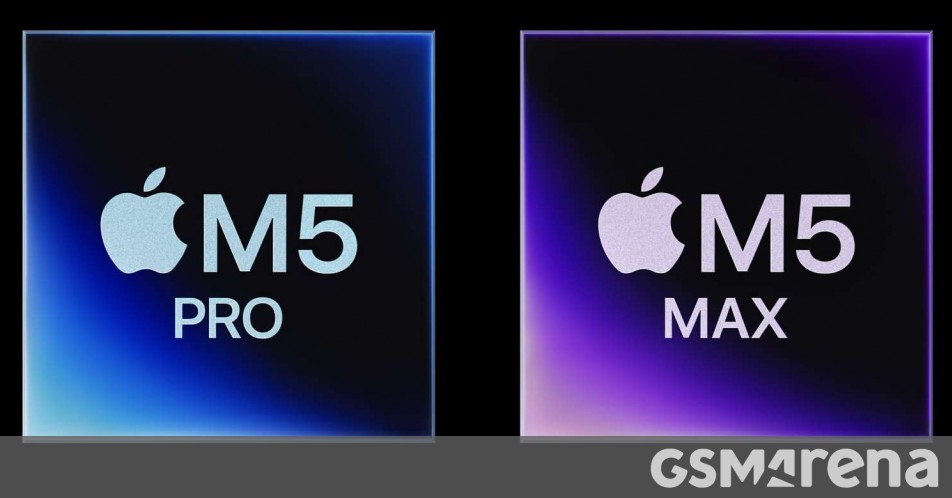
1 month agoM5 Pro and M5 Max are surprisingly big departures from older Apple Silicon
Apple's M5 Pro and M5 Max chips feature distinct GPU configurations, with M5 Max doubling M5 Pro's GPU cores, encoding engines, and memory bandwidth, plus a new third CPU core type optimized for multi-threaded performance.
Apple
fromArs Technica
1 month agoM5 Pro and M5 Max are surprisingly big departures from older Apple Silicon
Apple's M5 Pro and M5 Max chips feature distinct GPU configurations, with M5 Max doubling M5 Pro's GPU cores, encoding engines, and memory bandwidth, plus a new third CPU core type optimized for multi-threaded performance.

fromSecurityWeek
3 days agoApple Intelligence AI Guardrails Bypassed in New Attack
The first is Neural Execs, a known prompt injection attack that uses 'gibberish' inputs to trick the AI into executing arbitrary, attacker-defined tasks. These inputs act as universal triggers that do not need to be remade for different payloads.
Apple
fromThe Verge
1 month agoApple's new M5 Max feels like a huge upgrade if you bought your laptop 3 years ago
Apple claims that its 2026 models can deliver "up to 2x" the sustained read and write speeds of the M4 Pro and Max laptops. In our testing, the 4TB SSD in the 16-inch M5 Max MacBook Pro bore that out: our unit could sustain a 13.6GB/s read speed and an even higher 17.8GB/s write speed.
Gadgets
#m5-max-macbook-pro
Apple
fromgizmodo.com
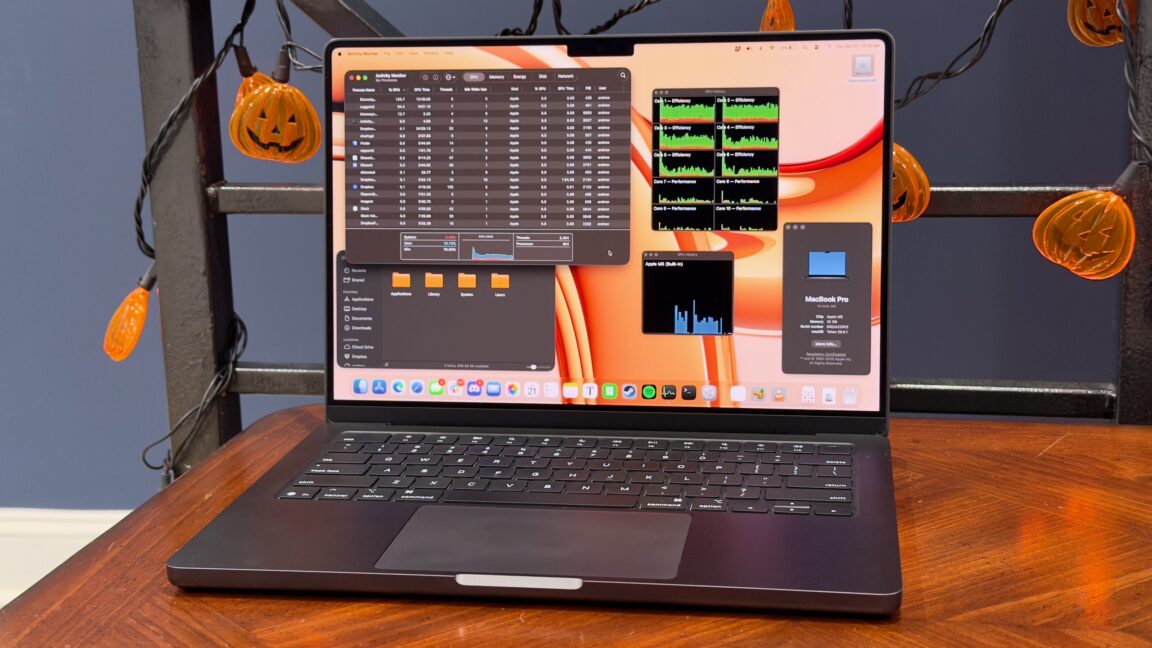
1 month agoM5 Max MacBook Pro Review: Preeminent Power In the Same Old Shell
The M5 Max MacBook Pro delivers exceptional gaming performance with frame rates around 50 fps in demanding titles, but its premium pricing starting at $3,600 raises questions about practical value for most users.
#macbook-air-m5


Apple
fromgizmodo.com
1 month agoM5 MacBook Air Review: A Laptop With Real Middle Child Energy
The M5 MacBook Air occupies a crowded middle position between the affordable MacBook Neo and powerful MacBook Pro, offering solid performance for demanding tasks but facing positioning challenges in Apple's expanded laptop lineup.


Apple
fromWIRED
1 month agoThe MacBook Pro M5 Max Is So Fast, It's Hard to Know How to Test It
The M5 Max MacBook Pro delivers exceptional performance and remains the market's most powerful high-end laptop, though its design has stagnated after five years with anticipated major redesigns coming next year.
fromWIRED
1 month agoThe MacBook Neo Cuts (Most of) the Right Corners
It's not the basic MacBook. Or the cheap MacBook. Or the mini MacBook. It's the MacBook "Neo," meaning new or young-a fresh take on an old idea. Love the name or hate it, you likely see what Apple was attempting to communicate from a marketing perspective. It's meant to be a new kind of Mac for a new generation-perhaps an attempt to recapture a generation that's only been exposed to iPads and Chromebooks.
Apple
fromArs Technica
1 month agoTesting Apple's 2026 16-inch MacBook Pro, M5 Max, and its new "performance" cores
The M5 Pro and M5 Max are no longer monolithic chips with all the CPU and GPU cores and everything else packed into a single silicon die. Using an 'all-new Fusion Architecture' like the one used to combine two Max chips into a single Ultra chip, Apple now splits the CPU cores (and other things) into one piece of silicon, and the GPU cores (and other things) into another piece of silicon.
Apple
#ipad-air-m4
Apple
fromEngadget
1 month agoThe Morning After: The new iPad Air M4 is Apple's best overall tablet
Apple's M4 iPad Air offers powerful performance but retains the same display technology from 2020 and lacks Face ID, indicating stagnation in key features despite rapid chip upgrades.

Apple
fromArs Technica
1 month agoApple's 512GB Mac Studio vanishes, a quiet acknowledgment of the RAM shortage
Apple quietly discontinued the 512GB RAM option for its top-tier M3 Ultra Mac Studio and increased the 256GB configuration price from $1,600 to $2,000, reflecting supply chain pressures despite maintaining stable pricing elsewhere.
Apple
fromArs Technica
1 month agoApple intros M5 Pro and Max MacBook Pros and its first new monitors in years
M5 Pro and Max chips feature significantly improved GPU cores and memory bandwidth, with M5 Pro offering up to 20 GPU cores and M5 Max up to 40, delivering approximately 20 percent performance gains alongside new Wi-Fi 7 and Bluetooth 6 connectivity.

fromZDNET
2 months agoM5 MacBook Pro vs. M4 MacBook Air: I compared Apple's most popular laptops, and this one wins
If you are in the market for a new Apple laptop, it can be confusing to choose the one that suits your needs. After all, the company recently released an all-new 14-inch base MacBook Pro powered by its latest M5 processor. It is more powerful than the $999 (currently $750) but not as formidable as the more expensive M4 Pro and M4 Max-powered machines.
Apple
[ Load more ]