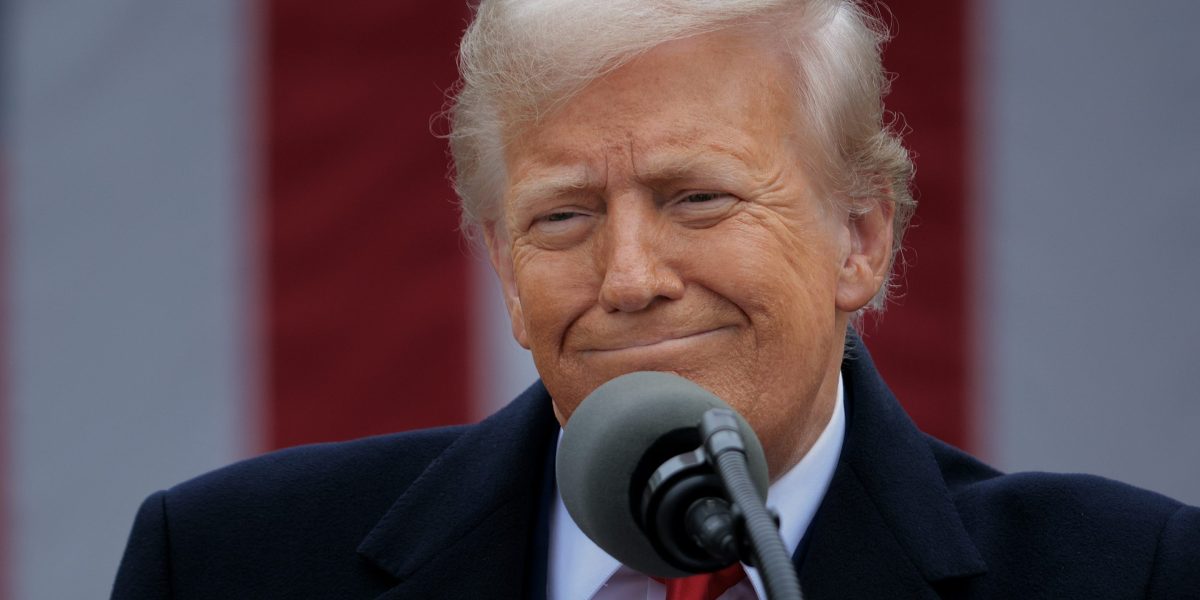
1. Trump - whose speech at the World Economic Forum drew such demand that a stampede nearly broke out at the doors - claimed the Greenland deal gives the U.S. "everything we needed." Even with concessions falling far short of total control, Trump can tout the "Art of the Deal" to his base and retreat from an issue that polls even worse than his handling of the Epstein files. The "Trump Always Chickens Out" (TACO) mockery popularized on Wall Street may sting, but the president's MAGA machine is already moving to sell the deal as a total victory.
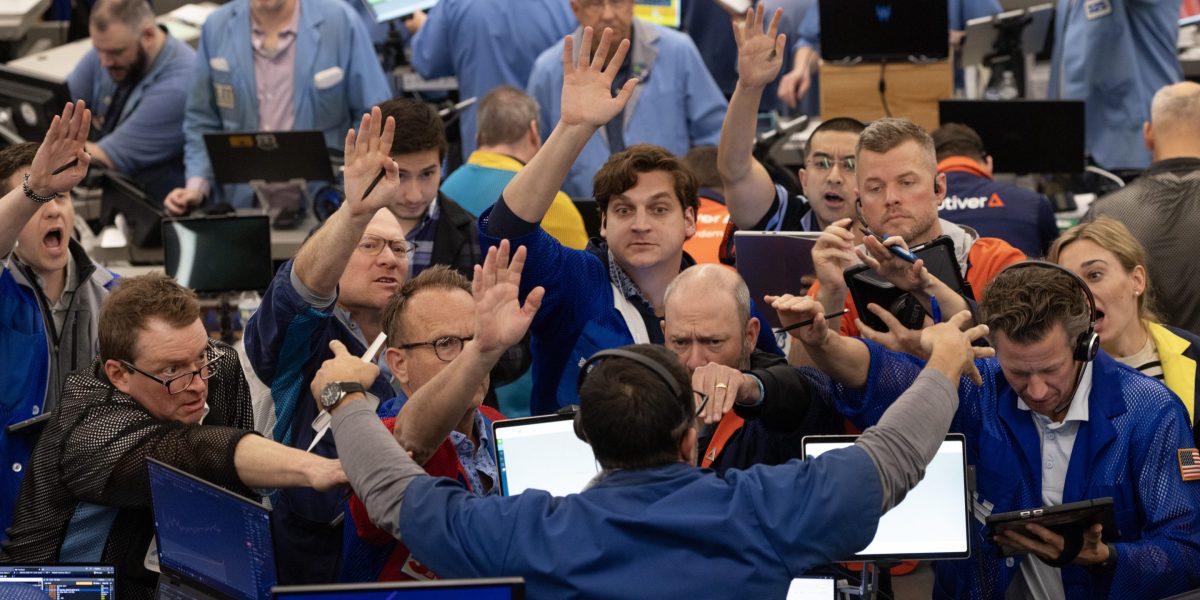
After a brief sell-off in the run-up to Donald Trump's speech to global leaders at the World Economic Forum in Davos, Switzerland on Wednesday, markets are up, after the president backed off earlier claims and ruled out using force to acquire Greenland. The Dow Jones Industrial Average was up 451 points, or about 1%, and the S&P 500 was up 67 points, also about 1%, in midday trading at the time of this writing. The Nasdaq was up about 0.7%.
The star-crossed Lindsey Halligan era came to a close in the Eastern District of Virginia yesterday, as two judges said the lawyer Trump installed as acting US Attorney must leave her post. Another judge previously found that the administration "had used an unlawful maneuver to install" Halligan, a former personal attorney for President Trump who had no prosecutorial experience and carried out Trump's orders to pursue flimsy prosecutions against perceived enemies like James Comey and Letitia James. ( Washington Post)
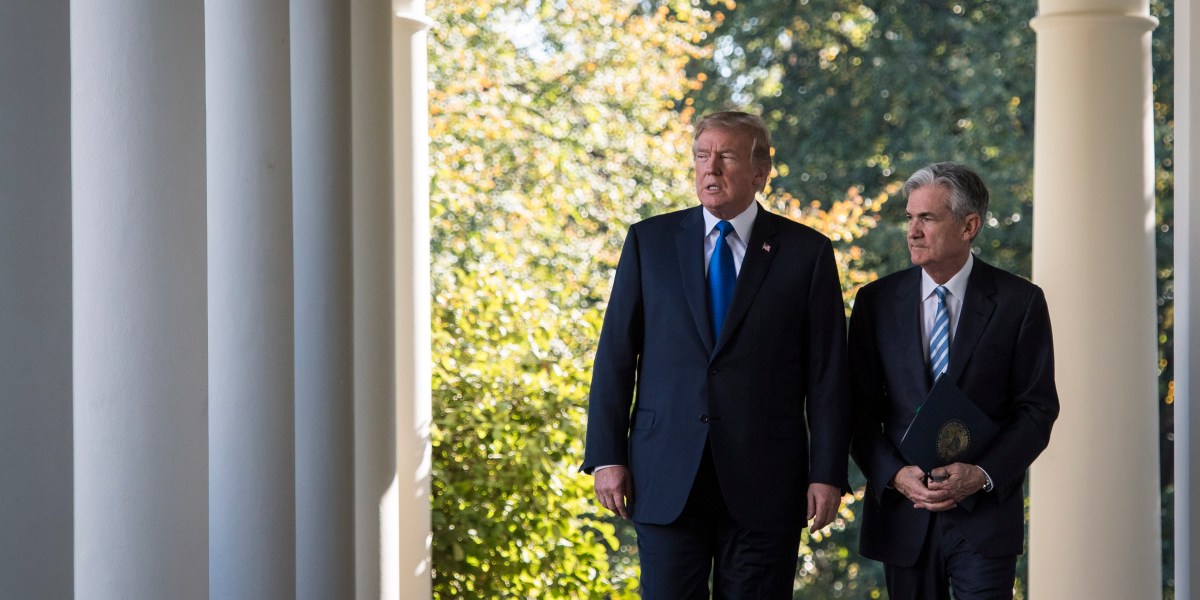
Yet, Monday came, and while gold and silver went vertical, equities stayed calm and the dollar barely drifted. To economist Tyler Cowen, the renowned libertarian from George Mason University and author of the influential Marginal Revolution blog, this lack of market panic is the most revealing part of the drama. It isn't that investors trust the administration's motives; it's that they have already accepted the "ugly little truth" that the Federal Reserve's independence is a relic of a bygone era.
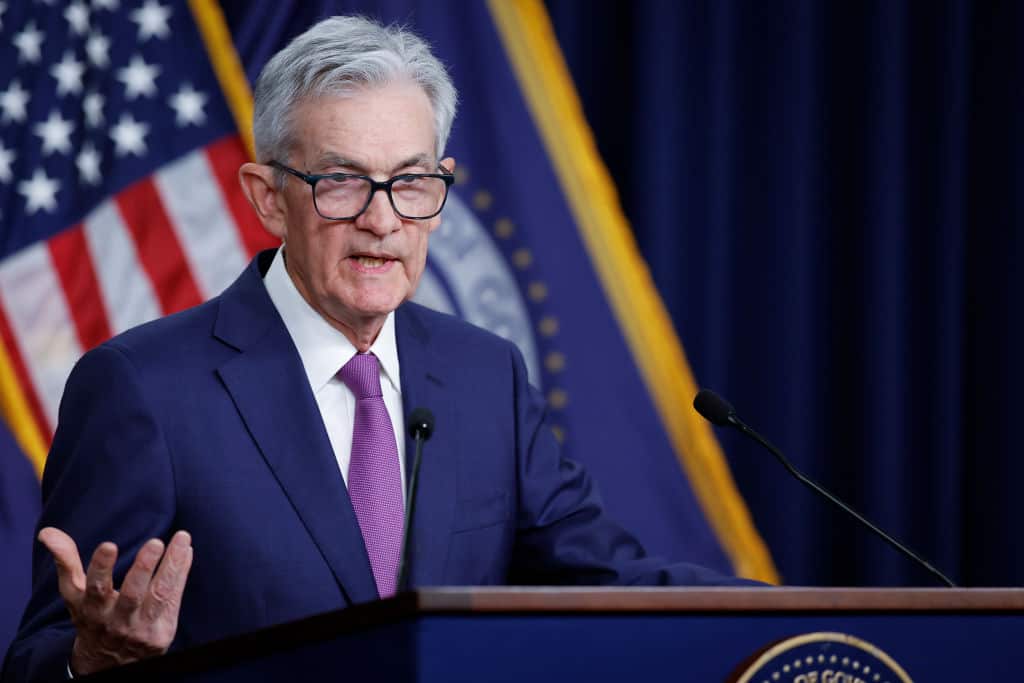
In a post on X, U.S. Attorney Jeanine Pirro wrote that she started the probe because she got no response from her inquiries at the Fed. She may be backing away a littlethat's my sense. House Financial Services Chair French Hill says the investigation creates an unnecessary distraction. Maybe he wants to back away as well. He says the investigation could undermine Trump's future ability to make sound decisions. I think they're backing away. What do you say?
President Donald Trump rattled the defense sector yesterday by signing an executive order prohibiting contractors from issuing dividends or repurchasing shares until they prioritize investments in new facilities and machinery to boost production speed and quality. He specifically targeted RTX ( ) as the most egregious violator, accusing it of favoring shareholders over military needs and warning it could lose access to future contracts unless it ramps up capital spending.
Real estate investment trusts (REITs), private equity firms and other large institutional investors have expanded their single-family rental portfolios in recent years, drawing criticism from housing advocates and lawmakers who argue that investor activity has constrained supply and pushed home prices higher. Markets reacted swiftly to Trump's comments. Shares of Invitation Homes the nation's largest owner of single-family rental homes fell more than 7% Wednesday afternoon. Blackstone, a major player in the space that acquired Home Partners of America for $6 billion in 2021 and Tricon Residential for $3.5 billion in 2024, was down about 5%.
Due to growing concerns over Palantir Technologies 's ( ) valuation, its stock fell 13% last week. However, following the U.S. military operation in Venezuela over the weekend, which captured President Nicolas Maduro, shares are rising over 4% in morning trading on speculation that Palantir's AI and data platforms contributed to the operation's intelligence and planning success. While unconfirmed by officials, such involvement could reinforce Palantir's critical role in national security, potentially supporting its elevated valuation if it leads to expanded contracts or demonstrates real-world efficacy.
In a Saturday press conference addressing America's military intervention, Trump said, "We're going to have our very large United States oil companies-the biggest anywhere in the world-go in, spend billions of dollars, fix the badly broken infrastructure, the oil infrastructure." While the president did not name any specific companies, based on premarket trading this morning, investors seem to think that the following oil and energy giants stand to benefit from the intervention:
Nike shares ticked up 2% in premarket trading on Wednesday after Apple CEO Tim Cook bought nearly $3 million worth of the sportswear maker's stock. Cook, who has served on Nike's board since 2005 and is its lead independent director, bought 50,000 shares at $58.97 each, according to a regulatory filing published on Tuesday. Nike shares were trading at $58.49 on Wednesday. The purchase comes just days after Nike reported weaker quarterly margins and sluggish sales in China.
The $0.25 per share earnings beat represented a 5.8% surprise, marking the sixth consecutive quarter Toll Brothers has exceeded analyst expectations. However, revenue of $3.26 billion came in just 1.8% above the $3.20 billion estimate. More concerning for investors: that revenue figure declined 2.2% year over year from the prior fourth quarter's $3.33 billion. This pattern suggests the earnings outperformance came more from cost management and margin discipline than from robust demand growth.
Compass Minerals reported a loss of $0.17 per share for Q4, beating the consensus estimate of a $0.23 loss by 25.7%. Revenue came in at $227.5 million, topping the $225.7 million estimate by 0.78%. More importantly, the quarter showed meaningful improvement versus the prior year. Net losses narrowed to $17.0 million from $48.3 million in Q4 FY2024, a 64.8% improvement. Revenue climbed 8.9% year over year from $208.8 million.
Chancellor Rachel Reeves is backing an inquiry into pre-Budget leaks from the Treasury which knocked business and consumer confidence and moved markets. The chief secretary to the Treasury told the Commons on Wednesday an inquiry into pre-Budget leaks was under way, led by top Treasury civil servant James Bowler and had "the full support of the chancellor". Policies such as a freezing of income tax thresholds, a pay-per-mile levy on electric vehicles and a tourist tax were all reported in the lead-up to the Budget on 26 November.
The broad index of large-cap companies in the S&P 500 closed flat, but the tech-heavy Nasdaq 100 rose 0.55%. Tech stocks were led by Nvidia, which was up 3%, and now has a market cap of more than $5 trillion. (Its stock is down 0.7% premarket this morning, suggesting that some traders are taking their overnight gains.) To put that in perspective, Nvidia's market cap is bigger than the GDP of every G7 country except the U.S. and Japan.
Bitcoin price surged past $111,000 today after new U.S. inflation data showed a milder-than-expected rise in consumer prices, strengthening expectations that the Federal Reserve will move ahead with additional rate cuts this year. The Consumer Price Index (CPI) rose 0.3% month-over-month in September, below economists' forecasts of 0.4%, while "core" CPI - excluding food and energy - rose just 0.2%, also softer than expected. On a year-over-year basis, both headline and core inflation registered 3.0%, slightly below estimates.
A recent Wall Street Journal report has sparked major renewed interest in the quantum computing sector, claiming that President Trump is pushing for the U.S. government to acquire ownership stakes in several key players. According to the Journal, discussions involve Rigetti Computing ( NASDAQ:RGTI ), D-Wave Quantum ( ), IonQ ( ), and Quantum Computing ( NASDAQ:QUBT ), with each company potentially receiving federal funding in exchange for equity. The report suggests this move aims to bolster U.S. leadership in quantum technology amid global competition.
The tension between Wall Street and Main Street was on display this week as the country's top banks reported blowout earnings, while regional lenders spooked investors about risks lurking in their loan books. In a regulatory filing on Thursday, Zions Bancorporation disclosed that it believes there were misrepresentations by certain borrowers who did business with its California Bank & Trust unit.
Javier Milei threw himself into Donald Trump's arms and was welcomed. Last week, the U.S. president offered Argentina an unprecedented $20 billion rescue package, in addition to an open-ended line of credit and even the possibility that the United States might purchase its debt bonds. True to form, Trump did not hold back: he said Milei was a truly fantastic and powerful leader and, perhaps misinformed about the Argentine electoral calendar, even offered him his complete and total endorsement for re-election as president.
The U.S. may soon scrap the penal import tariff on Indian goods and also cut the reciprocal tariff to 10-15% from the existing 25%, India's Chief Economist Adviser V. Anantha Nageswaran said on Thursday. "My personal confidence is that in the next couple of months, if not earlier, we will see a resolution to at least to the extra penal tariff of 25%," Nageswaran said at an event in Kolkata.
Indonesian President Prabowo Subianto abruptly replaced Sri Mulyani Indrawati as finance minister, risking renewed financial turmoil for Southeast Asia's biggest economy following violent protests in recent weeks against his administration. Purbaya Yudhi Sadewa, who has served as chairman of the Deposit Insurance Corporation since 2020, was sworn in as finance minister at a hastily-arranged ceremony late Monday. He said he is "a market person" who will keep Indonesia fiscally healthy.