#offseason-workout
#offseason-workout
[ follow ]
#mlb #football #baseball #injury-update #fitness #champions-league #injury #premier-league #world-cup #bayern-munich

fromwww.bbc.com
8 hours agoFootball refs need cardiac training, says coroner
Assistant coroner Valerie Charbit insisted that training to recognize sudden cardiac arrest should be compulsory for all members, including grassroots coaches and referees, stating, 'The responsibility for first aid lies with all ages within society.'
Public health



fromwww.aljazeera.com
2 days agoNeymar has to prove his fitness for Brazil's World Cup squad: Ancelotti
Ancelotti has consistently maintained that Neymar will be in contention if he is fully fit, but the attacker was excluded from Brazil's squad for last month's warm-up matches against France and Croatia.
Soccer (FIFA)
Real Madrid
fromwww.fourfourtwo.com
3 days ago'In training, Xabi Alonso showed me things I could improve. Sometimes mentally, you can feel unstable, but I kept working. Maybe if he had played me more often, I wouldn't be living this happy moment at Lyon' Endrick opens up on tough Real Madrid start
Endrick's loan to Lyon has revitalized his career after limited playtime at Real Madrid.
fromwww.businessinsider.com
4 days agoA busy dietitian, who strength-trains during her son's naps, shares how she gets protein in every meal
I just make protein a priority. I try to get it in every meal and every snack. Research suggests these amounts are best for staying full and supporting muscle health.
Silicon Valley food
Exercise
fromwww.businessinsider.com
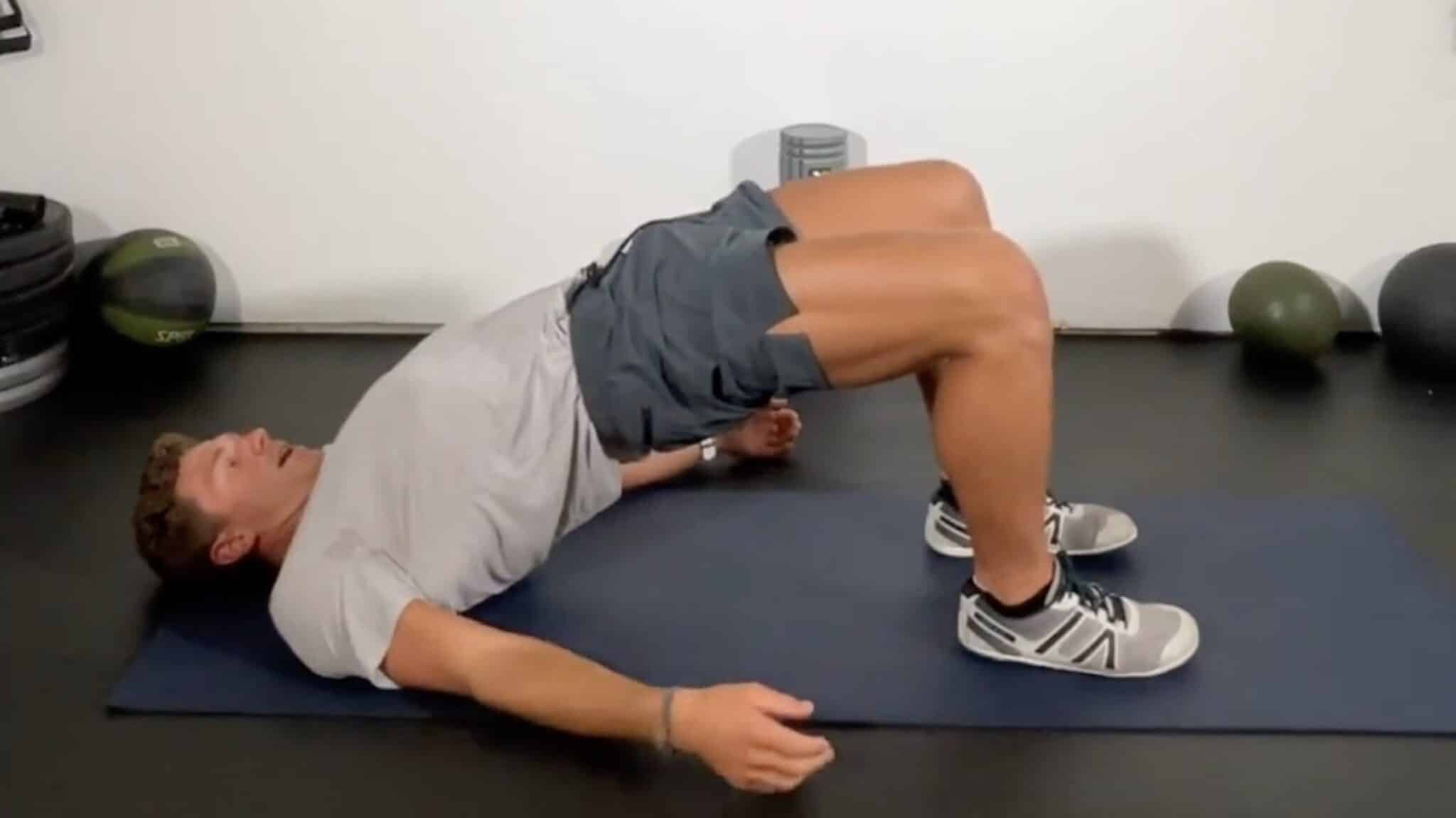
1 day agoAfter decades of swearing by workout classes, I switched to weightlifting. I never expected to be so impressed by the results.
Transitioning from group fitness to weightlifting can significantly improve strength and fitness levels, especially for those feeling stagnant in their workouts.
Bayern Munich
fromSoccer News
2 days agoLeverkusens Tapsoba concentrating on Champions League qualification amid transfer speculation - Soccer News
Edmond Tapsoba is focused on securing Champions League football with Bayer Leverkusen amid speculation about his future and interest from Premier League clubs.
fromAlternative Medicine Magazine
1 week agoWhat You Do After Training Matters More Than You Think
After a tough workout, your body enters a state of stress: muscle fibers are damaged, energy stores are depleted, and hydration levels drop. This is a critical moment. If your body gets the right nutrients, it starts rebuilding immediately. If not, recovery slows down, and so does progress.
Alternative medicine
fromBleacher Nation
3 days agoShould I Consider Team Travel Fatigue When Sports Betting? - Bleacher Nation
Travel fatigue refers to the cumulative physical and mental drain that comes from crossing time zones, sleeping in unfamiliar environments, and competing on compressed schedules. It is not just about being tired from a long flight.
Chicago Cubs
fromSherdog
1 week agoEx-UFC champ shatters nose in training, elects against corrective surgery
"What a good day, and what a stupid accident...again. Five years after [my previous nose break], my nose is f---ed up even worse [laughs]. As you see, it's even more cracked the same direction, and when I touch [my nose], my bones are broken inside."
MMA
fromStrength Running
1 month agoCross Training and Running: How to Add Other Sports to Your Training - Strength Running
Cross training and running go together like peanut butter and jelly. If you build it into your schedule intentionally, strategically, and with a clear understanding of what you're trying to accomplish, you'll thrive. Megan makes the case that cross-training serves runners for several distinct reasons, and the right reason for you will shape how you approach it.
Running
fromSnowBrains
1 month agoIt's Time to Stop Debating & Start Putting the Bar Down - SnowBrains
I have evolved from someone who didn't think much of the bar except for resting my legs to thinking of it as an obvious life-saving precaution. Dr. Bourne shared several examples from Mammoth in which the bar could have saved lives, including the death of her former ski coach, who fell from a chairlift to his death, most likely from a medical event which may have been treatable.
Snowboarding
Health
fromwww.theguardian.com
2 months agoBouncing back: from an ankle sprain to a shoulder pinch, experts on the best way to recover from common injuries
Address underlying imbalances with targeted, consistent movement, proper diagnosis and professional care; combine rest, sleep, nutrition and graduated training to prevent and recover from pain.
Snowboarding
fromUnofficial Networks
1 month ago6 Dryland Bodyweight Exercises That Will Improve Your Skiing Experience
Fundamental exercises targeting single-leg stability, lateral movement, and ski-specific muscle activation provide greater training benefits than complex advanced movements for skiers of all levels.
fromThe Atlantic
2 months agoYour Muscles Remember Your Strongest Moments-And Your Weakest
In 2018, Sharples and his research lab, now at the Norwegian School of Sport Sciences in Oslo, were the first to show that exercise could change how our muscle-building genes work over the long term. The genes themselves don't change, but repeated periods of exertion turns certain genes on, spurring cells to build muscle mass more quickly than before. These epigenetic changes have a lasting effect: Your muscles remember these periods of strength and respond favorably in the future.
Science
National Basketball Association
fromRaptors Republic
2 months agoFormer G League Strength & Conditioning Coach sharing industry's trade secrets
Kevin Wilson rose from Canadian collegiate basketball to Lakers assistant, founded CBPN, and is hosting a virtual conference to guide high school players amid NIL-driven pressure.
fromwww.scientificamerican.com
2 months agoHeal your injuries faster using motion as the new potion
When you have an acute injury, your body is sending signals through the peripheral and central nervous systems and the immune system to say, hold on, I need to stop doing this so we can allow the tissue to heal, says Ericka Merriwether, a physical therapist and pain researcher at New York University. Rest, after all, is the first part of the familiar RICE therapy, which stands for rest, ice, compression and elevation.
Health
fromIndependent
2 months ago'He thought that if it worked for a fighter pilot, it might work for a football player as well'
In 2017, Bjorn Mannsverk's phone rang. A year before, what was meant to be a special 100th anniversary for Bodo/Glimt ended in heartbreak as the Norwegian club were relegated from the top flight. A fresh approach was needed to get the club back on track. Having been stationed in Bodo before in his role as a fighter pilot with the Royal Norwegian Air Force, Mannsverk was familiar with the town, but not the football club.
Soccer (FIFA)
fromScience of Running
2 months agoFit and Fast: Achieving Robustness in Training
In this episode of the On Coaching Podcast, Steve Magness and Jon Marcus discuss the concept of 'fit but flat,' exploring the phenomenon where athletes excel in metabolic fitness but fail to perform competitively due to a lack of neuromuscular coordination. Using examples like middle-distance runner Ingram Brion, the hosts delve into how metabolic training alone can lead to race failures.
Running
[ Load more ]