#ordinary-characters
#ordinary-characters
[ follow ]
#literature #romantic-comedy #podcast #kristoffer-borgli #audience-engagement #identity #literary-analysis

fromThe Verge
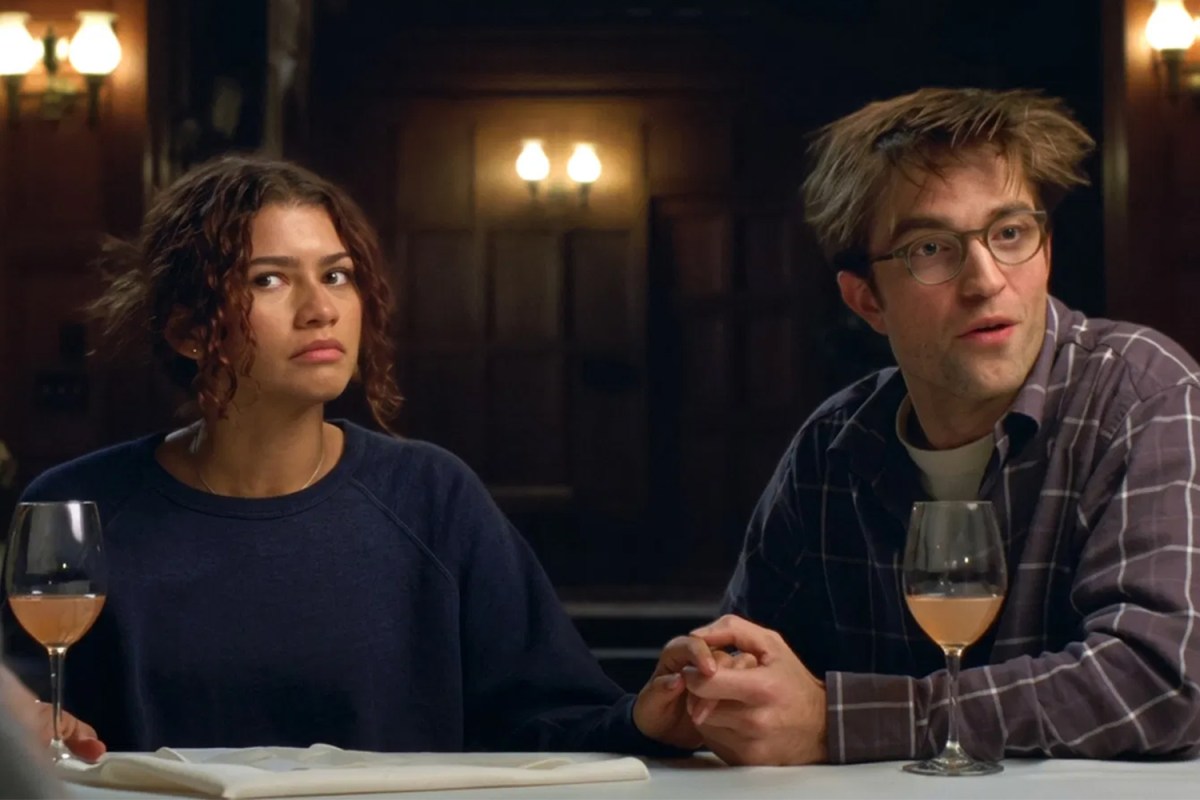
4 days agoThe Miniature Wife was an exercise in visual trickery
"There's no case where those things aren't critical, but with a project like this, there is no 'fix it in post' because it just can't work like that. This is a show that has about 3,000 VFX shots, and we were working with up to five different VFX vendors at times."
Women in technology

Books
fromThe Beer Thrillers - Central PA beer enthusiasts and beer bloggers. Homebrewers, brewery workers, and all around beer lovers.
4 weeks agoBook Review: Shock Induction (Chuck Palahniuk) - The Beer Thrillers
Shock Induction explores dark themes of high school disappearances and the exploitation of youth by billionaires through a satirical lens.
Artificial intelligence
fromThe Atlantic
3 weeks agoThe Human Skill That Eludes AI
Generative AI has paradoxically declined in creative writing quality since GPT-2, despite advancing in technical capabilities, with current models producing formulaic, flawed prose despite access to centuries of literature.

Toronto
fromwww.cbc.ca
1 month agoThese drawings of modern life are striking. But what's wrong with all the people? | CBC Arts
Simon Fuh's exhibition Cowboy Poet presents illustrated scenes of youthful misadventure rendered with blank-faced figures expressing apathy and detachment in response to chaos and absurdity.
fromPsychology Today
1 month agoThe Goodness Test: Dunk, Baelor, and Why Heroes Still Matter
For decades, we smallfolk have been told that goodness is naïve, that moral grayness is sophistication, and cynicism is cleverness. Turns out, we do not want it. Most of us can only take an endless string of villains, liars, and normalized nastiness for so long. Our battered nervous systems want a hero to root for who would not lie to us or betray us.
Miscellaneous
Philosophy
fromBig Think
1 month agoThe 3 colors: What folktales teach about how to grow wise
European folktales use red, black, and white colors to represent three modes of being that map human maturation: red as ambition and life force, black as introspection and shadow, and white as wisdom and transcendence.
Books
fromThe New Yorker
4 weeks agoBriefly Noted Book Reviews
Two literary works explore complex themes through innovative narrative techniques: Morrison's essays examine challenging craft elements in Toni Morrison's writing, while Nganang's memoir uses the scale as a metaphor connecting personal experience to colonial history.
Writing
fromBig Think
1 month ago"If it sounds literary, it isn't": The deceptively simple rules behind good writing
Neal Allen and Anne Lamott co-authored Good Writing by combining Allen's 36 writing rules with Lamott's annotations, creating a collaborative guide where Allen explains rules and Lamott provides practical examples and alternative perspectives.
Books
fromwww.theguardian.com
1 month agoDaisy Johnson: I wasn't a fan of David Szalay, but Flesh is a masterpiece'
Reading shapes identity across life stages, from childhood memories through formative teenage years to adult perspectives, with specific books creating lasting connections and inspiring creative ambitions.
Music
fromwww.npr.org
1 month agoWhy music has become such a big part of the romance novel reading experience
Romance novel readers increasingly use pop music playlists to enhance their reading experiences, creating a community that bridges book fandom and music fandom, exemplified by Charli XCX's Wuthering Heights album.
Video games
fromwww.theguardian.com
2 months agoIt's a loving mockery, because it's also who I am': the making of gaming's most pathetic character
Baby Steps uses deliberate frustration and an inept, awkward protagonist to transform player irritation into empathy, identification, and unexpected affection.
fromMedium
1 month agoThings that don't matter when you write
To deny one's own experiences is to put a lie into the lips of one's own life. It is no less than a denial of the soul. The concept I stick to - my core principle - is simple: I write in plain English, and only when I actually have something to say.
Writing
fromHarvard Gazette
2 months agoMoved by what's missing in Homer's 'Harrow' - Harvard Gazette
At first sight, Winslow Homer's " The Brush Harrow," which depicts two young boys, a horse, and a harrow against an arid landscape, evokes a feeling of somber isolation - but it's hard to pinpoint why. During a talk by curator Horace D. Ballard at the Harvard Art Museums on Jan. 29, visitors learned that Homer painted the scene in 1865, as the Civil War was ending, making the emotional underpinnings of the work clearer.
Arts
fromPsychology Today
1 month agoBurn Your Romance Novels!
The short answer is yes, unless you take fiction for what it is-fiction. When you long for something you don't have, it can lead to dissatisfaction with what you DO have. Romantic fiction has witty, heartfelt dialogue, buckets of romantic gestures, and protagonists who have a preternatural ability to read each other's minds. It's easy to forget it is not real. This can set up unrealistic expectations both conscious and unconscious.
Relationships
Books
fromwww.theguardian.com
1 month agoWhy are today's children's books and films often so much better than adult ones?
Contemporary children's literature and media, exemplified by Harry Potter and modern authors, demonstrate superior characterization, world-building, and ethical complexity compared to classic children's books from previous generations.
fromHyperallergic
2 months agoThe Nightmares Beneath the Surface of "Dreamworlds"
The timing could not be better: We have much to learn in this moment from a movement that was both explicitly antifascist and radically hopeful - and from how the not-so-antifascist Dalí broke from it. But Dreamworlds presents precious little of the historical and political context - for example, the birth of the movement out of the grotesque terrors of World War I - that would help viewers grasp the relevance of what's in front of them.
Arts
Books
fromwww.theguardian.com
1 month agoThey by Helle Helle review a novel to make the reader slow down and take notice
A Danish novel explores the deepening bond between a teenage daughter and terminally ill mother through minimalist prose that captures unspoken emotional intimacy and life's quiet, defining moments.
fromwww.theguardian.com
1 month agoThe rallying cry of the rich and horrible': the song that TV villains love to sing
Although the works of Gilbert and Sullivan have gained a reputation for being chummy, collegiate and a little pompous, For He is an Englishman is in fact a bitingly satirical piece of faux-patriotism. Although it sounds like something to be bellowed by tipsy Last Night of the Proms poshos, the song speaks to the kind of blind nationalism that bases exceptionalism purely on the location of one's birth.
Television
Psychology
fromSilicon Canals
2 months agoQuote of the day by Carl Jung: "Until you make the unconscious conscious, it will direct your life and you will call it fate" - Silicon Canals
Unconscious patterns and autopilot behavior drive most decisions, causing repeated life outcomes until they are consciously examined and changed.
Film
fromwww.theguardian.com
1 month agoPeople feel like they're in on the joke': the new wave of pseudo-biopics
Filmmakers increasingly create pseudo-biopics that borrow recognizable elements from real people and events while changing names and details to avoid legal liability and maintain creative freedom.
Television
fromwww.theguardian.com
2 months agoCompetency porn: is there any greater escapism than watching a capable person on TV?
Audiences increasingly seek escapism through media that showcases calm, expert performance and everyday professional competence rather than sensational or fantastical drama.
fromwww.theguardian.com
2 months agoUncomfortably relatable': writers on their favourite unlikeable movie characters
In one scene, an adoring fan asks Melvin his secret to writing women. I think of a man, and I take away reason and accountability, he says, an epic burn forever seared in my brain. Of course Melvin's anti-charm offensive only goes so far in a James L Brooks project. Before long, the rudeness erodes as Melvin is forced on to a journey of self-discovery with the nextdoor neighbor he can't abide (Greg Kinnear) and the diner waitress he can't live without (Helen Hunt).
Film
fromSilicon Canals
2 months ago7 things people do when telling stories that make others tune out immediately without realizing it - Silicon Canals
We've all been there. Someone starts telling a story, and within seconds, your mind starts wandering. Maybe you pull out your phone, suddenly remember an urgent email, or find yourself mentally reorganizing your weekend plans. The storyteller doesn't notice. They keep going, completely unaware that they've lost their audience. After interviewing over 200 people for various articles, I've noticed patterns in how people communicate their experiences. Some captivate you from the first word, while others lose you before they've even gotten to the point.
Writing
Books
fromThe Atlantic
1 month agoWhen Did Literature Get Less Dirty?
Philip Roth's Zuckerman Unbound functioned as a response to the controversial reception of Portnoy's Complaint, with Roth's protagonist expressing regret over writing sexually explicit material that drew accusations of anti-Semitism and misogyny.
fromwww.theguardian.com
2 months agoA cowardly, deluded drunken waster': readers on their favourite unlikable movie characters
A murderer, a gleefully sadistic rapist, an unapologetic sociopathic who treats human beings as playthings and a menace to every value in moral society. And yet Malcolm McDowell brings him to life with such panache and fun, he is irresistibly charming and likable throughout his horrors. You even feel happy for him at the end when he gets away with the whole thing.
Film
fromJezebel
1 month agoTurns Out, When You Write a Novel About Killing a Politician, People Tell You How They'd Do It
When the people who are after me get here, they'll arrest me and put me on trial, or they'll disappear me to some black site. Or they won't bother with any of that and they'll just kill me. All of these seem like plausible outcomes, but in the novel's prologue, the narrator seems much more confident of her success: I am a fucking genius, a gorgeous fucking genius, and the only thing left to do is sit down and write.
Books
fromwww.theguardian.com
1 month agoThere's only one bed', fake dating' and opposites attract': how tropes took over romance
Tropes, as these bullet-point ideas have come to be known, have taken over romance. Those who write, market and read romantic fiction use them to pinpoint exactly what to expect before the first page is turned. On Instagram, Amazon and bookshop posters you'll find covers annotated with arrows and faux-handwritten labels reading slow-burn or home-town boy/new girl in town. Turn over any romance title and they'll be there listed in the blurb.
Books
fromThe Atlantic
2 months agoThe Writer's Magic Trick
A writer is a kind of magician. Their job is to create living, three-dimensional people out of the ordinary stuff of ink and paper. This is no easy task, because readers can't literally hear, touch, or observe a character. Everything that defines a human being in real life-the physical space they occupy, or how they smell, feel, and sound-is stripped away, replaced by description. But authors have one major, mystical advantage: They can show you what's happening inside of someone's brain.
Books
[ Load more ]