#pre-load-availability
#pre-load-availability
[ follow ]
#amazon #logistics #e-commerce #operational-efficiency #ecommerce #generative-ai #automation #robotics #supply-chain

#logistics
Business intelligence
fromLondon Business News | Londonlovesbusiness.com
1 day agoHow contact centre outsourcing drives faster deliveries in logistics - London Business News | Londonlovesbusiness.com
Call center outsourcing is now a core strategy for logistics companies to enhance delivery performance and operational efficiency.
London startup
fromLondon Business News | Londonlovesbusiness.com
6 days agoHow digital technology is making road freight operations more efficient - London Business News | Londonlovesbusiness.com
Digital technologies enhance operational efficiency and transparency in UK logistics, addressing rising costs and customer expectations.
#amazon
E-Commerce
fromwww.businessinsider.com
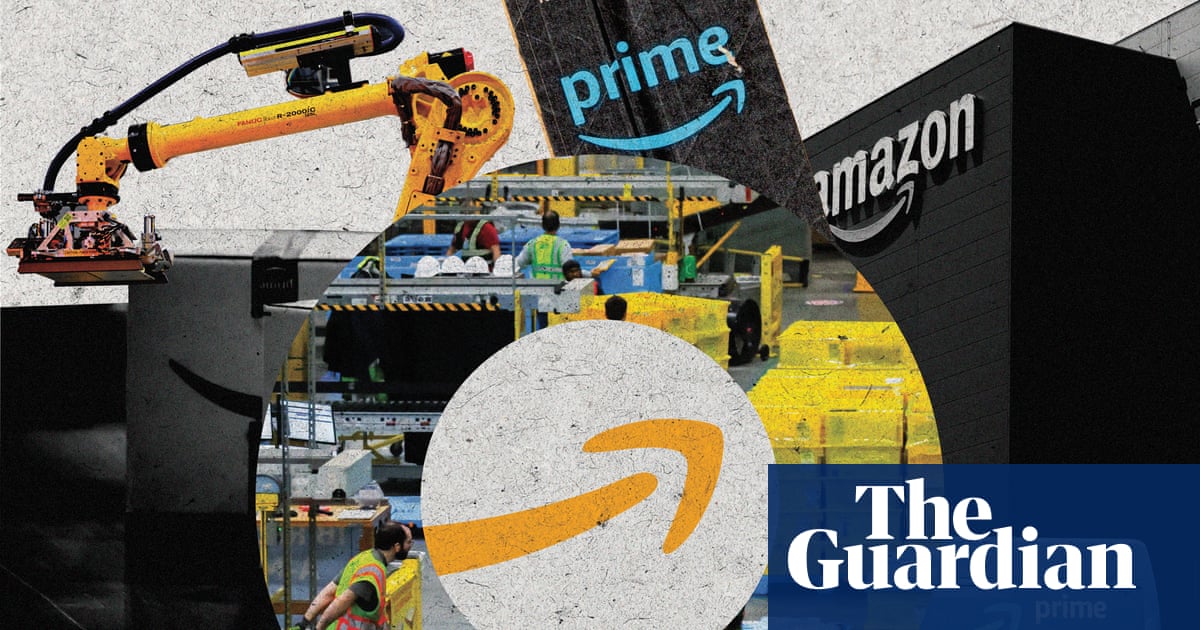
3 weeks agoInside Project Kobe: Amazon's plan to build Walmart-style supercenters powered by warehouse robots and AI
Amazon is developing large-format supercenters that integrate grocery, general merchandise, and robotics-powered fulfillment centers to compete with Walmart.

E-Commerce
fromwww.businessinsider.com
3 weeks agoInside Project Kobe: Amazon's plan to build Walmart-style supercenters powered by warehouse robots and AI
Amazon is developing large-format supercenters that integrate grocery, general merchandise, and robotics-powered fulfillment centers to compete with Walmart.

#generative-ai
Artificial intelligence
fromFast Company
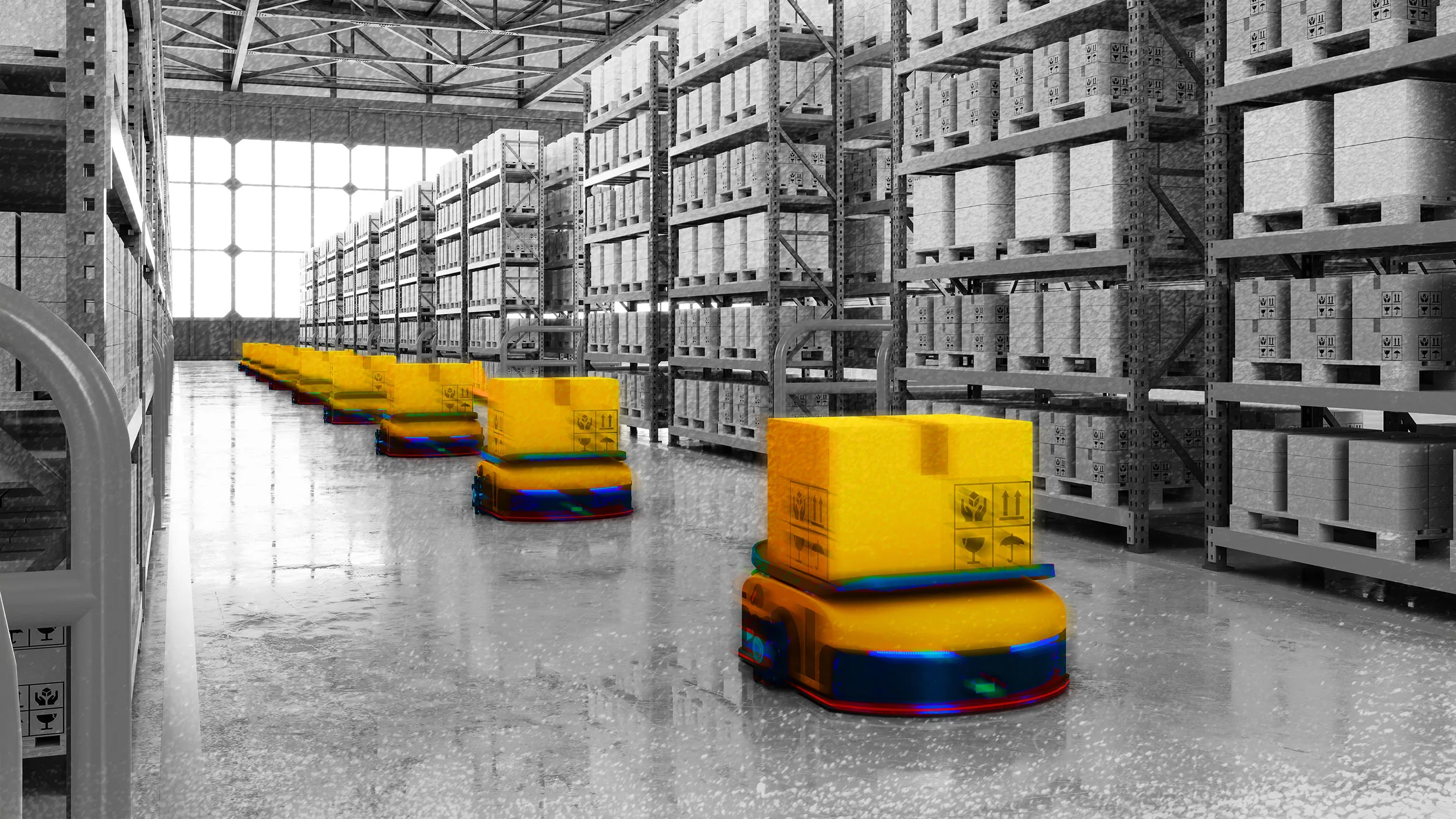
3 weeks agoWhat will the robot jobs apocalypse look like? Ask Amazon warehouse workers
Generative AI and automation are significantly transforming job landscapes, particularly in Amazon warehouses, potentially replacing hundreds of thousands of jobs with robots.
Marketing tech
fromAmazon Web Services
1 month agoBuilding intelligent media supply chain automation using Amazon Bedrock AgentCore | Amazon Web Services
Vision-based generative AI reduces video metadata generation costs while improving accuracy, and AI agents enable dynamic adaptation to complex, non-linear media supply chain workflows across multiple distribution channels.


Information security
fromSecuritymagazine
1 month agoThreat Actors Target the Entire Retail Supply Chain
Threat actors exploit shared supply chain vulnerabilities between wholesalers and retailers, with over 70% of retailers and 60% of wholesalers having exposed credentials, enabling widespread initial access.
fromAxios
1 month agoUSPS warning raises stakes for mail-order prescriptions, higher postage prices
The mail will stop if the agency can't meet its obligations. That includes critical deliveries like prescription drug packages. Postmaster General David Steiner warned lawmakers this week that USPS could run out of cash in less than 12 months without congressional action.
Media industry
Washington DC
fromEntrepreneur
1 month agoAmazon Plans to Slash USPS Shipments by Two-Thirds. Here's What That Means for the Postal Service.
Amazon plans to reduce USPS package shipments by two-thirds by fall, threatening the financially struggling postal service that delivered over one billion Amazon packages last year.
UK news
fromComputerWeekly.com
1 month agoUnreliable fleet connectivity driving employee exodus | Computer Weekly
UK fleet operators face significant connectivity challenges that threaten competitiveness, with unreliable networks causing customer complaints and operational disruptions despite limited failover protections.
fromFuturism
1 month agoAI Is Destroying Grocery Supply Chains
Whole Foods shelves sit empty after a data breach shut down its wholesale distributor. Meat packers working for JBS Foods are paralyzed as an $11 million ransomware attack takes out their processing facilities. Some 2.2 million workers at Stop & Shop and Hannaford have their personal data exposed as the result of a cyberattack on parent company Ahold Delhaize USA. These scenarios, straight from a William Gibson novel, are becoming increasingly common in supply chains across the world.
Food & drink
Miscellaneous
fromDevOps.com
1 month agoI Learned Traffic Optimization Before I Learned Cloud Computing. It Turns Out the Lessons Were the Same. - DevOps.com
Cloud infrastructure requires understanding system behavior and costs to operate effectively at speed, similar to how skilled drivers anticipate conditions rather than simply driving fast.
fromFortune
2 months agoHow Walmart is using AI to reroute essential supplies ahead of Winter Storm Fern | Fortune
From a meteorological perspective, the winter storm sweeping across the country this weekend is a supply chain disruption in its own right: A high-pressure system from the north is smashing into a low-pressure system from the south, belting large swaths of the US with heavy snow, sleet, and freezing rain. While the snarl in the upper atmosphere could trickle down to the real supply chain on the ground, some retailers are taking steps to anticipate the impact of the storm and position their products accordingly.
Data science
Artificial intelligence
fromFortune
1 month agoI help manage one of the world's most constrained supply chains, up close to the defining energy bottleneck of the decade | Fortune
Power transformer shortages are the critical bottleneck limiting AI infrastructure expansion and corporate electrification globally.
Marketing tech
fromwww.independent.co.uk
1 month agoIlluminating blind spots in store strategy execution
Consumer goods brands require real-time retail intelligence and visibility of in-store execution to compete effectively, as legacy tools fail to provide actionable data needed for optimal product placement, pricing, and promotion management.
fromBusiness Matters
2 months agoWhy Tolerance Management Is a Business-Critical Skill in Modern Manufacturing
We are now in a time of manufacturing where precision is more than a technical necessity; it's a business requirement. The more complex, globally dispersed and demanding things get, the less slack remains in the system. Under these circumstances tolerance management has become a decisive competence and affects competitiveness not only in terms of controlling costs, ensuring quality and improving production efficiency but also for long term market success.
Business
fromTechCrunch
1 month agoAmazon adds 1-hour and 3-hour delivery options in the US | TechCrunch
Our customers are busier than ever and are looking for new ways to save time while keeping their households running. We saw an opportunity to use our unique operational expertise and delivery network to help make customers' lives a little easier while unlocking even more value for Prime members.
E-Commerce
fromDbmaestro
4 years agoWhat is Database Delivery Automation and Why Do You Need It?
Manual database deployment means longer release times. Database specialists have to spend several working days prior to release writing and testing scripts which in itself leads to prolonged deployment cycles and less time for testing. As a result, applications are not released on time and customers are not receiving the latest updates and bug fixes. Manual work inevitably results in errors, which cause problems and bottlenecks.
Software development
fromDigiday
2 months agoAI is changing how retailers select tech partners
Surveys suggest customers want to use AI for shopping and to see AI tools from retailers. In a CI&T survey conducted in 2025, 58% of 1,040 U.S. consumers said retailers should use AI to improve the shopping experience, and almost 75% said they were already using AI tools at least occasionally in their path to purchase. In a separate survey from Gartner last March, 56% of millennials said they would be willing to let AI handle or assist with some of their shopping tasks.
Artificial intelligence
#amazon-delivery
E-Commerce
fromEngadget
1 month agoAmazon launches one- and three-hour delivery options in the US
Amazon launched one-hour and three-hour delivery options across 2,000+ locations, covering 90,000 products including essentials and discretionary items, with costs ranging from $5-$20 depending on membership and speed.
Business intelligence
fromLondon Business News | Londonlovesbusiness.com
1 month agoHow AI is transforming retail demand forecasting - London Business News | Londonlovesbusiness.com
AI-driven forecasting tools are becoming essential for retailers to navigate volatile markets, reduce inventory risk, and maintain margins in unpredictable economic conditions.
E-Commerce
fromBusiness Matters
1 month agoThe Hidden Costs of DIY Shipping: When to Switch to an Ecommerce Shipping Platform
DIY shipping becomes a business bottleneck as order volume grows, consuming excessive time and increasing errors while established shipping platforms automate processes and enable scalability.
E-Commerce
from24/7 Wall St.
1 month agoLook! Up In the Sky! It's Amazon's Flywheel in Action
Amazon's drone delivery service Prime Air exemplifies how the company's e-commerce, AWS cloud, and AI divisions create a self-reinforcing flywheel that generates data, optimizes operations, and drives competitive advantage.
E-Commerce
fromBusiness Matters
1 month agoSupplier Verification: A Practical Guide for Smarter Global Sourcing
Supplier verification is a strategic necessity in global trade, requiring thorough assessment of legal status, production capability, quality systems, financial stability, and regulatory compliance before establishing business relationships.
fromThe Business of Fashion
2 months agoHow Integrated Technology Is Reshaping Retail Operations
The technology underpinning retail operations is under scrutiny in 2026 as fashion executives look to streamline systems with the aim to unlock efficiency, cut costs and meet consumer expectations for speed and personalisation in the shopping journey. At the retail event Lightspeed Edge on 12 January, Lightspeed - the unified point-of-sale (POS) and payments platform for SMEs such as Apricot Lane Boutique and Neal's Yard Remedies - convened industry leaders to explore the strategic imperative for integrated technology ecosystems over siloed systems.
E-Commerce
fromComputerWeekly.com
1 month agoDelivery comms, intelligent fulfilment, and AI's growing influence | Computer Weekly
Nine in ten retailers globally are planning to raise their spending on artificial intelligence (AI) to optimise their e-commerce operations over the next 12 to 24 months, with online delivery execution a key area of focus. A total of 38% of European retailers identify speed, tracking and proactive communication around the delivery process as areas where AI can deliver the greatest impact.
E-Commerce
fromForbes
1 month agoFrom Click To Doorstep: Why Delivery Experience Is The Last Brand Impression
That's a problem. Without a doubt, a great website and top-level marketing will help generate new sales, but it's the delivery experience that warrants future ones. This is because today's consumer not only has options for where they'll buy but also a high set of expectations. What's more, they remember the way a product arrives at their doorstep more than how it was sold.
E-Commerce
fromThedrum
2 months agoTools retailer grows revenue by 180% in 10 months
Given that ParkerBrand had allocated greater resources to paid media, higher performance objectives were set for 2019. Overall, the goal was to grow revenue rapidly over a short period of time whilst maintaining the return on ad spend (ROAS) to remain profitable. This translated into the following objectives: Achieve a minimum of 10:1 ROAS "Grow revenue as much as possible" from a year-on-year perspective
E-Commerce
E-Commerce
fromTechRepublic
3 months agoStord Acquires Shipwire for AI-Fueled Ecommerce Push - TechRepublic
Stord acquired Shipwire, creating an AI-powered logistics powerhouse combining global warehouse access and integrated software to significantly boost fulfillment productivity and compete with Amazon.
E-Commerce
fromBusiness Insider
2 months agoI've been selling on Amazon for a year. After storage fees bled me dry, I'm pivoting my e-comm strategy away from it.
Aged-inventory surcharges on Amazon can rapidly deplete a small business's cash, turning a $10,000 launch into near insolvency without mastering Amazon selling and inventory management.
[ Load more ]