Writing
fromThe New Yorker
10 hours agoThe Violence in Vermeer
Vermeer's paintings served as safe havens amidst a backdrop of war and starvation, contrasting with modern acts of protest against art.
The splendid art nouveau Les Brigittines is a Belgian culinary institution, where chef Dirk Myny has overseen the kitchen for 35 years. He daringly reinterprets classic Flemish recipes with dishes such as smoked eel mousse and succulent pork belly with a tart cherry ale vinaigrette.
The exhibition highlights the works of Dirk Bikkembergs, Ann Demeulemeester, Walter Van Beirendonck, Dries Van Noten, Dirk Van Saene, and Marina Yee, showcasing their individual paths and collective impact in the design and fashion industry.
Yale came to me and said there isn't an overarching book about the history of printmaking; they wanted it to be about the printed image. There are a lot of books about printing-about the history of journalism or the history of books, the printing press and the printed word-but not so much about the printed image and its processes. So that was my challenge.
It's not a house of outstanding art, being a self-taught carver whose skills evidently advanced over the years, as you can see the evolution from fairly rough carving on the stairs to the very skilled work in the living room. He also created the paintings on the walls - talented chap - but never finished the carving in the living room, as his time finally ran out.
The heavy brick mass of the early twentieth century warehouse stands steady at the corner, its facades still marked by decorative lintels and deep-set openings. Above, two added floors sit within a perforated aluminum veil that glows softly at dusk. The metal skin reads as a light canopy hovering over the old masonry, a precise intervention that contrasts the museum's new public life with its working past. See designboom's previous coverage here.
In 2025 the Prado, which is home to such masterpieces as Velazquez's Las Meninas and Hieronymus Bosch's The Garden of Earthly Delights, was visited by 3,513,402 people, an increase of more than 56,000 from the previous year. Visitor numbers have risen by more than 816,000 over the past decade. While some museum bosses would be toasting such a success, the Prado's director, Miguel Falomir, is treating it with caution. The Prado doesn't need a single visitor more, he told a press conference on Wednesday.
Looking at old art gives me a sense of craftsmanship, of what can be achieved with paint. There is nothing comparable with Tefaf. The atmosphere of quality is unmatched. Contemporary art collectors are discovering value in historical works and the fair's curatorial standards, representing a potential shift in how different collector demographics engage with art across temporal boundaries.
The Rijksmuseum is set to expand its public presence beyond its historic walls with the creation of a sculpture garden of international scope, scheduled to open in autumn 2026. Enabled by a €60 million donation from the Don Quixote Foundation, the project will introduce a freely accessible green cultural landscape in Amsterdam, bringing together modern and contemporary sculpture, landscape design, and architectural adaptation. The new outdoor complex, officially titled the Don Quixote Pavilion and Garden at the Rijksmuseum, will present works by artists including Alberto Giacometti, Louise Bourgeois, Alexander Calder, Jean Arp, Roni Horn, and Henry Moore, alongside a rotating program of temporary exhibitions.
This exquisite painting displays how Drost, like his teacher, could capture a sitter's distinct individuality with inner life and contemplative potency. [The painting] shows Drost's own unique sensibility, evident in his carefully modulated brushwork and striking use of color.
This first edition book of Shakespearean poems was published by Kelmscott Press, the private press founded by the English designer and author William Morris in 1891. This example is covered in an opulent, bejewelled binding from the renowned London bookbinders Sangorski and Sutcliffe. The decoration, set with mother-of-pearl and more than 100 precious stones, takes inspiration from the sonnets inside.
"The silver price is high... but for us it is of course far more than the silver price," the museum's chairman Ernst Boesveld told The Art Newspaper. "It is about the stories behind every mustard pot, it is history and it is cultural heritage. We are enormously disappointed and angry."
In establishing the fair, a foundation (stichting in Dutch) seemed the most fitting legal entity for the purpose of creating an event 'run by dealers, for dealers... so that nobody had an advantage over anybody else.' That Tefaf operates as a not-for-profit differentiates it from other major art fair brands. There are no shareholders demanding a return, no owners to primp the thing for sale.
Ever walked into a friend's studio apartment and wondered how they made 400 square feet feel like a palace? Meanwhile, your seemingly larger space feels cramped and suffocating? You're not alone. Most of us struggle with making our rooms feel spacious, especially when square footage is at a premium. Working from my apartment corner that I desperately try to convince myself is a "real office," I've become obsessed with every trick that makes small spaces feel bigger.
Fontana is a rare example of a woman Old Master, one of only a few who managed to attain career success on her own and was the first woman elected to the Academy of Saint Luke in Rome. This painting is one of the most ambitious from her early career. Reflecting visual references to Michelangelo-a departure from her usual reference to Correggio and Raphael-the vibrant hues and dramatic composition reflect prevailing Florentine trends of the late 16th century.
The gallery's inaugural presentation marked the first time Australian First Nations art had been presented at TEFAF Maastricht, and with sales totaling nearly $1.4 million, further underscored the growing relevance and interest in the category. Building on the momentum of the 2025 presentation, D Lan Galleries will now focus on works dating from the 1970s through today by artists whose practices have shaped the evolution of Australian Indigenous art.
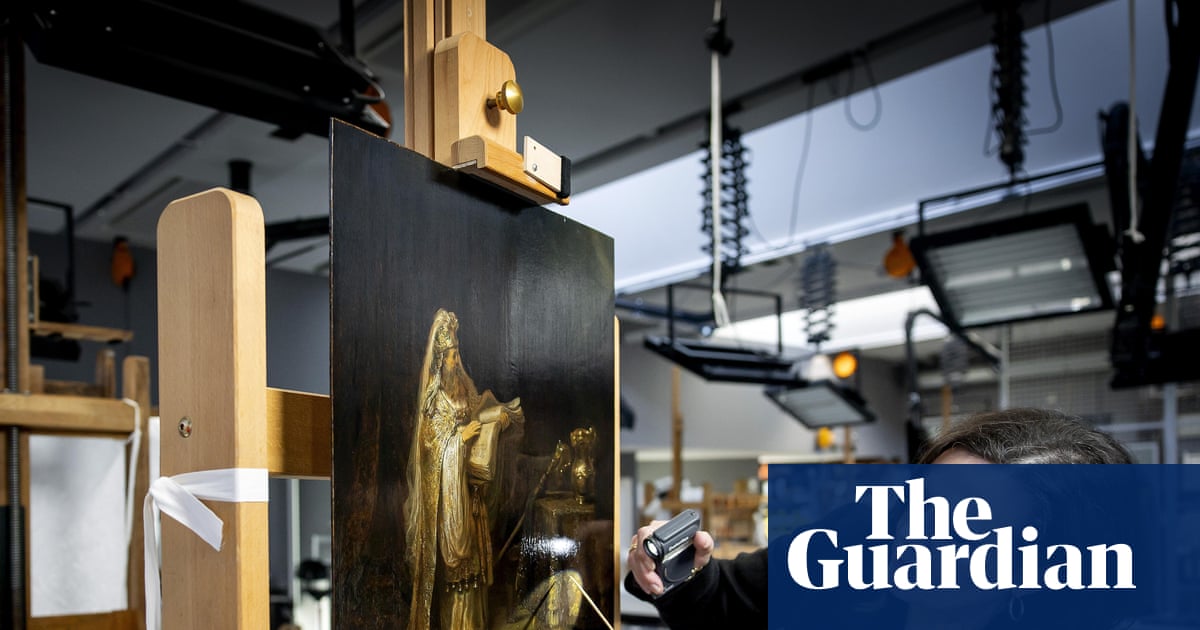
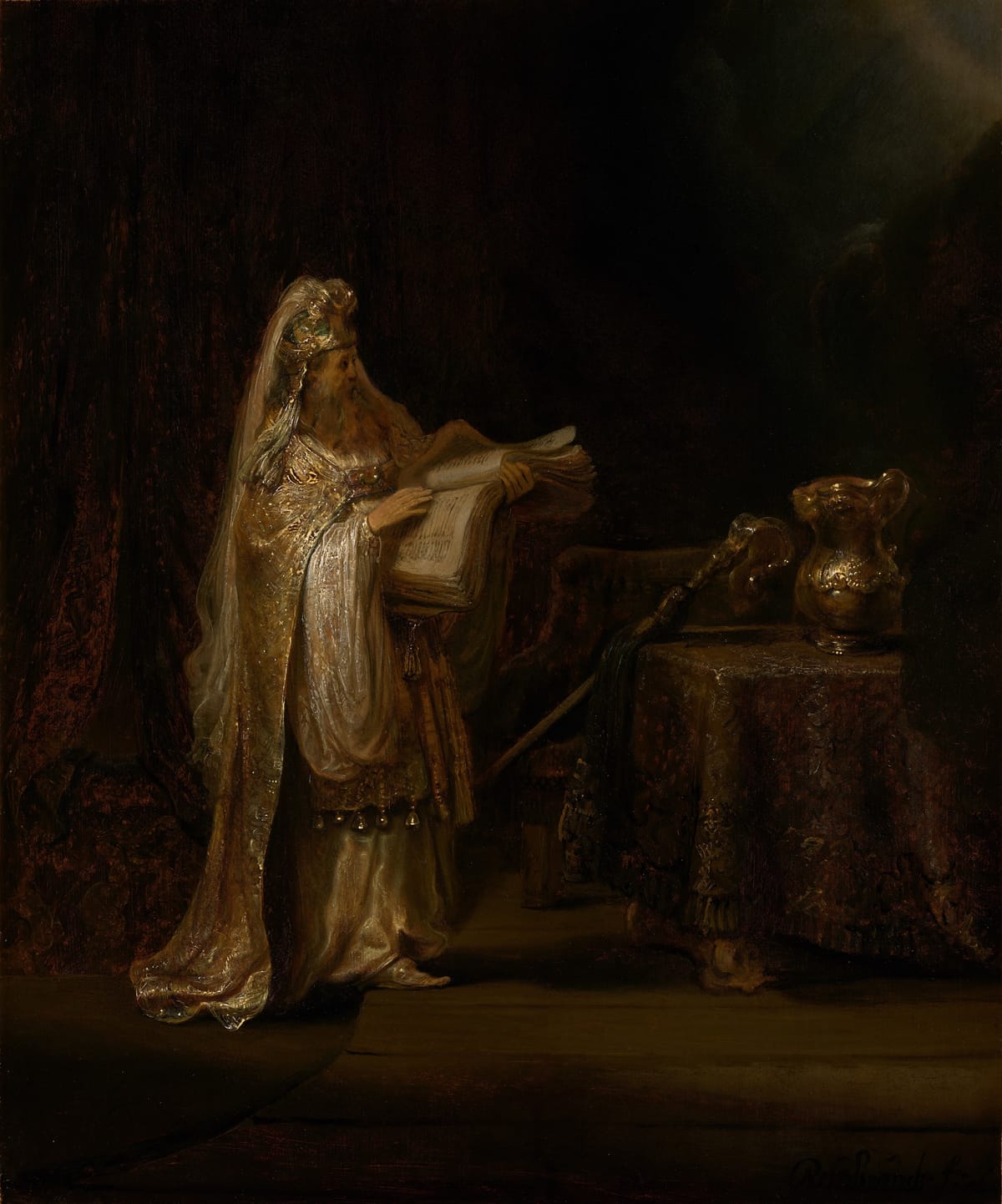
Advanced imaging and material analysis have led experts to reattribute a long-overlooked biblical scene to Rembrandt van Rijn, identifying the 1633 painting as a lost masterpiece after more than six decades of doubt. Titled Vision of Zacharias in the Temple, the work was last studied in 1960, when scholars ruled out the possibility that it could be by the Dutch master.
An analysis of two paintings in museums in the US and Italy by the 15th-century Flemish artist Jan van Eyck has raised a profound question: what if neither were by Van Eyck? Saint Francis of Assisi Receiving the Stigmata, the name given to near-identical unsigned paintings hanging in the Philadelphia Museum of Art and the Royal Museums of Turin, represent two of the small number of surviving works by one of western art's greatest masters, revered for his naturalistic portraits and religious subjects.
While Armenia has long been recognized for its rich and storied historical art and culture, the country's contemporary art scene is emerging as one to watch on a global scale. Armenian artists stand out for their ability to synthesize their own cultural heritage with avant-garde approaches to contemporary artmaking, bridging tradition with self-expression. Paralleling broader rising critical and market interest and investment in regions outside of the West, ARAR Gallery of Utrecht, the Netherlands, is at the forefront of Armenian art's mounting international presence.
'trace] the evolution of the imagery of affection, seduction, conversation, male camaraderie and the sociability of the café and theatre, as well as merry-making, flirtation, courtship and child-rearing in Renoir's art'
Running from March 17 to July 19, 2026, Renoir and Love will be one of the top special exhibitions of the year in Paris. Celebrating how affection, connection and human relationships shaped Renoir's work during a defining period of his career. Bringing many key works together for the first time in decades, the exhibition offers a fresh perspective on how Renoir approached love not as an abstract ideal, but as something lived and experienced within the changing social life of late-19th-century Paris.