Medicine
fromwww.scientificamerican.com
1 day agoChronic pain is not just in your head, but it is in your brain
Chronic pain affects 24% of U.S. adults, complicating diagnosis and treatment despite its prevalence.
At a time when memories are increasingly flattened into folders, feeds, and cloud backups, a new experimental device from MIT Media Lab proposes a far more intimate archive: scent. Developed by Cyrus Clarke, the Anemoia Device is a speculative yet functional prototype that translates photographs into bespoke fragrances using generative AI, inviting users not to view memories, but to inhabit them through the body.
To view this video, please enable JavaScript and consider upgrading to a web browser that supports HTML5 video Media Summit and Experiential Marketing | Nov 8, 2022 Raja Rajamannar, Chief Marketing Officer of Mastercard (US), explores how the world of marketing is embracing more sensory and experiential approaches. And looks at what all marketers can learn from this broader approach.
They created an artificial 'mental map', with pleasantness along one axis and bodily reactions along the other, and charted how the brain responded while watching clips from films. The results revealed clear groupings in the way that our brains represent emotion - with guilt, anger and disgust in one corner and happiness, satisfaction and pride in the other.
One scientist at MIT, Cyrus Clarke, is working to do just that. Alongside a team of fellow researchers, Clarke has developed a physical machine called the Anemoia Device, which uses a generative AI model to analyze an archival photograph, describe it in a short sentence, and, following the user's own inputs, convert that description into a unique fragrance. The word "anemoia" was coined by author John Koenig and included in his 2021 book, The Dictionary of Obscure Sorrows.
Wooden spoons as microphones, siblings spinning in socks across the floor, a mother laughing as Whitney Houston's "I Wanna Dance With Somebody" fills the room for the third time in a row-this is love. Long before children understand romance, they learn connection this way, through synchronized movement, shared joy, and the safety of familiar songs. Research on rhythm and social bonding suggests that moving in time together can regulate the nervous system and strengthen feelings of connection.
For many of us, that compulsive need to touch isn't about poor impulse control. It's about confirmation. It's about making sure the world around us is real, solid, tangible - because somewhere along the line, we learned that the emotional landscape we navigated wasn't.
Artificial intelligence (AI) machine learning is making a difference in assistive technology to help restore movement for the paralyzed. A new study in the American Institute of Physics journal APL Bioengineering shows how AI has the potential to restore lower-limb functions in those with severe spinal cord injuries (SCIs) by identifying patterns in brain signals captured noninvasively via electroencephalography (EEG).
Attention is the brain's filtering mechanism; what passes through that filter is what gets encoded. What gets encoded becomes memory. And memory is the raw material of identity. So in the architecture of your identity, attention is the doorway.
The human brain is engineered to ignore most of what it sees and hears, according to the neuroscientists I interviewed for the audio original Viral Voices. If that's the case, how are you supposed to make a memorable impression? The empowering news is that if you understand how the brain works, what it discards, and what it pays attention to, you'll be far more persuasive than you've ever imagined. Persuasive people have influence in their personal and professional lives.
If we told them to look at the face, they could usually manage it. But they were mostly looking at the hands. The Prakash children eventually learn to look at faces when spoken to - usually a few months after their surgeries. Their experiences reveal that seeing doesn't come naturally the moment a person is cured of blindness. Newly-sighted people must learn to see.
Did someone with spatial-sequence synaesthesia design the calendar app on mobile phones? Because that's how time and dates look in my brain. If you say a date to me, that day appears in a grid diagram in my head, and it shows if that box is already imprinted with a holiday, event or someone's birthday. Public holidays and special events like Christmas and Easter are already imprinted for the year, and the diagram goes backwards to about 100,000BC
The team, which is being led by Jülich neurophysics professor Markus Diesmann, will leverage the Joint Undertaking Pioneer for Innovative and Transformative Exascale Research (JUPITER) supercomputer for their simulation. JUPITER is currently the fourth most powerful supercomputer in the world according to the TOP500 list, and features thousands of graphical processing units. The team demonstrated last month that a " spiking neural network " could be scaled up and run on JUPITER, effectively matching the cerebral cortex's 20 billion neurons and 100 trillion connections.
Real estate with ocean views, stunning mountain vistas, and wide-open green spaces sell at premium prices because humans find those settings pleasing [1-5]. Certain color combinations in fashion-such as brown and forest green-blend harmoniously, while others, such as hot pink and orange, clash. And our eyes like certain proportions in visual objects (like buildings and human faces) but not others.
In fact, Stawicki was on a mission to save the lives of around 1,000 zebrafish ( Danio rerio) in her laboratory. Similarities between lines of hair cells on the fish's flanks and those in the mammalian inner ear enable her to use them as a model to study hearing problems in humans caused by some antibiotics and chemotherapy drugs. A sensor had picked up that the lab's heating system had been knocked out by a power fault.
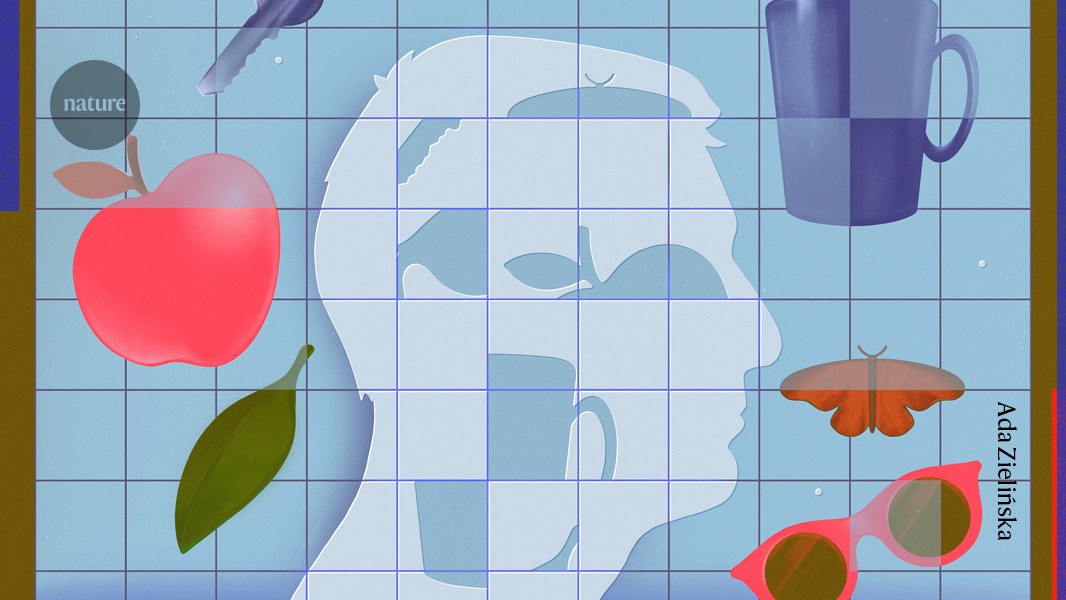
Close your eyes and picture an apple. Most people see something-a faint, slightly blurry image, less vivid than a real apple. A few, however, will see it as clearly as if it were sitting right in front of them. This ability is called hyperphantasia. Hyperphantasia, literally meaning "beyond imagination," refers to exceptionally vivid mental imagery. It is often described as the opposite of aphantasia, a condition in which people report little or no ability to form mental images.