#world-project
#world-project
[ follow ]
#sustainability

Artificial intelligence
fromFast Company
3 weeks agoSustainability is dead-long live purpose
Sustainability has been deprioritized, while purpose remains essential for long-term business success amidst the rise of AI.

Online Community Development
fromDaily Coffee News by Roast Magazine
3 weeks agoStudy: Social Enterprises Beat Corporate Sustainability in Farmer Well-Being
Social enterprises significantly enhance farmer well-being compared to traditional corporate sustainability programs and cooperatives in the coffee and cocoa sectors.
Online Community Development
fromDaily Coffee News by Roast Magazine
3 weeks agoStudy: Social Enterprises Beat Corporate Sustainability in Farmer Well-Being
Social enterprises significantly enhance farmer well-being compared to traditional corporate sustainability programs and cooperatives in the coffee and cocoa sectors.





Fundraising
fromNonprofit Quarterly | Civic News. Empowering Nonprofits. Advancing Justice.
1 day agoWhat If I Freeze with a Major Donor Ask? | Nonprofit Quarterly | Civic News. Empowering Nonprofits. Advancing Justice.
Silence after making a major gift ask is often the hardest part for fundraisers, leading to self-negotiation and smaller donations.
fromEntrepreneur
3 days agoWhy Passion Isn't Enough to Scale a Nonprofit
Most nonprofits begin with passion, and for good reason. A founder identifies a critical need and brings together a team that cares deeply enough to act. That kind of energy is what makes the early days possible. It drives long hours, resourceful problem-solving and a deep commitment to impact.
Non-profit organizations
fromElectronic Frontier Foundation
2 days agoDigital Hopes, Real Power: The Rise of Network Shutdowns
In 2024 alone, authorities imposed 304 internet shutdowns across 54 countries - the highest number ever recorded. This reflects a growing trend of governments treating connectivity as a weapon.
World politics
fromwww.theguardian.com
2 days agoHow South Korea plans to use the Iran crisis to spur a renewables revolution
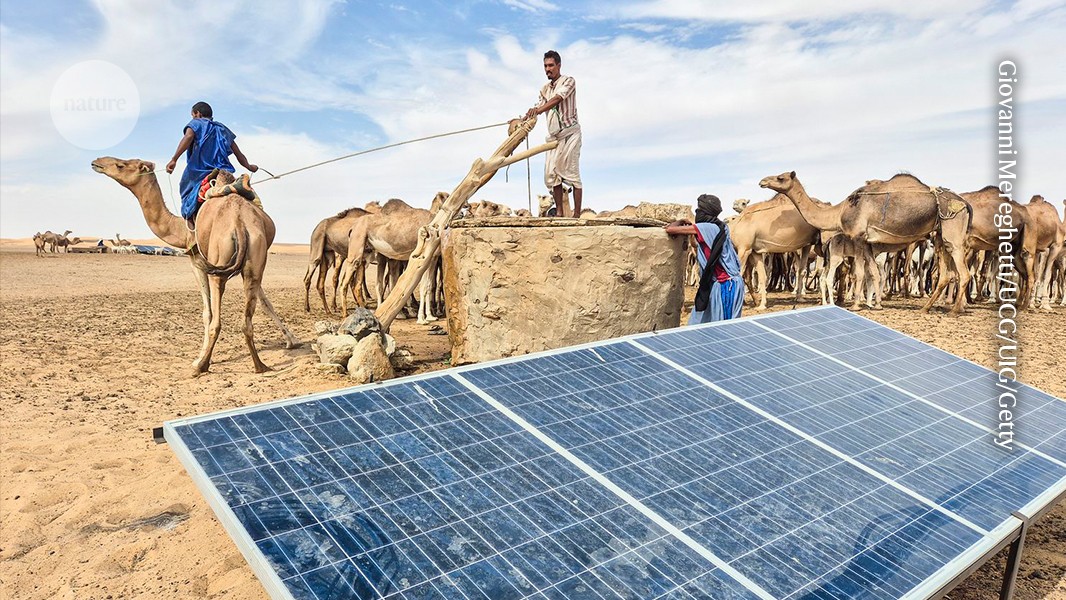
The village deliberately chose to spend solar income on welfare rather than individual dividends, a decision Jeon says residents made themselves rather than being persuaded. If you divide money as individual income, people feel disconnected.
Agriculture
fromNextgov.com
3 days agoCitizen Science Month 2026 Is about more than just stargazing
Citizen Science Month is built around a goal of 2.5 million 'Acts of Science,' tying the annual event to America's 250th birthday through a simple but powerful idea: lots of small contributions can add up to something really meaningful.
OMG science
fromTechCrunch
3 days agoInertia moves to commercialize one of the world's most elaborate science experiments | TechCrunch
Inertia Enterprises burst onto the scene in February with a $450 million Series A, making it one of the best capitalized startups in the industry, aiming to bring laser-based fusion reactors to market.
Science
London startup
fromComputerWeekly.com
4 days agoDatacentre developers tout benefits to local communities, but do they deliver? | Computer Weekly
Datacentre developments are causing challenges for local businesses, raising concerns about energy consumption and community impact despite potential local benefits.
fromTasting Table
4 days agoWhy Many Thrift Stores Won't Accept Small Kitchen Appliances - Tasting Table
Thrift stores often refuse to accept donated small kitchen appliances due to liability issues. These appliances can contain electrical components and moving parts that may degrade over time.
Everyday cooking
fromPsychology Today
4 days agoHow Community-Based Healthcare Builds Engagement
Most people leave doctor visits with prescriptions, but still feel unsure—instructions make sense, but no one asks about their life. In contrast, when a provider knows your name, remembers your story, and explains care in a way that fits you, the experience feels different—and that difference matters.
Healthcare
#philanthropy
Fundraising
fromNonprofit Quarterly | Civic News. Empowering Nonprofits. Advancing Justice.
3 days agoBridging Funders to the Front Lines: Pluralism and Greater Philanthropic Opportunity | Nonprofit Quarterly | Civic News. Empowering Nonprofits. Advancing Justice.
Movement-rooted philanthropic intermediaries are essential for addressing future challenges in the nonprofit sector and advancing equity.
fromwww.dw.com
3 days agoIndia walked away from its bid to host COP33 here's why
One of the key reasons for India's withdrawal appears to be the steadily declining relevance of COP in driving meaningful global climate action. The complete erosion of trust among countries at the Belem summit in Brazil, where several nations reneged on previously agreed commitments, seems to have contributed significantly to this decision.
World politics
London politics
fromwww.theguardian.com
4 days agoOn the streets of Dublin I met fuel protesters and the people who support them yet our leaders still don't get it | Caelainn Hogan
Fuel protests in Ireland highlight the impact of high fuel taxes on farmers and the broader population, emphasizing the need for a transition to clean energy.
Non-profit organizations
fromNonprofit Quarterly | Civic News. Empowering Nonprofits. Advancing Justice.
4 days agoThe Meaningful Reset: Designing Nonprofits to Survive Board-Staff Conflict | Nonprofit Quarterly | Civic News. Empowering Nonprofits. Advancing Justice.
Nonprofit organizations face unique challenges due to emotional investment, leading to conflicts that require careful analysis and intentional resolution.

Social justice
fromwww.theguardian.com
2 days agoWe took clothes, a blanket and a dog': the people displaced by a dam 50 years ago, but still fighting for justice
The Itaipu hydroelectric dam construction displaced the Ava-Guarani people, disrupting their territory and culture, with ongoing struggles for justice and recognition.
fromNature
2 weeks agoNow is the time for scientific societies to guide global research
Modern scientific societies are increasingly vulnerable due to their dependence on membership fees and journal subscriptions, which are being challenged by the rise of virtual networking and open-access publishing.
Science
fromHarvard Business Review
3 weeks agoTreat Nonprofits as Strategic Partners, Not Just Philanthropic Recipients
Most for-profit companies still confine nonprofit relationships to corporate philanthropy. Donations flow through foundations, annual reports highlight community contributions, and nonprofit engagement is framed as evidence of corporate responsibility.
Non-profit organizations
fromHarvard Business Review
1 month agoHow To Deliver on ESG Initiatives in Emerging Market
Multinational firms are under rising pressure-from investors, regulators, and employees-to demonstrate positive societal impact in the places where they do business. With ESG-focused institutional investments projected to reach nearly $34 trillion this year and roughly 90% of large U.S. companies now disclosing ESG reports, these pressures are now a central part of corporate strategy.
Business
fromwww.theguardian.com
1 month agoReaders reply: what would be the most socially useful way to spend a billion dollars?
I've always thought it would be good to acquire an old warehouse in every town throughout the land and convert it into low-rent community workspaces for artists, local charities and small businesses getting off the ground. A kind of people's WeWork. What would others do with a humungous, but not unlimited, pile of dosh to benefit society? Roland Freeman, West Yorkshire Send new questions to nq@theguardian.com.
Left-wing politics
Marketing
fromBuffer: All-you-need social media toolkit for small businesses
3 months agoWe Should All Be Building People-First Communities in the Age of AI
Human connection and community-driven trust outperform synthetic signals; prioritize building real relationships because people, not AI, scale lasting trust for brands and creators.
fromNonprofit Quarterly | Civic News. Empowering Nonprofits. Advancing Justice.
3 months agoEnvironmental Advocates Confront Trump's Fossil Fuel Agenda | Nonprofit Quarterly | Civic News. Empowering Nonprofits. Advancing Justice.
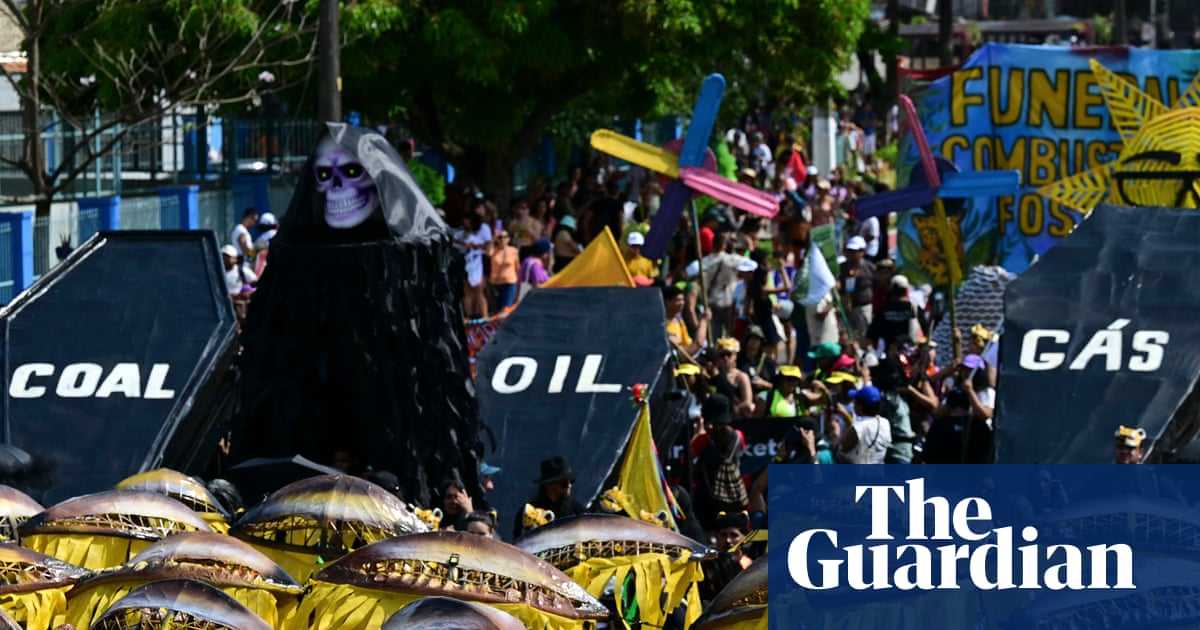
But to environmental advocates, the announcement sounded less like relief and more like a bill for working people, one that would result in higher fuel costs, increased pollution, and a slower path to clean energy. Critics warn that the decision represents a blow to the energy transition and a significant setback in the fight against climate change overall.
US politics
fromPsychology Today
2 months agoHow Can We Change the World?
There's a myth in our society that real change requires force, strength, and domination. We celebrate athletes, CEOs, and politicians who crush their opponents. But history tells a different story. Lasting social change has often been triggered by humble people whose weapons were passion, principle, and an unwavering commitment to justice and the truth - not the truth we see on TV or read in print media, but rather the truth that we feel deep inside ourselves.
Social justice
fromThe Nation
1 month agoA World on Fire Needs More Climate Reporting-Not Less
Covering Climate Now was formed in 2019 in response to the climate silence that then prevailed in much of the press, especially in the United States. Over the years that followed, hundreds of newsrooms joined our effort, and press coverage of the story began to reflect the scale of the crisis. Newsrooms beefed up their climate reporting teams; they confronted misinformation that sought to play down the problem; they thought creatively about how to find the climate connection on every beat.
Environment
fromArchDaily
2 months agoOn the International Day for Clean Energy: How Local Initiatives Respond to the Spatial Impacts of Energy Production
January 26 marks the International Day for Clean Energy, an initiative aimed at raising awareness and mobilizing action for an inclusive transition from fossil fuels, such as coal, oil, and natural gas, to power generation systems with lower greenhouse gas emissions and fewer pollutants. The term "clean" signals a fundamental shift away from extractive, finite, and exhaustible energy sources toward systems based on renewable resources or on capturing energy embedded in natural processes.
Environment
[ Load more ]