#cloud-native-gtm
#cloud-native-gtm
[ follow ]
#kubernetes #cloud-computing #ai #devops #aws #microservices #ai-agents #ai-integration #nutanix #observability


Information security
from24/7 Wall St.
1 day agoThe "SaaS-Pocalypse" Continues: Cloudflare, ServiceNow, CrowdStrike Under Fire as Anthropic Rewrites the Rules
The release of Anthropic's AI security product has significantly impacted investor confidence in enterprise software companies, leading to sharp stock declines.



fromTheregister
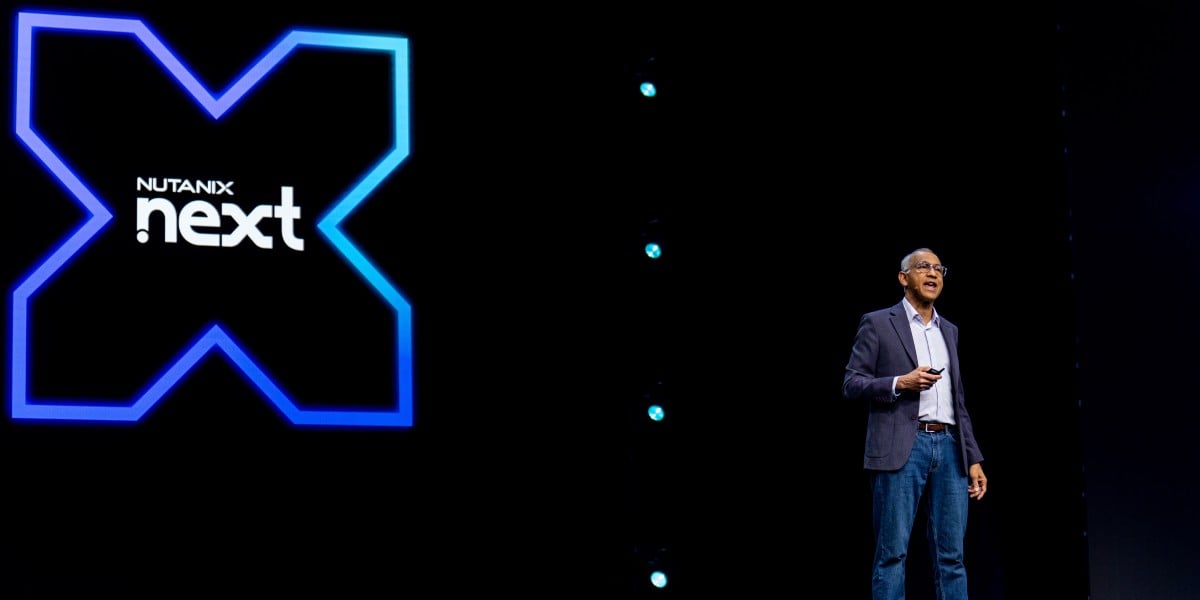
3 days agoWestern Union zaps VMware and moves to Nutanix
Western Union is six months into a migration of 900 to 1,200 applications that run across a 3,900-core server fleet. The decision to move came during a period of re-invention at Western Union, a 175-year-old company that is currently working to become more customer-focused and therefore is open to new suppliers to help reach that goal.
Tech industry
fromMedium
3 weeks agoModernizing Kubernetes Traffic: A Guide to the Gateway API Migration
If Ingress is the Legacy Path, then the Gateway API is the modern highway. In this guide, I will walk you through a complete migration demonstrating how to swap out your old Ingress controllers for Envoy Gateway. We won't just move traffic; we'll leverage Envoy's power to implement seamless request mirroring and more robust, path-based routing that was previously hidden behind complex annotations.
Web development


Tech industry
fromInfoQ
4 weeks agoNetflix Uncovers Kernel-Level Bottlenecks While Scaling Containers on Modern CPUs
Netflix discovered that container scaling bottlenecks stem from CPU architecture and Linux kernel mount lock contention, not container runtimes, with performance varying significantly across different hardware topologies.
fromInfoWorld
1 month agoRed Hat ships AI platform for hybrid cloud deployments
Red Hat AI Enterprise provides a foundation for modern AI workloads, including AI life-cycle management, high-performance inference at scale, agentic AI innovation, integrated observability and performance modeling, and trustworthy AI and continuous evaluation. Tools are provided for dynamic resource scaling, monitoring, and security.
Artificial intelligence
fromTechzine Global
2 months agoDevelopers struggle with container security
Almost a quarter of those surveyed said they had experienced a container-related security incident in the past year. The bottleneck is rarely in detecting vulnerabilities, but mainly in what happens next. Weeks or months can pass between the discovery of a problem and the actual implementation of a solution. During that period, applications continued to run with known risks, making organizations vulnerable, reports The Register.
Information security
Software development
fromTechzine Global
1 month agoA decade of Cloud Native at ING: Lessons learned, and what comes next
ING's decade-old private cloud built on open source and Kubernetes now faces layered legacy complexity requiring platform evolution while maintaining developer experience and organizational compliance.
Tech industry
fromInfoQ
1 month agoCNCF Graduates Dragonfly, Marking Major Milestone for Cloud-Native Image Distribution
Dragonfly, a CNCF open source P2P distribution system, achieved graduated status as the highest maturity level, enabling efficient container image and AI model distribution at scale with 90% bandwidth savings.
DevOps
fromComputerWeekly.com
3 weeks agoDo neoclouds mean a world where anything is possible? | Computer Weekly
Neoclouds are emerging GPU-as-a-service providers gaining investment and market attention as alternatives to dominant hyperscalers, filling real demand for AI and large language model training infrastructure.
fromEntrepreneur
2 months agoBuild Enterprise-Grade Applications for Just $50
Developers spend more than 60% of their time debugging and maintaining code rather than building new features, Stack Overflow's Developer Survey reports. If you're running a software development team or building applications for your business, you can use Microsoft Visual Studio Pro to streamline coding workflows with an AI-enhanced development environment that reduces debugging time and accelerates deployment cycles. Best of all, Microsoft Visual Studio Professional 2026 is currently available for only $49.99 (reg. $499.99).
Software development
fromInfoWorld
2 months agoWhat is GitOps? Extending devops to Kubernetes and beyond
Over the past decade, software development has been shaped by two closely related transformations. One is the rise of devops and continuous integration and continuous delivery (CI/CD), which brought development and operations teams together around automated, incremental software delivery. The other is the shift from monolithic applications to distributed, cloud-native systems built from microservices and containers, typically managed by orchestration platforms such as Kubernetes.
Software development
fromDevOps.com
1 month agoZero Downtime Multicloud Migrations for Observability Control Planes - DevOps.com
An observability control plane isn't just a dashboard. It's the operational authority system. It defines alert rules, routing, ownership, escalation policy, and notification endpoints. When that layer is wrong, the impact is immediate. The wrong team gets paged. The right team never hears about the incident. Your service level indicators look clean while production burns.
DevOps
DevOps
fromInfoWorld
2 months agoFrom distributed monolith to composable architecture on AWS: A modern approach to scalable software
Migrating distributed monoliths to a composable AWS architecture yields loosely coupled, autonomous services that improve scalability, resilience, deployment velocity, and team autonomy.
DevOps
fromAmazon Web Services
2 months agoBuilding a scalable code modernization solution with AWS Transform custom | Amazon Web Services
An open-source infrastructure enables enterprise-scale, parallel AWS Transform custom code modernizations using AWS Batch, Fargate, REST APIs, and CloudWatch monitoring.
fromDevOps.com
1 month agoGas Town: What Kubernetes for AI Coding Agents Actually Looks Like - DevOps.com
Steve Yegge thinks he has the answer. The veteran engineer - 40+ years at Amazon, Google and Sourcegraph - spent the second half of 2025 building Gas Town, an open-source orchestration system that coordinates 20 to 30 Claude Code instances working in parallel on the same codebase. He describes it as "Kubernetes for AI coding agents." The comparison isn't just marketing. It's architecturally accurate.
DevOps
DevOps
fromApp Developer Magazine
1 year agoOpenShift 4.21 launches with unified platform for AI and modern apps
OpenShift 4.21 unifies AI training, containerized microservices, and virtualized applications under one operational model, adds intelligent GPU allocation, scaling-to-zero, and enhanced virtualization features.
[ Load more ]