Marketing tech
fromAdExchanger
21 hours agoUnity And Index Exchange Unite Behind Gaming Data In Non-Gaming Channels
Unity and Index Exchange integrate to enable targeted advertising across multiple platforms using in-game audience data.
Since being named a Rising Star, my role as vice president at Systato has continued to expand alongside the company's growth. Over the past year, we've nearly doubled our company roster and tripled the size of our technology and software development organization. My focus, alongside growing a world-class group of technical real estate specialists, has increasingly centered on building scalable platforms, leading cross-functional teams, and helping organizations translate automation and data into real operational and financial outcomes.
"We've heard so much from our customers recently that they have so much data, but less than a third of them feel like they are confidently using that data in their browsing behavior. Are they using the right strategy? And they're really overwhelmed by the fragmentation of where all that data sits," Diana Williams, VP of product at Intuit Mailchimp, told MarTech.
The US Army's biggest AI gamble may not be on autonomous weapons, but instead whether Silicon Valley software can tackle the service's most tedious and, more often than not, grueling administrative jobs. Think less uncrewed aircraft and more behind-the-scenes tasks like recruiting, equipment maintenance, and endless gear inventories. Through a mix of new tools, redesigned workflows, and data integration, logisticians
Portal users can move data between platforms, which Lone Wolf says can reduce duplicate data entry and manual reporting processes. Designers say the system is intended to give real estate professionals a consolidated view of transaction activity, reporting and business analytics. Lone Wolf a 2026 HousingWire Tech100 honoree says the platform also allows brokerages and agents to integrate third-party software and internally developed tools while maintaining control over data access and security settings.
Attribution should be a priority for marketers, but if the "it ain't broke don't fix it' attitude holds true for many, then this is a huge opportunity missed to improve marketing performance. In today's world there are many useful data sources that can shape marketing and improve efficiencies. The problem facing brands is how to connect this data in a way that sheds light on customer behaviour and purchasing, and reveals the role that individual marketing activity has played in the journey.
A MIT study last year showed that 95 percent of generative AI implementations fail. They generate little to no business value. There can be various reasons for this. Think of poor integration, little focus on solving real problems, and unrealistic expectations. As far as Appian CEO Matt Calkins is concerned, this is an absurd percentage for something that is seen as the breakthrough technology of this generation.
Over the past decade, marketers have invested in dozens of creative data solutions to measure attention, emotion, distinctiveness, brand recall, and more. Yet these data sources remain disconnected, with brands switching between dashboards to gather creative intelligence. This means valuable insights can't be scaled, merged, or operationalised fast enough for modern marketing.
With that dubious success rate in mind, CPG advertiser Reckitt has taken a strict approach to its own generative AI marketing projects, piloting specific use cases designed to save its staffers time and stress before rolling them out to its 700-strong marketing organization. The approach - which Bastien Parizot, Reckitt's svp of IT and digital calls "functional reinvention" of the marketing workflow - has delivered, speeding up creative asset adaptation by 30%.
Salesforce has completed its acquisition of Informatica. The CRM provider paid more than $8 billion (€6.9 billion) for the data management company. The acquisition is intended to lay the foundation for reliable AI agents within the Salesforce ecosystem. The completion brings Informatica's data catalog, integration tools, and governance services to the Salesforce platform. CEO Marc Benioff emphasizes the importance of this step: "You have to get your data right to get your AI right. Data and context is the true fuel of Agentforce."
Misaligned teams. Sales and marketing often operate with different goals. Lead generation metrics don't translate easily into ABM performance. Old habits die hard. Existing processes, tech stacks, and KPIs are built around leads, not buying committees. Personalization takes work. ABM requires deeper insights, custom content, and coordinated outreach. That's resource-intensive. Data gaps. Poor data quality, disconnected systems, and lack of visibility into key accounts make targeting a guessing game. ROI anxiety. ABM doesn't always deliver quick wins.
APIs, or application programming interfaces, started out as a mechanism to let computers talk to other computers, but somewhere along the way, they've evolved into an ecosystem all their own. For virtually any development need, there is likely an API ready and waiting to deliver. Like the Lincoln Logs or Lego bricks of old, APIs are building blocks for creating applications.
Wang and his colleagues built a tool called Funding the Frontier, which integrates data on research publications, patents, policy papers and clinical trials, and presents the information in a visually intuitive way. They also combined the tool with a machine-learning-driven predictive algorithm to forecast which studies and fields are likely to lead to the most societal benefits in the future - for example, which grants are most likely to result in a patent.
The ever-evolving nature of IT operations and the growing complexity of modern technology environments have clearly spelled the need for AIOps tools. AIOps, or Artificial Intelligence for IT Operations, uses artificial intelligence (AI) and machine learning (ML) technologies to enhance and automate various IT operation tasks. AIOps platforms are designed to analyze and interpret data generated from various IT operations tools and platforms, providing service assurance and insights, automating routine tasks, and helping organizations detect and resolve issues more efficiently.
What we recognized was, buying a home is a really complex process, and there are a lot of documents and requirements, and just one of those was verification of insurance. As it exists today, that process is complicated, so we saw an opportunity to say, how can we take that piece of it and just simplify it? Tuttle shared that HOIVerify can take a process that once took several days and perform it in seven seconds.
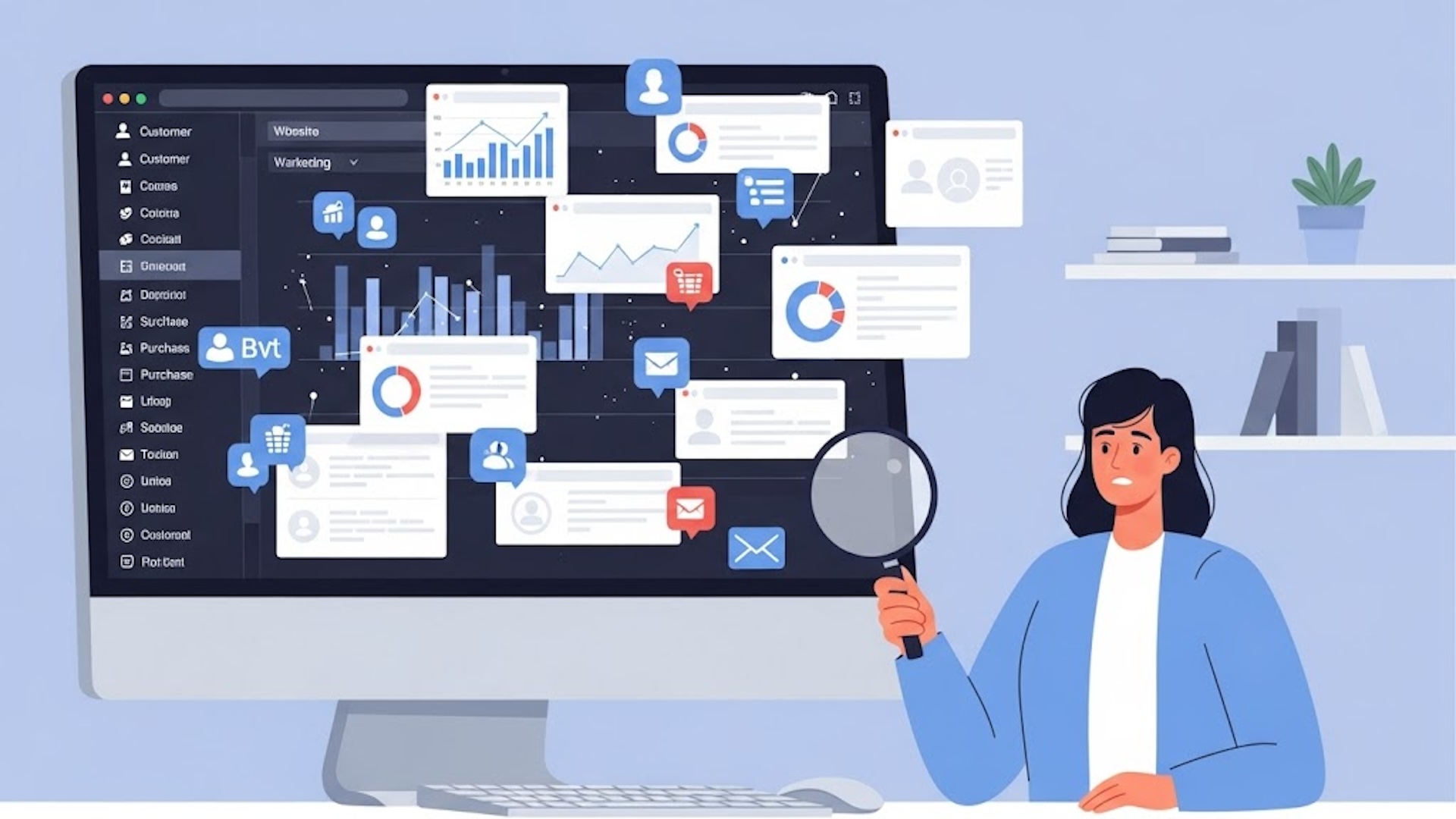
Marketers today aren't just swimming in data - they're besieged by it. Every campaign, click and customer touchpoint continuously generates insight. But this data only matters when it's activated. That requires systems to ingest, analyze, orchestrate and act on it successfully. Far too often, data remains siloed, fragmented or trapped in disconnected tools, leaving businesses with noise instead of clarity.
Gotham is an investigative platform built for police, national security agencies, public health departments, and other state clients. Its purpose is deceptively simple: take whatever data an agency already has, break it down into its smallest components, and then connect the dots. Gotham is not simply a database. It takes fragmented data, scattered across various agencies and stored in different formats, and transforms it into a unified, searchable web.
Not long ago, building an app meant endless spreadsheets, coding, and clunky tools. Today, 70% of new apps are expected to be built with low-code or no-code tools-nearly triple the 2020 rate. Modern AI platforms allow anyone, coder or not, to create powerful automated workflows. But with so many options, finding the right fit isn't simple. You need a tool that matches your team's skills, integrates with your stack, and delivers real value.